Posts Tagged ‘Travel’
Joy in the Evening – A meeting of Plum fans in Kolkata, India
Posted in What ho!, tagged Calcutta, Fans, Humour, India, Kolkata, Kwality, P G Wodehouse, Park Street, Travel on December 30, 2025| Leave a Comment »
Sixty years on, the hills are still alive with ‘The Sound of Music’!
Posted in The Magic of Movies!, tagged Austria, Christopher Plummer, Europe, Hollywood, Julie Andrews, Movie, Mozart, Musicals, Salzburg, The Sound of Music, Travel on October 6, 2025| 3 Comments »

Based on the 1949 memoir The Story of the Trapp Family Singers by Maria Augusta von Trapp, the film is about a young Austrian woman studying to become a nun in Salzburg in 1938 who is sent to the villa of a retired naval officer and widower to assume charge as a governess to his seven children. She brings love, spontaneity, and music into the lives of the family members through kindness and patience.
The heroine, though plagued by self-doubt, shows ample pluck and resource to win over a bunch of defiant children and their disciplinarian father. The characters of all the kids are well etched out and enchant us.
The governess ends up marrying the officer. Together with the children, they find a way to survive the loss of their homeland through courage and faith.
Underlying the whole narrative is the value of family togetherness, delicate love interwoven with the need for discipline and loyalty towards each other.
The musical scores stand out for their richness and the way in which they advance the plot of the movie. Even after sixty long years, the movie does not fail to cast a spell.
In Hollywood, everything is not only glamourised but also presented on a larger-than-life canvas, thereby leaving the audience mesmerised. Thus, it was interesting to recently visit some of the real locations where the movie was shot in Salzburg, Austria, in 1964.
How the movie came to be
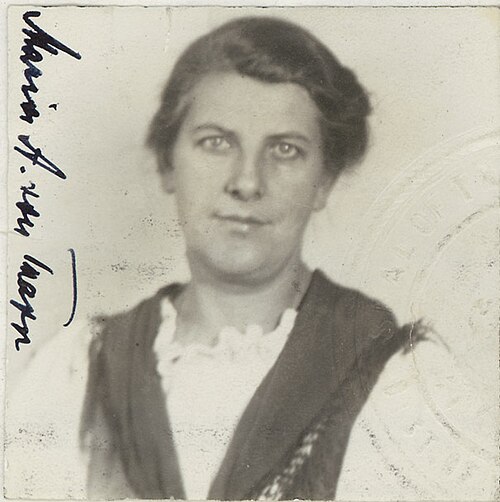

Maria Augusta von Trapp’s memoir was first brought to the silver screen in West Germany: Die Trapp-Familie (1956) and Die Trapp-Familie in Amerika (1958). Wolfgang Liebeneiner directed both.

Rodgers & Hammerstein’s Broadway musical opened at the Lunt-Fontanne Theatre on 16 November 1959. It ran for 1,443 performances and tied for the 1960 Tony Award for Best Musical with Fiorello!
Then came Robert Wise’s screen version for Twentieth Century-Fox. Released in 1965, it became a landmark musical, winning many accolades. The outdoor shooting in and around Salzburg took place in 1964. The planning was to wrap up the shoot within six weeks. However, due to disruptions caused by frequent rains, the crew had to camp there for around eight weeks, worrying the producers no end.
Salzburg: Places where key songs/scenes were filmed
The Opening
The opening sequence of Maria on the mountain was filmed at Mehlweg mountain near the town of Marktshcellenberg in Bavaria. The meadow itself is private property and, regrettably, is no longer accessible to the public. I was told that on a particular day, Julie Andrews and the entire crew had to wait for close to five hours for the rains to stop, so shooting could take place.
Solving a problem like Maria

For many of its scenes in the song, the film uses the authentic exterior of the Nonnberg Abbey, which is the real-life Benedictine convent where Maria was a novice. It sits on a hill above Salzburg and is still home to nuns. However, the interior “contemplation” scene was a set built in Hollywood to represent the abbey’s inner workings.
I have confidence

Maria’s walk into town includes the Residenzplatz Square, which is a significant landmark in the old part of the city. It is a historical fountain which uses a horse head as a spout. Before the scene at the fountain, there is a segment that was filmed in the pedestrian underpass named Domgang, a few meters away from the fountain, near the Cathedral entrance. The scene towards the end, where she is seen approaching the von Trapp estate, was possibly filmed in an alley next to Mondsee Lake.
The von Trapp villa

The original house the Captain lived in was found to be rather modest. Whereas they lived at Villa Trapp – an estate in Aigen, not far from the city of Salzburg, the movie makers decided to combine two different Salzburg sites:


Schloss Frohnburg (front gates/drive) and Schloss Leopoldskron (lakeside terrace and gardens). Leopoldskron’s Venetian Salon inspired the ballroom set.
Do-Re-Mi
Some meadow shots were filmed near Werfen, where stunning rocky mountains form an enchanting backdrop. That is where the picnic scene was filmed, with Julie Andrews, playing everyone’s favourite nun Maria, strumming her guitar through these fields to teach the curtain-clad von Trapp kids to sing Do-Re-Mi.
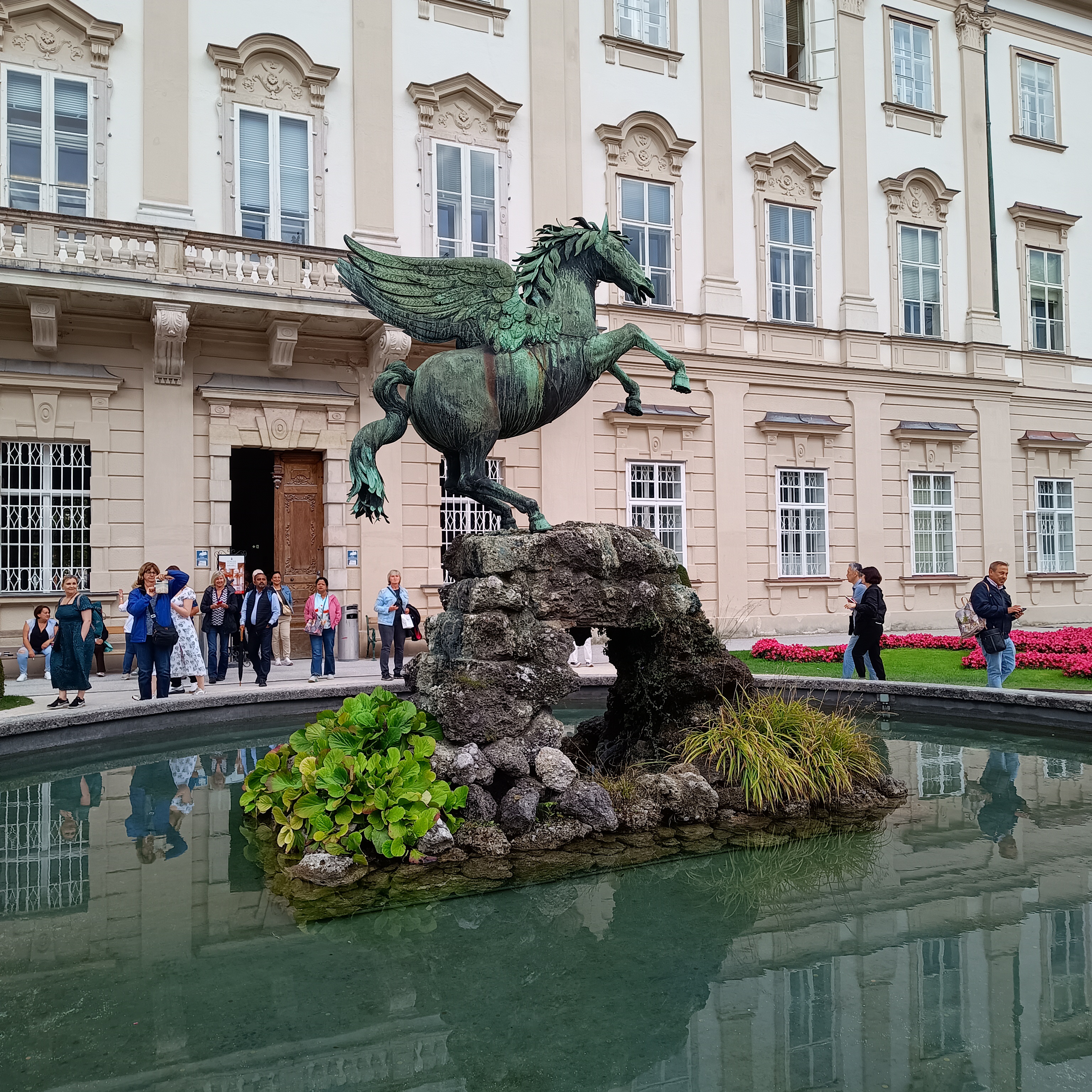

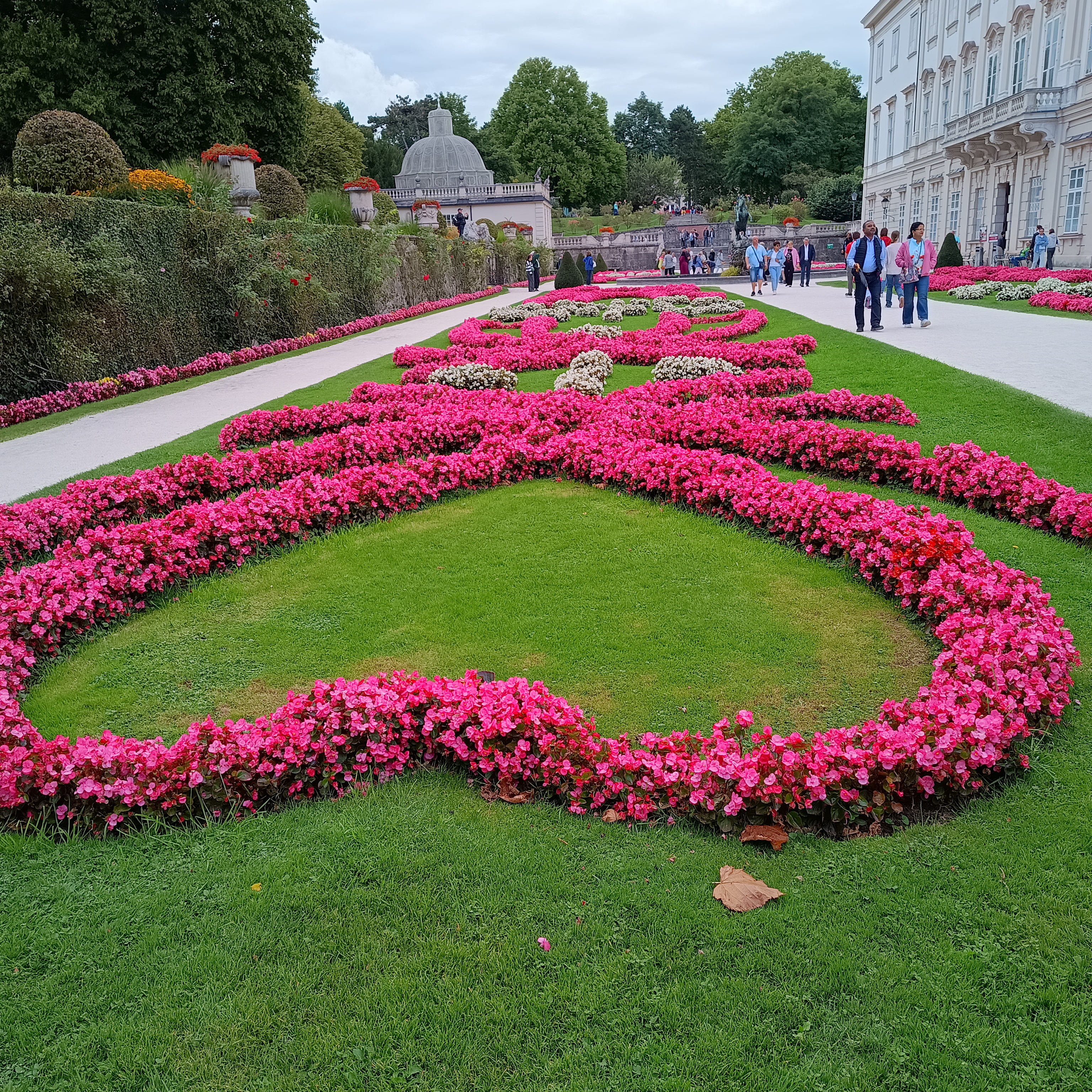


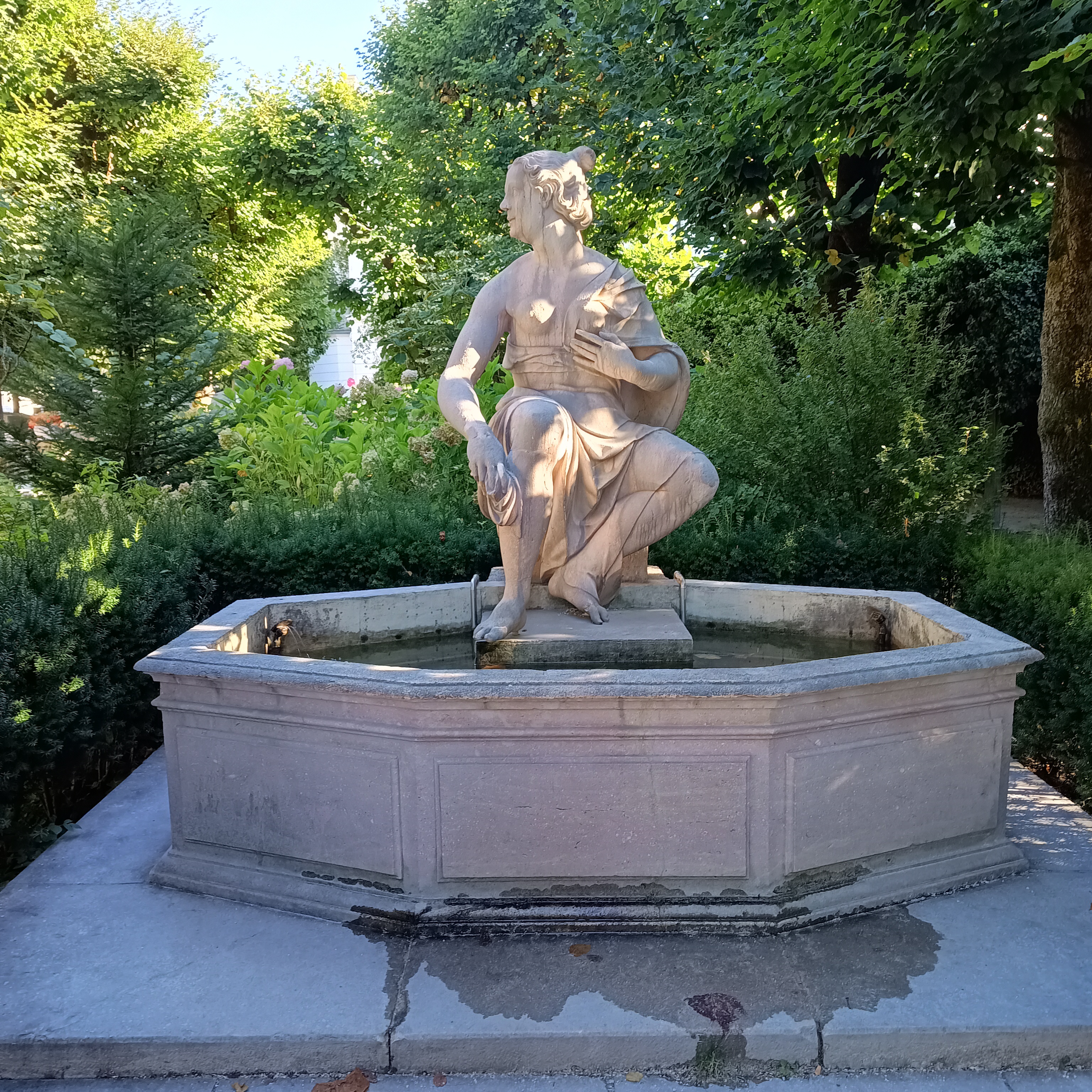
The famous montage uses Mirabell Gardens (Pegasus Fountain and “Do-Re-Mi” steps) and a few other places in Salzburg. (Regrettably, I could not capture the steps, owing to overcrowding at the place.)
Edelweiss

The locals told me that the flower is a delicate one. It is a mountain flower belonging to the daisy or sunflower family. The plant prefers rocky limestone areas at altitudes of about 1,800–3,400 metres. It is a non-toxic plant. It is a scarce, short-lived flower found in remote mountain areas and has been used as a symbol for alpinism, for rugged beauty and purity. It is a national symbol of several countries, like Austria, Bulgaria, Slovenia, Switzerland, and Italy.
It is a protected flower. If you spot one, you are permitted to photograph it. However, picking up one is considered an offence.
Reverend Mother’s Office
Scenes of Reverend Mother’s Office were shot at St. Margarethen Chapel and Dürer Studios.
Sixteen Going on Seventeen/Something Good

The iconic gazebo used for filming these songs was originally located at Schloss Leopoldskron. However, owing to frequent trespassers, it was moved and reconstructed in the gardens of Schloss Hellbrunn. The structure is small and has only four stone slabs within its circular structure. The film used the structure only for exterior shots; a large studio replica was used for the interiors.
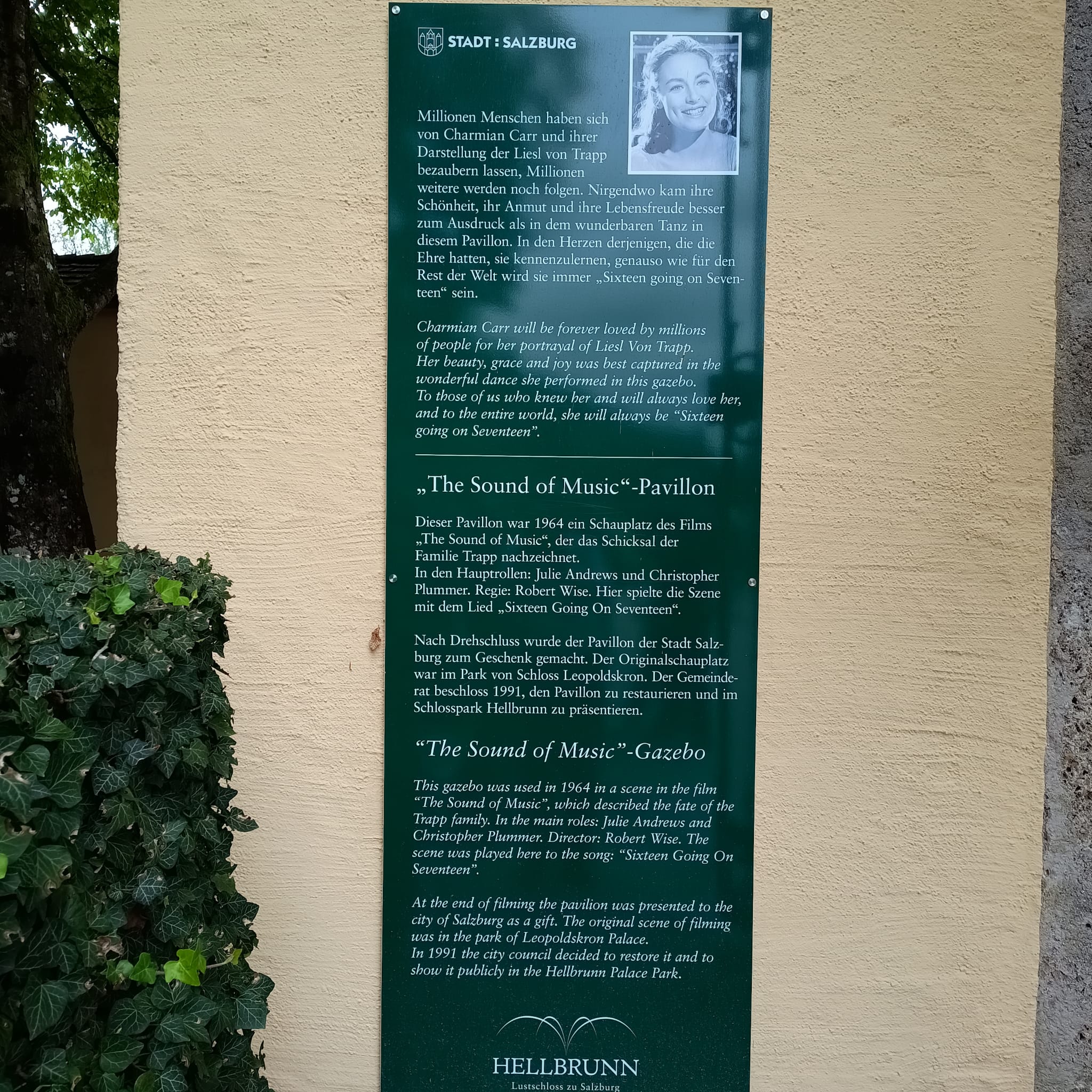
Just next to the Gazebo is a plaque featuring Charmine Carr who played Liesl in the movie.
The wedding




The interior wedding sequence was filmed at St Michael’s Basilica, Mondsee, which is about 30 km from Salzburg. The church is smaller than it appears on a large screen. However, the interiors are as captivating as shown in the movie.
The concert/finale
On the 12th of March 1938, Nazi Germany annexed the Federal State of Austria. The new rulers were keen on the captain joining the German navy, which had superior naval technology at its command. However, owing to ideological differences, the captain and his family decided to escape. The climactic festival performance used Salzburg’s Felsenreitschule (Rock Riding School), a real venue carved into the rock. This is where the escape plans were made.
Cemetery hideout
The tense hiding sequence was staged on a Hollywood set modelled on St Peter’s Cemetery in Salzburg.
The concluding scene
The final scene of the von Trapp family escaping over the mountains was filmed on the Obersalzberg in the Bavarian Alps.
The Making of a Classic
Principal photography began on March 26, 1964, at 20th Century-Fox studios in Los Angeles, where scenes were filmed from Maria’s bedroom and the abbey cloister and graveyard.
The company then flew to Salzburg, where filming resumed on April 23 at Mondsee Abbey for the wedding scenes. From April 25 through May 22, scenes were filmed at the Felsenreitschule, Nonnberg Abbey, Mirabell Palace Gardens, Residence Fountain, and various street locations throughout the old town area of the city.
From May 23 to June 7, the company worked at Schloss Leopoldskron and an adjacent property called Bertelsmann for scenes representing the lakeside terrace and gardens of the Trapp villa.
From June 9 to 19, scenes were shot at Frohnburg Palace, which represented the front and back façades of the villa.
The Do-Re-Mi picnic scene in the mountains was filmed above the town of Werfen in the Salzach River valley on June 25 and 27.
The opening sequence was filmed atop the mountain from June 28 to July 2, 1964.
The cast and crew flew back to Los Angeles and resumed filming at Fox Studios on July 6 for all remaining scenes, including those in the villa dining room, ballroom, terrace, living room, and gazebo. Following the last two scenes shot in the gazebo—for the songs Something Good and Sixteen Going on Seventeen—principal photography concluded on September 1, 1964.
A total of eighty-three scenes were filmed in just over five months.
Post-production work began on August 25 with three weeks of dialogue dubbing to correct lines that were ruined by various street noises and rain.
In October, veteran Disney playback singer Bill Lee dubbed Christopher Plummer’s singing voice. Christopher himself was a proficient singer and pianist and was not too pleased about this change.
Awards and accolades
- Academy Awards (38th, 1966). The Sound of Music won five Oscars, including Best Picture and Best Director (Robert Wise).
- Golden Globes (23rd, 1966). Won Best Motion Picture – Musical/Comedy and Best Actress – Musical/Comedy (Julie Andrews).
- AFI honours. Ranked #4 on AFI’s list of Greatest Movie Musicals; the AFI also places the film across several “100 Years…” lists.
- U.S. National Film Registry. Selected by the Library of Congress in 2001 as “culturally, historically, or aesthetically significant.”
Captain Georg von Trapp: life before Maria and career highlights

- Family life. Georg von Trapp (born 1880, Zara—now Zadar) married Agathe Whitehead (granddaughter of torpedo inventor Robert Whitehead) in 1912; they had seven children. Agathe died of scarlet fever in 1922.
- Naval career. An Austro-Hungarian Navy submarine commander in World War I, von Trapp commanded SM U-5, sinking the French armoured cruiser Léon Gambetta in April 1915, and later U-14; he became a decorated national figure.
- Before Maria arrived. After Agathe’s death, von Trapp raised his seven children at their Salzburg estate. In 1926, Maria Kutschera was sent from Nonnberg Abbey as a tutor for his convalescent daughter (also named Maria), not as a governess to all the children. Georg and Maria married in 1927.
Where the film diverges from reality (key examples)
How they left Austria
The film depicts a dramatic Alpine hike to Switzerland. In fact, the family left by train for Italy, first travelling to London, before sailing to the United States for their first concert tour. Georg’s place of birth meant the family held Italian citizenship after World War I border changes.
Timing of the marriage
The movie places the wedding on the eve of the 1938 takeover by Nazi Germany; in reality, they married in 1927.
Maria’s initial role
She tutored one child recovering from scarlet fever, not all seven, as a household governess.
Georg’s temperament
The real Captain was warm and musical, not the stern, whistle-wielding disciplinarian portrayed on screen.
The music director
The group’s long-time musical director was Father Franz Wasner, not a fictional impresario.
Children’s identities
The film changed the names, ages and even sexes of the children (for example, “Liesl” is fictional; the eldest was Agathe).
Edelweiss: the song
Often mistaken for an Austrian folk song, Edelweiss was newly written for the musical by Rodgers & Hammerstein.
Sixty years on, and still counting…
Even after six decades of its release, the echoes of the songs of “The Sound of Music” keep us enchanted. Often, when we are plagued by self-doubt while leaving our comfort zone, the words of the song ‘I have confidence…’ give us solace. Whenever the harsh slings and arrows of fate lower our spirits, the lyrics of ‘Climb every mountain…’ keep us focused on our goals. As and when we feel extremely grateful to someone or something, the phrase ‘Somewhere in my youth or childhood, I must have done something good…’ comes up in our minds.
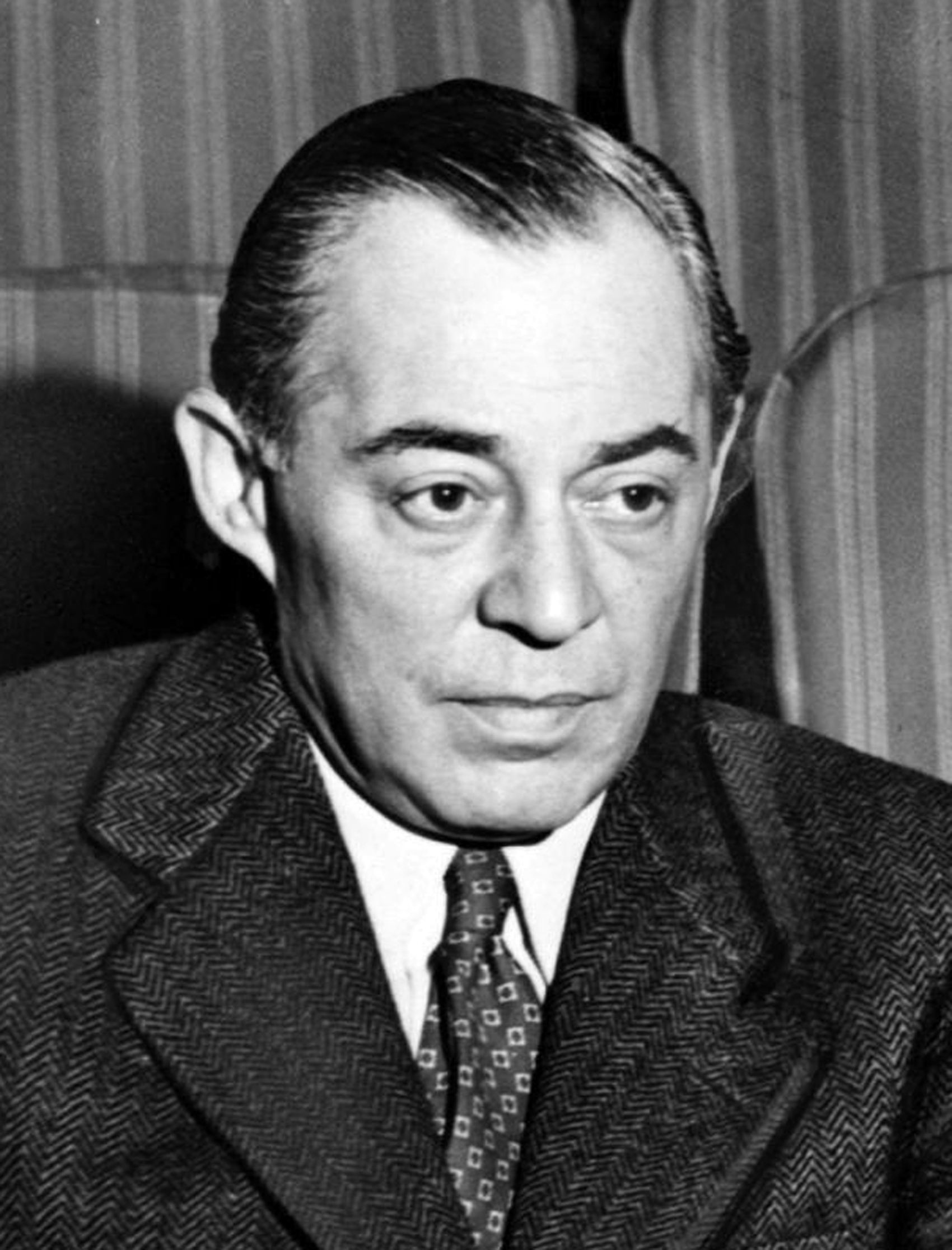

Richard Rodgers and Oscar Hammerstein deserve all the credit for creating such lilting and instructive compositions.
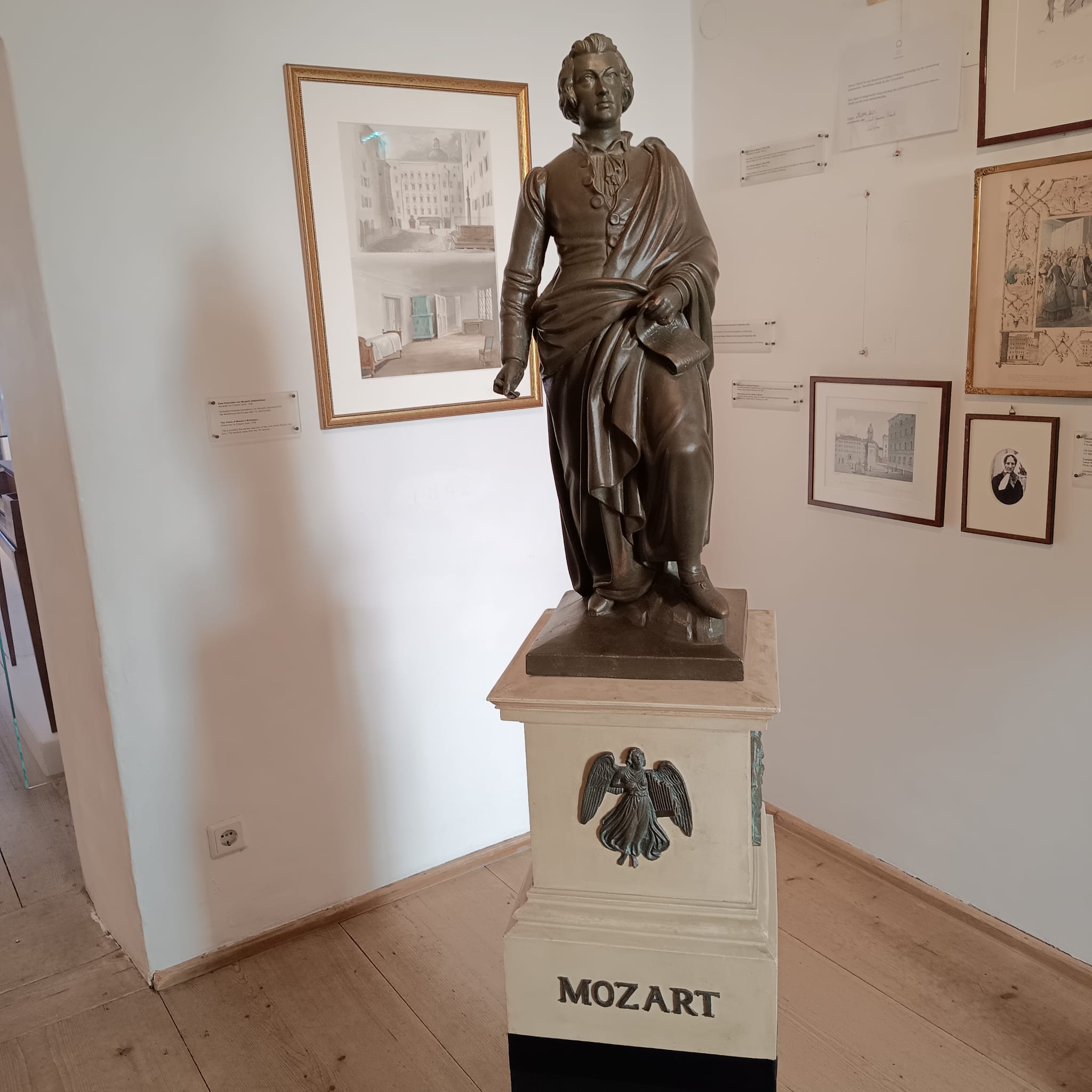
Hats off to the studio team, which whipped up a unique offering of this nature! It should come as no surprise that it originated in a city which is also famous for blessing humanity with a highly talented composer: Wolfgang Amadeus Mozart.
Notes:
- Sometime during 2026, just next to the present location of the gazebo, the gardens of Schloss Hellbrunn will also have an exclusive pavilion dedicated to the iconic movie.
- The photographs were either taken by me or subsequently downloaded from the internet.
References:
- U.S. National Archives, “Movie vs. Reality: The Real Story of the Von Trapp Family.” National Archives
- Filmportal (Germany) entries for Die Trapp-Familie (1956) and Die Trapp-Familie in Amerika (1958). Filmportal+1
- Rodgers & Hammerstein Organisation (official) — Broadway production notes; “Edelweiss” song page. Rodgers & Hammerstein+2Rodgers & Hammerstein+2
- Tony Awards (official) — 1960 winners; Best Musical tie. tonyawards.com
- Salzburg tourism/official venue pages — filming locations including Mirabell Gardens, Nonnberg Abbey, Felsenreitschule. Wikipedia, Goodreads, Barnes & Noble
- Hellbrunn Palace (official) — gazebo now on site. hellbrunn.at
- Schloss Leopoldskron (official) — filming location and ballroom inspiration. schloss-leopoldskron.com
- Awards round-ups — Oscars (1966) and Golden Globes (1966) winners. digitalhit.com+1
- AFI/Library of Congress — AFI rankings; National Film Registry selection (2001). American Film Institute, The Library of Congress
- HistoryNet — naval record and Maria Theresa Order context for Georg von Trapp. HistoryNet
- https://en.wikipedia.org/wiki/The_Sound_of_Music_(film)
Related Posts:
The Indian Curry Dished Out by P. G. Wodehouse
Posted in What ho!, tagged Army, Behavioural Traits, British Raj, Buddhism, Civil Disobedience, Civil Services, Conversations, Customs, English, Fakirs, Fauna, Handicrafts, Hindus, Humour, Hunting, Idols, Independence, India, India Rubber, Indian Clubs, Indian Ocean, Love Calls, Men In Uniform, Mutinies, Mystic Powers, Mythology, NWFP, P G Wodehouse, Partition, Priests, Rabindranath Tagore, Regional Languages, Royalty, Superstitions, Taj Mahal, Temples, Translations, Travel on February 10, 2025| Leave a Comment »
A visit to the birthplace of William Shakespeare
Posted in A Vibrant Life!, tagged Birthplace, Blandings Castle, england, English, Jeeves, Literature, P G Wodehouse, Shakespeare, Shakespeare Centre, Stratford-upon-Avon, Travel, UK on November 15, 2024| 4 Comments »
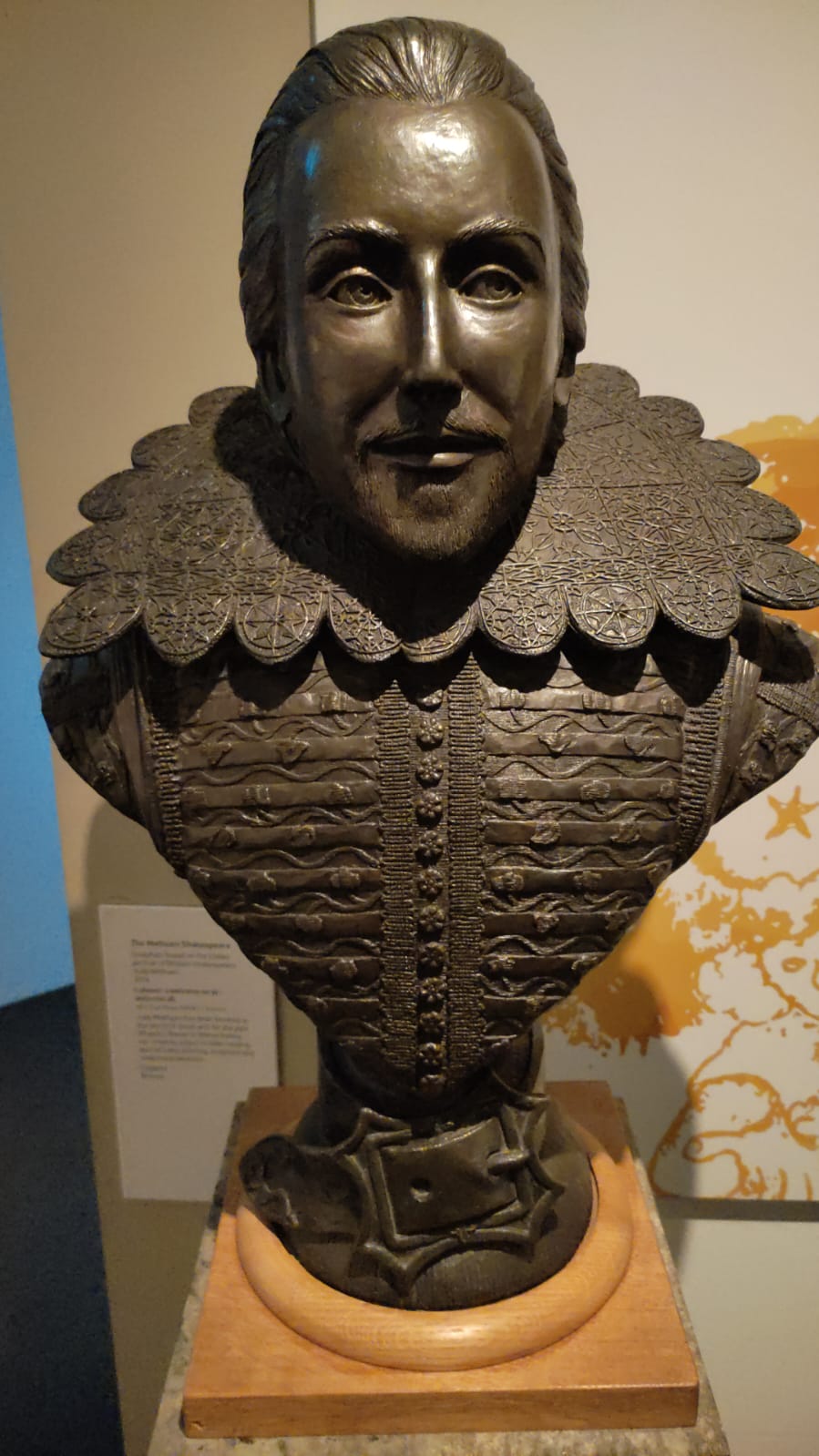
In one of my earlier posts, I had already confessed that I do not suffer from an affliction which could best be alluded to as Shakespearitis. Given the limited supply of grey cells that nature has bequeathed upon me, I can be held to be a person who has a rather high Pumpkin Quotient. William Shakespeare’s literary outpourings need a much higher level of intellect to be understood and enjoyed. Unfortunately, that I simply do not possess. The stuff he has dished out is meant for brainy coves whose eyes shine with keen intelligence and whose heads bulge at the back, much like Jeeves’.
However, all this does not necessarily guarantee peace of mind. On the contrary, it makes life even more of a challenge. The brow is invariably furrowed. The heart is leaden with woe. This is so because he is to be found everywhere and is apt to spring surprises at all times, not a very pleasing prospect for a faint-hearted person like me. Surely, the fault lies in my stars.
My last trip to the United Kingdom proved to be no exception. A few days after I had unpacked the proverbial toothbrush, on a fine morning, my genial host had whipped up a sumptuous breakfast. While tucking into it with much gusto, I was feeling on top of the world. But just when you feel that life is a bed of roses, God is in heaven, and all is well with the world, Fate sneaks up from the back. Your Guardian Angel decides to proceed on a vacation. The blow falls, leaving one shaken and stirred.
I was informed that the birthplace of The Bard was just an hour’s drive from the town I was in at the time. The host, grace personified, thought it was his patriotic duty to drive me down to the place. Hiding my trepidation somehow, I consented. Well, one must be civil, you see.
As you like it
The journey to Stratford-upon-Avon was part of the charm. Surrounded by the serene English countryside, the town turned out to be a beautiful blend of cobbled streets, Tudor-style buildings, and winding pathways that echo centuries of history. The drive had the effect of converting my initial hesitation to a reluctant sense of anticipation.
Visiting William Shakespeare’s birthplace in Stratford-upon-Avon proved to be like stepping into a time machine that transports one to the relatively simpler times of the late 16th century. Nestled in the charming market town in Warwickshire, England, the house on Henley Street is a unique time capsule that offers a glimpse into the life of Shakespeare and his family, set against the backdrop of a picturesque Elizabethan town. It is instructive to see how Henley Street has evolved over time.


Despite being armed with a Google app, we had to repeatedly disturb a few locals to ask for directions to the Shakespeare Centre.

The modern visitor centre serves as an introduction to the playwright’s life, works, and the world in which he lived. It offers exhibits, displays of historical artefacts, and multimedia presentations that set the stage for the main attraction. One can see copper plaques devoted to many of his works, besides creative illustrations that connect him to the contemporary world.
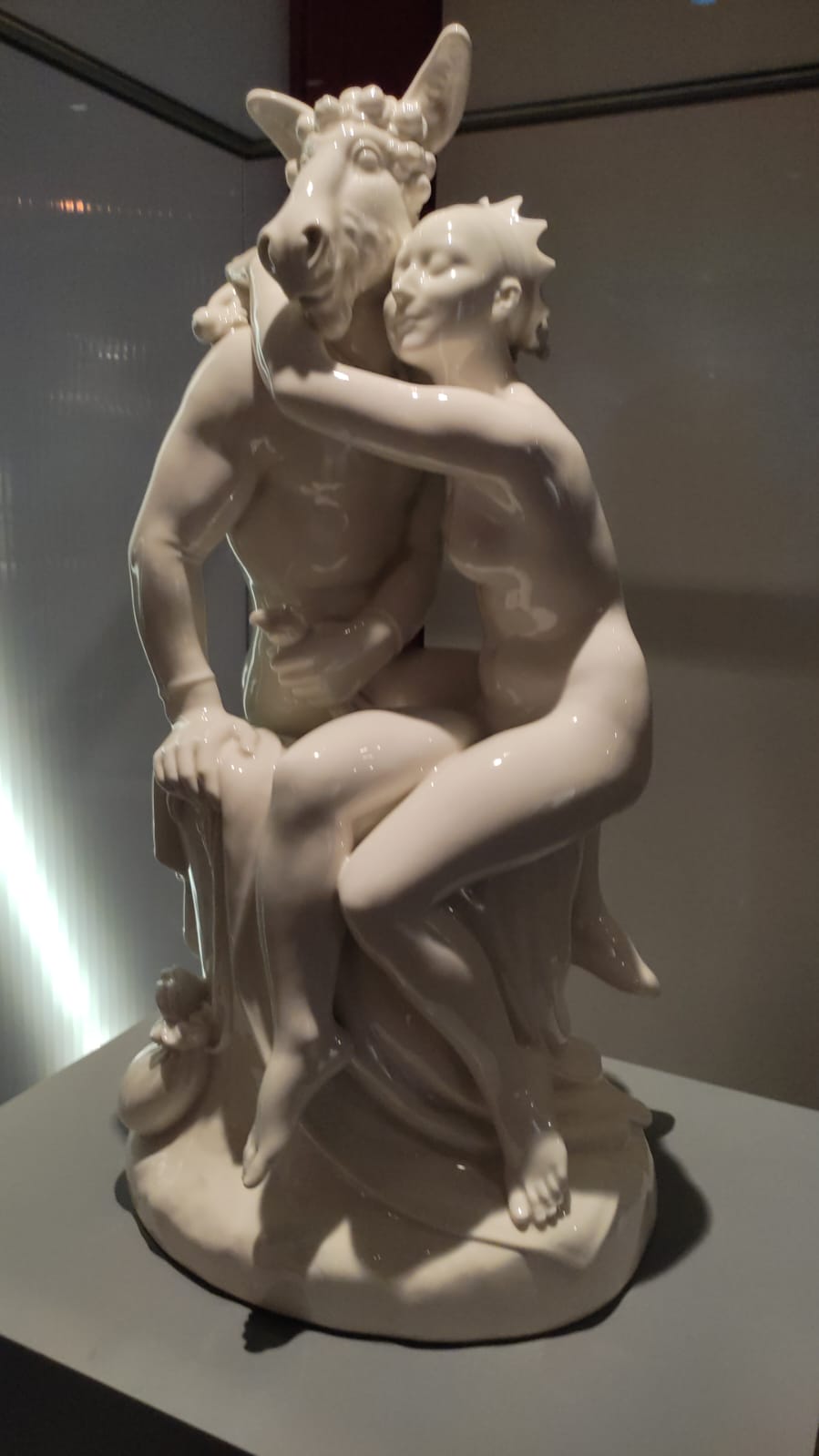


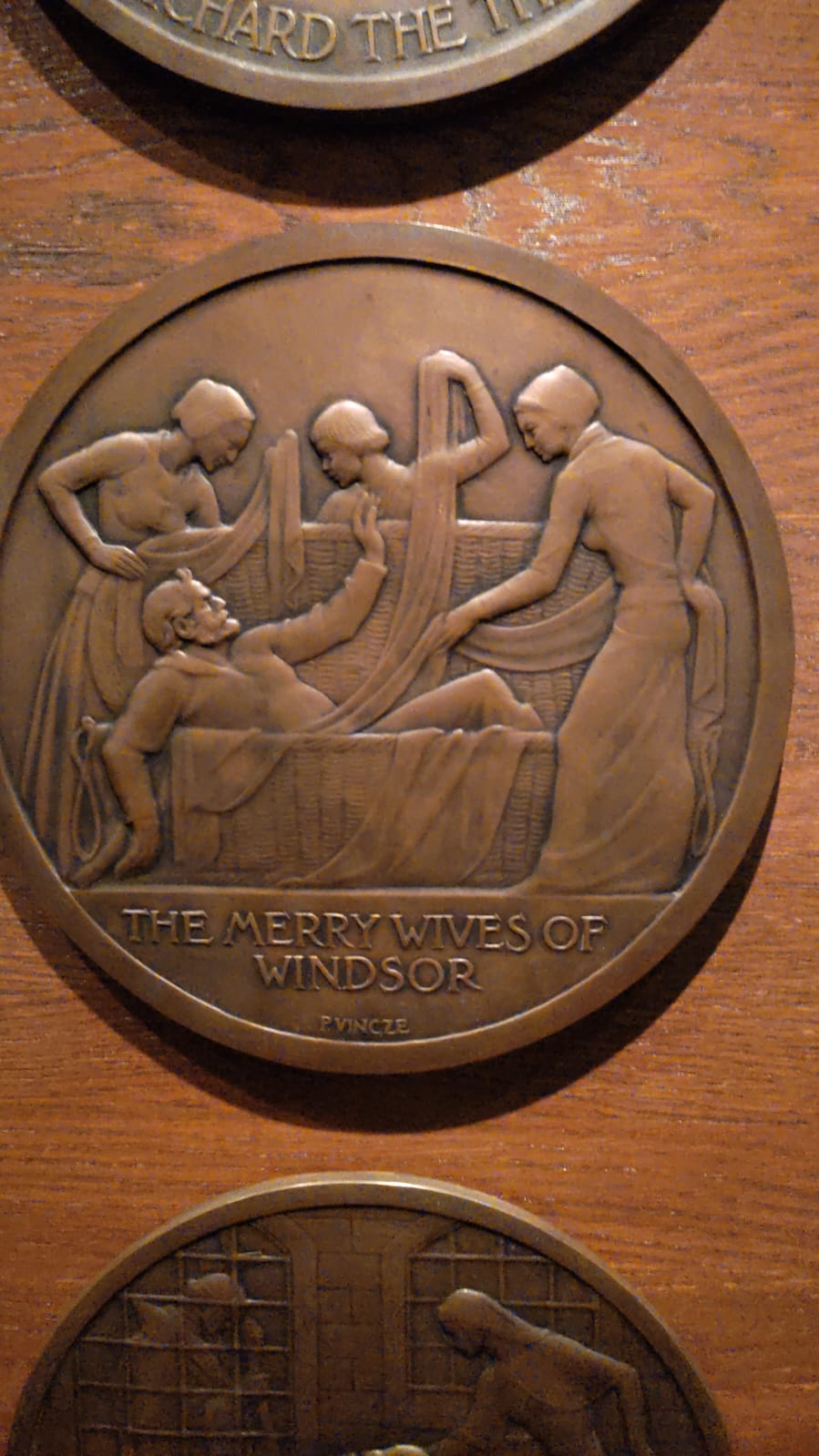

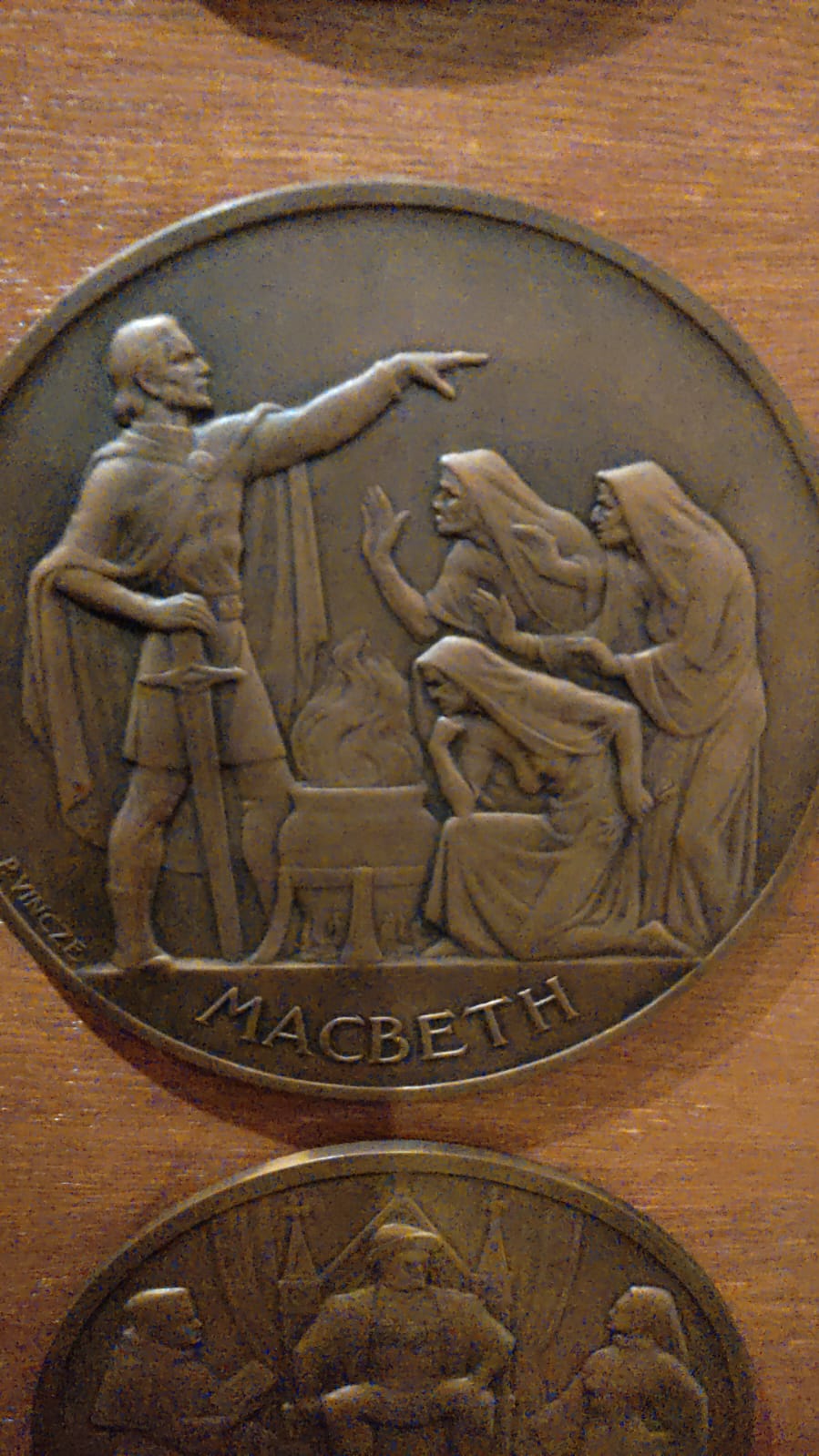
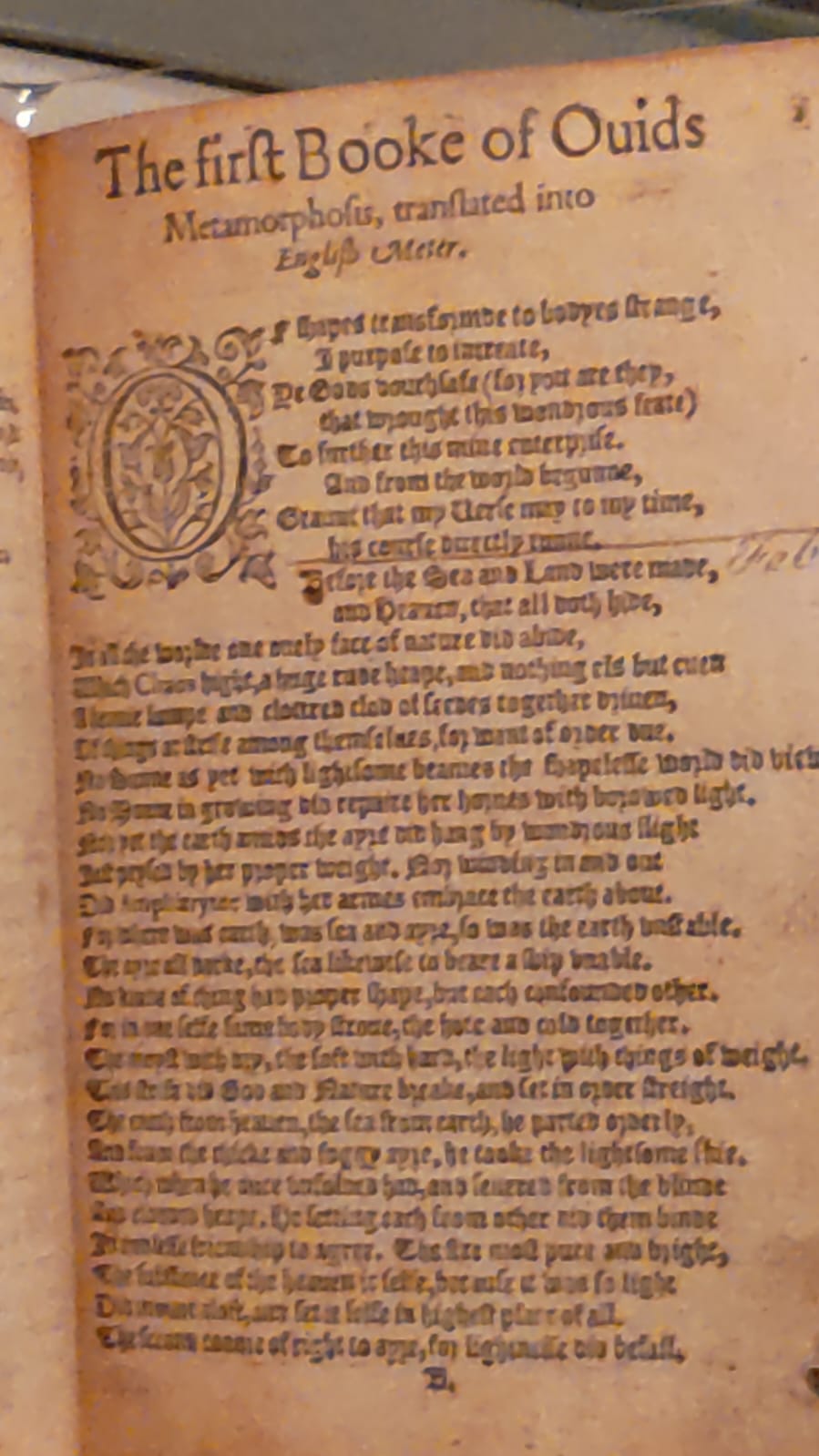
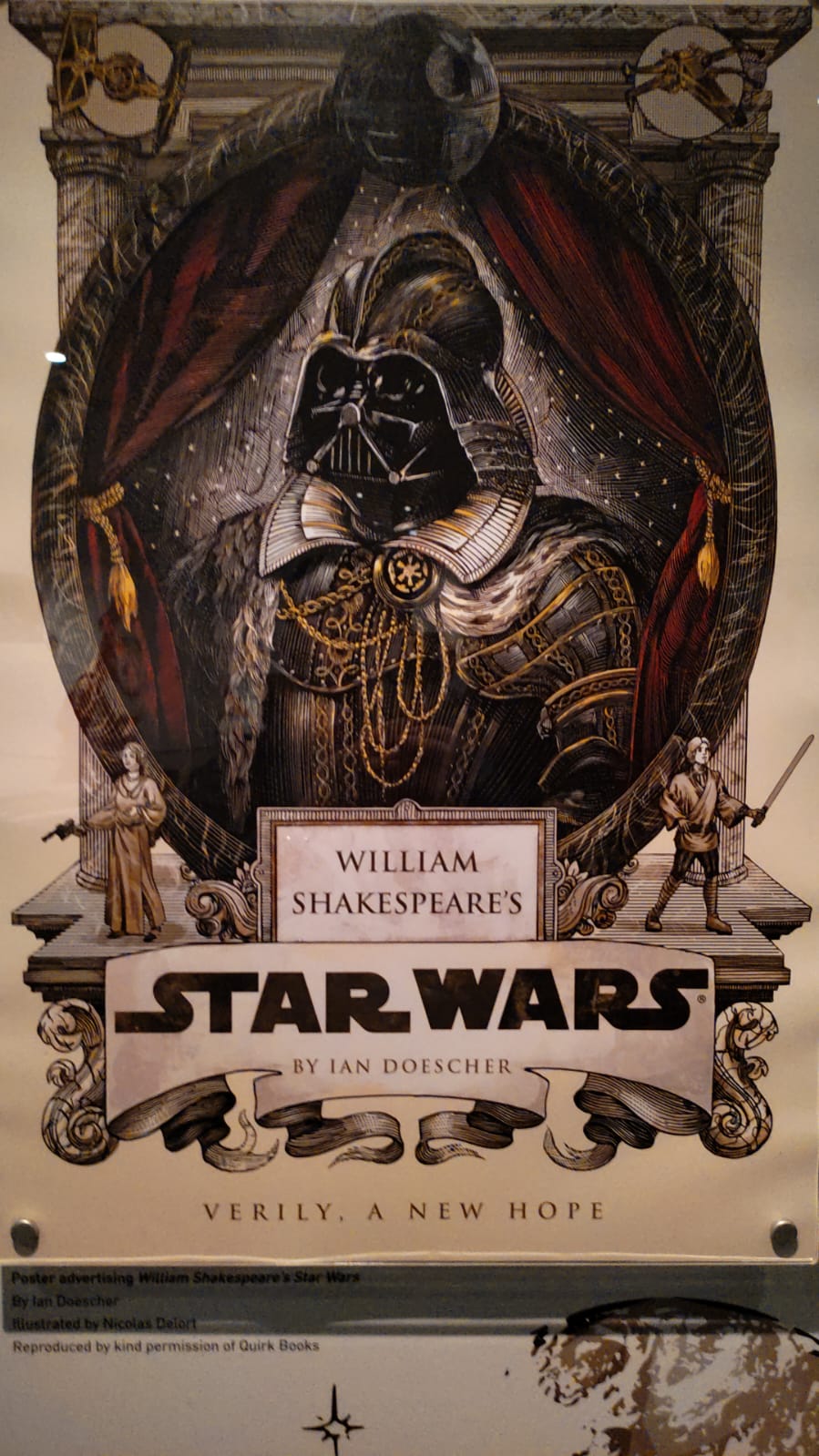


The heaven’s lieutenants
Before we move on to the birthplace itself, a family tree greets us. This is in the fitness of things, because The Bard placed a high premium on families. Some of you may recall this quote of his:
The voice of parents is the voice of gods, for to their children they are heaven’s lieutenants.

I am amazed to find that he was married to a lady by the name of Anne Hathaway; of course, not the Hollywood diva we happen to know since her The Devil wears Prada days!
Home: The place where he could waste his time!
The dwelling is a modest two-story, half-timbered house with a traditional wattle-and-daub construction typical of the Elizabethan era. Its architectural simplicity contrasts with the monumental legacy of the man who was born here in 1564. The house has been carefully preserved and restored to reflect the period as accurately as possible, down to the original furniture styles, wooden floors, and narrow doorways that would have been familiar to Shakespeare. Every corner of the home feels authentic, almost like the Bard himself or his family members might pop up at any moment. (Further details about the place can be found here)

Entering through the main door, visitors walk through the same rooms where young William would have spent his formative years. The ground floor houses a small enclosure where he would have met and entertained visitors. Then comes the main hall where the family would have gathered for meals, with a large hearth and a sturdy wooden table, showcasing how a typical middle-class family of that period lived.

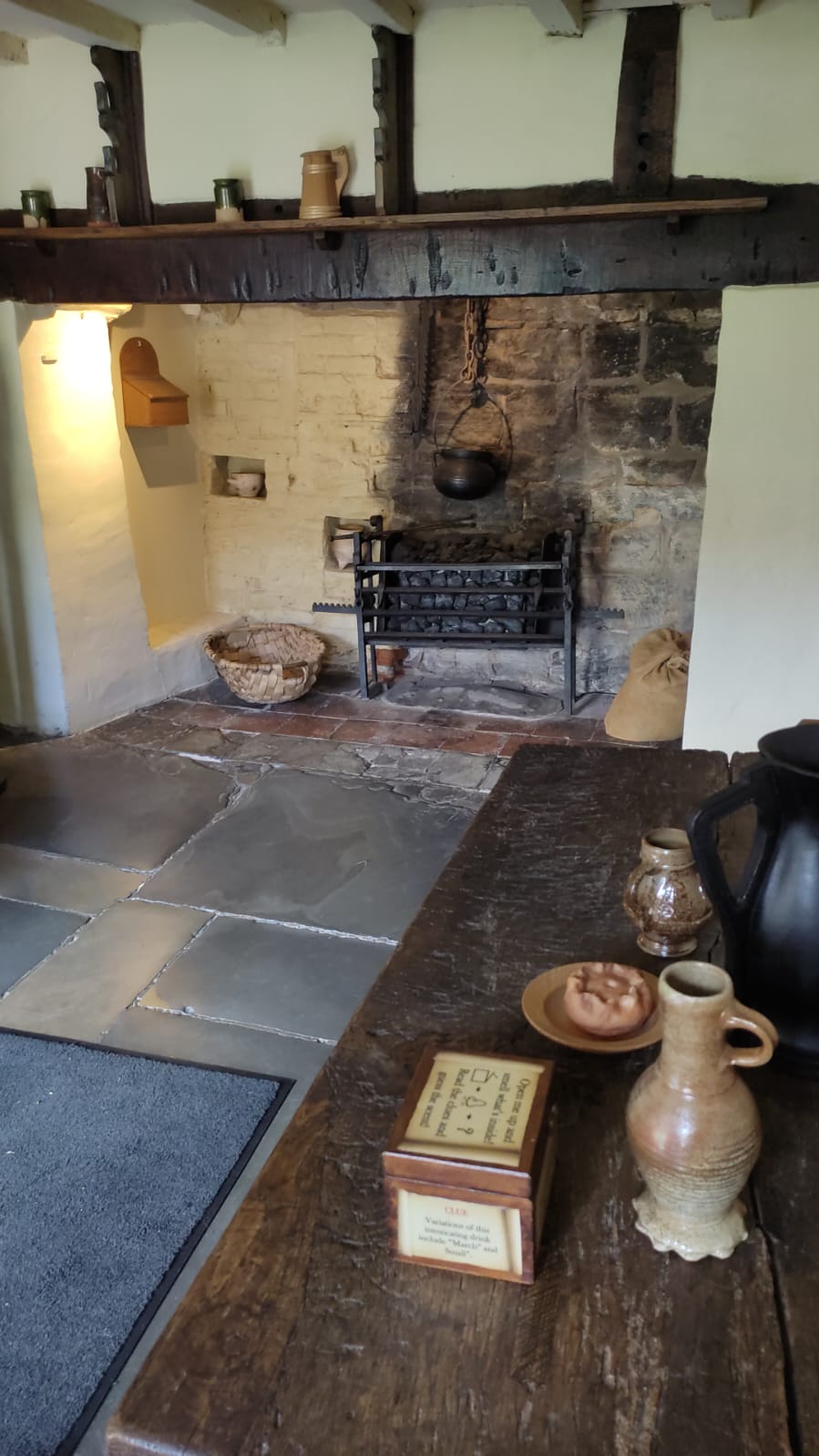
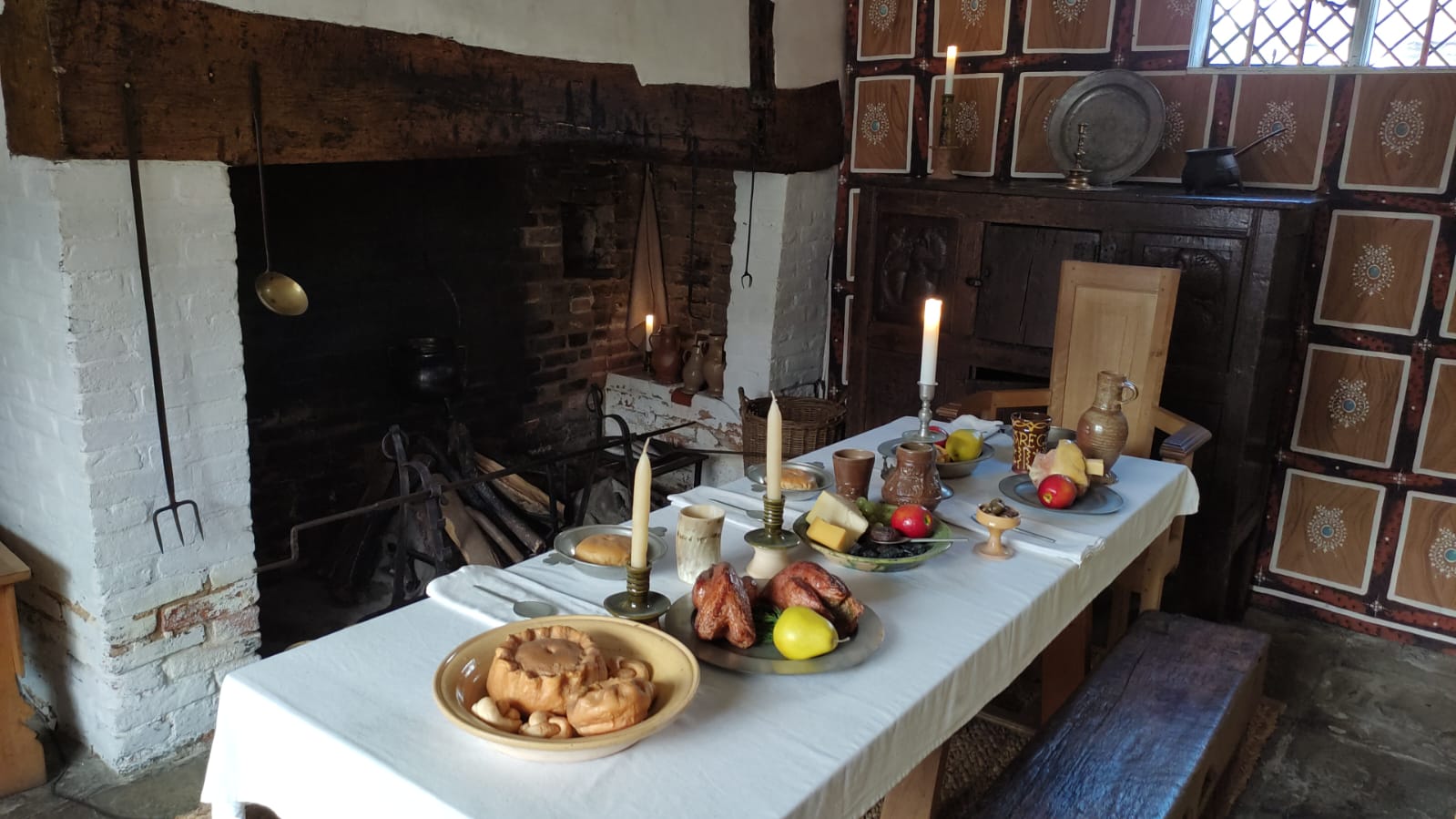
One can readily appreciate how the house served as both a home and a business venue, as Shakespeare’s father, John Shakespeare, was a glove maker and wool dealer. His workspace, along with the tools of his trade, is laid out in one of the rooms, illustrating a connection between commerce and home life in the 16th century.


Upstairs, visitors can see the room traditionally thought to be the room where Shakespeare was born. The tiny window lets in a sliver of daylight, highlighting the simplicity of the furnishings and the room’s plain walls. One can see a tiny cradle where the young one might have had his maiden midsummer night’s dream.




A literary genius who was born great
Standing in that room, it’s hard to reconcile the humble surroundings with the profound literary genius that Shakespeare would become. But as a guide explains stories from Shakespeare’s early life, you get a sense of the young boy’s curiosity and imagination—qualities that must have been nurtured in this very place. Surely, he was not someone who became great, or upon whom greatness was thrust by his Guardian Angels. Indeed, he was born great.
The garden outside the house is another lovely feature. To a fan of P G Wodehouse, it sounds like a miniature version of the ones at Blandings Castle. It is filled with plants and flowers that are mentioned in Shakespeare’s plays and sonnets. Walking through, you may recognize some of the herbs and flowers—like rosemary and pansies—from his writings. There is a sense that these natural elements inspired him, giving rise to his poetic descriptions of the natural world.
Understanding the world that shaped him makes it easier to understand how his plays reflected both the universality of human nature and the specific issues of his time.
To be or not to be
As the visit ends, scales have already fallen from one’s eyes. To be or not to be a fan of the Bard is a question which leaves one baffled, bewildered, confounded, confused, disconcerted, flummoxed, mystified, perplexed, and puzzled. In any case, one leaves with a newfound appreciation for the humble origins of William Shakespeare. His birthplace, though small and unpretentious, radiates with the legacy of a man whose works have shaped literature and drama worldwide and who is revered for his unique contributions to the Queen’s language. I am sure that he must have enriched the language in a manner that might be vaster and deeper than those who have either preceded or succeeded him. But lesser mortals like me, surely at the bottom of the English Proficiency Pyramid, are apt to feel very dense while endeavouring to devour any of his works.

However, for literary coves and linguistic purists, Stratford-upon-Avon remains a pilgrimage site, a place that celebrates not just Shakespeare’s legacy but also the power of words and stories to transcend time and space.
P G Wodehouse was one of those who held the Bard in high esteem. He once said: “Shakespeare’s stuff is different from mine, but that is not to say that it is inferior.” His frequent use of Shakespearean phrases in his stories and books merely attests to the same. Those of you who wish to explore this subject further may find this link useful.
All is well that ends well
Visiting the birthplace of William Shakespeare is more than a historical tour; it’s a journey through the formative environment of a literary legend. It provides a tangible sense of where the world’s most celebrated playwright came from and reminds visitors of the timeless influence of Shakespeare’s words, which continue to resonate across the ages.
Note: Thanks are due to Dominique Conterno, my host in the UK, who enabled this visit.
Related Posts
A Raconteur’s Riddle: Spinning Tales While Dodging Dullness and Domestic Drama: Guest Post by Suryamouli Datta
Posted in What ho!, tagged Adventure, Bangriposhi, Humour, India, Odisha, P G Wodehouse, Tourism, Travel on September 21, 2024| Leave a Comment »

Oh, the eternal conundrum of a wannabe raconteur! How to entice the dear reader with a ripping yarn, without getting bogged down in the quagmire of tedious explanations? I, for one, have frequently found myself in this very predicament, my literary endeavours stymied by the pesky queries that insist on popping up every once in a while, much like the kind of obnoxious queries raised by Aunt Myrtle of The Mating Season fame at a family gathering.
“Where, oh where, do I begin?” I cry, throwing up my hands in despair, as the words “It was a dark and stormy night” wither and die on my lips. For, you see, dear reader, I am not one of those dashed clever fellows who can effortlessly spin a tale, replete with vivid descriptions and witty asides. No, I am but a humble wordsmith, prone to getting tangled in the underbrush of my own verbosity.
Take, for instance, this endeavour of mine to regale you with the tale of our merry jaunt to Bangriposhi, a picturesque hamlet nestled in the eastern reaches of India, in the charming state of Odisha. I began, with all the confidence of a debutante at her first ball, “It was at the crack of dawn that we set forth on our journey to Bangriposhi…” only to be met with a chorus of “Wait, what’s the name of the place?” and “Why on earth did you go there?” and “Were you alone?” and so on, ad infinitum.
I confess, dear reader, that I was soon reduced to a state of utter exhaustion, my responses growing more and more feeble, like the dog Bottles of Blandings and Elsewhere fame, after it has been subjected to an excessive number of baths. “Well, you see, it was like this… we were in couples, and didn’t have any kids, so… er… yes, I suppose we did enjoy the scenery…” Ugh, the very thought of it makes me shudder!
But fear not, dear reader, for I have since sought the counsel of a wise and venerable sage, who has imparted upon me the ancient secrets of storytelling. And thus, with a renewed sense of purpose, let me share with you with the tale of our Bangriposhi adventure, sans the tedious interruptions.

The halcyon days of Bangriposhi, where the scenic beauty unfolded like a tantalising tapestry, precisely as one would expect. A diminutive jungle, a cosy cottage, and a caretaker-cum-chauffeur, along with his better half, all combining to create an ambience reminiscent of the cinematic masterpiece, “Days and Nights of the Forest.” Our merry band of five families, sans the tiny terrors, converged upon this idyllic setting, our camaraderie forged in the crucible of our apartment complex in the bustling metropolis we infest. And yet, I confess, I felt as out of place as a toupee on a turtle’s head. The crowd, you see, was not exactly my cup of tea. Initially, I attributed this unease to my introverted nature, which, I feared, was not quite in harmony with the group’s collective psyche.
But, as I delved deeper into the mystery of my discomfort, I discovered that the root of the problem lay not with the group, but with my trusty sidekick, my wife. It was as if Bertie Wooster, sans Jeeves, had embarked on an adventure with the formidable Aunt Agatha in tow. Now, before you label me a bounder for making such a statement, permit me to explain. I have conducted an exhaustive study of my own psyche (well, as exhaustive as one can be when sipping tea and nibbling on biscuits) and discovered that, on occasion, I have mingled with groups with the élan of a seasoned socialite. So, what was the source of my trepidation this time around?
The answer, my friends, lay in the confidence-sapping presence of my wife, who, I dare say, is otherwise an epitome of virtue and rectitude. You see, in days of yore, my confidence was fuelled by those devilish cigarettes, but with my wife by my side, even the thought of those white sticks with filters at the end was tantamount to committing a mortal sin. I felt like Ignatius Mulliner, craving a smoke, but acutely conscious of the weight of my self-esteem, lest I incur the displeasure of my better half, which might precipitate a domestic turbulence of epic proportions.
In short, I was a man torn asunder by the conflicting desires of his heart and the stern dictates of his conscience, all the while attempting to navigate the treacherous waters of matrimonial bliss. Ah, the trials and tribulations of being a married man!

Many of you may agree with me when I say that maintaining a stiff upper lip in the face of impending lunacy is something that could test the resilience of even those who are made of sterner stuff! I was, in a word, a bit of a mess, rather like Ignatius, that talented but temperamentally-challenged nephew of Mr. Mulliner. It seemed that with each tick of the clock, my grip on sanity was slipping, much like a chap trying to cling on to a greased pig at the village fair. But, by Jove, I was determined not to let the good people around me catch on to my internal turmoil. No, no, I played it cool, a regular mask of tranquillity, all the while thinking, “Good fellow, you’re one step away from being carted off to the loony bin!” If any of the group members had indeed caught onto the kind of inner torment I was experiencing, services of someone configured along the lines of Sir Roderick Glossop would surely have been sought.
And, I must confess, it’s a dashed difficult thing to do, this keeping-a-stiff-upper-lip business. I daresay, that’s why the bachelor chaps always seem so carefree – they can let their hair down, as it were, and express themselves without fear of being thought a bit…well, dotty. Alas, I felt like Horatio, constantly on the lookout for signs of my own Hamlet-esque madness bursting forth from its hiding place.
As a result, the kindly hospitality of our homestay hosts was rather lost on me. I’m afraid I responded to their warm overtures with all the enthusiasm of a sleepy sloth, muttering the occasional “thanks” and “so kind of you” in a tone that suggested I’d rather be undergoing a root canal without anaesthesia. In short, I was about as far from being my natural self as a fish is from flying. But, by George, I managed to keep the old mask in place, even if it was held together with nothing more than a few threads of sanity and a healthy dose of British pluck!
The dashed awkwardness of it all! I’m afraid I’ve made a thorough ass of myself by presenting myself in this tranquil and inviting setting, looking for all the world like a chap who has the look of one who had drunk the cup of life and found a dead beetle at the bottom. My companions, no doubt, had been hoping to indulge in a spot of idle chatter or a hearty guffaw or two, but instead, they were stuck with a fellow who resembled a fugitive from a particularly dismal funeral procession. I daresay, they must be thinking, “Good heavens, what’s got into this blighter? Has he been taking elocution lessons from a dyspeptic owl?” Ah, the horror! The shame! I might as well have worn a T-shirt proclaiming, “I’m a killjoy, avoid me at all costs!”

As luck would have it, on a rainy day when any outdoor expedition was ruled out, the group decided to play Antakshari, a game based on songs. Amidst the dampness all around, some inner clouds of despair also gathered, leading to a veritable tempest of tune-less-ness. I, a vocal virtuoso of the most dubious sort, found myself floundering in the depths of Antakshari despair. My usually trust-worthy memory, capable of recalling the most obscure ditties with the precision of a Swiss watch, had apparently gone on a spot of holiday, leaving me high and dry, like a chap who’s misplaced his favourite umbrella on a drizzly day. The lyrics, those pesky little devils, seemed to vanish into thin air, rather like Dr. Watson’s hasty estimate of James Mortimer’s age, which, if I recall rightly, went up in smoke the moment the good doctor cast his eye on the fellow in person.
As I stumbled from one musical misstep to the next, I felt my Superman cape fluttering to the ground, leaving me exposed, a mere mortal, stripped of my melodic mojo. It was a bit like Napoleon’s ill-fated Waterloo campaign, only instead of cannons and cavalry, I was facing a barrage of bemused glances and stifled giggles from my opponents. The ‘War of Songs’, that most noble of pursuits, had reduced me to a quivering mass of uncertainty, a chap who couldn’t carry a tune in a bucket, let alone emerge victorious in the fray.
The tribulations of a chap on holiday! As the inimitable Bertrand Russell so sagely observed, “The wise man will be as happy as circumstances permit, and if he finds the contemplation of the universe painful beyond a point, he will contemplate something else instead.” Ah, but what happens when the universe, in all its inscrutable wisdom, decides to play a trick or two on one?

On the final day of our jaunt, I found myself in a state of utter despondency, feeling as though I’d lost my own identity in the great vortex of travel. The atmosphere around me had grown as heavy as the infamous London fog, with nary a glimmer of sunshine in sight. It was as if the very clouds themselves were conspiring against me, refusing to yield even a single, solitary yellow gap which would allow a ray of sunshine to creep in and dispel the darkness of my melancholy. And then, like a beacon of hope, I chanced upon Russell’s wise words, reminding me that when the weight of the world becomes too much to bear, one must seek solace in more pleasant pursuits.
For me, that pleasant thought was a nice, long soak in the tub. Ah, bliss! We’d been cooped up in that confounded place for a couple of days, and I’d already indulged in a pre-trip scrub at home, but now, I was determined to treat myself to a good, old-fashioned bath. I became as resolute as a bulldog guarding its favourite bone, refusing to budge until I’d had my fill of hot water and soap. Much like Bertie Wooster, you would have found me soaping a meditative torso and even belting out something along the lines of Pale Hands I Loved Beside the Shalimar, if you know what I mean.
Almost all of our scriptures exhort us to introspect and meditate on the state of affairs in one’s life. Being a firm believer, I daresay there is no place other than the bathroom where one could experience this bliss and have an uninterrupted conversation with the universe, thereby giving a boost to one’s Spiritual Quotient.
Alas, my companions, those dear, long-suffering souls, grew anxious at my intransigence, their faces as long as a wet weekend in Brighton. My wife, that paragon of patience, took centre stage, her eyebrows shooting up like a warning flag on a stormy day, signalling to me that I was being, well, a bit of a cad. But I, like Bertie Wooster in his most obstinate moments, chose to ignore her gentle remonstrations, much as he would have disregarded Jeeves’ sage advice on the perils of donning a white mess jacket with brass buttons.

The tension was palpable, the air thick with the weight of my own stubbornness. I can only imagine the trauma I inflicted upon my fellow travellers, who, in their infinite wisdom, chose to support my wife’s sensible entreaties over my own, ahem, principled stance. And yet, at the time, I felt the kind of hollow defeat that plagues a character from R.K. Narayan’s stories—like a weary clerk who, after dodging creditors, losing his lunch money, and missing the last bus, drags himself home only to find the milk curdled and the fan creaking in the sweltering heat.
But fate, in its infinite mercy, intervened, and the caretaker’s wife announced that they were running low on fuel, and hot water was a luxury we could ill afford. With a sigh that was equal parts relief and frustration, I beat a hasty retreat, my dignity bruised.

And so, dear reader, we come to the end of this tale of woe, a chronicle of one man’s valiant struggle to maintain a stiff upper lip in the face of impending lunacy. As I reflect on the trials and tribulations of our Bangriposhi adventure, I am reminded of the wise words of that great sage, G.K. Chesterton: “The only way to be sure of catching a train is to miss it.” Ah, the profound wisdom of those words! For, in the end, it was not the scenic beauty of Bangriposhi, nor the camaraderie of our merry band, that proved the greatest challenge, but rather the internal turmoil of my own mind, aided and abetted by my better half. When everyone took my wife’s side instead of mine, in that moment of extreme insult, I was reminded of the following words by P.G. Wodehouse:
Are wives often like that? Welcoming criticism of the lord and master, I mean?’
‘They are generally open to suggestion from the outside public with regard to the improvement of their husbands, sir.’
Note: Images courtesy of the World Wide Web we have spun around ourselves.
Related Posts:
Joy in the Evening – A meeting of Plum fans in Kolkata, India
Posted in What ho!, tagged Calcutta, Fans, Humour, India, Kolkata, Kwality, P G Wodehouse, Park Street, Travel on December 29, 2023| 4 Comments »
Come festive season and a new Yuletide spirit casts its spell over Homo sapiens every year. A spirit of outwardly cheerfulness and goodwill prevails. Fresh rays of hope penetrate through the dense clouds of gloom. Concerns of eking out a living fade away, giving way to a transient resurgence of happiness. Relationships get nurtured afresh. Networking concerns reign supreme.

Kolkata, the erstwhile second city of the British empire, is no exception. For those enlightened souls who are already well-versed in the seasonal predicament that plagues the illustrious Park Street in Kolkata, no further elucidation is necessary. On the brightly lit street, one is apt to see spirited pedestrians deftly trying to avoid colliding with the ones coming from the opposite side, thereby re-affirming Nature’s law that a given spot on a given plane shall at a given moment of time be occupied by only one body. One can spot hassled drivers manoeuvring shimmering limousines as well as old jalopies which are crawling along at a speed which would make a tortoise glance at them in a supercilious manner.
In brightly lit departmental stores, befuddled customers can be seen getting lured by hefty but deceptive discounts. One may feel a sense of pity for the hassled husbands hidden behind a huge pile of shiny gift packets dutifully following their wives to the nearest billing counter. Lobby managers in hotels and restaurants can be seen perspiring, trying to manage the queue of weary shoppers pouring in, looking for something to put down the hatch.
Those peddling street foods of all kinds can be seen doing brisk business. Amidst all the razzmatazz, one can see quite a few pavement book sellers sit idly, having a forlorn look in their brooding eyes, as if contemplating the divine. Kolkata may pride itself on being a city of intellectuals but perhaps there are times when the festive cheer takes over the collective spirit of its inhabitants, suppressing their innate yearning for intellectual upliftment.
As opposed to the infernal din on Park Street, the ambience inside the hallowed establishment known as ‘Kwality’ was serene and cosy. If the government ever instituted an award for a successful and victorious entry into the equivalent of the Drones Club of Kolkata, its first claimants would surely be the five brave souls who could make it on the occasion.

Those turned up included a prominent beak who, had she been cast as Aunt Dahlia in one of Plum’s theatre adaptations, would have been spectacularly popular, a school principal in the mould of Rev. Aubrey Upjohn, a senior educationist in the realm of milk of human kindness, an IT expert who is devoted to his family as much as Bingo Little happens to be, and yours truly.
All those present were punctual, jovial, and exhibited a proclivity for rolling on the floor in fits of laughter (figuratively, of course). The gleeful yelps emanating from them often made other patrons seated on the nearby tables raise their eyebrows a quarter of an inch. Their indulgences were not limited to the culinary delights of Darjeeling tea and delectable fish fingers. Their minds were nourished by scintillating conversations and an abundance of references to literary treasures dished out not only by Plum but also by many others. Movies steeped in a Wodehousean spirit, or the ones inspired by his works, came up for discussion.
They spoke of Wodehouse and his influence on all of them. The challenges of translating his works were discussed. Surprise was expressed when one spoke of some creatures who do not like him, primarily owing to the language being a bit dated and many plots appearing to be copy-and-paste jobs. Information about the Bengali film Rajat Jayanti directed by Pramathesh Barua, which was an adaptation of Money for Nothing, was shared. Sakher Chor by Uttam Kumar, which bears a significant resemblance to A Gentleman of Leisure was mentioned.
The beak spoke with great enthusiasm about the famed Bengali cuisine and about her meetings with other fans located in Bengaluru and Delhi. The eminent educationist shared the kind of work he does to uplift the intellect level of his students at one of the premier institutes of management in India. The principal, who has just published a book of short stories, spoke briefly of challenges of taming lions and lionesses in our liberal times. Bingo Little gave a detailed account of works in Bengali literature and movies which happen to be inspired by Plum.
They listened with some interest to a brief account of my recent pilgrimage to Dulwich College. This made them recall another famous alumnus of that esteemed institution, Raymond Chandler, which took them to Humphry Bogart and Philip Marlow.
Suffice it to say that it was a feast of Reason and flow of Soul which was never punctuated by intervals of uncomfortable silences which arise when all the members are meeting each other for the first time.
Who says that joy cometh only in the morning? It also comes in the evening, especially if it is an occasion when fans of Plum meet, that too in a metropolis which is often alluded to as the City of Joy.
(Inputs from Ms Indrani Ganguly and Mr Suryamouli Datta are gratefully acknowledged.)
Related Posts:
The Indian Curry Dished Out by P. G. Wodehouse
Posted in What ho!, tagged Army, Behavioural Traits, British Raj, Buddhism, Civil Disobedience, Civil Services, Conversations, Customs, English, Fakirs, Fauna, Handicrafts, Hindus, Humour, Hunting, Idols, Independence, India, India Rubber, Indian Clubs, Indian Ocean, Love Calls, Men In Uniform, Mutinies, Mystic Powers, Mythology, NWFP, P G Wodehouse, Partition, Priests, Rabindranath Tagore, Regional Languages, Royalty, Superstitions, Taj Mahal, Temples, Translations, Travel, Vedas on August 31, 2021| 6 Comments »
What ho!
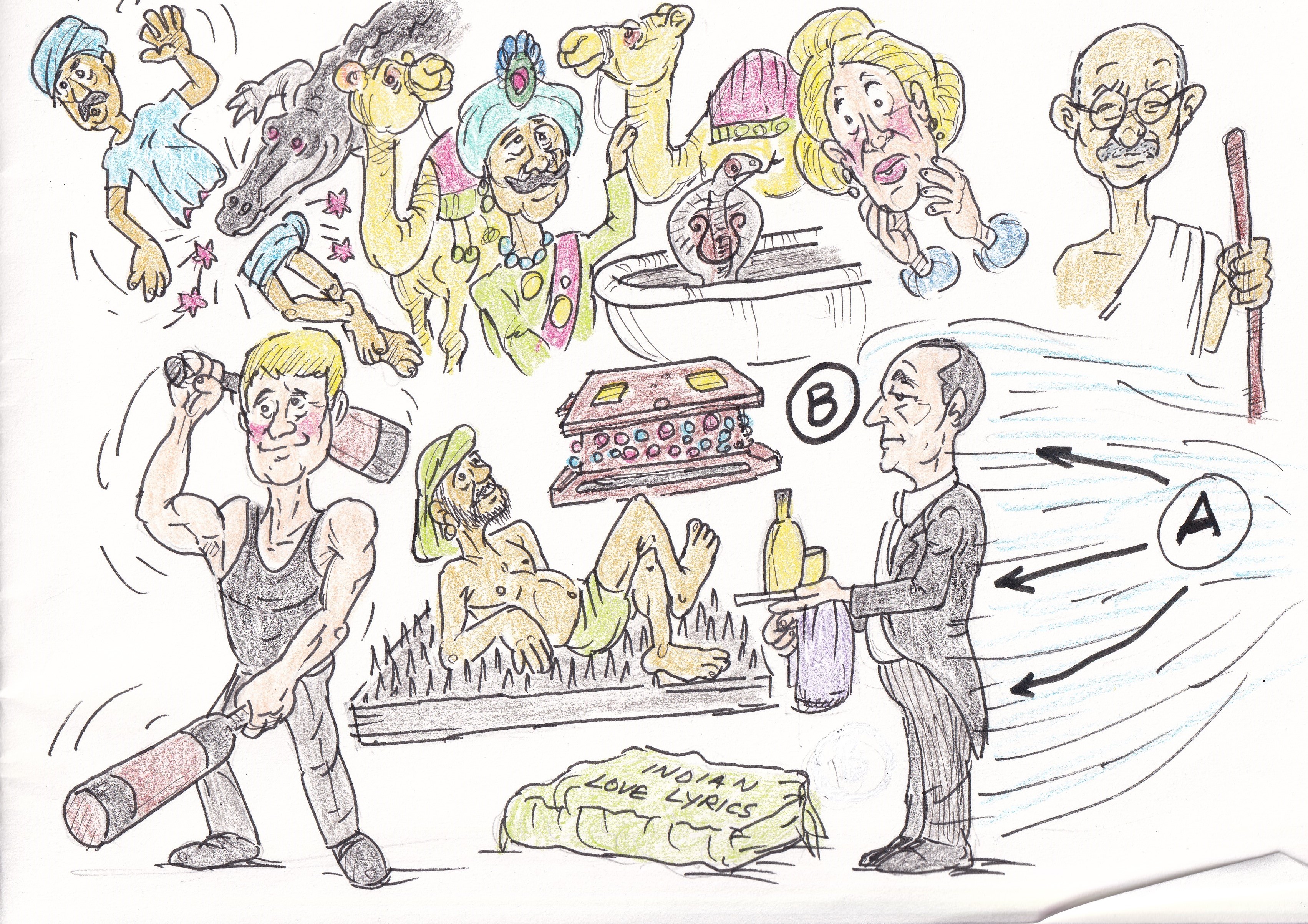
To the best of my knowledge and belief, P. G. Wodehouse never set foot on Indian soil. But he has often alluded to its exotic temples, its wildlife, its royalty, its fakirs and mystics with magical powers, and even its love lyrics. Many times he has vividly captured facets of my beautiful country, serving up a delectable curry spiced with uniquely Indian condiments.
In this essay, the reader will find a random sample of references to India in Wodehouse’s novels and short stories. Such references are found across all his narratives, whether he is writing a Jeeves and Bertie story, a tale of Blandings, or a stand-alone novel.
Plum’s Indian Connection
Plum’s elder brother, Ernest Armine Wodehouse, was an English Theosophist, poet and educator. He is better known as the tutor of Jiddu Krishnamurti, the famous Indian author and lecturer on spiritual and philosophical subjects. He was admitted to the Theosophical Society at Poona (now Pune) in 1908. Before the First World War, he held a position as professor at Deccan College in Poona, India. After the war he returned to India. One can understand the source of Plum’s inspiration when he named one of his pet cats as Poona.
One of the important landmarks on Wodehouse Road in the Indian city of Mumbai is the Cathedral of the Holy Name. The seat of the Archdiocese of Mumbai, the cathedral is one of the most striking churches of the city. Its foundation stone was laid in 1902. It had then come to be known as the Wodehouse Church since it was located on Wodehouse Road, named after Sir Philip Edmond Wodehouse who was Governor of the Bombay Presidency from 1872 to 1877. He was a distant relative of Plum’s. Sometime back, the road was renamed Nathalal Parekh Marg.
Few writers have Plum’s mesmerizing command over English. He uses it in an innovative manner, leaving the reader steeped to the gills with an overdose of Vitamin H(umour). It comes as no surprise that English-speaking Indians who are aware of his works simply adore him.
One of the unique features of India is its linguistic diversity. By default, English is the sole means of communication between different people from across the country. It acts as a bridge between large chunks of its 1.4 billion people who otherwise speak as many as 447 languages. Of these, 22 happen to be scheduled ones, deserving official recognition and support. Six languages – Kannada, Malayalam, Odiya, Sanskrit, Tamil and Telugu – are recognized as classical ones. English being a prominent link between people, Plum’s popularity in India is readily understandable.
But we digress. We are here to consider the kind of ingredients Plum uses while dishing out an Indian curry.
Some Indian fans of P G Wodehouse who have a chin-up attitude like that of Bertie Wooster and also a hearty capacity to laugh at themselves may appreciate the kind of India-centric similes Wodehouse uses at times to depict the behaviour of his characters.
In reading what follows, it may be advisable for readers to imagine themselves taking a leisurely stroll through either the Shalimar or the tulip gardens of Kashmir, or the Mughal Gardens in New Delhi, relishing the enchanting aroma of each section at a time.
The Indian Curry
Idols, Temples and Priests

Religious fervour is one of the main strands in the socio-cultural tapestry of India. One of its many unique features is its vast pantheon of gods and goddesses, its handcrafted and bejewelled idols, its magnificent temples and its overzealous priests.
- In Ring for Jeeves, Rory speaks to Monica of a story published in The Strand Magazine in which a gang of blighters pops over to India and pinches a great jewel which is the eye of an idol. When one of the gang is deprived of his share in the booty, he seeks revenge by tracking down all the others and wiping them out. Rory is of the opinion that Captain Biggar is likewise casting a vengeful eye on Bill, as if the latter had denied the former his share of the proceeds of the green eye of the little yellow god in the temple of Vishnu.
- The feisty heroine of Something Fresh, Joan Valentine, acts as a muse for Ashe Marson when he suffers from a temporary writer’s block. She suggests that ‘The Adventure of the Wand of Death’ can only be about the sacred ebony stick stolen from an Indian temple which is supposed to bring death to whoever possesses it. Priests dog this person and send him threatening messages. Yet another episode of the adventures of Gridley Quayle, Investigator, gets dished out by Ashe.
- Mr. Chinnery of Summer Moonshine is said to be an enormously rich person in spite of the incessant demands placed on his income by a platoon of ex-wives to whom he has to keep paying alimonies. Notices keep getting served on him in that respect. He suspects Mr. Bulpitt to be following him to serve yet another notice and shares his discomfiture with Sir Buckstone. He describes his latest encounter with Mr. Bulpitt as that of someone who steals the jewel and thinks he has hidden himself rather well, only to look over his shoulder to find some sinister Indian priests around the corner.
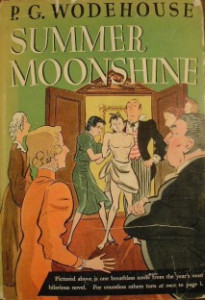
Indian fauna such as spiders, scorpions, cobras, elephants, tigers, cheetahs and lions regale the reader across many of Plum’s narratives. Princes and maharajas of yore also find a mention occasionally.
- Take the example of Summer Moonshine’s Colonel Tanner, who, during his tenure in India under the English Raj, had learnt to be comfortable with the presence of Afridis, snakes, scorpions and even tigers in his sleeping quarters. Members of these species would ‘saunter into his abode as if it were a country club to which they had paid the entrance fee’.
- In Thank You, Jeeves, Chuffy introduces Bertie to Sergeant Voules, who claims to have tackled as many as ninety-six big spiders while in India. Bertie’s protests that he is unable to sleep in his own bedroom because there is a big pink spider lurking around there (indirectly referring to Pauline Stoker, Chuffy’s fiancée, in his heliotrope pajamas!) get ignored. He gets hauled back to his bed. Luckily for all concerned, Pauline has already done the vanishing trick by then.
- In Aunts Aren’t Gentlemen, we come to know that Cook’s horse Potato Chip and Briscoe’s horse Simla are going to compete in a race at Bridmouth-on-Sea. Eventually, the race gets awarded to Simla after Cook’s cat runs across the racecourse and startles Simla. Aunt Dahlia wins her bet. Some of you may know that Simla (or, Shimla) is the name of a popular hill resort in northern India. It was once the summer capital of British India. Elsewhere, in the same narrative, Orlo Porter runs into Bertie Wooster and is as startled as an Indian native who sees a scorpion in his path. He goes on to ejaculate: ‘Wooster, you blasted slimy creeping crawling serpent, I might have expected this!’
- What does an Indian native do when bitten by a scorpion? In Uneasy Money, Plum tells us that ‘He does not stop to lament, nor does he hang about analysing his emotions. He keeps running until he has worked the poison out of his system. Not until then does he attempt introspection.’ The amiable Lord Dawlish, after a rather unpleasant meeting with Lady Wetherby, follows a similar policy. After leaving her house, he does not run. Instead, he takes a very long and rapid walk. He has an acute sense of being poisoned and wishes to work the poison out of his system. He has nothing on his mind other than walking faster and faster.
- In Jeeves and the Feudal Spirit, Ma Trotter, upon going through a morning journal, discovers that the powers that be have gone ahead and knighted Robert Blenkinsop instead of her illustrious husband. ‘She stares at The Times much like an Indian resident would eye a cobra, had he found it nestling in his bath tub’.
- On his part, the husband, L. G. Trotter, is a man who suffers from dyspepsia and is already out of harmony with his wife. The latter screaming her head off in the middle of the breakfast startles him, making him give her ‘the sort of look the cobra might have given the resident of India who had barged in on its morning bath.’
- In Bachelors Anonymous, we run into Mr. Ivor Llewellyn, head of the Superba-Llewellyn studio of Hollywood. Having suffered through as many as five divorces, he wishes to remain a bachelor. However, upon Joseph “Joe” Pickering’s insistence that he visit a hospital, Cupid strikes yet again. He ends up proposing to Amelia Bingham, a nurse he comes in touch with at the hospital. He squarely blames Joe for having got him entangled into yet another prospect of marriage. Upon return, he, like L G Trotter before him, looks at Joe with an open dislike, much like a resident of India registers ‘when he comes to have his morning bath and finds a cobra nestling in the bath tub.’
- In Galahad at Blandings, as also in Pigs Have Wings, Plum says that Beach never buzzes off, ‘his customary mode of progression being modelled on that of an elephant sauntering through an Indian jungle.’
- As per Meet Mr. Mulliner, as well asthe story ‘Gala Night’ in Mulliner Nights, when royalty goes a-hunting, it expects to be supported by elephants which display an easy nonchalance when their masters spot a tiger in an Indian jungle. But there are times when such hunting expeditions get spoiled by ‘the failure of the elephant to see eye to eye with its owner in the matter of what constitutes sport.’
- How does one avoid the prospect of an elephant turning and galloping home? How does one ensure that a timid elephant would instead trumpet loudly and charge the fiercest tiger without any hesitation, ‘facing the tiger of the jungle with a jaunty sang-froid?’
- Wilfred Mulliner has a solution in the form of a tonic known as Mulliner’s Buck-U-Uppo. Were a teaspoonful of it be mixed with the morning bran-mash, better results ensue.
- Sunset at Blandings tells us how one feels when one is likely to face the prospect of facing a formidable person like Dame Daphne Winkworth. If Gally is to be believed, one would find oneself in the position of a native of India who knows that a tigress is lurking in the undergrowth near at hand and wonders how soon she will be among those present.
- In Big Money, when Berry acts like a buoyant and aspiring sportsman in the jungles of India who has caught a tiger by its tail, he realizes that even though all has been well so far, his next move would need careful consideration.
- Uncle Dynamite records the reaction of Sir Aylmer when being told by Lord Ickenham that he would go a hundred miles to judge bonny babies. This thwarts the ambitions of Sir Aylmer no end. He starts ‘like a tiger that sees its Indian villager being snatched away from it.’ His face, already mauve, becomes an imperial purple.
- Uncle Dynamite also describes the emotions of Hermione, a young authoress, who finds that her royalty earnings are likely to go up substantially but her father is conniving to rob the publisher of his means to publish her work. Her feelings are said to be even more poignant than those of ‘wolves which overtake sleighs and find no Russian peasant aboard and of tigers deprived of their Indian coolie just as they are sitting down to lunch.’
- In Full Moon, Freddie, at Gally’s suggestion, smuggles Bill Lister back into Blandings Castle disguised as a false-bearded gardener, having paid off Angus McAllister. Lister soon ruins things, however, when he mistakes Veronica’s mother, Lady Hermione, for a cook and tries to bribe her to pass a note to Prudence.
- Later on, when Freddie appears to be whole-heartedly welcoming Lister after the latter has been asked to leave, Lady Hermione is found twitching her hands and has gleaming eyes. She is then likened to the puma of an Indian jungle about to pounce upon its prey.
- In Piccadilly Jim, Jimmy has a unique style of proposing to Ann. He points out that if he were to go out of her life, she would be miserable. She would have nobody to fight with. She would be like the female jaguar of the Indian jungle who expresses her affection for her mate ‘by biting him shrewdly in the fleshy part of the leg, getting a shock one day to find that the mate has simply vanished.’
- In ‘The Story of Cedric’, Mr. Mulliner Speaking, when Cedric crawls on all fours on the floor, his teeth are clenched and his eyes gleam with a strange light, he is said to look like an ‘exact replica of the hunting cheetah of Indian jungle stalking its prey.’
- In the same narrative, when he cries out aloud, he sounds like an Indian peasant who, ‘while sauntering on the banks of the Ganges, suddenly finds himself being bitten in half by a crocodile.’
- ‘Leave it to Algy’, A Few Quick Ones depicts Purkiss, having handed over a five-pound note to Bingo, giving a defiant look at Algernon Aubrey. His look gets likened to that of an Indian coolie, who, when he is safe up a tree, may give it to the baffled crocodile at its foot.
- In The Girl in Blue, Jerry chooses to celebrate his triumph at the grill room of the Barribault’s which is said to be a ‘stamping ground of Texas millionaires and Indian Maharajas.’
- In Luck of the Bodkins, Mr. Llewellyn wonders if his sister-in-law has ‘mistaken him for Rockefeller, Pierpont Morgan, Death Valley Scotty or one of those Indian Maharajas.’
- In Bachelor’s Anonymous, Sally realizes the true nature of Joseph Pickering while sitting in the lobby at Barribault’s, infested by Texas millionaires and Indian maharajas.
- In Pearls, Girls and Monty Bodkin, Monty waits for Gertrude to show up in the lobby of Barribault’s world-famous hotel, the doors of which normally swivel around only to admit Texan millionaires and Indian Maharajas. The doors then revolve yet again to admit an elderly man with a face like a horse, Mr. J. B. Butterwick, who promptly proceeds to inform him that Gertrude will not be lunching with him on the day.
- The story The Man Who Disliked Cats in The Man Upstairs speaks of Hotel Jules Priaulx in Paris. When rich people of any nationality come over to stay there, they often bring their pets along with. If an Indian prince has two dromedaries for company, the other one brings along a giraffe. The giraffe is reported to drink a dozen of the best champagne every day, so as to keep his coat in good shape. Young lions and alligators also pop up once in a while.
Of Civil Disobedience and Mutinies
Till the year 1947, India was under the British Raj. The period was marked by Indians struggling to gain independence through means which were peaceful as well as violent. From 1920 onwards, the self-rule struggle was characterized by Mahatma Gandhi’s policy of non-violence and civil disobedience, duly complemented by several other campaigns.
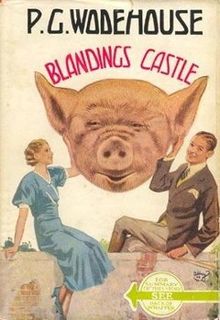
- When people are hungry, they become angry. They want to go out and fight. This could even be true of Mahatma Gandhi, who is given a singularly juicy mention in ‘The Juice of an Orange’ in Blandings Castle and Elsewhere.
While narrating the story of Wilmot Mulliner, Mr. Mulliner blames the modern dieting craze of women for all the unhappiness which afflicts the world.
‘Women, of course, are chiefly responsible. They go in for these slimming systems, their sunny natures become warped, and they work off the resultant venom on their men-folk. These, looking about them for someone they can take it out of, pick on the males of the neighbouring country, who themselves are spoiling for a fight because their own wives are on a diet, and before you know where you are war has broken out with all its attendant horrors.
‘This is what happened in the case of China and Japan. It is this that lies at the root of all the unpleasantness in the Polish Corridor. And look at India. Why is there unrest in India? Because its inhabitants eat only an occasional handful of rice. The day when Mahatma Gandhi sits down to a good juicy steak and follows it up with roly-poly pudding and a spot of Stilton you will see the end of all this nonsense of Civil Disobedience.
‘Till then we must expect Trouble, Disorder … in a word, Chaos.’
- Mahatma Gandhi’s dietary habits come under the Wodehousean lens yet again in Right Ho, Jeeves. Bertie tries to mend the ties between Tuppy Glossop and Angela by advising the former to forsake the pleasures of the table. When immediate results are not obtained, he motivates Tuppy by citing the example of Gandhi who, according to him, has not had a square meal for years!
- Those who are familiar with the Indian mutiny of 1857 may recall that the Siege of Cawnpore is one of its key episodes. The British forces and civilians in Cawnpore (now Kanpur) were unprepared for an extended siege and surrendered to rebel forces in return for a safe passage to Allahabad (now Prayagraj), another city nearby. As a rescue force approached Kanpur, an unfortunate massacre took place, leading even to a war cry ‘Remember Cawnpore’. On at least two occasions, Plum captures the sentiments of elation experienced by girls under siege in Kanpur when they hear the sound of the bagpipers of the British reinforcements.
The Girl in Blue describes how an authoress feels when she finds that a horn-rimmed American is trying to locate a copy of her latest book Daffodil Days. Flannery and Martin’s book shop in Sloane Square in London does not stock her latest brain child but when a stranger walks in and asks for it, Vera Upshaw is thrilled beyond measure.
She whips around, her lips part, her eyes widen and her lovely body experiences a tingling of sorts. Her sentiments get compared to the thrill a girl would have experienced when, in the midst of the Indian Mutiny, during the siege of Cawnpore (Kanpur, 1857), she would have heard the skirl of the bagpipes, heralding the arrival of British reinforcements.
In Pearls, Girls and Monty Bodkin, similar uplifting sentiments are experienced by Monty when he suddenly finds a friend and sympathizer in Mr. Llewellyn.
Men in Uniform, the North Western Frontier Province (NWFP) and Hunting

Military men who had served in India as part of their duties tell us interesting anecdotes about that distant land, including about their time in the NWFP. The latter was a province of British India from 1901 to 1947, when it was ceded to Pakistan. Hunting was a common pastime. Some such references enrich many of Plum’s narratives.
- In Right Ho, Jeeves, while allaying the fears of Gussie that his trousers will split while delivering a speech at the Market Snodsbury Grammar School, an example is cited by Bertie Wooster – that of General Bosher, who was a D.S.O. (Distinguished Service Order), ‘with a fine record of service on the north-western frontier of India, and his trousers split.’
- In ‘Ukridge and the Home from Home’, Lord Emsworth and Others, we find that Ukridge has turned his Aunt Julia’s house into a hotel. Amongst the six guests, we find one Lieutenant-Colonel B. B. Bagnew, late of the Fourth Loyal Lincolnshires. In Ukridge, we find a suave and genial host, presiding over the dinner-table on most nights. As and when the conversation in the group ‘touched a high level and feasts of Reason and flows of Soul occurred’, one of the major contributors was the Colonel. He narrated his anecdotes of India, where he had served his country faithfully and well.
- In the same story, Ukridge tells Corky that Indian army men are not to be trusted. He thinks that all of them believe themselves to be heroes. Hence, they get greatly disliked. He cites Lieutenant-Colonel B. B. Bagnew’s clear views on lesser mortals like burglars. The Colonel is of the view that if he were to ‘show them a good old army revolver, they would run like rabbits.’
- In ‘Trouble Down at Tudsleigh’, Young Men in Spats, Freddie Widgeon gets formally introduced by Lady Carroway to Captain Bradbury from the Indian Army. He is competing with Freddie for the affections of April. Freddie believes that the Captain might have such advantages as a natty moustache, a rich tan and deep-set eyes, but what bowls over a refined and poetical girl is a refined soul. He intends to devour Tennyson over the next few days and be equivalent to six souls so as to beat his rival hollow.
- At the end of a get-together, Captain Bradbury draws him aside and gives him the sort of look he would have given a Pathan discovered pinching the old regiment’s rifles out on the North-Western Frontier. He also mentions to Freddie that he had won the Heavyweight Boxing Championship of India earlier
- In the same narrative, one gets to learn that when one is up against one of the Indian Army strategists, one realizes how thoroughly they get trained from early youth to do the dirty on the lawless tribes of the North-Western Frontier. Captain Bradbury, when outfoxed at the door, is not one to beat a hasty retreat. Rather, he tries to outflank Freddie by trying to enter through the sitting-room window.
This is how Plum describes the aftermath:
‘But the interchange of glances did not last long. These Indian Army men do not look, they act. And it has been well said of them that, while you may sometimes lay them a temporary stymie, you cannot baffle them permanently. The Captain suddenly turned and began to gallop round the corner of the house. It was plainly his intention to resume the attack from another and a less well-guarded quarter. This, I believe, is a common manoeuvre on the North-West Frontier. You get your Afghan shading his eyes and looking out over the maidan (field), and then you sneak up the pahar (mountain/hillock) behind him and catch him bending.’
- In the story ‘Bill the Bloodhound’ in TheMan with Two Left Feet, we meet Henry, a private detective. He happens to be shadowing Walter Jelliffe, one of the cast of a touring play, at the request of Walter’s wife. When Henry is dressed up as an old Indian colonel and is fondling his silver moustache and contentedly puffing away at a cigar provided by Walter himself, the latter finds him comfortable enough to pop the question. ‘And now tell me, old man, which of us is it you’re trailing?’
- In Summer Moonshine, Colonel Tanner tells Mr. Waugh-Bonner about his life in Poona (now Pune), while Mr. Chinnery plays croquet with Mrs. Folsom. Throughout the narrative, he speaks enthusiastically of his life in the city, supplementing the spoken word with a display of photographic snapshots illustrating conditions in those parts. He also speaks of the Bengal Lancers, a regiment of the British Indian Army.
- Captain Biggar, one of the several unique characters in Ring for Jeeves, loves hunting. One would never get surprised to run into him ‘in such hunting grounds as in Kenya or Malaya or Borneo or India’! It would be perfectly in order.

The Indian Ocean surrounds India on most of its Eastern, Southern and Western sides. It is the third largest of the world’s oceanic divisions. Often, cyclones and tsunamis come about, enabling water, one of the five elements of nature, to demonstrate its disastrous powers. Plum uses this to comic advantage.
- In Jeeves in the Offing, Kipper, upon seeing the newspaper announcement of the engagement of Bobby Wickham and Bertie, writes a stinker to her. Bobby Wickham takes umbrage. She takes his head off and Kipper experiences something akin to that of facing a typhoon on the Indian Ocean. She promptly announces her intention to get married to Bertie and returns Kipper to store. Jeeves, who is off to Herne Bay on a vacation, gets promptly roped in and helps Bertie Wooster to avoid a saunter down the aisle.
- In ‘Feet of Clay’, Nothing Serious, Captain Jack Fosdyke tells Agnes Flack of the time he saved Princess della Raviogli in the Indian Ocean. He claims that ‘there were half a dozen sharks horsing about then and behaving as if the place belonged to them’. He claims to have used a Boy Scout pocket knife to teach them a lesson or two.

Indian scriptures often use the Sanskrit term ‘siddhi’ to signify either a remarkable accomplishment or a singular proficiency attained by an aspirant. These could be material, paranormal, supernatural or magical in nature, attained by such practices as meditation, yoga and intense ‘tapas’ (austere practices).
Such attainments could include the ability to reduce one’s body to the size of an atom or even become invisible, to become infinitely large, to become weightless or lighter than air, to instantaneously travel or be anywhere at will, to achieve or realize whatever one desires, to control nature, individuals, organisms, etc., and also the ability to control all material elements or natural forces.
Like much else, this facet of India is also used by Plum to amuse, elevate and entertain his readers.
Floating Around Like a Gas
One of the sterling qualities of Jeeves is that of quietly popping up as and when the Master needs him. This quality of his is routinely invoked by Plum, using the teleportation analogy from India.
- In ‘The Artistic Career of Corky’, Carry On, Jeeves, he is described as ‘one of those birds in India which dissolves itself into thin air and hops through space in a sort of disembodied way, assembling the parts again just where it wants them’.
- In such other narratives as Right Ho, Jeeves and Stiff Upper Lip, Jeeves, he is said to be like those who go into thin air in Bombay (now Mumbai), reassemble the parts a little later in Calcutta (now Kolkata), displaying the property of a kind of gas which seems to float from Spot A to Spot B without much ado.
- Joy in the Morning compares Jeeves to Indian blokes ‘who shoot their astral bodies to and fro’, disappearing in Rangoon (now Yangoon) and reassembling the parts in Calcutta (now Kolkata).
- In ‘Trouble Down at Tudsleigh’, Young Men in Spats, Freddie demonstrates a similar proficiency by means of the speed at which he rushes down the stairs, only to run into Captain Bradbury. He behaves like an Indian fakir who would go ‘into thin air in Bombay (now Mumbai) and reassemble the parts two minutes later in Darjeeling’.
- Galahad at Blandings also alludes to Indian fakirs of this kind.
Curling Up on Spikes
- In Pigs have Wings, Jerry Vail does not like the ambience of Emsworth Arms and finds a furnished villa on rent as an option. However, when inspecting the bed on offer, he shrinks from the prospect of occupying it for many nights. After all, he is not an Indian fakir who is accustomed from childhood onwards to curling up on spikes.
- In Summer Lightning, Rupert Baxter, when he starts becoming conscious of a growing cramp in his left leg, turns on one side with the nonchalance of those Indian fakirs who spend the formative years of their lives lying on iron spikes.
Contemplating the Infinite
- In The Clicking of Cuthbert, Plum captures the kind of discipline and meditative contemplation required while playing golf. The club gets raised at least two times, touching the ball and being raised back again after a careful inspection of the horizon. At the third attempt, he brings it down and ‘then stands motionless, wrapped in thought, like some Indian fakir contemplating the infinite. Then he raises his club again and replaces it behind the ball. Finally he quivers all over, swings very slowly back, and drives the ball for about a hundred and fifty yards in a dead straight line.’
- In The Girl on the Boat, when Sam achieves an almost imbecile state of boredom, his position is described as that of one of those Indian mystics who sit perfectly still for twenty years, contemplating the Infinite.
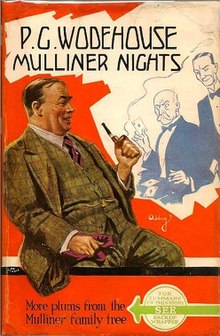
Wherever Plum is, love cannot be far behind. India has gifted the world with the Kama Sutra, but it is not surprising that Plum never alludes to this unique treatise, because he never used sex as a ploy to popularize his narratives. All of his male characters are steeped in chivalry, strictly bound by Victorian norms. This aspect of his work had been covered by the author in an earlier article entitled ‘Cupid in Plumsville’: (https://ashokbhatia.wordpress.com/2019/02/14/cupid-in-plumsville)
In his narratives, Wodehouse appears to have instead based his observations on The Garden of Kama, a collection of lyrical poetry of Indian origin published in 1901, which makes liberal use of imagery and symbols from the poets of the North-West Frontier of India and the Sufi poets of Persia (Iran). The poems, written by Laurence Hope, a pseudonym of Violet Nicholson, are typically about unrequited love and loss. She had married Colonel Malcolm Hassels Nicolson, who was a commandant of the 3rd Battalion of the Baluch Regiment. The couple lived in Mhow in the central part of India from 1895 to 1900.
One of her famous compositions, known as a ‘Kashmiri Song’, also appears in at least two of Plum’s narratives.
- In ‘The Knightly Quest of Mervyn’, Mulliner Nights, when Mervyn pops up at Clarice’s abode to report having suffered several privations and challenges in procuring strawberries in the month of December, he is made to wait in the drawing room where there is not much to entertain and amuse a visitor. He finds a photograph of the girl’s late father on the mantelpiece and several other items, including a copy of Indian Love Lyrics bound in limp cloth.
- In Galahad at Blandings, Galahad strongly urges Lord Emsworth to be alert and on his guard. Dame Daphne Winkworth is not to be allowed to get him alone in the rose garden or on the terrace by moonlight. If she starts talking about the dear old days, he is to change the subject. He is to be wary if Dame Daphne Winkworth asks him to read her extracts from the Indian Love Lyrics after dinner. According to him, these have to be avoided like poison, because the consequences could be disastrous.
- Jeeves and the Feudal Spirit opens with Bertie Wooster in his bath tub. ‘As I sat in the bath tub, soaping a meditative foot and singing, if I remember correctly, “Pale Hands I Loved Beside the Shalimar”, it would be deceiving my public to say that I was feeling boomps-a-daisy. The evening that lay before me promised to be one of those sticky evenings, no good to man or beast. My Aunt Dahlia, writing from her country residence, Brinkley Court down in Worcestershire, had asked me as a personal favour to take some acquaintances of hers out to dinner, a couple of the name of Trotter.’
- In Ring for Jeeves, we find an alert and bright Captain Biggar crooning ‘Pale hands I loved beside the Shalimar, where are you now, where are you now? Where are you now? Where are you now?’ Jeeves walks in just then and outlines his ‘spider sequence’, a scheme to deprive Mrs. Spottsworth of a precious pendant she wears around her neck, thereby bringing some financial relief to all concerned.
- In Jill the Reckless, Uncle Chris (Major Selby) alludes to a romantic experience in Bangalore (now Bengaluru) when, some twenty-five years ago, beneath the shadows of the deodars, he had crushed in his arms a girl whose name he has forgotten, though he remembers that she had worn a dress of some pink stuff.
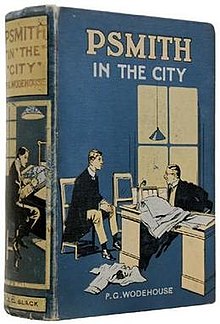
India rubber is one name for the natural rubber that comes from the sap of certain trees. Rubber trees that grow in South America and India produce the majority of India rubber. Plum uses its properties of agility, elasticity, flexibility and robustness to cover a wide range of physical endeavours of the characters in many of his narratives.
In Psmith in the City, we come to know of Joe, Mike’s brother, who plays great cricket. He is said to behave as tough as India rubber. In ‘The Inferiority Complex of Old Sippy’, Very Good, Jeeves, Sippy is found chewing a piece of India rubber. In ‘Bramley is So Bracing’, Nothing Serious, Bingo’s baby, when left in Rev. Aubrey Upjohn’s study, does the same.
- In The Inimitable Jeeves, when confessing his having fallen in love with Honoria Glossop to Bertie, Bingo’s eyes bulge, his cheeks get flushed and his ‘Adam’s apple hops about like one of those India-rubber balls on the top of the fountain in a shooting-gallery.’
- In The Mating Season, the cosh which gets used by Jeeves to temporarily knock off Constable Dobbs is said to be an object which is ‘small but serviceable and constructed of India rubber.’
- In Pigs Have Wings, we are told that Lord Emsworth’s writing desk contains not only pens, ink, sealing wax and a contraption which looks like an instrument for taking stones out of horses’ hooves, but also India rubber.
- Those who have gone through Luck of the Bodkins may recollect how Albert Peasemarch, the steward, produces ‘from his trousers pocket a pencil, a ball of string, a piece of India rubber, three pence in bronze, the necklace, a packet of chewing gum, two buttons and a small cough lozenge’, and places these on the table.
- In Indiscretions of Archie, when a girl who has been posing for Archie standing for a solid hour on one leg, holding a tennis racket over her head and smiling brightly, he ventures an opinion as follows: ‘The female of the species is more India-rubbery than the male.’ Modern emancipated females who care for physical alacrity and fitness may heartily approve of this sentiment.
- When it comes to agility in dancing, India rubber legs often get mentioned. ‘The Masked Troubadour’, Lord Emsworth and Others assures us that Freddie is endowed with them. Money in the Bank tells us that Mr. Trumper is able to forget all about the mystery man with India rubber legs only when being told by Mrs. Cork about an emu she had known which ate aspirin tablets. In Money for Nothing, John, who lacks India rubber legs, proves to be lucky. By the time he has to prove his performance to a girl of high ideals in dancing, the floor has already become congested, allowing him merely to shuffle. This suits his individual style. In Psmith, Journalist Mr. Wolmann is said to have once danced around The Kid with an Indian-rubber-agility.
- ‘Quick Service’, Indiscretions of Archie tells us that when someone’s neck appears to be growing longer any moment, it is believed to be composed of India rubber. Elsewhere, we run into Mr. Steptoe who is found rubbing his nose on his shirt front. Joss concludes that his prospective employer is blessed with an India rubber neck. It is a matter of speculation if he may be alluded to as a contortionist.
- In Money in the Bank, we run into Mrs. Wellesley Cork, the well known explorer and a big game hunter of such India-rubber-necked animals as giraffes.
- In The Girl on the Boat Swenson misinterprets Sam’s motives and starts resisting being pulled away from cash which he regarded as his legacy. He is an emotional Swedish gentleman, ‘six foot high and constructed throughout of steel and India rubber’. He begins to struggle with all the violence at his disposal.
- In The Coming of Bill, Aunt Lora is described by Bill as a human cyclone and even like an earthquake. He feels that the company of a woman capable of taking other people’s lives and juggling with them as if they were India rubber balls is best avoided.
- ‘Have you ever played a game called Pigs in Clover? We have just finished a merry bout of it, with hens instead of marbles, which has lasted for an hour and a half. We are all dead tired, except the Hired Man, who seems to be made of India rubber. He has just gone for a stroll on the beach. Wants some exercise, I suppose.’ (Love Among the Chickens)
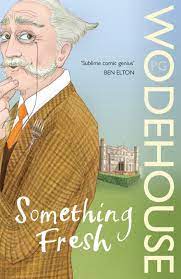
Many of Plum’s characters have a fetish for remaining as fit as a fiddle. One of the instruments which they happen to depend upon is a pair of Indian clubs.
Something Fresh has Ashe Marson using them. In A Damsel in Distress, when Percie gets criticized by Reggie for the condition of his liver, he uses them. In Coming of Bill, the hero swings them in slow and irregular sweeps while his eyes stare fixedly at the ceiling.
- In The Heart of a Goof, we come to know of Felicia Blakeney. Her brother, Crispin Blakeney, is an eminent young reviewer and essayist. He is said to have gone off to India to study its local conditions with a view to delivering a series of lectures.
- Many of us would recall that in ‘Bertie Changes His Mind’, Carry On, Jeeves, Bertie Wooster tells Jeeves that he has a sister in India. She is likely to return from there with her three daughters. Since Bertie wants to break the monotony of his life, he plans to move to a large house and invite the gang to stay with him. He looks forward to have ‘the prattle of childish voices around him’. Jeeves uses his tact and resource to make Bertie change his mind.
- In ‘Best Seller’, Mulliner Nights, we discover what happens to a young lady whose heart throb has gone off to India. Miss Postlethwaite, the sensitive barmaid, imagines that the lady is ‘standing tightlipped and dry-eyed in the moonlight outside the old Manor. And her little dog has crawled up and licked her hand, as if he understood and sympathized.’
- ‘Jeeves and the Unbidden Guest’, Carry On, Jeeves introduces us to Lady Malvern, a vicious specimen (to quote Bertie). She is said to have been in India for less than a month whereupon she has whipped up a book on social conditions in India, entitled ‘India and the Indians’.
- ‘The Ordeal of Osbert Mulliner’, Mr. Mulliner Speaking narrates the story of Osbert Mulliner who intends to board the boat sailing for India. His idea is to ‘potter awhile about the world, taking in en route Japan, South Africa, Peru, Mexico, China, Venezuela, the Fiji Islands and other beauty-spots’. When Major-General Sir Masterman Petherick-Soames hears of this, he claims to have been in India for many years. He offers to give him all sorts of useful hints. He also claims to know the old ‘Rajputana’ area (the present day state of Rajasthan in India) well.
Indian Handicrafts, Taj Mahal and Tagore

- In Leave it to Psmith, we find that the noise which had unduly perturbed the Efficient Baxter had been caused by ‘the crashing downfall of a small table containing a vase, a jar of potpourri, an Indian sandalwood box of curious workmanship and a cabinet size photograph of the Earl of Emsworth’s eldest son, Lord Bosham.’
- Taj Mahal, the ivory-white marble mausoleum located in the city of Agra, remains a key attraction for those who have India on their itinerary. Designated as a UNESCO World Heritage Site, it does not get left out in Plum’s references to India. In ‘Bingo Bans the Bomb’, Plum Pie, when Bingo Little sees a ray of hope for getting a coveted raise in his emoluments from Mr. Henry Cuthbert Purkiss, the proprietor of Wee Tots, he is said to gaze at the latter with as much appreciation as he would at the Taj Mahal in moonlight.
- Gurudev Rabindranath Tagore, a Nobel laureate, finds a brief mention in ‘Rodney Has a Relapse’, Nothing Serious. Rodney is of the opinion that the family can survive on wholesome and inexpensive vegetables. He thinks this will help his poetry. ‘He says look at Rabindranath Tagore. Never wrapped himself around a T-bone steak in his life, and look where he fetched up. All done on rice, he said, with an occasional draft of cold water from the spring.’
Some Behavioural Traits of Indians

- In Uneasy Money, Lady Wetherby despairingly speaks of having seen ‘Algie hanging over the rail during a three o’ clock race one May afternoon, yelling like an Indian’.
- In The Prince and Betty, Mr. Benjamin Scobbel, the unscrupulous millionaire, has built a casino on the small Mediterranean island of Mervo. He prides himself on its interiors which comprise many rooms, each having a table of its own and furnished in a different style. Besides a Dutch room, a Japanese room, a Swiss room and the like, it also boasts of an Indian room. However, one is ‘wary of accosting some nasty Hindoos’ who look at one rather oddly.
- Visitors to Blandings Castle, when discussing the character of The Efficient Baxter, allude to paranoia – a rush of blood to the head and fellows running amuck.
- ‘I’ve heard fellows who have been in India talk of it. Natives get it. Don’t know what they’re doing, and charge through the streets taking cracks at people with dashed whacking great knives…I have seen it happen so often in India, don’t you know, where fellows run amuck and kick up the deuce’s own delight.’ (Something Fresh)
Of Customs, Conversations and Civil Services
- In Hot Water, we also find a mention of the age-old sordid custom of ‘sati’, which, thanks to the efforts of Raja Ram Mohan Roy, was outlawed during the 19th century itself. It gets referred to by a widowed Mrs. Wilmot Brewster who thinks that Mabel, her sister-in-law, would have perhaps liked her to commit ‘suttee’, a practice followed in India. It means a widow burning herself on the funeral pyre of her husband when he has kicked the bucket.
- In ‘Honeysuckle Cottage’, Meet Mr. Mulliner, James, playing his role of a good host, tries to snap Colonel Carteret out of his absent-minded silence by talking about ‘the weather, golf, India, the Government, the high cost of living, first-class cricket, the modem dancing craze, and murderers he had met.’
- ‘When Papa Swore in Hindustani’, A Wodehouse Miscellany speaks of Colonel Reynolds, V. C., who, upon losing his temper, is apt to swear for half an hour in Hindustani, and for another half-hour in English. He feels better thereafter.
- In Ring for Jeeves, Jeeves clarifies that ‘Kuala Lumpur was first made a separate dependency of the British Crown in 1853 and placed under the Governor-General of India. In 1887 the Cocos or Keeling Islands were attached to the colony, and in 1889 Christmas Island. Mr. Somerset Maugham has written searchingly of life in those parts.’
- In Mike at Wrykyn, the elite administrative service alluded to as the Indian Civil Service gets mentioned by Plum. When Mike is in the Great Hall which has panels showcasing the work the school has done in the world, he finds that the panels are covered with the names of Wrykynians who had won scholarships at Oxford and Cambridge, and of ‘Old Wrykynians who had taken firsts in Mods or Greats’, or achieved any other recognized success, such as a place in the Indian Civil Service list.
Many of us are aware that Buddhism is a religion of Indian origin, based on the teachings of Gautam Buddha. It is said to have originated sometime between the 6th and the 4th centuries BCE. Of all the characters etched out by Plum, Stilton Cheesewright has the unique distinction of having come under its spell briefly.
In Joy in the Morning, we discover the impressionable nature of the otherwise stiff-upper-lip cop Stilton Cheesewright whose head is said to be comparable to a pumpkin. Florence Craye talks socialism to him and persuades him to read Karl Marx. When at Oxford, someone had temporarily converted him to Buddhism. Bertie recalls that it had led to a lot of unpleasantness with the authorities since he had started to ‘cut chapel and go and meditate beneath the nearest thing the neighbourhood could provide to a bo tree.’
Indian Vedas, Mythology and Superstitions

The Luck Stone, a concoction whipped up by Plum under the pseudonym Basil Windham, was serialized in a magazine known as ‘Chums: An Illustrated Paper for Boys’ during 1908-1909. To the best of my knowledge, it is his only such novel of mystery, high adventure, and danger, where the story is set against the backdrop of a boarding school at Marleigh.
The narrative revolves around a blue stone which keeps popping up and vanishing. The stone is also known as The Tear of Heaven and is a sacred jewel of the Maharajahs of Estapore. The people of the state believe the stone to be sacred and worship it. Without it a Maharajah would have little chance of keeping his throne.
The novel has several Indian references. Ram, one of the class fellows of Jimmy, is described as small, round, and dark-skinned, wearing gold-rimmed spectacles. He is said to come from Calcutta. Jimmy’s father, Colonel Stewart of the Indian Army, has a walnut colour skin, thanks to the harsh sun in India. When posted there, he is said to have been fond of plunging off into the jungle after tigers. His subordinates repose the kind of faith in him which the officers of our Indian army inspire in their men.
We have a bunch of sinister goons who could possibly be broken army men who had got mixed up in shady affairs. There are said to be scores of them in the then underworld of India. The goons have a leader who is a lame man who speaks perfect English with the polished accent of the cultured Indian.
We also have a stiff-upper-lip teacher who is an expert at Indian Mythology, Superstitions and Vedas. He looks at the small stone with as much keen interest as he would if it were the Koh-i-noor and is not averse to hand over the stone to the goons at a price of two hundred and fifty thousand pounds (in 1909 money; or more than twenty-five million pounds in today’s).
How Jimmy Stewart, the hero, and Tommy Armstrong, his friend, use tact and resource to overcome various odds and ensure that the stone ends up falling into the right hands makes for an interesting read. (Source: https://www.madameulalie.org/chums/luckstone19.html)
Some Missing Ingredients in the Curry

In Plum’s narratives, we encounter American millionaires, French cooks, Russian peasants, Italian waiters, Spanish ladies and white hunters and huntresses who keep popping up in Africa. We also get to meet wealthy American ladies who are on the lookout for castles which are owned by impecunious English gentlemen.
When it comes to India, we get introduced to military men, royals and others who narrate some juicy details or the other about that exotic land. He also gives us a sneak peek into the civil disobedience movement of Mahatma Gandhi, the Father of the Nation of India. Rabindranath Tagore’s dietary habits, like those of Mahatma Gandhi, get commented upon. Taj Mahal finds a mention.
Some of his characters are even desirous of trooping down to India to study its social conditions while some emulate the mystics contemplating on the infinite in caves in Himalayas or elsewhere. We come to know of some cities as well.
To Plum’s credit, he even quotes Rudyard Kipling, the India-born author whose works were inspired by his country of birth:
‘I’ve said it before, and I’ll say it again – girls are rummy. Old Pop Kipling never said a truer word than when he made that crack about the f. of the s. being d. than the m.’ (Right Ho, Jeeves).
Not to forget the poem ‘Gunga Din’, which gets mentioned by Plum in few of his narratives.
But if he had wanted to, Plum could have used a number of other Indian resources to further enrich his narratives.
Alas, we do not find any mention of such literary figures as Kalidasa, besides Aryabhata or Ramanuja, the famous mathematicians. The Vedas do find a solitary mention but any other references to India’s soft power comprising such aspects as spirituality, its multi-layered scriptures and various dance forms are sadly missing.
Above all, the mind-numbing diversity of the spirit of India is missing. Its wide spectrum of ethnicities, languages, beliefs, practices and cuisines is nowhere to be found. These are facets of India which have missed out on his wit and wisdom. It is indeed a delectable irony of sorts that this write up is labelled as The Indian Curry Dished Out by P G Wodehouse, even though it has not thrown up even a single reference to any specifically Indian dish!
In his works, the term ‘curry’ does pop up once in a while. Bertie offers Bingo ‘some cold curry’ in ‘Bingo and the Little Woman’ (The Inimitable Jeeves). He also mentions ‘curried egg’ in The Code of the Woosters. There are few more instances of this kind. There are even references to mulligatawny soup. The reason these references do not appear here is simply that Plum never qualifies these as being specifically Indian. Whereas a resident of the UK could consider these as Indian references, those in the USA and elsewhere could interpret these to allude to any curry of Asian origin. Yes, there is a possibility that Plum had an Indian connection in mind while using the term in his works.
As to a liberal use of many other resources of an Indian origin, imagine a distraught Gussie Fink-Nottle pining for Madeline Bassett and sending messages to her through clouds passing overhead, a la ‘Meghadut’, the classic poem penned by Kalidasa. Poets like Ralston McTodd would have been found drawing some inspiration from the creative outpourings of Tagore. Personalities like Indian scientists and mathematicians would have helped some sleepless guardians of the peace – like Constable Oates – to improve their methods of investigation, improving the prospects of their being noticed by Scotland Yard. To improve Bertie’s intellect, all Florence Craye had to do was to insist that he peruse at least one of the chapters of the ‘Bhagavad Gita’. Laura Pyke could have drawn some inspiration from the science of ‘Ayurveda’, the healthy-lifestyle system that people in India have used for more than 5,000 years. Anatole could have been found whipping up ‘chhole-bhature’ or ‘dosa’s!
Yoga could have helped someone like Ashe Marson to treat his clients suffering from acute dyspepsia to heal faster and better. Sir Roderick Glossop could have gone about advising his loonier patients to make meditation an essential part of their mundane lives. Vicars could have lived a happier Thos-infested life while brooding on spiritual tenets dished out by Indian scriptures, thereby becoming hotter at their jobs. George Bevan, while working on one of his next musical comedies, could have been drawing inspiration from the ‘Natya Shastra’ of Bharata Muni. Gentlemen aspiring for India rubber legs could have been practising such dance forms as ‘Kathak’ or ‘Bharatnatyam.’
The possibilities are endless. The mind boggles. But one would do well not to be concerned with what might have been. Instead, the focus needs to be on the rich legacy Plum has left behind for us to rejoice in.
The Pale Parabola of Subtle Humour
In fact, quite a few of his works have been translated into the regional languages of India, forming a pale parabola of subtle humour across India. Encouraged by an expert on Plummy affairs, I recently posted an enquiry on Facebook. The results have been gratifying, though not exhaustive.
Some fans of his confirm that Sanskrit has in its fold The Great Sermon Handicap (Dharmopadeśasya Mahatī Aśvadhāva).
Bengali has translations of Psmith in the City (Sahar e elo Psmith), The Summer Lightning (The Summer Lightning) and Psmith the Journalist (Sambadik (P)smith), all done by Sanjit Ghatak. Bengali translation of Clicking of Cuthbert too was appended by him to Psmith the Journalist. Hemendra Kumar Roy’s offering Tara Tin Bondhu (They Were Three Friends) is noteworthy; therein one of the adventures of the titular trio is a take on The Truth About George. Then there is The Crime Wave at Blandings (Abhyartha Lakshabhed), a novella dished out by Narayan Gangopadhyay, the creator of ‘Tenida’ and his three followers. At least two stories, or incidents from those stories, were adapted by the great Bengali humourist Rajshekhar Basu (Parashuram). These happen to be Buck-U-Uppo (Rajbhog) and Pig-hoo-o-o-o-ey (Rajmahishi). Some other translators have retained the original titles in the Bengali versions, such as Carry on, Jeeves by Manindra Dasgupta and Thank You, Jeeves by Nripendra Krishna Chattopadhyay.
Kannada can boast of many Jeeves-Wooster and Mulliner stories, thanks to the efforts of Kefa (a pseudonym of Dr. A.V. Keshava Murthy). These were published in a satirical magazine known as ‘Koravanji’ in the 1950s and 1960s. Then there is a play entitled ‘Okay’ written by N. Kasturi which is based on Mulliner’s Buck-U-Uppo, which is also a sincere adaptation. Mr. Palahalli Vishwanath has adapted twenty stories to Kannada and published his collection as Alpa Swalpa Wodehouse (A Little Bit of Wodehouse).
Telugu can take pride in Gabbita Krishna Mohan who is the most recent and certainly the most prolific translator of Wodehouse in the language. He has published as many as seven books based on his narratives. These are actually not pure translations but more of adaptations since the same have been adapted to an Indian milieu. He is said to have been quite faithful to the plot and to the characterisations. Thus, fans who are adept in the language can devour:
The Old Reliable (Aapaatbandhavi)
Uncle Dynamite (Uncle Dynamite)
Frozen Assets (Lanke Bindelu)
If I Were You (Neeve Naenai Nene Neevai)
The other three dished out by the same author are titled Saradaga Kasepu (Fun For A While), Saradaga Marikasepu and Saradaga Marikonthasepu. These are a compilation of assorted short stories, several of them based on the Mulliner saga.
Marathi author Purushottam Lakshman Deshpande and Tamil author Mahadevan are as revered for their wit and humour as Plum is in English. However, there are no known translations of any of Plum’s books in these languages, though Prasanna Pethe is said to have published a book on the life of P. G. Wodehouse in Marathi.
When it comes to Hindi, I would rate the works of Hari Shankar Parsai, Sharad Joshi and Shrilal Shukl as being closest to Plum’s style which was characterized by wit and satire. I am not aware of any translations of his books in Hindi.
His fans are well aware that globally many of his books have been translated into several languages. One bows in reverence to the brainy coves who have facilitated the spread of Wodehousitis thus. Their literary skills and their passion for Plum deserve to be applauded. After all, it is not easy to figure out how one could translate such delectable phrases and, in particular, such expressions as ‘Right Ho’, ‘By Jove’, ‘Pip pip’, ‘Tinkery Tonk’, ‘Toodle O’ and the like. Perhaps the solution lies in adapting the stories to the local milieu and a liberal dash of colloquial slang!
A Consistent Depiction, Despite 1947

The India that Plum would refer to belongs to an era which is long since bygone. India gained independence in 1947, but his works published during the period from 1947 (Joy in the Morning) till 1974 (Aunts Aren’t Gentlemen) do not reveal much change in his imagination. If one were to compare allusions to India based on Wodehouse’s works published before and after 1947, one notices a singular consistency. Astral bodies, scorpions and cobras continue to rule the roost.
The insignificance of the year of India gaining independence from the British Raj in Plum’s works has its own merits. Much like the relationship between Bertie Wooster and Tuppy Glossop, which soured for some time when the former was forced to take a dip in the water even when suitably attired, a friendly spirit of joie de vivre appears to have prevailed and both countries have moved on.
Malcolm Muggeridge, who was an editor of Punch, had spent two extended periods in India, once during 1923-26, as a lecturer in English at a college in Kerala, and then during the early 1930s as an assistant editor of the Statesman. In his book Tread Softly for you Tread on my Jokes, he says that ‘Almost the only Englishmen left in the world today are Indians…. If there are Bertie Woostersstill around, they are called, we may be sure, Sen Gupta or Abdul Rahman.’
Many enlightened Indians who take a broad view of things, or those who were born much after 1947 and have not suffered the birth pangs of their country, admire the Crown rule for having left behind a rich legacy in terms of a legal framework, a bureaucracy, a railway network, partial linguistic proficiency in English and a fine army with its own traditions. The genesis for such a legacy to have come about could have been rooted in stark commercialism and a stiff-upper-lip-type control over the people, but that need not distract us from the fine institutions created and left behind by the British in 1947.
But many others, especially those who have been exposed to the personal trauma of partition which ended up displacing an estimated 10 to 20 million people along religious lines, or their descendants who have heard the horror stories of those trying times, and many others, would speak of the manner in which Indians of yore were exploited by the British. They would lament the decline of their country’s share in the global Gross Domestic Product from roughly 27 percent in the 1700s to roughly 3 percent in 1947. (Sources: Wikipedia and a talk by Dr. Shashi Tharoor, a famous fan of Plum’s and a Member of Parliament of India, https://www.youtube.com/watch?v=OB5ykS-_-CI)
In the present scenario, both the countries, the erstwhile rulers as well as the ruled, enjoy a healthy and vibrant relationship. Even during the two World Wars in the 1900s, Indian soldiers had made the supreme sacrifice, supporting the British/Allied forces. Over time, close to 150,000 soldiers are said to have died while supporting the wars fought by the Empire. A private sector steel company in India had produced rails much to the satisfaction of the rulers. Sure enough, there were mutinies, internal skirmishes and episodes of non-violent civil disobedience, but there were clear signs of good collaboration between the two even prior to 1947.
In any case, it should come as no surprise that Plum maintains consistency throughout his canon while using Indian condiments for the curry he serves. During 1947, the Indian subcontinent was undergoing some major changes. But these did not register on the Plumsville radar.
From a global perspective, the devastation caused by the Second World War (1939–45) was then the main area of concern, rather than the fact of India gaining independence on 15 August 1947. Plum had personally suffered in his life owing to political developments then and had relocated from Europe to USA during April 1947, never to visit Europe again. One believes that the press in the USA had then covered the fact of India gaining independence rather prominently, probably because it was the first significant nation to have gained independence from the British after the USA, which had achieved the feat some 171 years earlier, in 1776. However, due to his preoccupation with other matters then, perhaps the last thing on his mind would have been the British (or American) reaction to the events unfolding in India. Hence his storylines and characters never touched upon the emergence of an independent India.
Even though his works do not offer any commentary on the politics of the day, at times he does not refrain from deploying the communist ideology to amuse and entertain his readers. Psmith brims over with socialist ideas. George Cyril Wellbeloved has strongly communistic views. At one stage, even Bingo Little becomes a member of the ‘Red Dawn’. Roderick Spode happens to be a born crusader and revolutionary. Vanessa Cook leads protest marches and appears to be gravitating towards politics by chance. Stilton Cheesewright, who is otherwise content being a vigilant guardian of peace at Steeple Bumpleigh, gets egged on by Florence Craye to pursue a career in politics.

It would not be wrong to say that his works represent the composite way of life on the Indian subcontinent, often unimaginable these days in the din of nationalistic jingoism on either side of the India-Pakistan border.
The love for Plum’s oeuvre in the Indian subcontinent transcends any such mundane considerations. Moreover, Plum sets a gold standard of pristine humour not only in English but also in many regional languages.
The reasons for his popularity on the Indian subcontinent are many. Having been ruled by the dispensable siblings of the British nobility, many of them still carry a feeling of awe and respect for their white rulers. Perhaps the idea of acquiring a linguistic skill and being on an equal footing with their erstwhile rulers appeals to them. By taking a saunter down the sunlit valleys of Plumsville, perhaps they are temporarily relieved of the pain of their economic hardships, misery and lack of quality infrastructure and civic services. In other words, at a subconscious level, this could be their style of fighting the depressing shadows of imperialism while nourishing their own sense of patriotism.
He is often regarded as a writer about the ruling classes, touching upon the challenges faced by some woolly-headed but financially well-endowed characters. However, scratching below the surface, one finds that in the vast majority of cases his sympathies are with the less well-off, the underdog and even the down-trodden. Thus, those who happen to be less fortunate in their lives, facing its harsh slings and arrows, perhaps find it easier to identify with many of his characters. Moreover, when he lampoons figures which are dictatorial, authoritarian, magisterial and the bullying kind, one tends to be in sync with him.
One of his ardent fans is of the opinion that Plum uses stereotypes not only to make his readers chuckle but also to demonstrate the futility of painting all the people in a group with the same brush. In his works, all Scots are red-headed, frugal and angry; all Australians are rich sheep farmers and are prone to stealing anything that is not bolted to the ground; all Russians go around killing family members after a hard day’s work; all financiers are alumni of the Sing Sing and similar institutions; all aunts are dangerous, and the like. He leads his readers into valleys lit up with sunny humour, playing with these notions until they lie shattered on the ground. He might not have meant to do it but his lesson is that blanket ideas about people are nonsense.
Whatever the reasons, Plum’s appeal across the Indian subcontinent is as dispersed as the milk of human kindness coursing through the Wooster veins.
Conclusion
All inputs were invariably grist to the humour-producing mill of P. G. Wodehouse. He had this unique talent of turning and twisting even the most inconsequential things into something which would leave his readers chuckling, guffawing, rollicking, laughing and falling down from their couches. All his works are like beehives dripping with honey which possesses the unique property of making one look at the sunnier side of life. His sole aim has always been to amuse, entertain, educate and uplift his readers. Give him an enigmatic country like India teeming with enchanting wildlife, enigmatic mystics, magnificent temples and gallant men in uniform and he delivers utmost satisfaction.
Plum dished out his narratives in a pre-Internet era, when access to information was severely restricted. It is amazing that based mostly on secondary data, so to say, he could leave behind for us a spicy Indian curry, making India shine through in so many ways through a vast array of his novels and stories.
Pip pip!
Notes:
- The inspiration for this essay comes from the scholarly work done by Ms. Masha Lebedeva, who had earlier whipped up a research paper entitled The Russian Salad by P. G. Wodehouse.
- The author expresses his sincere gratitude to few eminent experts on Plummy matters for having spared the time to go through a part of this composition and provide insightful suggestions. Some fans of P. G. Wodehouse have also suggested improvements in its contents.
- Thanks are also due to Mr. Suvarna Sanyal for dishing out the main illustration; also, to Ms. Sneha Shoney, who has edited the text.
- The author wishes to emphasize his moral rights over the contents of this essay, save and except quotations from the books/stories of P. G. Wodehouse, the rights to which belong exclusively to the Wodehouse Literary Estate, UK. Anyone planning to publish any part of this essay including quotations from Wodehouse’s writing would do well to obtain appropriate consent from the Trustees of the Estate. Some material has been sourced from Wikipedia.
- Insofar as images of P. G. Wodehouse and book covers are concerned, every effort has been made to trace relevant copyright holders. If there have been inadvertent omissions I apologize to those concerned, and request them to contact Ashok Kumar Bhatia at akb_usha@rediffmail.com so that any oversights can be corrected.
- This is merely an indicative listing of references to India in Plum’s books and stories. It is surely not exhaustive.
- Feedback at akb_usha@rediffmail.com shall be welcome. Those who wish to receive a PDF version of this essay may please send a request to this mail id.
- The author suffers from two afflictions: Professoritis and Wodehousitis. His profile can be seen at https://www.linkedin.com/in/ashokkumarbhatia.
- This essay is for private circulation only. The intention is not commercial but merely to share some of the references made by P. G. Wodehouse in his books/stories to India.
The world beckons you! (Review of a book by Rajeev Varma)
Posted in A Vibrant Life!, tagged Book, Countries, Cuisine, Culture, Rajeev Varma, Tours, Travel, vacations on January 29, 2021| Leave a Comment »
Many of us these days are fed up of quiet a few things – handling lockdowns, an overdose of the Work From Home virus, a torrent of depressing news from all sides, being bleary-eyed owing to movie/serial binges on online streaming platforms, to name only a few. We wish to hedge our bets and take wings. We are looking out for a well-deserved vacation.
If you fall in this category, here is a guide which can help you to choose the country of your choice and plan the gig in advance. What follows is a review of the book by yours truly.

When life puts a human resources expert and a history buff together, one gets a formidable team which loves adventure and believes that the routine and the mundane is lethal. Provide them with an insatiable urge to explore new cultures, discover new places, savour different cuisines and make friends in distant places, and they treat the world like an oyster. They keep falling in love with places they have never been to before. They end up making memories all over the world.
Here is a sumptuous offering from the team of Rajeev Varma and his wife, Meenakshi Varma. It is a meticulous record of their travels to countries as diverse as Bangladesh, Sri Lanka, Thailand, Turkey, Russia, Norway, Belgium, UK and Switzerland, to mention only a few. The book here covers as many as 23 countries, with the tantalizing promise of few more to come!
Other than the places and their famous attractions, the couple have often taken the road less travelled. By chronicling their travels, they enrich our understanding of the countries captured in this book. Behavioural traits of many of the countries have been captured lovingly. As one joins them in these wanderings, one gets a sneak peek into each country’s history, the evolution of its cultural and racial potpourri, the collective behaviour of its people and the kind of staple diet they relish. Written in a lucid style, the book offers a vivid description of distant places on our planet.
In fact, one of the outstanding features of these memoirs is the mouth watering description of a wide variety of delectable local dishes on offer in almost all the countries. Even names of restaurants have been captured at places, prompting one to catch the next flight and land there to taste the savouries!
There are several other ways in which these memoirs stand out amongst the otherwise readily available tourist brochures, travelogues and the kind of details available over the world-wide-web we humans have spun around ourselves.
One, these are first-hand accounts based on relatively objective observations, sans any value judgements about any of the countries or its denizens.
Two, given the details etched out so very painstakingly, one can plan one’s next visit to a specific country far more knowledgably.
Three, a realization dawns – that the purpose of travelling to a different country need not always be ticking off the list of ‘Places-To-Visit’ of the more famous of its attractions – the monuments, the palaces, the relics and the museums. Admittedly, these do have their utility as fodder for our public relations and ego-boosting drives on social media and amongst our circle of relatives and friends. But the key purpose of travel is also to get a first-hand initial feel of the soul of a country, rather than merely exploring its physical body.
These memoirs also offer some underlying lessons. If life enables one physically, emotionally and financially, it makes eminent sense to avail opportunities to forget one’s own champagne and caviar at home and instead venture out to taste the world! Moreover, to extract the best juice out of such opportunities life gifts us with, meticulous planning in advance helps, just the way Rajeev and Meenakshi have done in their several sojourns described here.
Travel amuses, entertains, educates and enlivens us. If the book in your hands serves to whet your appetite to explore our beautiful planet, its purpose would have been adequately served. But budget your travels wisely. With similar compilations to follow in the times to come, you may run the risk of splurging on the first few trips, thereby making future escapades relatively dreary – a prospect best avoided!
Another word of caution – every trip could make us realize that we seem to know less and less about more and more. So, keep vacationing, continue to explore newer places and keep following the sequels to this maiden compilation!
About the author:
Rajeev loves travelling, conversing, writing and singing. He is a lover of arts and is fond of theatre and documentaries. He values human interactions and likes to reach out to long lost acquaintances and re-forge relationships. He has re-connected with friends who were his closest some five decades ago!
A Human Resource Management practitioner by profession, Rajeev was associated with the TATAs in India for nine years before relocating to the Middle East. Initially working for 15 years as Corporate HR Head for organizations in Dubai and Oman, he later managed his own Training & Management Consultancy Company in Muscat, Oman for 10 years. He is a qualified coach and a counsellor. He is a University topper.
He now lives in NOIDA, India with his wife, children and grandchildren.
His next venture is to write a book on life of expatriates in the Middle East.
He can be reached at: rajeevtheomnist@gmail.com)
Another pilgrim’s progress
Posted in What ho!, tagged Dulwich, Humour, P G Wodehouse, Travel, UK Wodehouse Society, Wodehousitis on December 21, 2018| Leave a Comment »
As the next pit stop in time looms ahead, yours truly is feeling a wee bit chuffed up. Wodehousitis appears to be spreading far and wide. Conventions are taking place. Exhibitions are getting organised. Meetings of Wodehouse fans are happening all over. Scholarly articles are popping up. Books containing some juicy narratives are getting dished out. Blue-blooded royals are peeping out of their cocoons and confessing their love for the Master Wordsmith of our times. Fans are travelling to different continents and engaging with all things Wodehousean. Flowers are in bloom, birds are chirping, God is in heaven and Homo sapiens appear to be headed in the right direction.
Here is a delightful post from a fan Down Under. He sauntered across to UK recently, and caught up with the kind of goofy and not-so-goofy things happening there.


Anyone who has an affinity with the English language and happens to be in London would be well rewarded by braving the crowds and paying the moneylenders at Westminster Abbey just to visit Poets’ Corner.
You’ll be able to sit there for a while, among the slabs of stone and the pompous statues commemorating many of the greatest exponents of our tongue, and ponder why it is that in a place given over to tombs and memorials for kings and queens, heroes and saints – in, as many believe, the presence of God – mere dreamers and story-tellers should be elevated to holiness in a place of their own.
Maybe you’ll find the experience as strange and wonderful as I did . . . because this was the morning after the announcement that Sir Pelham Grenville Wodehouse was to have a memorial stone placed in the Abbey. It transformed a…
View original post 3,051 more words
-
Recent Posts
Buy the Book

buy the book
Categories
-
cc
Tags
Art Bertie Wooster Bhagavad Gita Bingo Little Birthday Blake Mouton Grid Blogging Bollywood Book Campus Life CEO Chivalry Consciousness Coronavirus Corruption Edwin Empress of Blandings English Ethics Feminism Happiness Health Hindi Hollywood Human Values Humour India Jeeves Kalidasa KIds Leadership linkedin Literature Lord Emsworth Love Lyrics Mahabharata Mahatma Gandhi Management Movies Music Norway Paintings Panjab University People P G Wodehouse Politics Pondicherry Portugal Psmith Puducherry Rabindranath Tagore Ramayana Ritusamhara R K Laxman Romance Rosie M Banks Rupert Psmith Seasons Shakespeare Social Media Something Fresh Songs SPANDAN Spirituality SQ Sri Aurobindo Stephen Covey Switzerland Tatas Thos UBS Values Wodehousitis WomenArchives
- March 2026 (1)
- February 2026 (5)
- January 2026 (2)
- December 2025 (1)
- November 2025 (2)
- October 2025 (2)
- September 2025 (3)
- August 2025 (3)
- July 2025 (2)
- June 2025 (2)
- May 2025 (4)
- April 2025 (5)
- March 2025 (5)
- February 2025 (4)
- January 2025 (4)
- December 2024 (6)
- November 2024 (6)
- October 2024 (6)
- September 2024 (5)
- August 2024 (5)
- July 2024 (4)
- June 2024 (4)
- May 2024 (5)
- April 2024 (5)
- March 2024 (3)
- February 2024 (1)
- January 2024 (4)
- December 2023 (2)
- November 2023 (3)
- October 2023 (3)
- September 2023 (3)
- August 2023 (5)
- July 2023 (5)
- June 2023 (7)
- May 2023 (6)
- April 2023 (6)
- March 2023 (8)
- February 2023 (8)
- January 2023 (7)
- December 2022 (6)
- November 2022 (5)
- October 2022 (8)
- September 2022 (5)
- August 2022 (6)
- July 2022 (6)
- June 2022 (8)
- May 2022 (7)
- April 2022 (8)
- March 2022 (7)
- February 2022 (3)
- January 2022 (7)
- December 2021 (4)
- November 2021 (8)
- October 2021 (7)
- September 2021 (6)
- August 2021 (7)
- July 2021 (7)
- June 2021 (9)
- May 2021 (8)
- April 2021 (9)
- March 2021 (10)
- February 2021 (8)
- January 2021 (8)
- December 2020 (7)
- November 2020 (6)
- October 2020 (5)
- September 2020 (9)
- August 2020 (9)
- July 2020 (8)
- June 2020 (8)
- May 2020 (6)
- April 2020 (5)
- March 2020 (7)
- February 2020 (4)
- January 2020 (7)
- December 2019 (12)
- November 2019 (10)
- October 2019 (5)
- September 2019 (9)
- August 2019 (10)
- July 2019 (9)
- June 2019 (14)
- May 2019 (13)
- April 2019 (14)
- March 2019 (11)
- February 2019 (11)
- January 2019 (14)
- December 2018 (12)
- November 2018 (12)
- October 2018 (14)
- September 2018 (9)
- August 2018 (10)
- July 2018 (10)
- June 2018 (8)
- May 2018 (11)
- April 2018 (11)
- March 2018 (6)
- February 2018 (9)
- January 2018 (10)
- December 2017 (10)
- November 2017 (9)
- October 2017 (8)
- September 2017 (11)
- August 2017 (10)
- July 2017 (10)
- June 2017 (11)
- May 2017 (9)
- April 2017 (7)
- March 2017 (7)
- February 2017 (8)
- January 2017 (10)
- December 2016 (9)
- November 2016 (11)
- October 2016 (10)
- September 2016 (10)
- August 2016 (9)
- July 2016 (6)
- June 2016 (10)
- May 2016 (10)
- April 2016 (10)
- March 2016 (10)
- February 2016 (12)
- January 2016 (10)
- December 2015 (11)
- November 2015 (11)
- October 2015 (10)
- September 2015 (10)
- August 2015 (10)
- July 2015 (10)
- June 2015 (10)
- May 2015 (10)
- April 2015 (10)
- March 2015 (9)
- February 2015 (10)
- January 2015 (8)
- December 2014 (9)
- November 2014 (8)
- October 2014 (8)
- September 2014 (7)
- August 2014 (7)
- July 2014 (7)
- June 2014 (7)
- May 2014 (7)
- April 2014 (7)
- March 2014 (7)
- February 2014 (6)
- January 2014 (7)
- December 2013 (6)
- November 2013 (6)
- October 2013 (6)
- September 2013 (6)
- August 2013 (6)
- July 2013 (6)
- June 2013 (6)
- May 2013 (6)
- April 2013 (6)
- March 2013 (6)
- February 2013 (6)
- January 2013 (6)
- December 2012 (4)
- November 2012 (4)
- October 2012 (3)
- September 2012 (2)
- August 2012 (4)
- July 2012 (2)
- June 2012 (2)
- May 2012 (2)
- April 2012 (2)
- March 2012 (2)
- February 2012 (3)
- December 2011 (3)
- November 2011 (1)
- October 2011 (2)
- September 2011 (2)
- August 2011 (2)
- July 2011 (2)
- June 2011 (3)

 ashokbhatia