Posts Tagged ‘Tribute’
A Basketful of Plums: Guest Post by Shiva Kumar
Posted in What ho!, tagged Death Anniversary, Humour, P G Wodehouse, Tribute, Valentines Day on April 29, 2025| Leave a Comment »
Remembering Suchitra Sen, the ‘Mahanayika’: Guest Post by Shivdas Nair
Posted in The Magic of Movies!, tagged Bengali, Bollywood, Movies, Suchitra Sen, Tollywood, Tribute on April 7, 2025| Leave a Comment »

For more than six decades, Suchitra Sen, originally named Roma Dasgupta, stood as the undisputed queen of Bengali cinema, embodying the essence of Bengali femininity, beauty, and elegance. Even after her unexpected withdrawal from the public eye in 1978, her allure and mystique remained intact; in fact, her choice to retreat into seclusion only deepened the intrigue surrounding her.
It is believed that one of director Sukumar Dasgupta’s assistants was responsible for bestowing upon Roma Dasgupta the iconic screen name, Suchitra Sen. Sukumar Dasgupta was the director of her debut film, Saat Number Kayedi.
Her passing on January 17, 2014, signified the conclusion of a remarkable era in Bengali cinema.
The Suchitra Sen phenomenon was unprecedented in the history of Bengali cinema. Not only was she the leading female actor of her time, but she also emerged as one of the most significant stars to grace the Bengali film industry, with her widespread popularity rivaling only that of Uttam Kumar, with whom she shared the screen in 30 of her 60 films. She was the first and only actress to earn the title ‘Mahanayika,’ a distinction that was only similarly awarded to Uttam Kumar in Bengali cinema.
During the height of her fame in the 1950s and 1960s, it is estimated that she commanded a fee of around ₹ 1 lakh per film. Her immense star power made her a central figure in the film industry, often featured prominently on movie posters, and her name was typically highlighted even more than that of the male lead, with the exception of Uttam Kumar, where they shared equal prominence.
The partnership of Suchitra Sen and Uttam Kumar on screen marked a pivotal era in Bengali cinema. Their collaboration spanned 30 films, starting with Sharey Chuattar in 1953, and significantly altered the landscape of Bengali film history. For over two decades, from 1953 to 1975, Suchitra and Uttam reigned supreme in the industry, delivering memorable hits such as Agnipariksha, Shap Mochan, Sagarika, Harano Sur, Indrani, Saptapadi, and Bipasha.
They became icons that resonated with the youth, embodying their dreams and aspirations. Their undeniable on-screen chemistry was so powerful that they transcended their individual stardom, merging into a single entity: Suchitra-Uttam or Uttam-Suchitra. Uttam Kumar himself acknowledged this bond, stating, ‘Had Suchitra Sen not been by my side, I would never have been Uttam Kumar.’
Suchitra is hailed as the first style icon of Bengali cinema, with her unique mannerisms inspiring generations of young Bengali women. The characters she portrayed were often progressive, reflecting the aspirations of women ahead of their time. In many of her films, she took on the roles of ‘professional women,’ whether as an artist in Jiban Trishna, a doctor in Harano Sur, or a politician in Aandhi.
Madhuja Mukherjee, an associate professor of Film Studies at Jadavpur University, noted, ‘Her star persona was shaped by her roles. She exuded a remarkable star quality, both in her appearance and her performances. Compared to the societal norms of her time, she was almost placed on a pedestal, embodying the aspirations of women.’ Remarkably, according to Mukherjee, Suchitra maintained her status as a leading star throughout the 1960s, even as she entered her thirties.

Suchitra’s stunning beauty and immense fame frequently eclipsed her acting talent. Nevertheless, she made history as the first Indian actress to win the best actress award at an international film festival, receiving the honor for her role in Saat Paake Bandha (1963) at the Moscow International Film Festival. Her star power was well-recognized in the Hindi film industry, where she appeared in several major films, including Devdas, Bambai Ka Babu, Mamta, and Aandhi.
Born on April 6, 1931, in Pabna, now part of Bangladesh, Roma was one of eight siblings. Her father, Karunamoy Dasgupta, served as a school headmaster, and she was raised in a culturally rich environment. The Partition led her family to West Bengal, and Roma, already a captivating beauty, soon married Dibanath Sen, the son of a prosperous industrialist. Before venturing into acting, Roma aspired to pursue a music career and reportedly recorded several songs in her own voice.
Despite the admiration she garnered and the unwavering attention from her devoted fans, Suchitra Sen remained a mystery. Known as ‘Mrs Sen’ in the film industry, she was often viewed as distant and hard to approach. By the time she entered the film world, she was already a married woman and a young mother, and her striking looks, reserved demeanor, and privileged background often intimidated those around her. However, she was also recognized for her warmth and friendliness.
Veteran actress Moushumi Chatterjee remarked, ‘Suchitra Sen embodied elegance. She had a remarkable ability to distinguish her personal life from her public persona.’
Industry insiders believe that Suchitra’s keen awareness of her own celebrity status contributed to the myth surrounding her. This understanding may explain her enduring reign as the queen of Bengali cinema and the continued fascination with her, even 36 years after she chose to live in complete seclusion. Her abrupt withdrawal from the public eye only heightened interest in her, sparking numerous discussions, debates, and theories about the reasons behind her choice to retreat.
Rarely spotted in public, she became the most renowned recluse in West Bengal, drawing comparisons to Hollywood’s Greta Garbo. Her commitment to privacy and the lengths she reportedly went to maintain it often seemed almost obsessive.
In 2005, she allegedly declined the Dada Saheb Phalke Award because accepting it in person would compromise her privacy. Even in death, she preserved her enigmatic aura: her final journey was conducted in a black-tinted hearse, obscuring her body from public view.
Suchitra Sen had never collaborated with any of the three giants of Bengali parallel cinema: Satyajit Ray, Ritwik Ghatak, or Mrinal Sen. According to reports, she turned down an opportunity to work with Satyajit Ray because he requested that she refrain from taking on other projects while filming. Suchitra expressed her willingness to honor her commitment to him but was unwilling to promise exclusivity. As a result, the collaboration fell through, and Satyajit Ray ultimately abandoned the project.
While discussing her views on Hindi actors, she touched upon her decision to decline a collaboration with Raj Kapoor. Suchitra explained that the reason for her refusal stemmed from an encounter where the legendary actor and director positioned himself near her feet and presented her with a bouquet of roses. She expressed her preference for men who engage in sharp, intelligent dialogue, which made her uncomfortable with Raj Kapoor’s gesture.

Suchitra Sen and Dharmendra starred together in the film Mamta, directed by Asit Sen. According to a report, Suchitra recounted an incident where Dharmendra unexpectedly kissed her on the back during a scene. She revealed that this moment was not scripted, but the director, Asit Sen, found it compelling enough to include in the final cut of the film. Describing it as an ’embarrassing moment,’ Suchitra made it clear that she was not fond of Dharmendra’s spontaneous kiss.
The world had undergone significant changes in those 36 years of her seclusion, yet the image of Suchitra Sen remains timeless. This enduring presence continues to resonate with the Bengali community, as demonstrated by the large crowds of all ages that filled the streets of Kolkata during her final farewell.
While many regarded Suchitra Sen’s passing as a profound loss for the film industry, the esteemed director Buddhadeb Dasgupta offered a poignant perspective: ‘She will forever be celebrated as the greatest heroine of Bengali cinema. No one can rival her mass appeal. However, the industry truly lost her when she chose to live in seclusion over 30 years ago.’
Suchitra Sen has been honored with four BFJA Awards, the Best Actress Award at the 3rd Moscow International Film Festival, a Filmfare Bangla Award, the Filmfare East Lifetime Achievement Award, the Banga Bibhushan, and the Padma Shri.
Today marks Suchitra Sen’s 94th birthday, a perfect occasion to celebrate her remarkable film legacy. You can catch some of her iconic performances on Prime Video, where titles like Agnipariksha, Sagarika, Indrani, Bipasha, and Devdas are available. On YouTube, check out Shap Mochan, Harano Sur, Saptapadi, Jiban Trishna, Aandhi, Bambai Ka Babu, Mamta, and Uttar Phalguni. On Hoichoi, don’t miss Saat Paake Bandha, Deep Jwele Jai, and Sharey Chuattar.
Notes
- A version of this article first appeared in The Reviewer Collective group on Facebook. The author’s consent to reproduce it here is gratefully acknowledged.
- I believe that after she retired from acting, she lived in Pondicherry for a few years as a reclusive inmate of the Sri Aurobindo Ashram.
- All the visuals are courtesy the World Wide Web.
Plum’s universal appeal: Guest Post by Captain Mohan Ram
Posted in What ho!, tagged Appeal, Bertie Wooster, Humour, Jeeves, P G Wodehouse, Psmith, Tribute on October 1, 2024| Leave a Comment »

P.G. Wodehouse, an Englishman who eventually settled in America, wrote novels set in a charming, idealized version of England—a place that, while fictional, captures a timeless allure. His stories are peopled with endearing characters: affluent young men with time and money to spare, formidable aunts, eccentric American millionaires, temperamental French chefs, and the ever-resourceful Jeeves, alongside the delightful The Empress of Blandings, the apple of the eye of absent-minded Lord Emsworth.
At first glance, Wodehouse’s plots might seem repetitive. However, much like Bach’s intricate counterpoints and fugues or the variations in a jazz improvisation or Carnatic Kalpana swaras, Wodehouse’s stories are masterful variations on simple themes. Their charm lies in their subtlety and simplicity, creating a captivating experience that speaks to readers across different backgrounds.
How do his novels set in 1920s English country houses resonate universally? Let’s explore the reasons behind their widespread appeal.
Most of us harbor a certain resentment towards authority. Whether dealing with bossy relatives, stern headmasters, or demanding bosses, we often yearn for the chance to rebel against those who impose their will upon us. Wodehouse’s humor, which targets pompous magistrates, domineering aunts, and cigar-smoking tycoons, provides a delightful escape. His satirical treatment of such figures allows us to revel in their ridiculousness and momentarily escape the constraints of authority.
The Drones Club members, epitomized by the charmingly clueless Bertie Wooster, live lives of leisure—an existence many of us can only dream of. While we may outwardly dismiss the idle rich, there’s often a hidden envy for their carefree existence, so different from our own routines. Although our work may have its moments of interest, it often involves mundane tasks and repetitive duties.
Wodehouse’s protagonists are not heroic supermen but rather ordinary young men with sunny dispositions. Unlike the Casanova on steroids James Bond or the suave Saint, his characters are more relatable: shy eccentrics like Gussie Fink-Nottle, small-time fixers like Ukridge, and domineering domestic servants like McAllister. In my own life, I have encountered people reminiscent of these characters, yet I have never met anyone resembling a James Bond. Wodehouse’s characters, though exaggerated, embody qualities found universally.
Occasional mavericks like Piccadilly Jim or the irrepressible Psmith add to the charm of Wodehouse’s world. Who can resist Psmith’s nonchalant umbrella appropriation on a rainy day? These mildly caricatured individuals are both believable and endearing, whether in Knightsbridge or Kolkata.
Finally, Wodehouse’s prose is irresistible. His ability to seamlessly integrate quotes from Latin and Greek classics, the Bible, and Shakespeare into whimsical situations demonstrates his linguistic brilliance. His writing flows with a natural, effortless grace reminiscent of Beethoven’s serene and evocative second movement of the Pastoral Symphony.
As someone from Coimbatore, a small city in southern India, I first encountered Wodehouse’s novels in my teens, beginning with Piccadilly Jim. The charm and wit of his writing enchanted me then, and seventy years later, my admiration remains as strong as ever.
Wodehouse’s work transcends borders and cultures—he belongs to the world.
(Captain Mohan Ram, ex Naval designer, eventually moved to the automobile industry where, if one may hazard a guess, he might have been designing some amphibian vehicles. His career trajectory followed the Peter’s Principle. He rose to senior positions, until finally retiring recently at the age of eighty four. He is currently cooling his heels, writing inane posts on Facebook.
His permission to reproduce this piece here is gratefully acknowledged.)
Related Post:
The perils of being a diehard fan of Plum’s: Guest Post by Suryamouli Datta
Posted in What ho!, tagged Death Anniversary, Humour, P G Wodehouse, Tribute, Valentine's Day on February 14, 2023| 3 Comments »

(The final resting place of Plum at Southampton, New York, USA)
Dear Plum Sir,
I wonder if you happen to realize the kind of life your fans like me live. I can assure you it is not an easy one.
Serving Life Imprisonment at a Plummy Sing Sing
Often, I feel as if I am an inmate at the Sing Sing Correctional Facility, surrounded by high walls of delectable humour, on top of which I can see barbed wire fencing of your ready wit and sarcasm. I find it impossible to escape from this high-security prison. You may know that one of your fans (Ashok Kumar Bhatia) has even gone ahead to describe this kind of entrapment as the 3rd and final stage of what he alludes to as ‘Wodehousitis’.
I confess it is a sentence which has not been dished out by a stern-looking beak. No fines have been imposed by anyone. Nor is it an imprisonment which comes without an option. It is purely voluntary. The only crime I have committed is that of pinching one of your books from the shelf of one of my maternal uncles or one of my friends, that too at a tender age. Ideally, it would have attracted a punishment merely under the law which covers juveniles. Surely, not the harsh kind which I have to live through as long as I am alive and kicking.
Early in the morning, there is a roll call which involves all of us presenting the summary of any story of yours, or a quotation therefrom, which we might have come across on the previous day. Ashe Marson then comes in, making us do Larsen exercises, mercilessly ensuring that we jog at least two kilometres within the jail compound, before being commanded to have cold baths. A frugal breakfast designed by Laura Pyke follows. In fact, the two other meals of the day follow the same philosophy – of comprising dishes which are rich in fat soluble vitamins, but which promptly turn to ashes in the mouth.
Twice a day, Roderick Spode, the jailer, passes by for a closer inspection of our cells, giving us supercilious glances. Once a week, Doctor E. Jimpson Murgatroyd, you know the one who has sad and brooding eyes and long whiskers, checks us up, sending our spirits right down into the basement. Once in a month, Sir Roderick Glossop visits each one of us with the sole purpose of checking our Looniness Quotient.
One consolation we have is that it is a mixed-sex facility. But meetings with the members of the tribe of the delicately nurtured are few and far between. Some of the female inmates happen to be of the dreamy kind, like Madeline Bassett. Some are of the sporty kind, a la Pauline Stoker and Honoria Glossop. Few others are of the goofy kind, reminding us of Stephanie Byng and Roberta Wickham.
Another bright spot is that the facility boasts of a well-stocked library which has multiple copies of all your books, keeping us preoccupied with devouring the same, one by one. Unfortunately, no other books of any kind are available to us, creating an intellectual vacuum of sorts.
To me, and perhaps for many other inmates, identifying such ‘vacuums’ results into our almost getting obsessed with your work, unable to leave the pleasurable cocoon you have built and left behind for us through your canon. It comes as no surprise that many call you a ‘master wordsmith’.
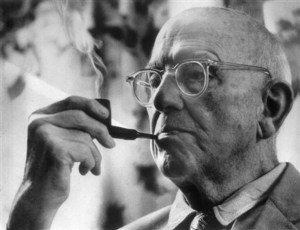
Of Literary Merit
In the realm of modern literature, I find authors in every language who generate the right set of emotions while documenting a particular chronicle to win over the hearts of their readers. Also, we should not forget that any work of art is subjective – whether it is likable or not is left to the reader’s discretion or intellect. Recently, I have often encountered a few authors who have successfully delivered their message to the ‘right set’ of audience and have created emotions that resonate properly with the feelings of the readers.
However, such works of art, according to me, singularly lack some critical ingredients – a witty statement, a dash of wisdom, a clever twist of the phrase, an ingenious use of the Queen’s language, a humorous situation which, even, during a crisis created for the readers to sweat, feels like a cool breeze caressing one’s face at the height of the kind of hot and humid we suffer in my part of the world. Or, like a glass of water naturally cooled in an earthen pitcher.
I started reading you when I entered college and got addicted to your works. I used to search for your books anywhere and everywhere. Earlier, I encountered some great authors like Shaw, Russel, and Priestley but, with due respect, I felt, no one was successful in putting a sense of intoxication (if that is the word I want) in myself other than you.
As fate would have it, my association with you changed my outlook towards life. I learnt to take it more and more lightly, occasionally dismissing its harsh slings and arrows in a nonchalant manner, much like dusting off an imaginary speck of dust from my jacket. I developed empathy for others and even started feeling for my enemies when they were in a crisis.
You are a Man of all Seasons
In my younger days, during my summer holidays, after coming back to the house from the playground, I used to have a glass of water from an earthen pitcher which we used to have in our house in those pre-refrigerator days. The water, as soon as it would touch my parched lips, used to give me a sense of comfort which, I daresay, no water from the refrigerator has ever given! Every single drop of that water was so perfect! Be it temperature-wise, be it taste-wise! It never failed to energize me with a great boost up forgetting all the fatigue which I carried from playground to home. I can easily compare it to the Jeeves’ trademark pick-me-ups.
During harsh winters, your works feel like the warmth of a fireplace which is ablaze. During monsoons, when parts of the city roads could put the canals of Venice to shame, these feel like a freshly pinched umbrella protecting me from the incessant downpour. When spring arrives and my fancy turns to tender thoughts of love, these feel like a post-lunch snooze in the mild sun.
You are Omnipresent
I happen to feel your presence in all the situations and people that I encounter.
As a youth, whenever I ran into a female, my tongue would invariably dry up. My Adam’s apple would bounce like a table tennis ball. My eyes would bulge. I desperately needed someone who will mix some stimulant in my jug of orange juice.
For many years, my parents thought I would bring home a girl some day and merely seek their blessings. However, I am the subservient and obedient kind. Thus, I could eventually have only what is euphemistically referred to as an ‘arranged marriage’. I admit there are advantages to this. One, for all my matrimonial challenges, I can blame my parents. Two, in such cases, love sprouts much after a walk down the aisle. Thus, the alliance fails to mummify the corpse of love.
In my work life too, I see you everywhere. A tough boss appears like Mr. Schnellenhamer. When he yells, I feel like the young Bertie Wooster facing Rev. Aubrey Upjohn in his study, sans, of course, the cane. A friendly colleague makes me recall the equation between Mike and Psmith. A disobedient and back-stabbing subordinate generates the kind of feelings Sir Roderick Glossop would have had in his bosom when Master Seabury laid out the butter slide for him. When I face a tough challenge at the workplace, I wonder how Jeeves would have met the same. I miss him as much as Lady Constance Keeble would miss Rupert Baxter.

Of Movies and their impact
Your works chase me even within the confines of a cinema hall.
I love watching movies. However, I keep on searching for various flavours in a single movie and have found that my opinion about wit and humour resonates with that of literature. Lots of things are successfully delivered to the audience but a few new-age films that I have watched recently have not been successful in putting a smile on my not-so-handsome visage. There is sarcasm, there is satire, there is violence and sex in gay abundance, but a refined farce or humour is sadly missing. This provokes me to watch old Indian films, many of which had a Plummy brand of subtle humour the yearning for which has so very successfully been planted by you in my feeble grey cells.
Who can forget the hilarious situation at the end of the movie ‘Rang Birangi’ (Colourful, Dir: Hrishikesh Mukherjee, 1983) whereinmost of the characters come together in a police station. It is a truly rib-tickling scene.
I remember another movie from the same director –‘Khoobsurat’ (Beautiful, Dir: Hrishikesh Mukherjee, 1980) wherein a family is saved from a Lady Adela like mother by a goofy character like Bobby Wickham.
There are many such instances in old films. Even I get Plummy vibes in many of the films that I have watched in Bengali language. ‘Mahapurush’ (The Holy Man, Dir: Satyajit Ray, 1965) is based on a story by Parashuram (Birinchibaba), who, as far as I understand, was your fan, and took many instances from your stories. The same influences are found in films like ‘Golpo holeo satti’ (True, even if it is a story, Dir: Tapan Sinha, 1966), which was remade in Hindi as ‘Bawarchi’ (The Cook, Dir: Hrishikesh Mukherjee, 1972), and ‘Goopy Gayen Bagha Bayen’ (Adventures of Goopy and Bagha, Dir: Satyajit Ray, 1966), etc.
When I think of either the closing scene of the Bengali movie ‘Jatugriha’ (The House of Lac, Dir: Tapan Sinha, 1964), or the opening scene of the Hindi film (based on the same story) ‘Ijaazat’ (Permission, Dir: Gulzar, 1987), when an estranged husband and wife run into each other after many years at a rural railway station’s waiting room, I try to suppress a giggle. The stilted conversation between them, where feasts of Reason and flows of Soul are sorely missing, somehow reminds me of the following lines from one of your greatest works of fiction, ‘My Man Jeeves’:
“What ho!”, I said.
“What ho!”, said Motty.
“What ho! What ho!”
“What ho! What ho! What ho!”
After that it seemed rather difficult to go on with the conversation.
While many movies remind me of the kind of the kind of subtle humour you specialize in, there are even songs which take my mind to your delectable works. Consider the song ‘Mere paas aao mere doston…’ from the Hindi movie ‘Mr. Natwarlal’ (1979, Dir: Rakesh Kumar) where the hero describes his encounter with a lion in a jungle.
There is a striking similarity here with one of your famous quotes from Ring for Jeeves which goes like this:
It was a confusion of ideas between him and one of the lions he was hunting in Kenya that had caused A. B. Spottsworth to make the obituary column. He thought the lion was dead, and the lion thought it wasn’t.
The Psychology of the Individual and “pi”
As a child, long before I became aware of your works, I remember getting solace by thinking of alternative endings to any terse situation. For example, someone being carried to the hospital in a serious condition used to invoke a thought in myself – what if, after checking the patient for, say, tuberculosis, the doctor felt that he/she was wrong, and the patient was suffering from nothing but an ordinary cough and cold?
Perhaps, Mother Nature had sown the seeds of a deep craving for pristine humour in me, long before I started reading you. The entire maternal side of my family was a fan of your works. Our genes and our environment surely shape our psychology. Jeeves was surely not much off mark when he extolled the virtues of studying the ‘Psychology of an Individual’ (PI in short) to resolve problems.
There are indeed times when I wonder if Jeeves, with his keen intelligence, had ever studied mathematics. If so, he would have been happy to know of the number “π” (spelled out as “pi”). I allude to the mathematical constant which is the ratio of a circle’s circumference to its diameter, approximately equal to 3.14159. It also helps us to figure out the area of a circle, given its radius.
If so, Jeeves would have surely figured out that the circumference, as well as the area, or scope, of the challenge faced by Bertie or one of his pals is intricately related to the radius, or the magnitude, of the disgruntled person’s Looniness Quotient.
Just like “pi” (approx. 22/7) happens to be an irrational number, the decimal representation of which is never ending, human behaviour and the circumstances prevailing at the time of executing a fruity scheme are a finicky and unpredictable lot. Consider the case of Bertie’s plan to shove Oswald into the lake and getting Bingo Little to rescue him, thereby winning over the affections of Honoria Glossop. Jeeves never approves of the scheme. He believes that there are too many imponderables in the situation. Soon, we realize, that (a) Oswald knows swimming, and (b) Bingo Little is missing in action, having just transferred his own affections to a lady other than Honoria, thereby rendering the whole scheme null and void.

The Appropriateness of Valentine’s Day
When hormones started sloshing about within my veins, I started developing attraction towards the opposite sex. However, a mushy sense of love has never been part of my psychology. Gifting chocolates, flowers and having the guts to look a pretty lass in the eye and murmur some sweet nothings happen to be beyond my level of competence.
Typically, a Valentine’s Day would find me in a sad mood, much like the feeling Lord Emsworth used to have on a Parva School Treat Day. I would see apparently happy couples around me and celebrating the day to their heart’s content! But once I became used to devouring your works, I realized that love was wherever you were. Whether it is Angela and Tuppy fighting over a shark, or Joe and Julia sharing the condition of their stomach lining, or even Mrs. Spottsworth imagining being clubbed and dragged by her hair to a man’s cave many centuries back, love invariably lurks behind most of your works.
Being an Inmate at the Psing Psing Correctional Facility
The fact that you decided to hand in your dinner pail on a Valentine’s Day was an understandable coincidence. I do feel sad on this day, but it is a sadness which has a dash of elegance to it, arising out of my being a part of your beautiful world! I guess the feeling is akin to the kind of sensation one feels while putting a sweet-and-sour dish down one’s hatch. Had you lived longer, spreading joy, sweetness, and light for all your Sing Sing fans, prompting them to never consider leaving the facility. In fact, we should refer to it as the Psing Psing Correctional Facility.
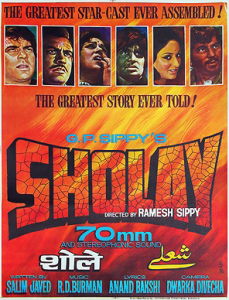
In any case, unlike the two protagonists of the movie ‘Sholay’ (The Glowing Embers, Dir: Ramesh Sippy, 1975), who planned a daring jailbreak, I entertain no such ambitions. I am sure many other fans would approve of this sentiment.
I hereby rest my case and apologize for disturbing you in your well-deserved rest and recuperation in the heavens above with a long letter of this kind. I also wish to assure you that the love for your oeuvre down here on this planet is very much alive and kicking, thanks to many experts, several societies, virtual groups, and fanatics like yours truly.
I can see you smiling down at all of us, waving a gentle hand – this, indeed, is my reward.
A hearty pip pip!
(Photo of Plum’s grave courtesy Ms Anuradha Bharat. Illustration of Lord Emsworth courtesy Suvarna Sanyal. Inputs from Ashok Kumar Bhatia are also gratefully acknowledged.)
(Suryamouli Datta is a 42-year young fan of P G Wodehouse. He is a software professional, presently associated with Tata Consultancy Services. He is an amateurish author who is yet to knock at the publisher’s door. He is a black belt in karate and occasionally dabbles in theatre. He also happens to be a movie buff.
He believes that Wodehouse, like golf, should be caught early and that his Guardian Angels have will-nilly ensured that this is what has happened to him! Thus, the ‘child’ in him is yet to grow up and he is pretty elated about it.)
Related Posts:
The Wodehousean Canon: A Guest Post by Mr. S. Subbaraman
Posted in What ho!, tagged Canon, Humour, P G Wodehouse, Tribute on August 12, 2022| 4 Comments »

Not merely the number but the amazing variety and range of comic situations and characters that Plum has created entitle him to more than the appellation of a comic genius. And then there is the beauty of his language, the mot juste, the easy flow and the almost lyrical quality of the descriptions of nature, especially in the Blandings novels. It was not for nothing that Hillaire Bellock once described him as the best living writer of the English language. It is difficult to pick one’s favourites from his uniformly delightful output. One can merely endeavour to capture the broad contours of his canon here.
Take the case of the Blandings Castle stories wherein the humour is derived from such adorable absurdities as the woollen-headed peer, Lord Emsworth, whose sole passion in life is his prize pig, the Empress of Blandings; his eccentric brother, Galahad, who never went to bed till 4 am and has no business to be in the pink of health that he is in, in his fifties ; his son, Freddie, the go-getter salesman of Donadson’s Dog-joy biscuits; his secretary, the ever-suspicious Rupert Baxter; his gardener Agnes McAllister who detests any attempts by kids to pick up flaar’z from his fiefdom; the array of his formidable sisters and last, but not the least, the dignified and portly butler, Beach, whose walk reminds one of an elephant having a saunter in an Indian jungle, and one for whom it is difficult to stop once the subject of the lining of his stomach comes up.
The Jeeves-Wooster stories depend on a plethora of odd-ball characters such as the hero, Bertie Wooster, himself; his incomparable gentleman’s personal gentleman, Jeeves, who is also Bertie’s friend, philosopher and guide and rescues him from many a sticky situation, being endowed with a master brain, probably the result of his predominantly piscine diet; Bertie’s favourite aunt, Dahlia, whose telephone conversations can be heard in the next county; Sir Watkyn Basset, the ex-magistrate, who, according to Bertie, has grown rich by pocketing a five pound fine here and a five pound there, imposed on miscreants; his daughter, Madeline, who thinks stars are God’s daisy chain; his niece Stiffy Byng, a girl to be carefully avoided by all sensible gentlemen because she is always hell-bent on sending them on crazy errands; Bingo Little, who beats the record of falling in and out of love with many members of the tribe of the delicately nurtured till he walks down the aisle with Rosie M Banks, and, of course, Roderick Spode, ‘the eight foot tall’ tinpot dictator, who is once reduced from being a menace to a mouse by Bertie telling him that he knows all about Eulalie!
Not to forget one of his friends, Augustus Fink-Nottle, the bespectacled newt-fancier, whose uninhibited speech at the Market Sondsbury Grammar School, made when he was duly oiled, plastered, sozzled, whiffled, and blotto (as Roget would have it), would need another piece altogether.
Can one really blame many of Plum’s fans who bemoan the fact that Rupert Psmith, the suave Etonian, appears in very few of his works? The way in which he manages his bosses in Psmith in the City, goes about wooing Eve Halliday in Leave it to Psmith, and even tackles underworld dons in Psmith the Journalist, leaves one yearning for more.
Mr. Mulliner’s juicy tales, narrated to a devoted audience of his at The Angler’s Rest, recounting the escapades of a vide array of his nephews and nieces, are so very delightful. Whether it is Eustace who, while working at the British Embassy in Berne, earns the right to yodel in the presence of the Vice-President, or Adrian who uses his crooked smile to enrich himself with a sum of hundred thousand pounds and even win over the love of his life, the sheer range of these characters would regale as well as baffle the mind of any lesser mortal.
And then we have the inimitable Ukridge, whose amoral and dreamy schemes to earn money simply tell us how not to conceive and run a business venture. After the failure of each of his ventures, he does not take much time to rebound. A chicken farm going for a toss merely leads him to start thinking of setting up a duck farm. A great lesson in tenacity and resilience, one would say.
Besides, we have many stand-alone novels which are simply superb. If The Damsel in Distress tells us about the lives of authors and music composers and ends on a strong anti-obesity note, The Girl in Blue covers the perils of shoplifting, renovating old crumbling properties, and teaching the rozzers a lesson or two by pushing them into the refreshing waters of a brook. Of course, there are many others, but I wish to let my audience have merely a bird’s eye view, so to say.
These days, having just picked up ‘The Old Reliable’, I realize that though it is not as riotously funny as many of the above groups of stories, it is also a very nice read because of picturesque characterization and delightfully witty dialogue.
Plum had the unique skill of making the weirdest and oddest situations seem entirely laughable. His works make even a nonagenarian like me get up each morning, overcome the kind of subdued pessimism which engulfs one at a ripe age, and cheerfully look forward to the day, basking in his blissful humour while devouring one of my favourite tissue restoratives, there being no necessity to put any of Jeeves’s famous pick-me-ups down the hatch.
About the Author:
Mr. S. Subbaraman retired from the Archaeological Survey Of India (A.S.I.) in 1987 as Superintending Archaeological Chemist, having been the Head of the Southern Region of the Chemistry Branch of A.S.I. at Hyderabad, and having worked on such famous monuments as Ajanta, Lepakshi and Brihdeeshwara (Thanjavur) temples etc on the conservation and restoration of our mural painting heritage and in Belur, Halebid etc in Karnataka on stone conservation. He has led many teams to exotic monuments abroad, rendering specialized services and advice for conservation of many structures.
After retirement from A.S.I., he served as Director of the INTACH Chitrakalaparshath Art Conservation Centre, Bangalore, from 1993 to 2006. He was then responsible for the conservation and restoration of many art objects of various kinds for institutions as well as for individual owners.
He took voluntary retirement in June 2006 and settled down in Mysore to lead a life of retirement, consisting of such activities as reading. P G Wodehouse is one of his favourite authors.
Note:
I confess to having taken some liberties with the original text posted by the author on the Fans of P G Wodehouse page on Facebook recently; his permission to blog it here is gratefully acknowledged.
Tryst with Fire: Welcome to the Storm; Guest Post by Prof Sanjoy Mukherjee
Posted in Management Lessons, tagged Belur Math, Chicago, India, Leadership, Netaji Subhash Chandra Bose, Nietzsche, Rabindranath Tagore, Satyajit Ray, Shri Ramakrishna, Sister Nivedita, Socrates, Sri Aurobindo, Swami Vivekananda, Tribute on January 13, 2022| Leave a Comment »

A Tribute to Swami Vivekananda: Leader Extraordinary
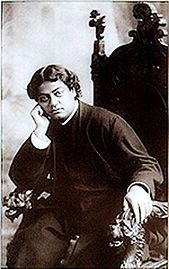
“On the seventh of August 1941, in the city of Calcutta, a man died. His mortal remains perished but he left behind a legacy… that no fire can ever consume…”
That was the baritone, sonorous voice of Satyajit Ray in his documentary titled ‘Rabindranath’ created as a tribute to Rabindranath (a project mandated on Ray, the genius in film making, arts and literature, commissioned by Ministry of Culture, Government of India) on the occasion of the birth centenary of the another genius, Rabindranath Tagore the Nobel laureate poet, musician, novelist, dramatist, artist and philosopher. The first scene of the documentary depicted the last and final journey of Tagore to the burning ghat (crematorium).
Ray’s portrayal of Tagore began with the scene finale. But where do we start in our odyssey with the volcanic monk of India whose 150th birth anniversary we celebrated…
View original post 2,153 more words
A Basketful of Plums: Guest Post by Shiva Kumar
Posted in What ho!, tagged Death Anniversary, Humour, P G Wodehouse, Tribute, Valentines Day on February 18, 2021| Leave a Comment »
A note from Shiva Kumar
I had written this poem in 2015 as a tribute to the master humourist, P.G.Wodehouse, who died on Valentine’s Day in 1975. Ace caricaturist Suvarna Sanyal paid me the highest compliment with his superb sketch showing The Master himself appreciating my poem. Thank you, SS!

A BASKETFUL OF PLUMS
Holiday morning, lovely day
To the bookshop, I’m on my way
The bookman called and said “come, quick,
Come a-running and take your pick.
A bunch of ol’ books have arrove,
A big crateload, a treasure trove.”
I wade in, my wish list in hand
Books all over, I can’t see land.
Dark grim tales to the left of me,
Sob stories to the right of me;
Pah! Bah! And Tchah! Far away be,
I want books which guffaw make me.
Books all over, I can’t see land.
Dark grim tales to the left of me,
Sob stories to the right of me;
Pah! Bah! And Tchah! Far away be,
I want books which guffaw make me.
Melodrama, romance, forsooth!
Stuff, no sense in the bitter truth.
Yes, ribbing prose, tickling poetry,
But no science nor geometry.
Stuff, no sense in the bitter truth.
Yes, ribbing prose, tickling poetry,
But no science nor geometry.
Clarence, Freddie, Threepwood clan
Sir Galahad, the Pelican
Empress, Baxter, the angry swan;
Plum makes you chortle, that’s his plan.
Sir Galahad, the Pelican
Empress, Baxter, the angry swan;
Plum makes you chortle, that’s his plan.
Psmith the name with the silent P,
Sometimes dotty, always natty!
Ukridge the get-rich-quick schemer,
Out, looking for his redeemer.
Sometimes dotty, always natty!
Ukridge the get-rich-quick schemer,
Out, looking for his redeemer.
Anatole, chef extraordinaire,
He cooks up a superb French fare;
But when he expresses his ire,
His English is simply hilare!
He cooks up a superb French fare;
But when he expresses his ire,
His English is simply hilare!
Come and meet Mr. Mulliner,
Angler’s Rest’s own story teller.
Or, the golf club’s Oldest Member,
Who many tales does remember!
Angler’s Rest’s own story teller.
Or, the golf club’s Oldest Member,
Who many tales does remember!
Roderick Spode, Sam the Sudden,
Uncle Fred, Pongo Twistleton!
Sally, Gussie, Bingo, Catsmeat,
On my bookshelf you all I’ll greet!
Uncle Fred, Pongo Twistleton!
Sally, Gussie, Bingo, Catsmeat,
On my bookshelf you all I’ll greet!
Ah! There I spy a Bertie tale
With his antics he does regale.
By himself he’ll be in a bind
Thankfully, Jeeves isn’t far behind.
With his antics he does regale.
By himself he’ll be in a bind
Thankfully, Jeeves isn’t far behind.
Wodehouse Omnibus, just you wait
Till I pick you up from that crate!
Plum’s the word for the humour stuff
Reading once is just not enuff!
Till I pick you up from that crate!
Plum’s the word for the humour stuff
Reading once is just not enuff!
A holiday morning well spent
Time flew, so fast, it came and went!
Now to curl up in the arm chair
Read away, come up only for air!
Time flew, so fast, it came and went!
Now to curl up in the arm chair
Read away, come up only for air!
(Shiva Kumar is an electrical engineer by education. Having served in several industries, he and his Alma Mater are both relieved that he has never been called upon to prove his subject knowledge. He is otherwise adept at delivering uplifting shocks to those who follow him with his occasional blog posts, dishing out stuff that would make a reader laugh. His creative outpourings can be accessed at either https://sudden-elevenses.blogspot.com or https://thewiklyupdet.blogspot.com.He also loves to indulge in photography and listening to music. He likes nature and his favourite places to visit are the hills.
Suvarna Sanyal has had a satisfying career pouring over bulky ledgers of a bank. He has an eye for the humorous and the unusual. He never fails to amuse with the sparkling illustrations he keeps coming up with. An Ace Caricaturist he surely is!
Permission to post this composition here is gratefully acknowledged.)
Tryst with Fire: Welcome to the Storm; Guest Post by Prof Sanjoy Mukherjee
Posted in Management Lessons, tagged Belur Math, Chicago, India, Leadership, Netaji Subhash Chandra Bose, Nietzsche, Rabindranath Tagore, Satyajit Ray, Shri Ramakrishna, Sister Nivedita, Socrates, Sri Aurobindo, Swami Vivekananda, Tribute on May 20, 2020| 4 Comments »
A Tribute to Swami Vivekananda: Leader Extraordinary
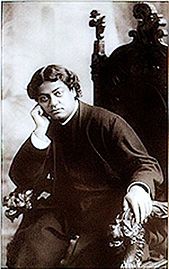
“On the seventh of August 1941, in the city of Calcutta, a man died. His mortal remains perished but he left behind a legacy… that no fire can ever consume…”
That was the baritone, sonorous voice of Satyajit Ray in his documentary titled ‘Rabindranath’ created as a tribute to Rabindranath (a project mandated on Ray, the genius in film making, arts and literature, commissioned by Ministry of Culture, Government of India) on the occasion of the birth centenary of the another genius, Rabindranath Tagore the Nobel laureate poet, musician, novelist, dramatist, artist and philosopher. The first scene of the documentary depicted the last and final journey of Tagore to the burning ghat (crematorium).
Ray’s portrayal of Tagore began with the scene finale. But where do we start in our odyssey with the volcanic monk of India whose 150th birth anniversary we celebrated earlier in this decade?
“Let’s start from the very beginning/ a very good place to start…” (The Sound of Music)
Naren or rather Bile (Narendranath Datta) was storm or turbulence personified from childhood in the premises of the Datta household in North Calcutta. Never obedient to seniors, ever an enigma to peers (his local friends), he would relish his father’s hookas (smoking pipes) or throw away his mother’s clothes from the windows to the beggars on street even while he was locked up in a room for his erratic unmanageable behaviour. But when the time of crisis came, his friends would run away at the sight of a snake. But he would remain seated, immersed in meditation while the snake rustled away leaving him in peace. Trained in the art of physical mastery, he would combat the white man for speaking ill of Indians. He showed the promise of a Life Exemplary and Leader Extraordinary!
“His pre-eminent characteristic was kingliness. Wherever he went he was the first.’ (Romain Rolland).
Narendranath was a born leader, never ‘made’ – only refined and directed by his great master Shri Ramakrishna.
A good leader accepts the situation at hand and tries to find a way out. But a great leader is ever in discomfort with the commonplace and the hackneyed reality. Naren began his quest for the beyond with burning questions on the existence of God and purpose of Life – only to be answered clear and direct by Sri Ramakrishna, who was to become his master though in appearance, upbringing and otherwise his direct antithesis. But this was not by any devout dedication but through a series of questioning he hurled upon his master. And then came the hour of consecration.
“Ei jonmo ei shorir oi murkho bamun kine niyeche”. (This life, this body is consecrated to that old illiterate Brahmin!) – He wrote to a brother disciple later.
By the way, Narendranath was projected as the leader of tomorrow by his master – not by himself!
“Naren shikshe debe” (Naren will teach the world) – was the prophecy of Shri Ramakrishna in the Master’s own writing.
A great leader emerges out of stormy crisis from various fronts – death of father, deprivation of mother from family property, futile search for a job. But he had the fortitude to stick to his master’s promise that he would never be plagued with basic sustenance. His primary preoccupation became an immersion into the self, deep in meditation. “Mon cholo nijo niketone…’ (O Mind! Return to thy own repose!). It was for his Master to turn him towards the world with the message of service, love, education to humanity. He was destined to be a leader –a banyan tree for one and many.
Storm as in crises for him was lifetime companion – severe hardship n Baranagar Math in North Calcutta after the death of his Master, hunger and uncertainty during his parivrajaka (the wandering monk) life in India, anxiety about funds for the America trip, spending sleepless and shivering night in Chicago railway station, lampooned and maligned by his opposition religious groups in the West and even from his close quarters back home.
But the fire in him was never to extinguish.
Vivekananda stood for the principles of acceptance and assimilation of diverse opinions, values and cultures. A true global leader in thoughts, words and action, he became a fiery inspiration to men and women from the East and West from myriads of background – businessmen like Rockefeller and Jamshetji Tata, European women like Margaret Noble (Sister Nivedita) and Emma Calve, scientists like Acharya J C Bose and many more. His style of communication was different for each according to the nature and character of individuals. His was an enlightened universal mind a century ahead of his times. But never did he lose his anchor in India.
“India was his daydream. India was his nightmare.” (Sister Nivedita)
And his thundering voice rose: “He Bharat bhuliona…” (O India! Forget not…). He never disowned the past and ever cherished the golden heritage of India. But he was ever stretching out his hand and heart of welcome to the West as well, to a future that is different and diverse yet mutually and globally enriching for one and all.
“Je somonnvoy kore sei lok” (The one who can synthesize is truly a human) said his Master. Swamiji lived this message throughout life – a grand synthesis of the best from all parts of the world that he had visited during his brief life span.
‘Srinvantu Vishwe Amritasya Putrah’ (Listen! O Children of Immortality, world over!). This was the invocation of the rishis of the Upanishads. The voice of Swamiji in Chicago Parliament of Religions resonated; “Sisters and brothers of America…” He was a modern incarnation of the ancient rishis (sages and seers) in the attire of a monk.
Back home he chose ‘atmanomoksharatham jagat hitaya cha’ as the motto of the Ramakrishna Mission – (For the liberation of the self and the welfare of the world) on the foundation of the philosophy and principle of action ‘Siva jnana jivaseva’ (To serve man is to serve God n Man) as he learnt from his Master.
His last life in Belur Math was like that of a child – playing with animals and enjoying the company of tribal people while giving lessons on Upanishads to brother monks. In fact his was a life of a child-like leader yearning for fresh air and new light and learning forever. He learnt from all possible sources including a low caste ‘bhangee’ (one from a low caste) with whom he had smoke and also a dancing girl who, in Rajasthan at the palace of Maharaja of Khetri, taught him the message of non-discrimination among humans.
“Jabot bnachi tabot shikhi” (I learn as long as I live) – was the message of Shri Ramakrishna. Following this precious teaching from his Master Swamiji lived, loved, learnt and left a legacy that is lasting and growing even beyond a century! Ramakrishna Mission is sustaining and flourishing every day all over the world for the service of humanity at large – spiritual, social and educational.
His funeral pyre was lit on the bank of the Ganges on the fifth of July 1902. The body of the monk inferno Swami Vivekananda was stretched on pyre in his chosen place under the bilwabrikshwa (The Bengal Quince tree) in Belur Math. His mother Bhubaneshwari Devi was sitting and watching the rising flames from the body of his eldest son. A speck of his saffron robe flew in the wind to Sister Nivedita, the devout disciple of the monk. She collected and preserved that ‘memento’ for her inspiration to action in the days to come.
Thus was the mortal consummation of the Swami, the Prince among men –the volcanic monk who shook the world with the fiery message of the Upanishads under the spiritual umbrage of his ‘seraphic master’ Sri Ramakrishna and ignited the spirit of India towards freedom.
Netaji (Subhas Chandra Bose) accepted him as his fiery guru in mortal absentia. In the words of Sri Aurobindo, it was like “baptism with blood and fire”. Netaji described Swamiji as a leader extraordinary in the following words:
“Reckless in his sacrifice, unceasing in his activity, profound and versatile in his wisdom, boundless in his love, exuberant in his emotions, merciless in his attacks and yet as simple as a child, he was a rare personality in this world of ours.
If Swamiji had been alive today he would have been my guru.”
I have ransacked the history of leadership and management literature in my voyage through Human values and Indian Ethos in Management, Spirituality and Leadership for nearly three decades but never found such a detailed, succinct yet most powerful and accurate assessment in these seven leadership qualities of one genius of a world leader by another of no mean stature.
We began with a tribute to Tagore by Satyajit Ray. And here we find a tribute to Swami Vivekananda, the Great Master and Leader Extraordinary by none other than Netaji Subhas Chandra Bose. They remain with us as fountainhead of boundless inspiration in a world ruled and dictated by leaders who at best belong to the class of mediocrity in academia and otherwise!
But the fire in the volcanic monk still remains alive and aflame in those who are willing and ready to be ignited.
‘Agne twam hridayam agachha’ – Oh Fire Eternal! Come and set our hearts ablaze!
“Amar modhye je agun jwolchhe tomader modhye o sei agun jwole uthuk… Ei sodai Vivekanandar prarthana.”
(The fire that is burning within me may set all your hearts aflame! This will ever be the eternal prayer of Vivekannada.)
May we live up to his prayers!
It was high in the snowy Himalayas. Swamiji was on pilgrimage with a few chosen disciples. His intense meditation led him to a vision of the Mother Kali, the Black Goddess, the mighty Destroyer and Time Eternal, lurking behind the veil of life. During one evening in a state of high fever he wrote a famous poem that concludes thus:
“Who dare misery loves,
And hug the form of Death,
Dance in destruction’s dance,
To him the Mother comes.”
He said to her chosen disciple Nivedita (an Irish lady of noble origin): “Meditate on death. Only by the worship of The Terrible can The Terrible itself be overcome…There could be bliss in torture too…The Mother Herself is Brahman…The heart must be a cremation ground – pride, selfishness, desire, all burnt to ashes. Then and then alone, will the Mother come!”
Vivekananda exemplified an authentic synthesis of the East and the West, the past and the present, Science and Religion, contemplation and action, spiritual pursuit and service to humanity. He was the messenger of dynamism and hope to India and the world. Could it be that he was under a spell of so-called negative thinking when he wrote the above verse? Or did he want to convey a pertinent message in a different mood that might be useful for all in moments of turbulence and uncertainty?
Leaders of tomorrow in business or otherwise, when shall we learn from death and destruction of old orders that we need creative quantum breakthroughs in our leadership principles, roles and practices to shake the very foundation of our outdated models and worn out concepts, our tunnel vision and fossilized values, by keeping alive and aflame just one precious element within our hearts – the passion to transform and infuse new life in our organizations and the planet at large?
Millennia ago, Socrates exhorted us to think and look within ourselves: “An unexamined life is not worth living.” Closer in time, the voice of Nietzsche sounded even more daring and adventurous: “If one is to live, one is to live dangerously.”
{Tribute to Swami Vivekananda, the Great Master and leader extraordinary on The Foundation Day (May 1st, 1897) of The Ramakrishna Mission, the first Indian international organization with headquarters in India (Belur Math, Howrah – Kolkata on the bank of the Ganges) but outreach all over the world with more than 200 centres and still thriving in glory for almost more than a century and a quarter dedicated to the service of suffering humanity. An entrepreneurial venture of timeless significance even in times of crisis as in the present, this institution remains and grows as the ever expanding global vision of this great master as an inexhaustible source of energy and inspiration, firmly rooted in Indian culture, ethos and heritage but with appeal reaching all over the world. At a level of Philosophy in Practice (Practical Vedanta, a term coined by himself that he spread like wild fire in the West even within the short span of his life of less than forty years) he gave a new turn to the ideal of monkhood with simultaneous emphasis on pursuit of salvation of the self through evolution of Consciousness and welfare of humanity at large.The Ramakrishna Mission that embodies the ideals of globalization and sustainability propounded by its founder a century before the pioneers of management in the West could even conceive of these ideas and principles. Even at a functional level the structure of the main temple of Shri Ramakrishna in Belur Math represents a grand synthesis of the East and the West – of Christian, Islamic and ancient Indian architecture.]
(Sanjoy Mukherjee (58) is Faculty of the Sustainability, CSR and Ethics academic group at the Indian Institute of Management (IIM) Shillong. He is the Chairperson of the Institute’s Annual International Sustainability Conference (SUSCON) and also the Chairperson of Student Affairs, Placement and Public Relations.
His detailed profile can be accessed at https://www.linkedin.com/in/sanjoy-mukherjee-72b18823
Permission to publish this tribute here is gratefully acknowledged.)
Valentine’s Day: A Plummy tribute to the Master Wordsmith
Posted in What ho!, tagged P G Wodehouse, Tribute, Trivial Travails, Valentines Day on March 29, 2016| 2 Comments »
Here is a juicy tribute to P G Wodehouse from a fan of his, Mahesh Verma. He is a banker by profession, a columnist by choice; a father of two lovely daughters and a husband to an amazing woman! Every alternate Wednesday, he writes a column known as ‘Trivial Travails’.
“Albert Einstein probably didn’t realise that his theory of relativity did not really affect those who are not relatives and consequently tie the knot on T-1 from Valentine’s Day, and his theory of relative disappointment (“Women marry men hoping they will change. Men marry women hoping they will not. So each is inevitably disappointed”) also does not hold true for those brave ones who are not falling prey to the triskaidekaphobia – the morbid fear of the number 13!
So while M&M celebrated vanquishing the fear of that number in their exotic residence in The Hague, M&V celebrated overcoming that dreaded number 13 in their not-so-exotic residence in The Wave.
And as February 13th blended into the 14th, the Shakespearean fans reminded the non-believers: “Doubt thou the stars are fire; Doubt that the sun doth move; Doubt truth to be a liar; But never doubt I love.”
So while the world celebrated what is popularly known as Valentine’s Day (a day dedicated to extortion, as per Jay Leno) a few of the dedicated bunch mourned the passing away of the Master, some 41 years ago. Sir Pelham Grenville Wodehouse, KBE born on October 15, 1881 left for his Master’s abode on February 14, 1975.
Almost like yours faithfully, Wodehouse also was employed by a bank and also disliked the work and also turned to writing in his spare time. But while he switched to comic fiction, creating characters like “the feather-brained Bertie Wooster and his sagacious valet, Jeeves; the immaculate and loquacious Psmith; the feeble-minded Lord Emsworth and the Blandings Castle set”, this plebian started with writing for the school newspaper and graduated to the Reader’s Forum and switched to the column, ‘Trivial Travails’, writing about the handsome Atticus and the Trinity and the society at large – where some display their assets while others display what, unknown to them, have become liabilities over time.
While Wodehouse moved in 1934 to France for tax reasons, this poor banker moved to Muscat in 1985 for pecuniary reasons. While the Master used a mixture of Edwardian slang, quotations from and allusions to numerous poets, and only some critics considered his work flippant, nearly all critics (and boy, are they out there!) consider the TT to be flippant despite the quotations from numerous poets and references to the acute and obtuse.
But flippant or not, the alternate Wednesdays keep coming and so does the TT – at least till some more time to come. C’est la vie – such is life! And across the oceans, on the night of February 14, Leonardo DiCaprio had a date with Kate Winslet, at the Royal Opera House in London. Yes, they have a Royal Opera House there too, though nowhere as elegant and beautiful as ours in Muscat. But I digress…was in the process of telling you that Leo and Kate did what they couldn’t do during their Titanic days.
And before the likes of a certain Mr Singh start thinking things, one needs to clarify that the stars of Titanic fame won the 69th BAFTA awards: Leo won his first Best Actor’s award for his role in The Revenant while Kate got the Best Supporting Actress award for her role as Steve Jobs’ secretary. And the coveted Academy Fellowship went to Sir Sidney Poitier, the Sir of To Sir, with Love fame.
The British Academy Film Awards are generally considered to be a precursor to the Academy Awards (or Oscars) and the bookies are now busy rejuggling their odds and ends on Leo and Kate. Don’t know about DiCaprio and Winslet, but I am hoping that Asif Kapadia does a repeat of the BAFTAs and wins again for the best documentary Amy – based on the late singer Amy Winehouse. And the same evening, the BAFTA’s host Stephen Fry’s comment about the costume design award-winner Jenny Beavan’s appearance created havoc in the world of the Twitteratis. After users tweeted him their distaste, he angrily responded in a number of updates, reminding people that Beavan is a close friend of his and she was aware of his intention.
He wrote: “Will all you sanctimonious … … … … … (expletives deleted to protect the continuity of the TT). Jenny Beavan is a friend and joshing is legitimate. Christ I want to leave the planet”. He also shared a picture of himself and Beavan, with the caption: “Jenny Baglady Beavan and Stephen Outrageous Misogynist Swine Fry at the #EEBAFTAs after party”. But he subsequently deleted his account expressing his happiness at being free from Twitter, a platform he referred to as “a stalking ground for the sanctimoniously self-righteous who love to second-guess, to leap to conclusions and be offended”.
Maybe someday, I too will delete my Twitter account after I get to host some award function or the other! But in all fairness, let the man be… . Stephen Fry is a genius, not only because he is the quintessential perfect Jeeves and his Moab is my Washpot is an absolute gem of an autobiography, but because he is!
Give the man a break – if we can’t joke with a friend or about a friend on stage or in print, then we might as well sell our souls to the critics. Right, Mr Singh?
And before I sign off, a few random thoughts:
Do you know that hell hath no fury like a woman scorned?
Do you know that hell also hath no fury like a woman conned?
Do you know that hell actually hath no fury like a woman tagged in a Facebook photo that makes her look fat??
Till next fortnight… .”
(Notes:
- This article appeared in The Muscat Daily on the 17th of February, 2016. (http://www.muscatdaily.com/Archive/Stories-Files/Valentine-s-Day)
- Permission from the author to re-blog it here is gratefully acknowledged.)
-
Recent Posts
Buy the Book

buy the book
Categories
-
cc
Tags
Art Bertie Wooster Bhagavad Gita Bingo Little Birthday Blake Mouton Grid Blogging Bollywood Book Campus Life CEO Chivalry Consciousness Coronavirus Corruption Edwin Empress of Blandings English Ethics Feminism Happiness Health Hindi Hollywood Human Values Humour India Jeeves Kalidasa KIds Leadership linkedin Literature Lord Emsworth Love Lyrics Mahabharata Mahatma Gandhi Management Movies Music Norway Paintings Panjab University People P G Wodehouse Politics Pondicherry Portugal Psmith Puducherry Rabindranath Tagore Ramayana Ritusamhara R K Laxman Romance Rosie M Banks Rupert Psmith Seasons Shakespeare Social Media Something Fresh Songs SPANDAN Spirituality SQ Sri Aurobindo Stephen Covey Switzerland Tatas Thos UBS Values Wodehousitis WomenArchives
- March 2026 (1)
- February 2026 (5)
- January 2026 (2)
- December 2025 (1)
- November 2025 (2)
- October 2025 (2)
- September 2025 (3)
- August 2025 (3)
- July 2025 (2)
- June 2025 (2)
- May 2025 (4)
- April 2025 (5)
- March 2025 (5)
- February 2025 (4)
- January 2025 (4)
- December 2024 (6)
- November 2024 (6)
- October 2024 (6)
- September 2024 (5)
- August 2024 (5)
- July 2024 (4)
- June 2024 (4)
- May 2024 (5)
- April 2024 (5)
- March 2024 (3)
- February 2024 (1)
- January 2024 (4)
- December 2023 (2)
- November 2023 (3)
- October 2023 (3)
- September 2023 (3)
- August 2023 (5)
- July 2023 (5)
- June 2023 (7)
- May 2023 (6)
- April 2023 (6)
- March 2023 (8)
- February 2023 (8)
- January 2023 (7)
- December 2022 (6)
- November 2022 (5)
- October 2022 (8)
- September 2022 (5)
- August 2022 (6)
- July 2022 (6)
- June 2022 (8)
- May 2022 (7)
- April 2022 (8)
- March 2022 (7)
- February 2022 (3)
- January 2022 (7)
- December 2021 (4)
- November 2021 (8)
- October 2021 (7)
- September 2021 (6)
- August 2021 (7)
- July 2021 (7)
- June 2021 (9)
- May 2021 (8)
- April 2021 (9)
- March 2021 (10)
- February 2021 (8)
- January 2021 (8)
- December 2020 (7)
- November 2020 (6)
- October 2020 (5)
- September 2020 (9)
- August 2020 (9)
- July 2020 (8)
- June 2020 (8)
- May 2020 (6)
- April 2020 (5)
- March 2020 (7)
- February 2020 (4)
- January 2020 (7)
- December 2019 (12)
- November 2019 (10)
- October 2019 (5)
- September 2019 (9)
- August 2019 (10)
- July 2019 (9)
- June 2019 (14)
- May 2019 (13)
- April 2019 (14)
- March 2019 (11)
- February 2019 (11)
- January 2019 (14)
- December 2018 (12)
- November 2018 (12)
- October 2018 (14)
- September 2018 (9)
- August 2018 (10)
- July 2018 (10)
- June 2018 (8)
- May 2018 (11)
- April 2018 (11)
- March 2018 (6)
- February 2018 (9)
- January 2018 (10)
- December 2017 (10)
- November 2017 (9)
- October 2017 (8)
- September 2017 (11)
- August 2017 (10)
- July 2017 (10)
- June 2017 (11)
- May 2017 (9)
- April 2017 (7)
- March 2017 (7)
- February 2017 (8)
- January 2017 (10)
- December 2016 (9)
- November 2016 (11)
- October 2016 (10)
- September 2016 (10)
- August 2016 (9)
- July 2016 (6)
- June 2016 (10)
- May 2016 (10)
- April 2016 (10)
- March 2016 (10)
- February 2016 (12)
- January 2016 (10)
- December 2015 (11)
- November 2015 (11)
- October 2015 (10)
- September 2015 (10)
- August 2015 (10)
- July 2015 (10)
- June 2015 (10)
- May 2015 (10)
- April 2015 (10)
- March 2015 (9)
- February 2015 (10)
- January 2015 (8)
- December 2014 (9)
- November 2014 (8)
- October 2014 (8)
- September 2014 (7)
- August 2014 (7)
- July 2014 (7)
- June 2014 (7)
- May 2014 (7)
- April 2014 (7)
- March 2014 (7)
- February 2014 (6)
- January 2014 (7)
- December 2013 (6)
- November 2013 (6)
- October 2013 (6)
- September 2013 (6)
- August 2013 (6)
- July 2013 (6)
- June 2013 (6)
- May 2013 (6)
- April 2013 (6)
- March 2013 (6)
- February 2013 (6)
- January 2013 (6)
- December 2012 (4)
- November 2012 (4)
- October 2012 (3)
- September 2012 (2)
- August 2012 (4)
- July 2012 (2)
- June 2012 (2)
- May 2012 (2)
- April 2012 (2)
- March 2012 (2)
- February 2012 (3)
- December 2011 (3)
- November 2011 (1)
- October 2011 (2)
- September 2011 (2)
- August 2011 (2)
- July 2011 (2)
- June 2011 (3)

 ashokbhatia