In one of my earlier posts, I had already confessed that I do not suffer from an affliction which could best be alluded to as Shakespearitis. Given the limited supply of grey cells that nature has bequeathed upon me, I can be held to be a person who has a rather high Pumpkin Quotient. William Shakespeare’s literary outpourings need a much higher level of intellect to be understood and enjoyed. Unfortunately, that I simply do not possess. The stuff he has dished out is meant for brainy coves whose eyes shine with keen intelligence and whose heads bulge at the back, much like Jeeves’.
However, all this does not necessarily guarantee peace of mind. On the contrary, it makes life even more of a challenge. The brow is invariably furrowed. The heart is leaden with woe. This is so because he is to be found everywhere and is apt to spring surprises at all times, not a very pleasing prospect for a faint-hearted person like me. Surely, the fault lies in my stars.
My last trip to the United Kingdom proved to be no exception. A few days after I had unpacked the proverbial toothbrush, on a fine morning, my genial host had whipped up a sumptuous breakfast. While tucking into it with much gusto, I was feeling on top of the world. But just when you feel that life is a bed of roses, God is in heaven, and all is well with the world, Fate sneaks up from the back. Your Guardian Angel decides to proceed on a vacation. The blow falls, leaving one shaken and stirred.
I was informed that the birthplace of The Bard was just an hour’s drive from the town I was in at the time. The host, grace personified, thought it was his patriotic duty to drive me down to the place. Hiding my trepidation somehow, I consented. Well, one must be civil, you see.
As you like it
The journey to Stratford-upon-Avon was part of the charm. Surrounded by the serene English countryside, the town turned out to be a beautiful blend of cobbled streets, Tudor-style buildings, and winding pathways that echo centuries of history. The drive had the effect of converting my initial hesitation to a reluctant sense of anticipation.
Visiting William Shakespeare’s birthplace in Stratford-upon-Avon proved to be like stepping into a time machine that transports one to the relatively simpler times of the late 16th century. Nestled in the charming market town in Warwickshire, England, the house on Henley Street is a unique time capsule that offers a glimpse into the life of Shakespeare and his family, set against the backdrop of a picturesque Elizabethan town. It is instructive to see how Henley Street has evolved over time.
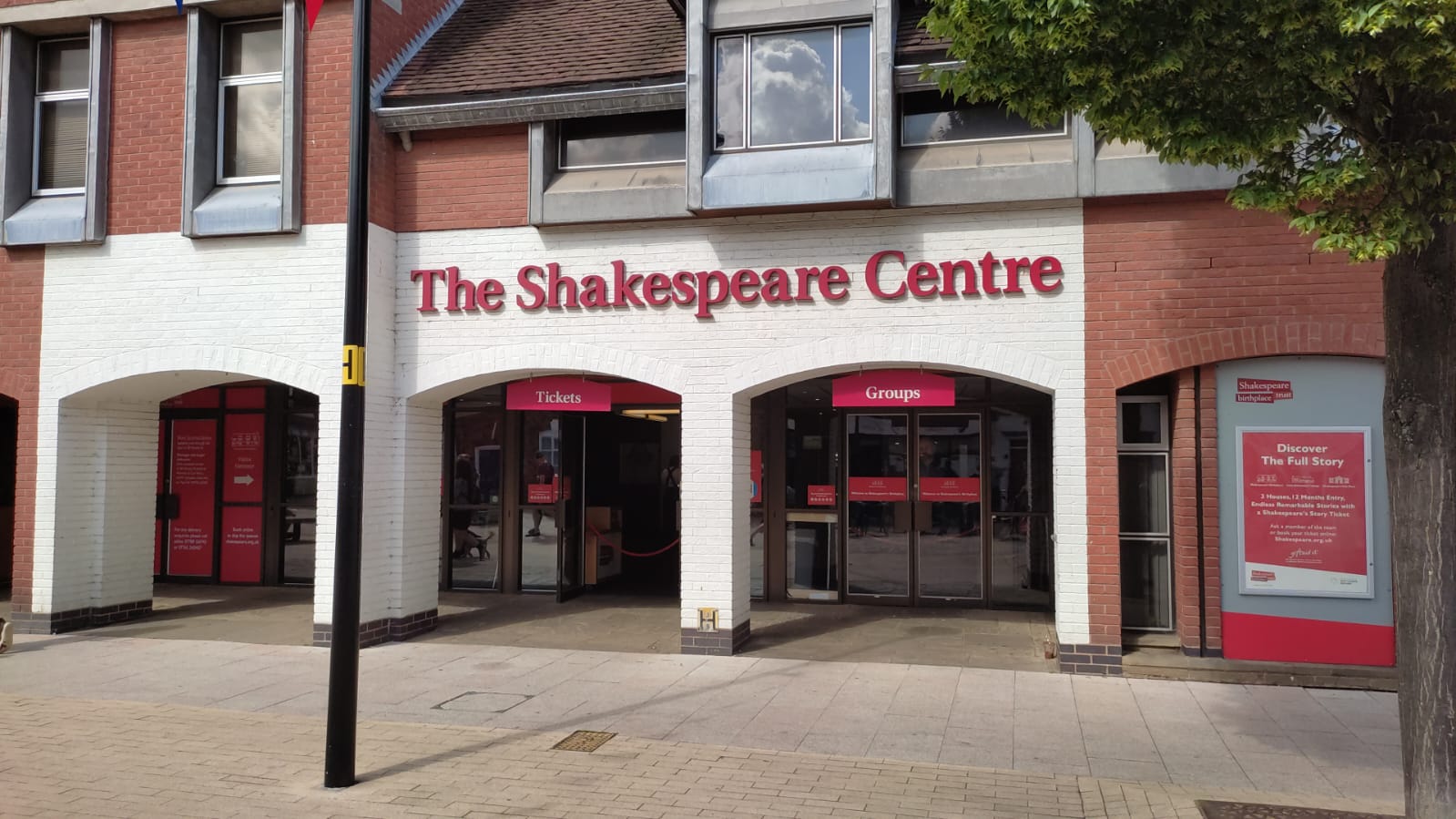
Despite being armed with a Google app, we had to repeatedly disturb a few locals to ask for directions to the Shakespeare Centre.
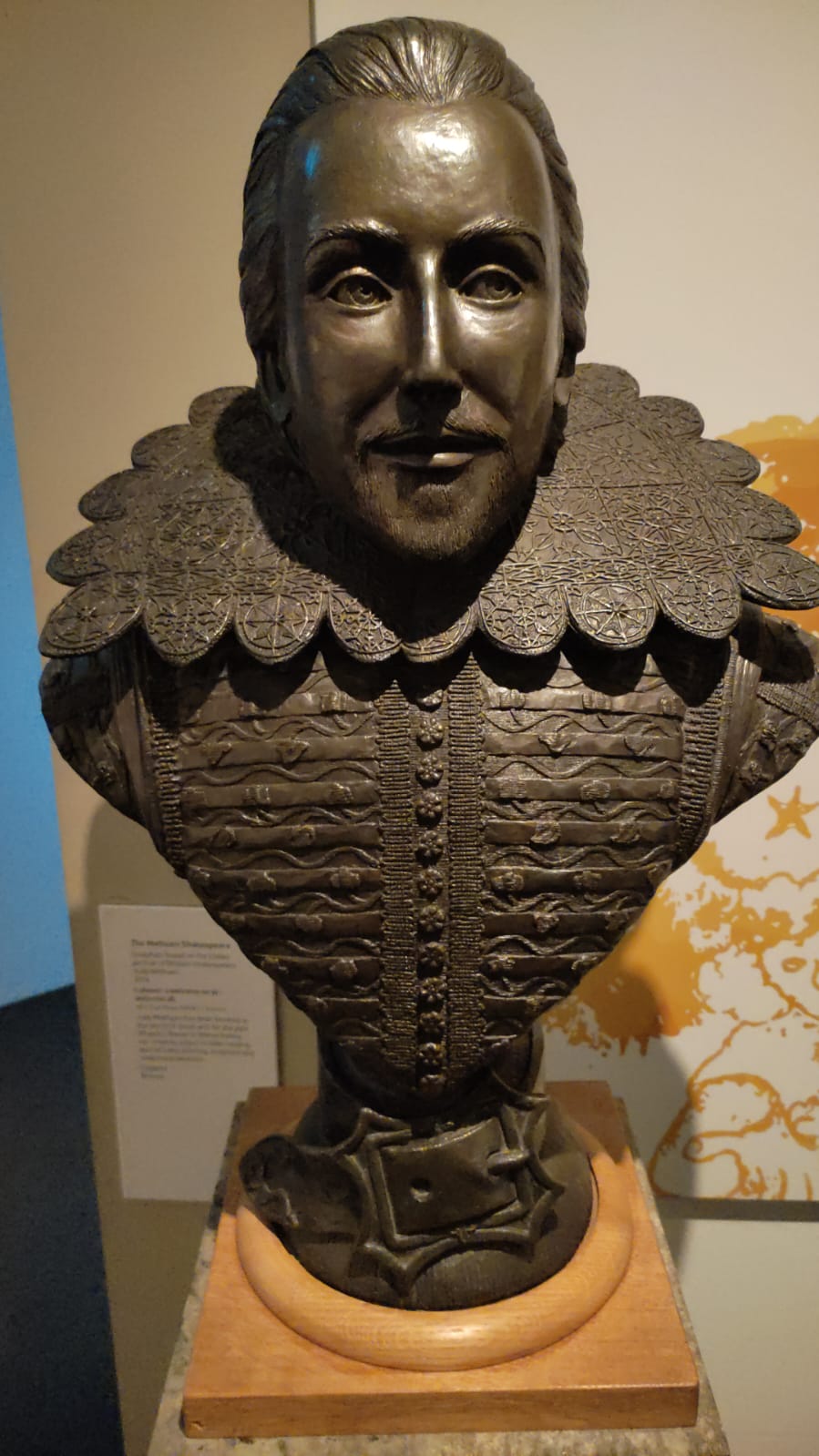
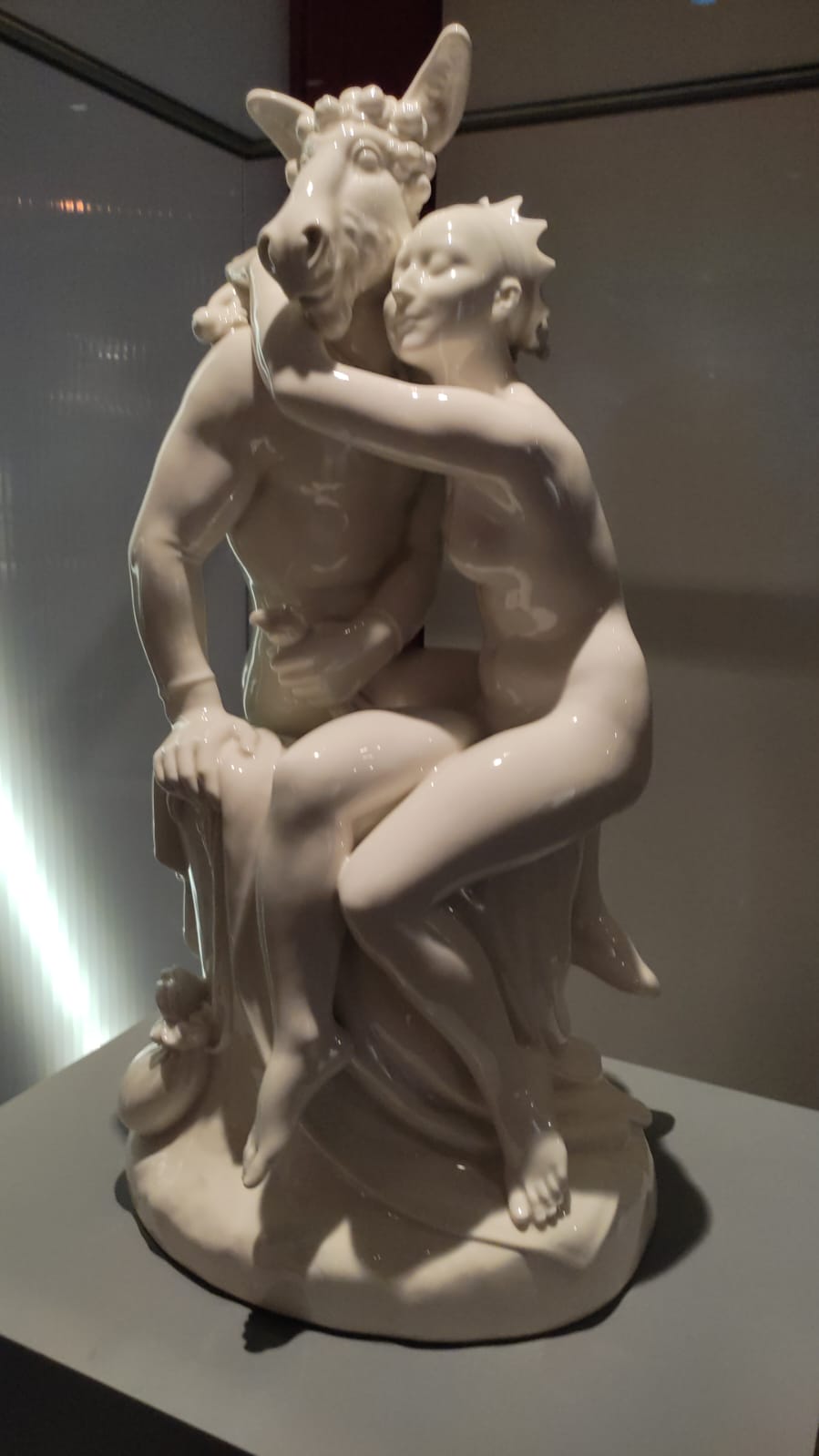
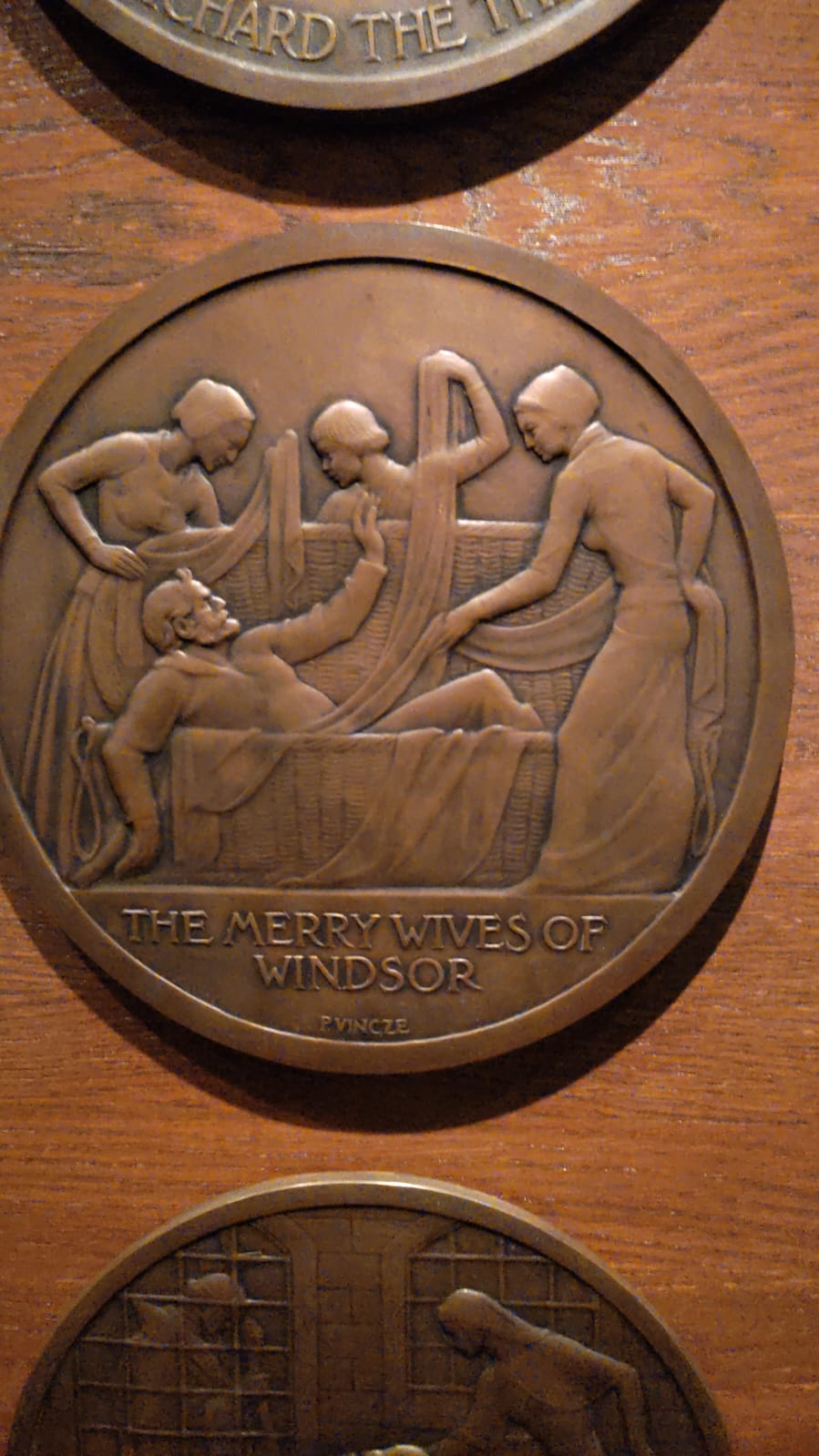
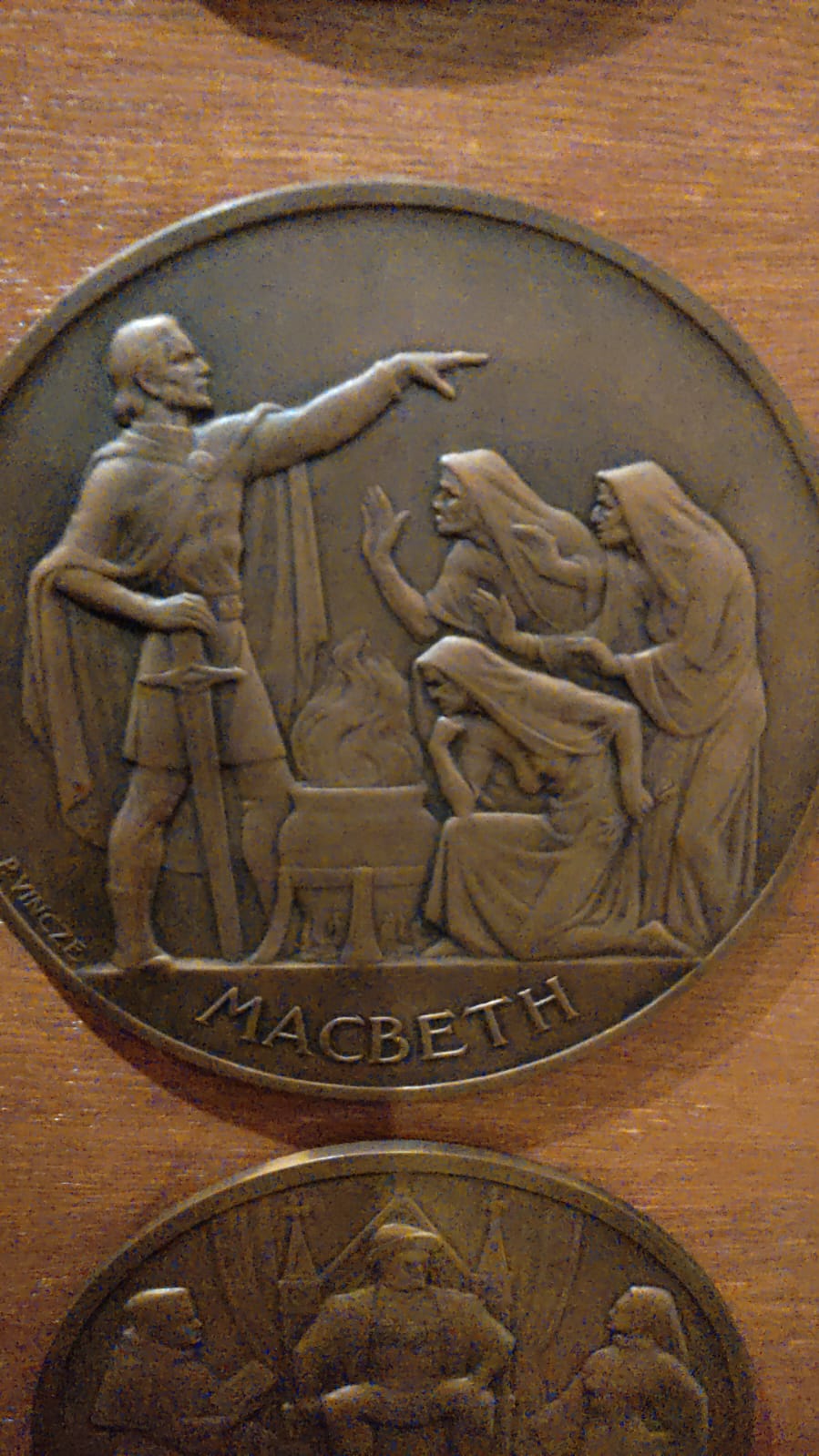
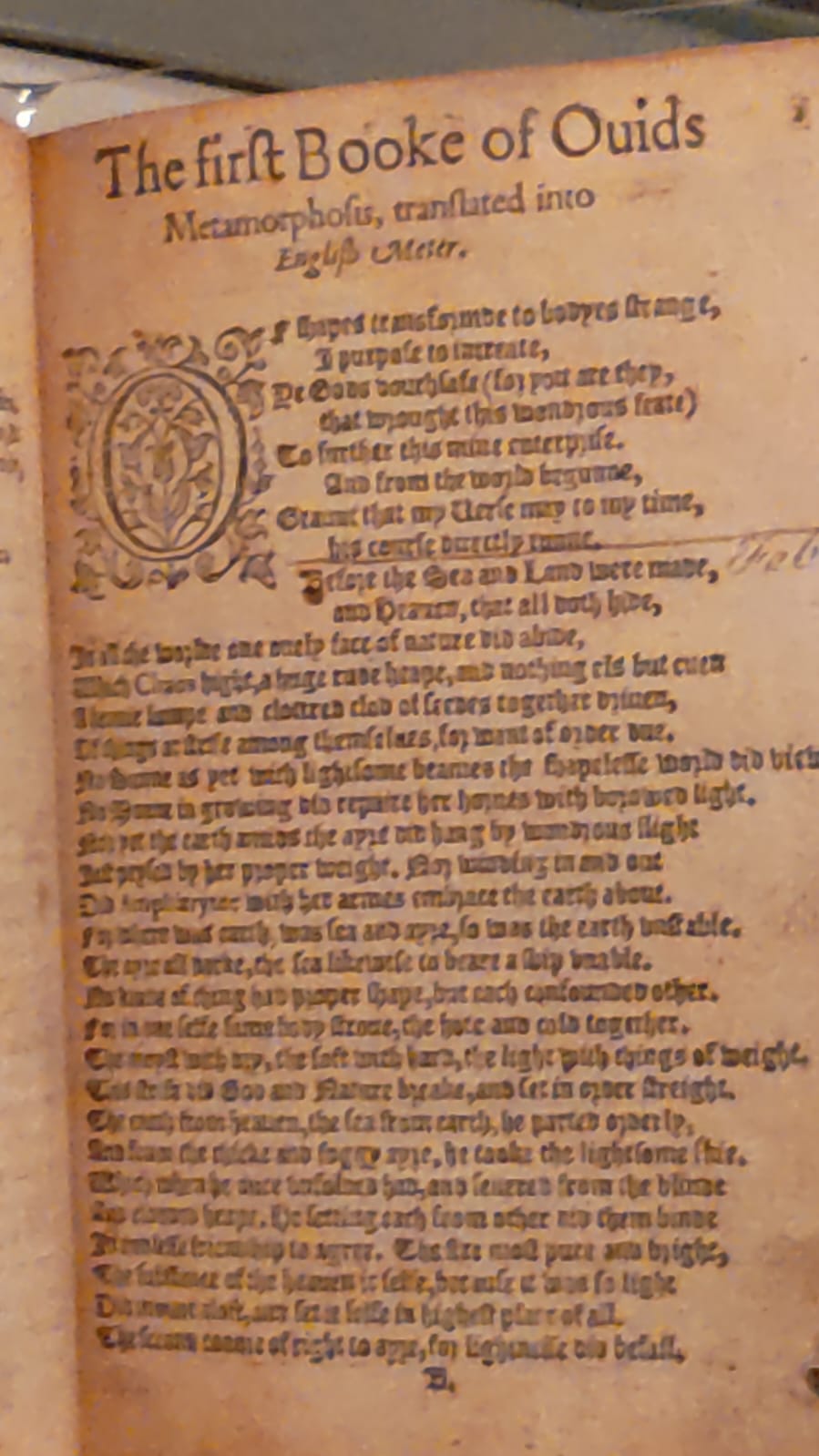
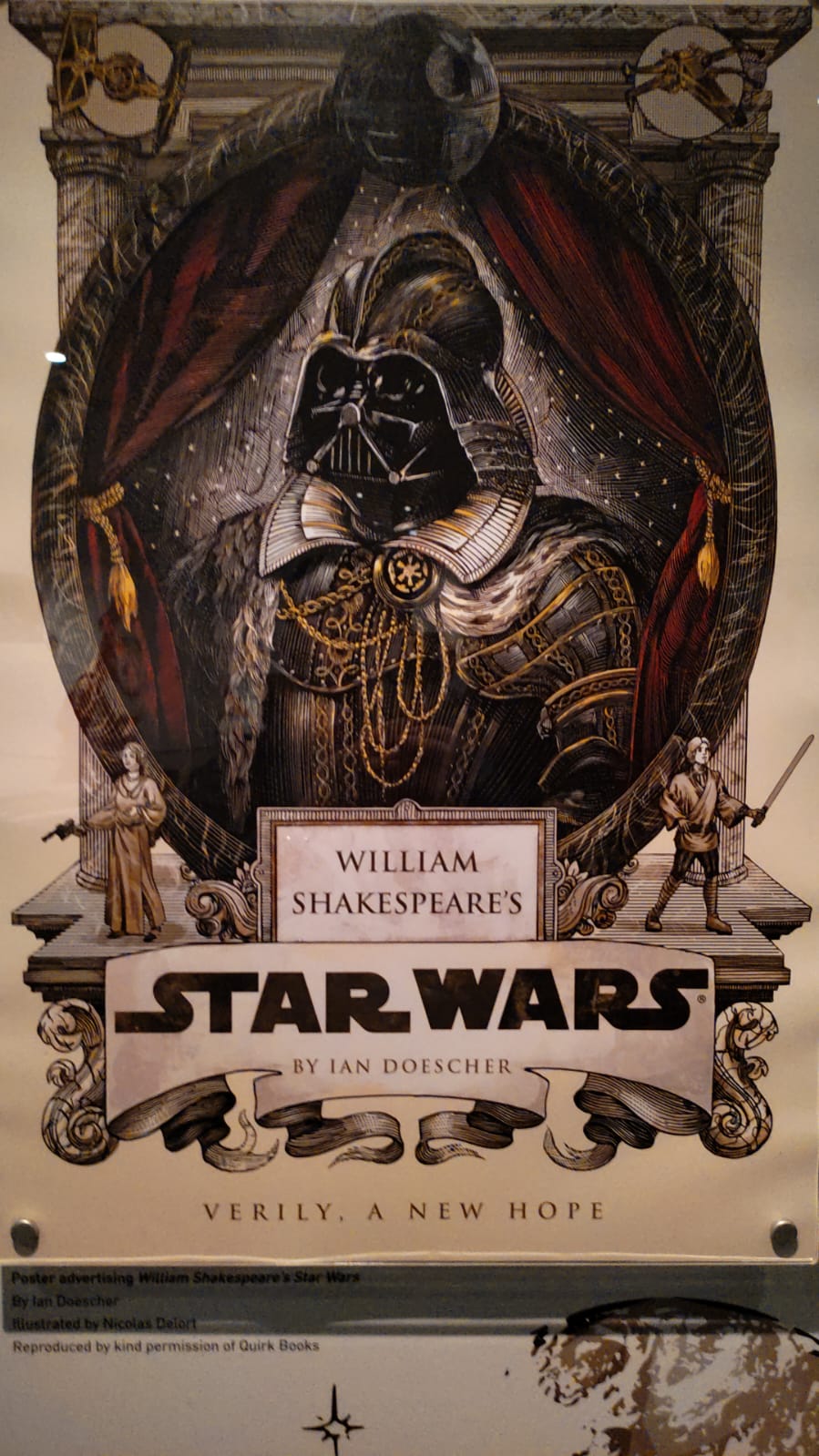
The modern visitor centre serves as an introduction to the playwright’s life, works, and the world in which he lived. It offers exhibits, displays of historical artefacts, and multimedia presentations that set the stage for the main attraction. One can see copper plaques devoted to many of his works, besides creative illustrations that connect him to the contemporary world.
The heaven’s lieutenants
Before we move on to the birthplace itself, a family tree greets us. This is in the fitness of things, because The Bard placed a high premium on families. Some of you may recall this quote of his:
The voice of parents is the voice of gods, for to their children they are heaven’s lieutenants.
I am amazed to find that he was married to a lady by the name of Anne Hathaway; of course, not the Hollywood diva we happen to know since her The Devil wears Prada days!
Home: The place where he could waste his time!
The dwelling is a modest two-story, half-timbered house with a traditional wattle-and-daub construction typical of the Elizabethan era. Its architectural simplicity contrasts with the monumental legacy of the man who was born here in 1564. The house has been carefully preserved and restored to reflect the period as accurately as possible, down to the original furniture styles, wooden floors, and narrow doorways that would have been familiar to Shakespeare. Every corner of the home feels authentic, almost like the Bard himself or his family members might pop up at any moment. (Further details about the place can be found here)
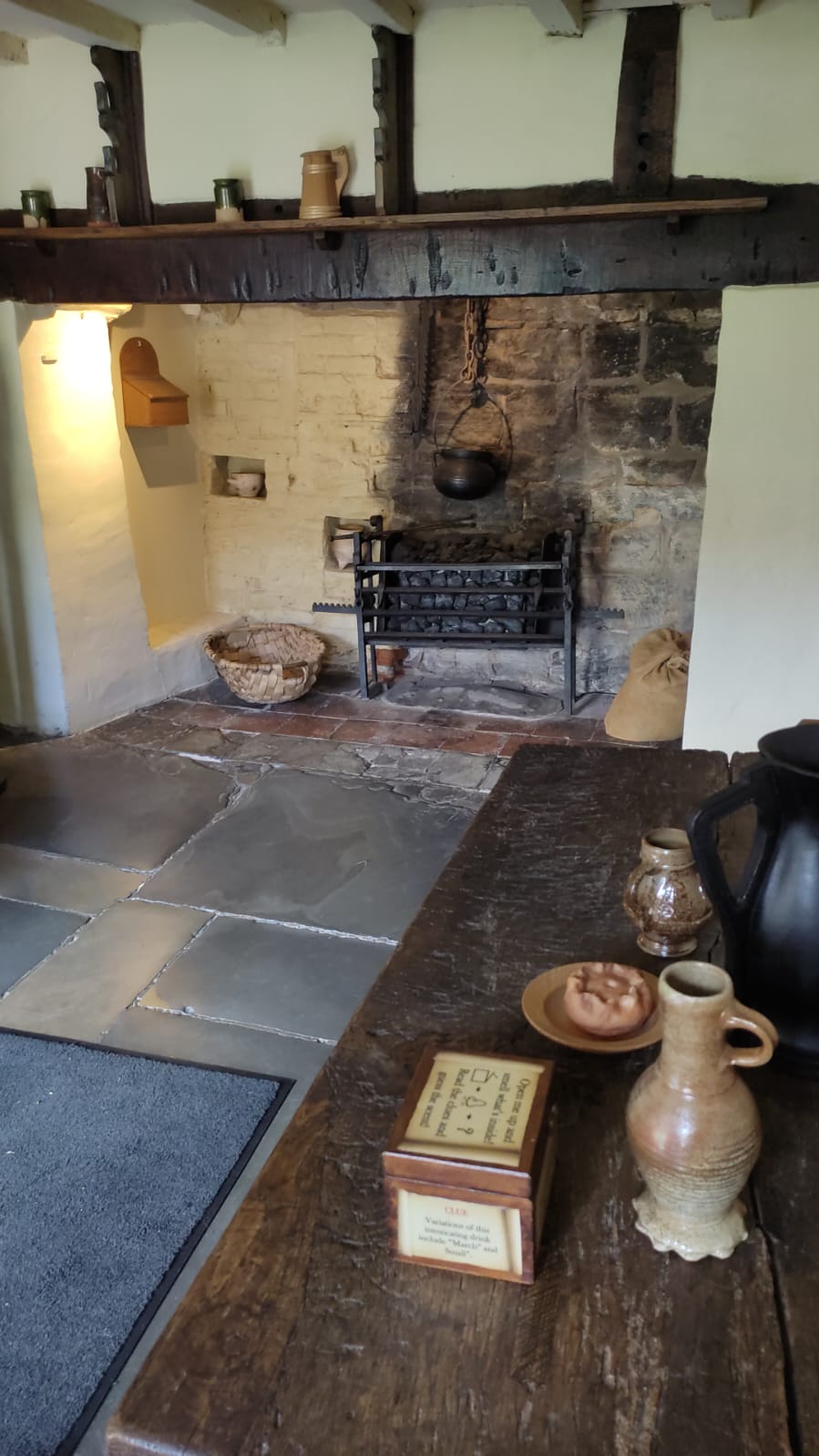
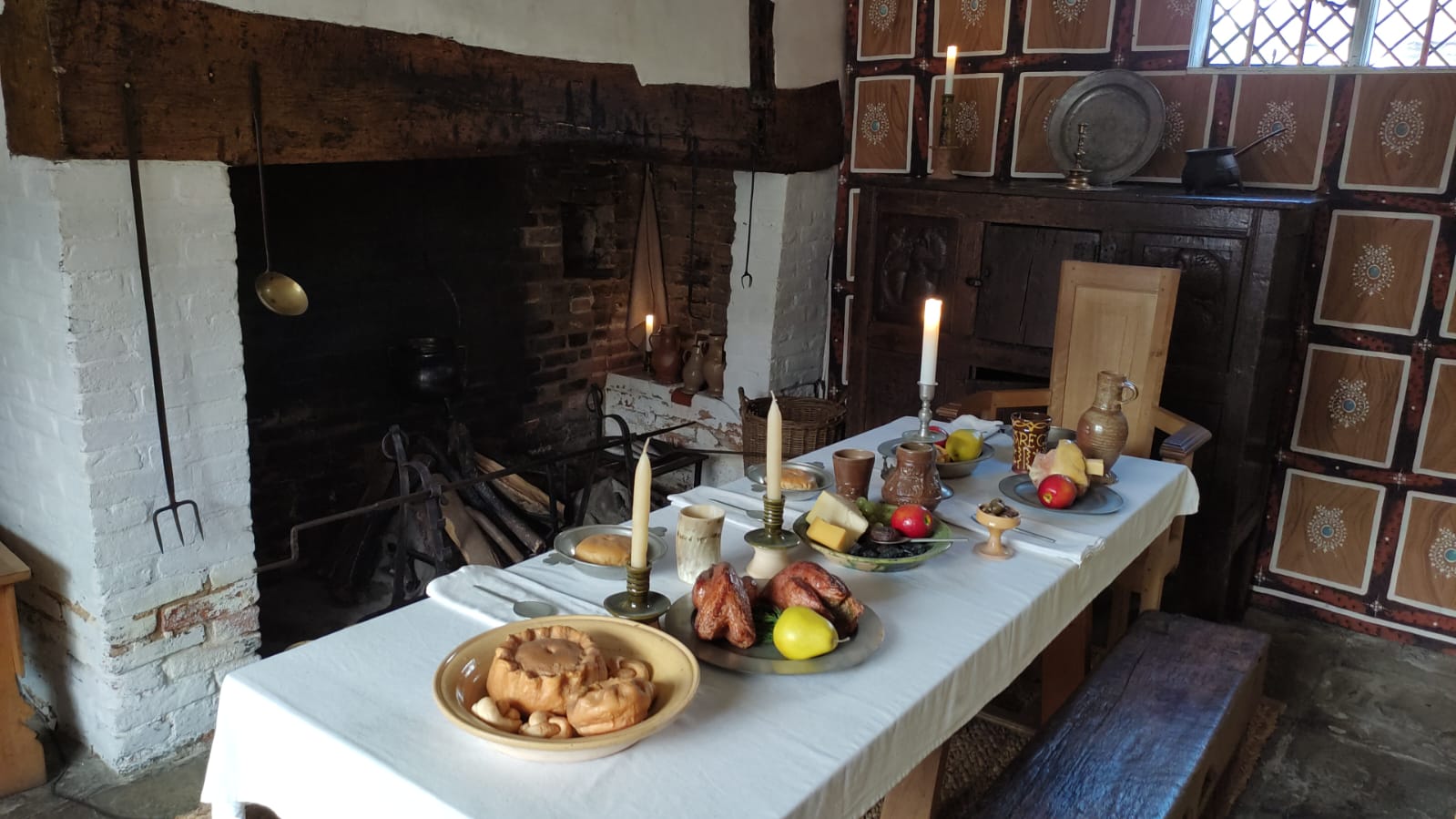
Entering through the main door, visitors walk through the same rooms where young William would have spent his formative years. The ground floor houses a small enclosure where he would have met and entertained visitors. Then comes the main hall where the family would have gathered for meals, with a large hearth and a sturdy wooden table, showcasing how a typical middle-class family of that period lived.
One can readily appreciate how the house served as both a home and a business venue, as Shakespeare’s father, John Shakespeare, was a glove maker and wool dealer. His workspace, along with the tools of his trade, is laid out in one of the rooms, illustrating a connection between commerce and home life in the 16th century.
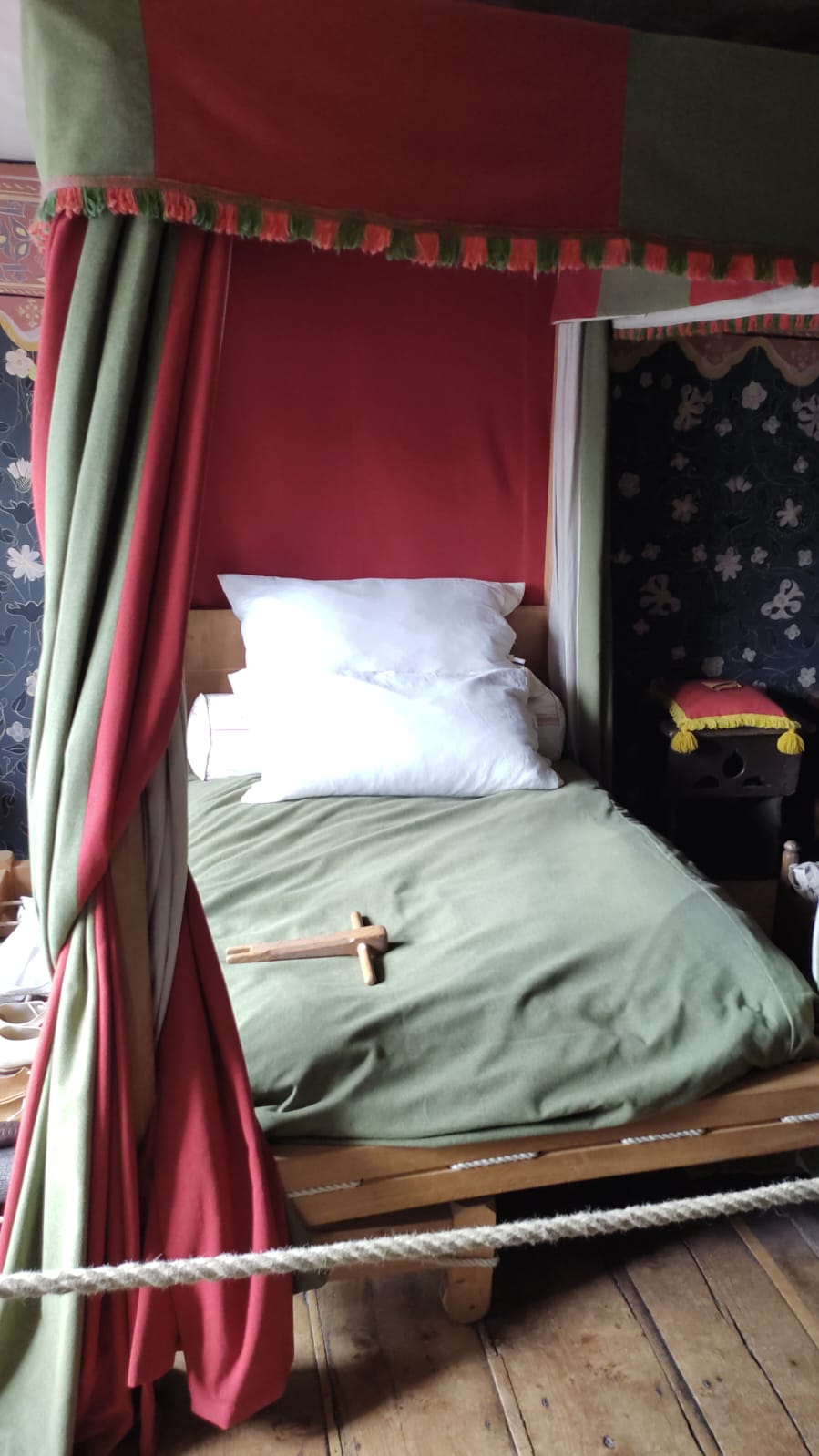
Upstairs, visitors can see the room traditionally thought to be the room where Shakespeare was born. The tiny window lets in a sliver of daylight, highlighting the simplicity of the furnishings and the room’s plain walls. One can see a tiny cradle where the young one might have had his maiden midsummer night’s dream.
A literary genius who was born great
Standing in that room, it’s hard to reconcile the humble surroundings with the profound literary genius that Shakespeare would become. But as a guide explains stories from Shakespeare’s early life, you get a sense of the young boy’s curiosity and imagination—qualities that must have been nurtured in this very place. Surely, he was not someone who became great, or upon whom greatness was thrust by his Guardian Angels. Indeed, he was born great.
The garden outside the house is another lovely feature. To a fan of P G Wodehouse, it sounds like a miniature version of the ones at Blandings Castle. It is filled with plants and flowers that are mentioned in Shakespeare’s plays and sonnets. Walking through, you may recognize some of the herbs and flowers—like rosemary and pansies—from his writings. There is a sense that these natural elements inspired him, giving rise to his poetic descriptions of the natural world.
Understanding the world that shaped him makes it easier to understand how his plays reflected both the universality of human nature and the specific issues of his time.
To be or not to be
As the visit ends, scales have already fallen from one’s eyes. To be or not to be a fan of the Bard is a question which leaves one baffled, bewildered, confounded, confused, disconcerted, flummoxed, mystified, perplexed, and puzzled. In any case, one leaves with a newfound appreciation for the humble origins of William Shakespeare. His birthplace, though small and unpretentious, radiates with the legacy of a man whose works have shaped literature and drama worldwide and who is revered for his unique contributions to the Queen’s language. I am sure that he must have enriched the language in a manner that might be vaster and deeper than those who have either preceded or succeeded him. But lesser mortals like me, surely at the bottom of the English Proficiency Pyramid, are apt to feel very dense while endeavouring to devour any of his works.
However, for literary coves and linguistic purists, Stratford-upon-Avon remains a pilgrimage site, a place that celebrates not just Shakespeare’s legacy but also the power of words and stories to transcend time and space.
P G Wodehouse was one of those who held the Bard in high esteem. He once said: “Shakespeare’s stuff is different from mine, but that is not to say that it is inferior.” His frequent use of Shakespearean phrases in his stories and books merely attests to the same. Those of you who wish to explore this subject further may find this link useful.
All is well that ends well
Visiting the birthplace of William Shakespeare is more than a historical tour; it’s a journey through the formative environment of a literary legend. It provides a tangible sense of where the world’s most celebrated playwright came from and reminds visitors of the timeless influence of Shakespeare’s words, which continue to resonate across the ages.
Note: Thanks are due to Dominique Conterno, my host in the UK, who enabled this visit.
As a fan of the world-famous detective Sherlock Homes, what is the first thing one does once one has landed in London? Elementary, is it not? Well, one heads to 221b, Baker Street, right?!
The Sherlock Holmes Museum located at the above-mentioned address had opened its doors to the public on the 27th of March 1990. A belated honour, but surely a befitting one, to the world-famous detective, created by one of the greatest wordsmiths of our times – Sir Arthur Conan Doyle.
Visitors get permitted to the hallowed premises only in batches of twenty. Moreover, before they climb up the narrow staircase, they no longer run into an inquisitive Mrs. Hudson. Instead, they get greeted by a staff member who is dressed like a ‘Bobby’ and checks their online booking confirmation before allowing them to trudge up the stairs.
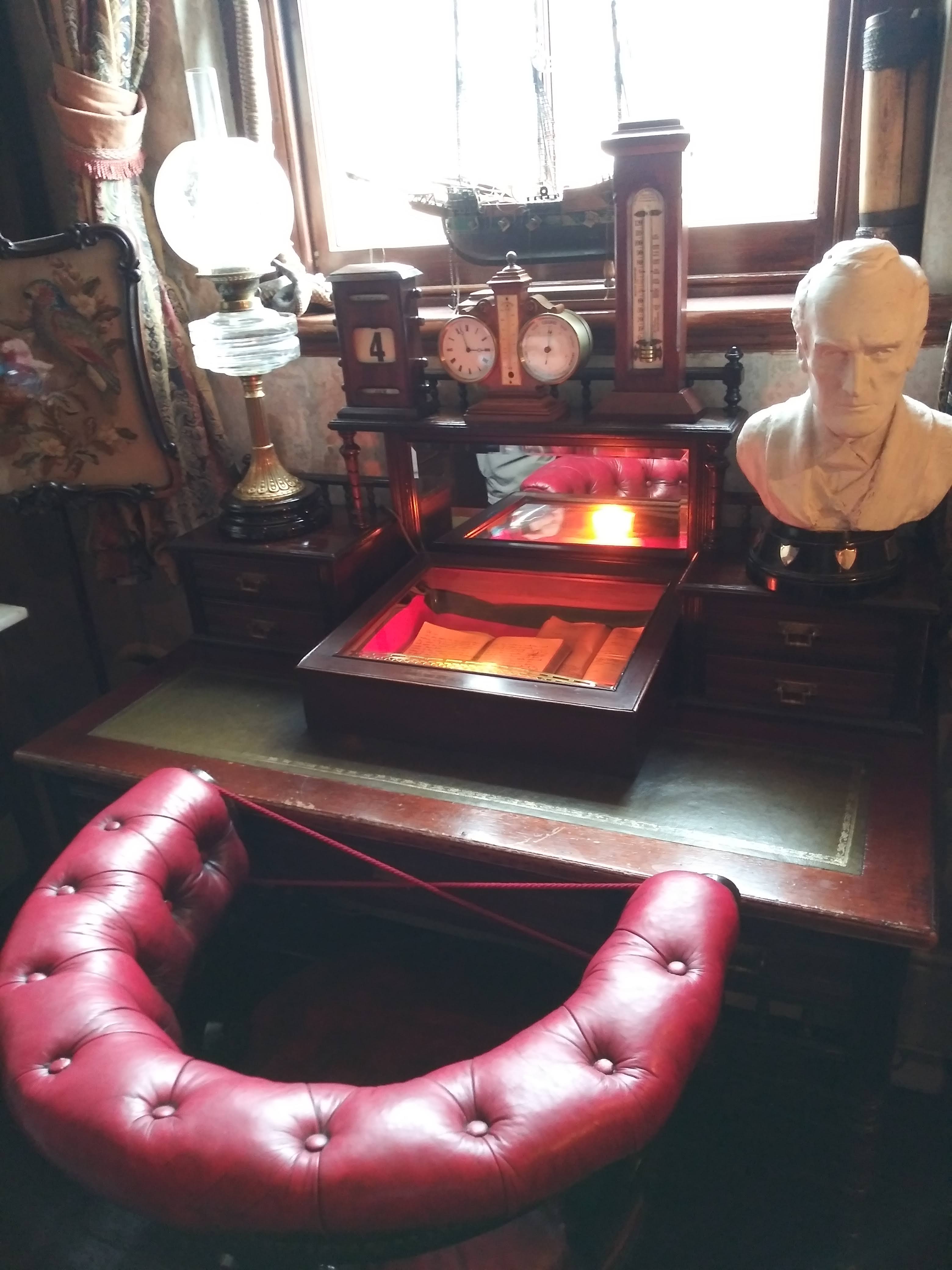
The famous study which Holmes and his friend Doctor Watson shared for almost twenty-five years (circa 1881-1904) is on the first floor overlooking Baker Street.
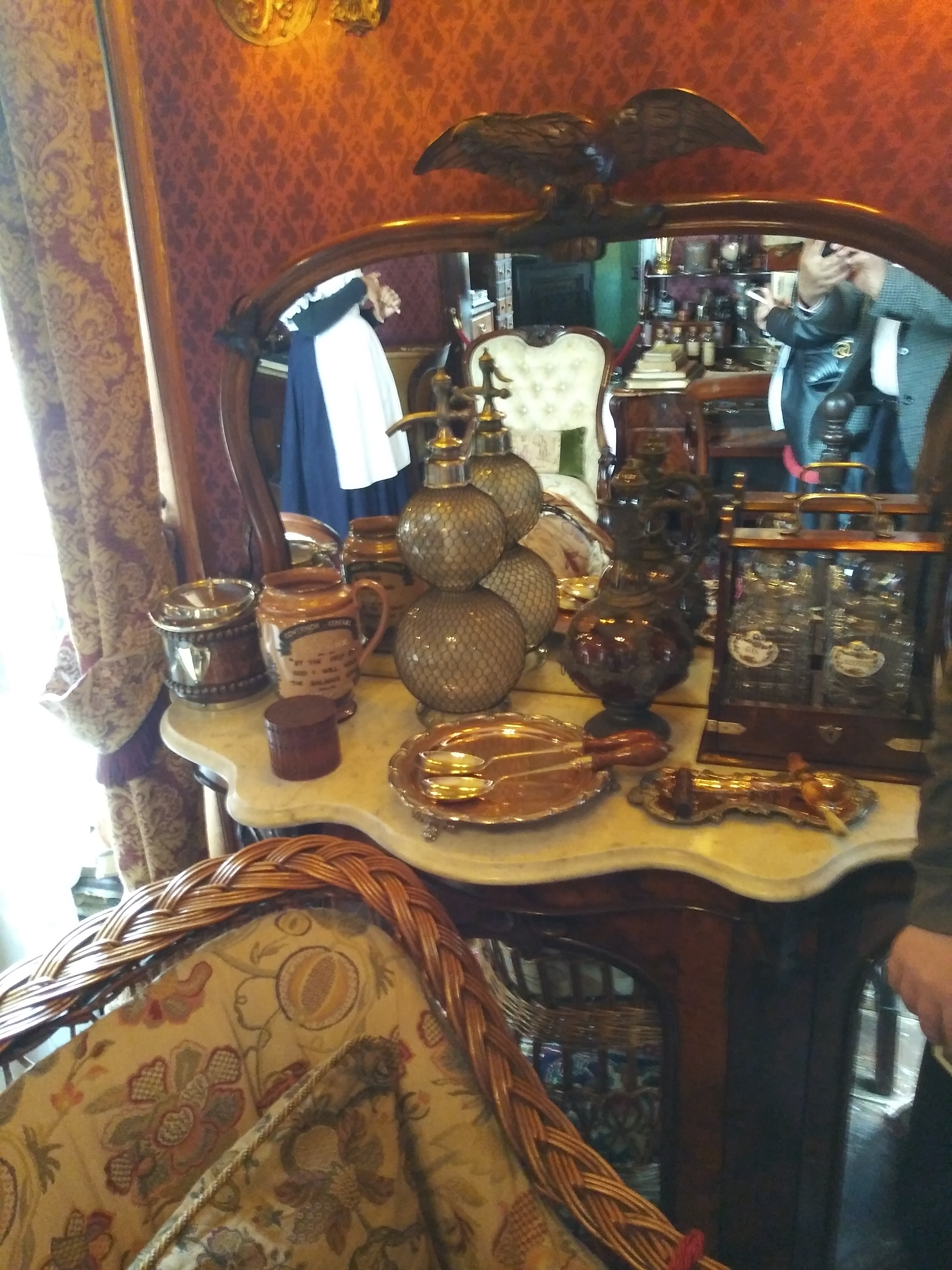
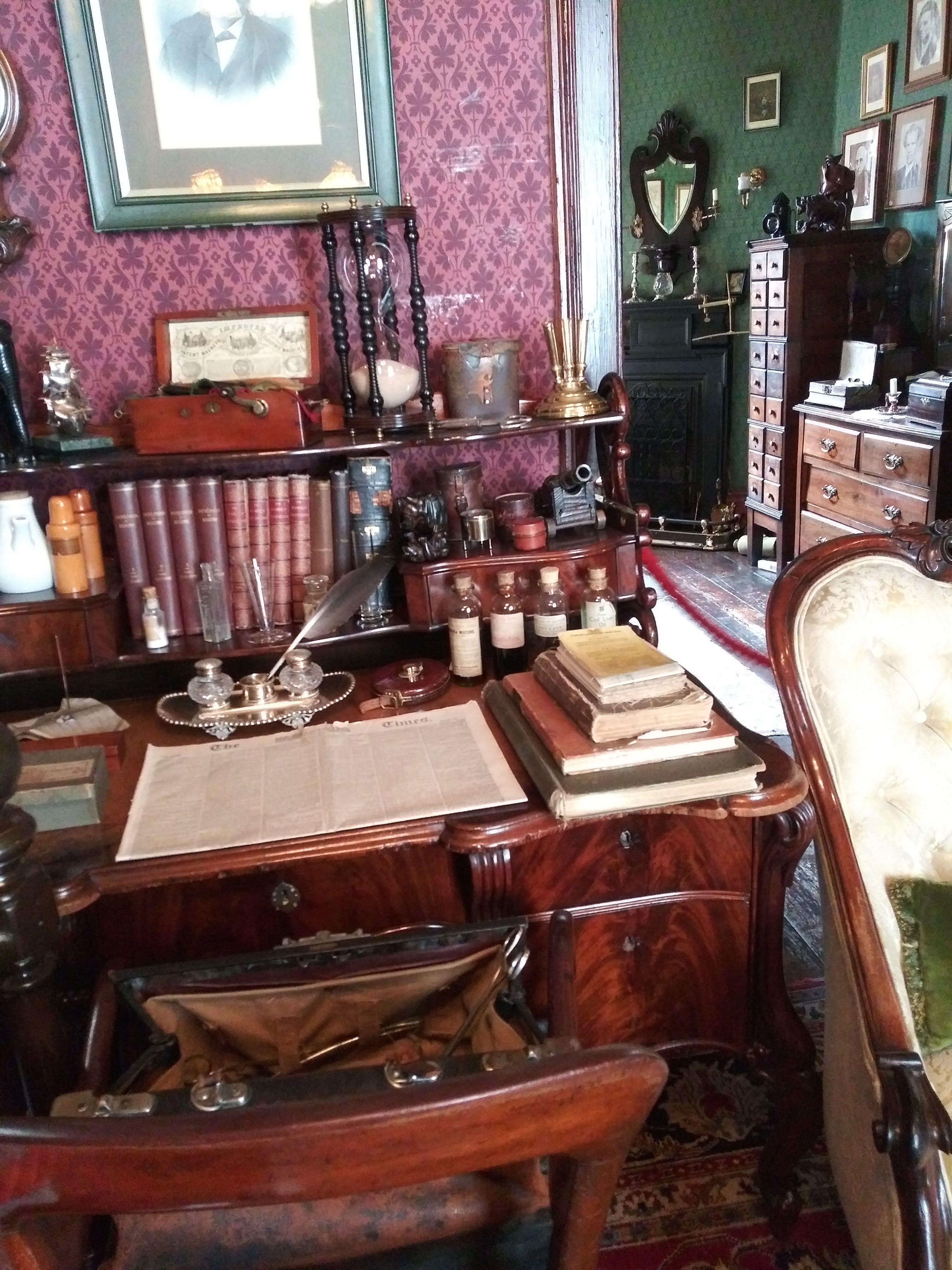
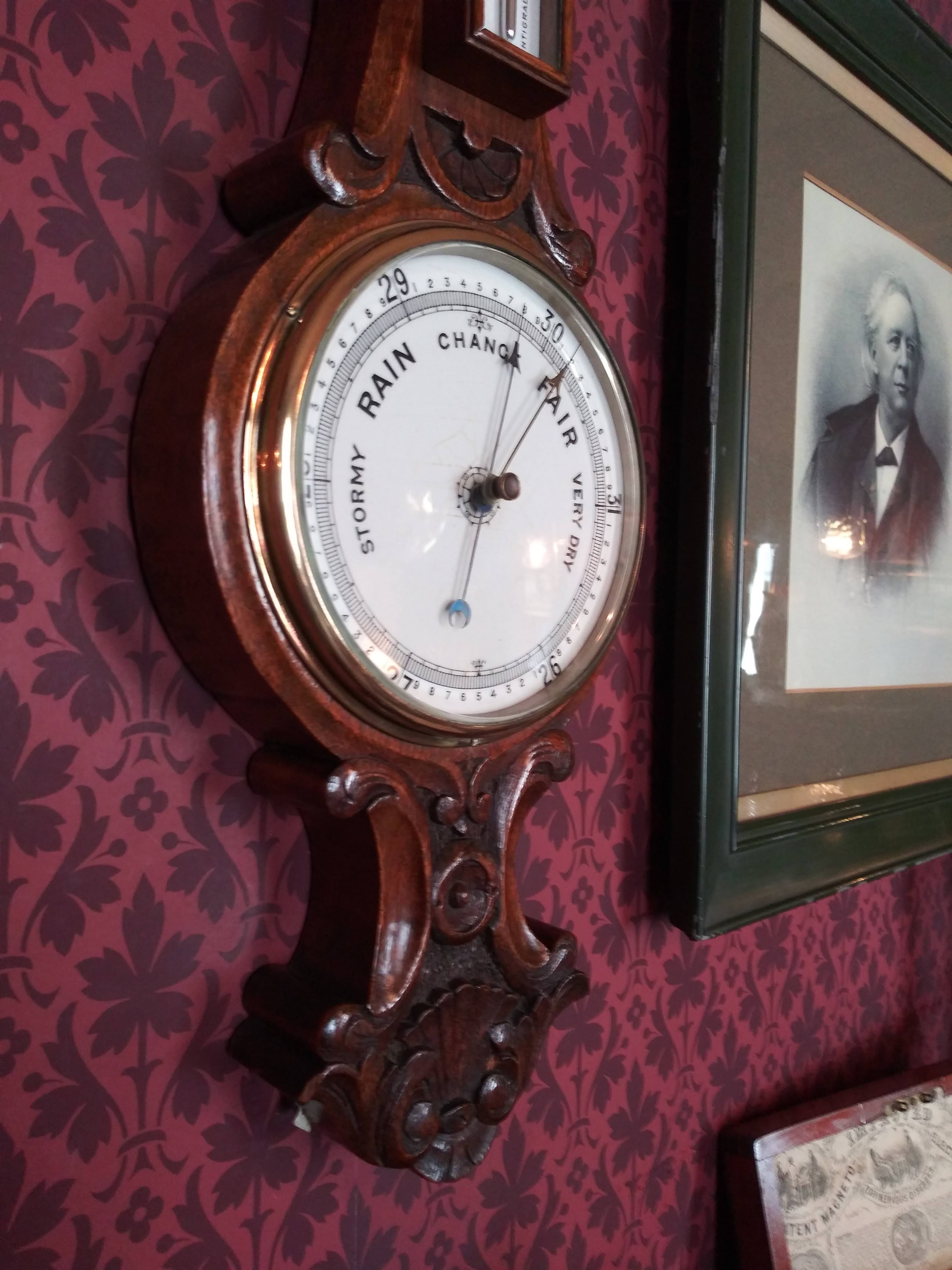
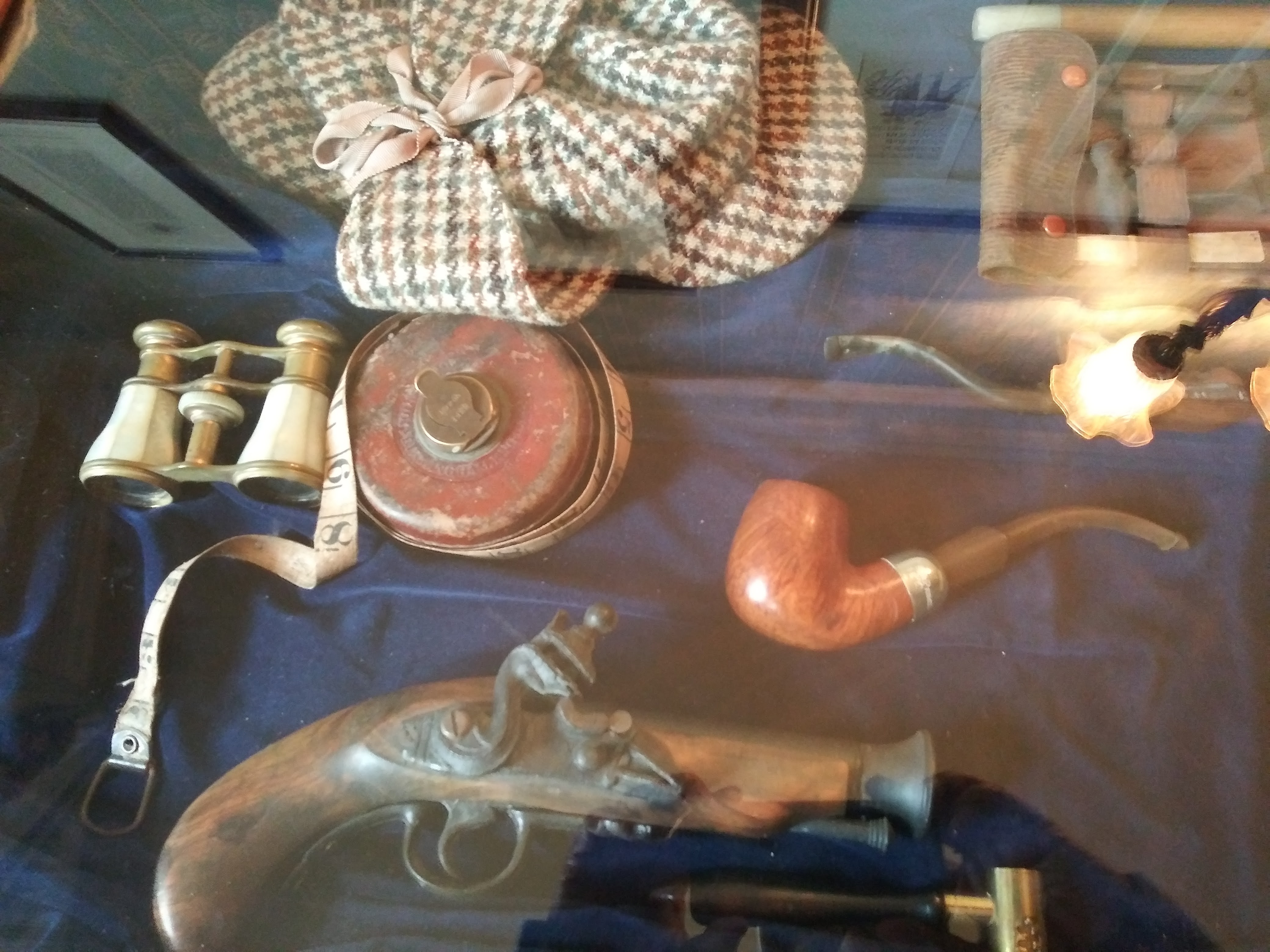
As described by Doctor Watson, the siting room boasts of two broad windows and turns out to be disappointingly small. The detective’s chair is there, and so is the tool kit he used to untangle the mysteries presented to him. The back side of the first floor displays several other things of interest to a fan, though it is said to have been the bedroom of the detective.
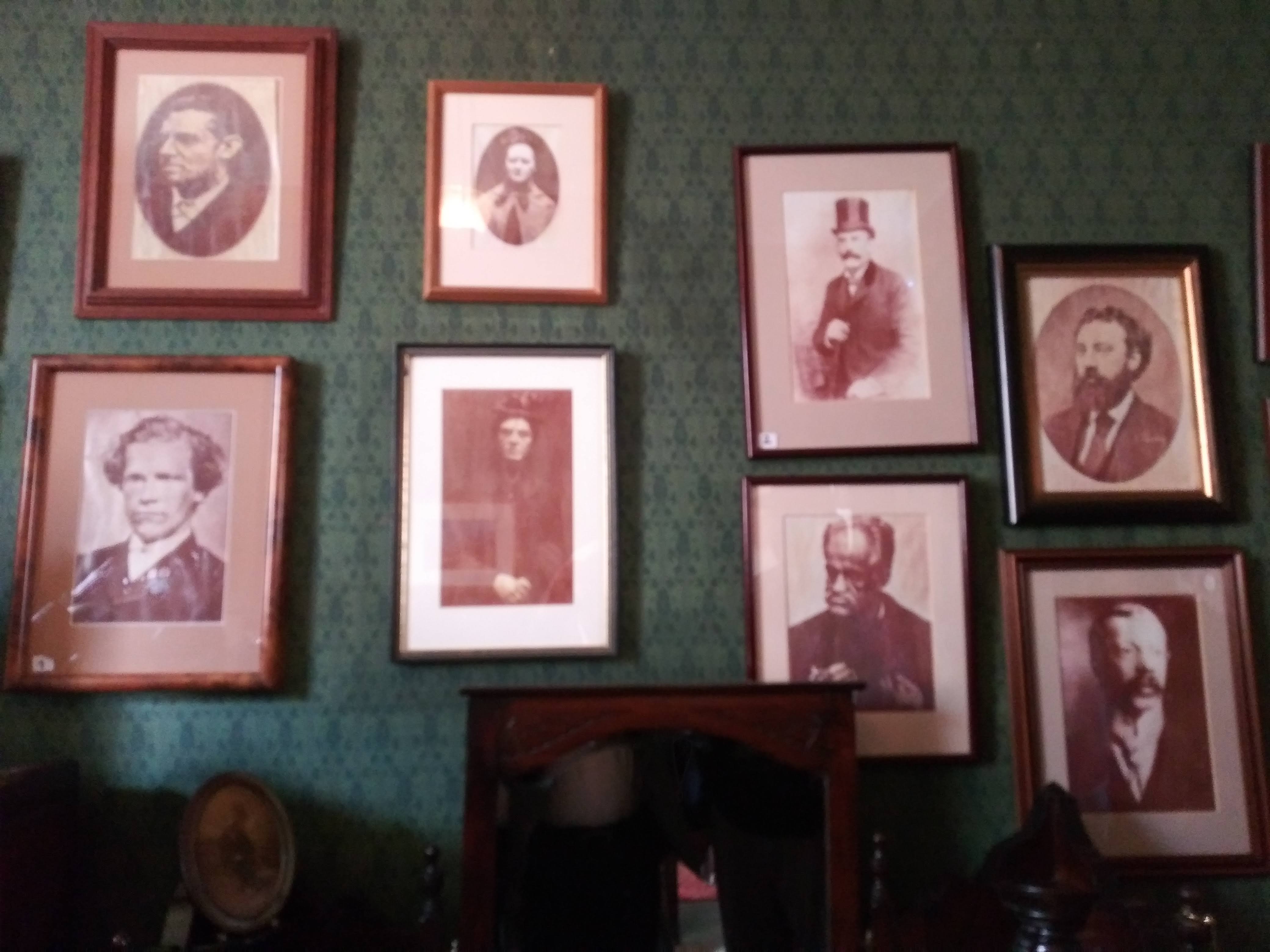
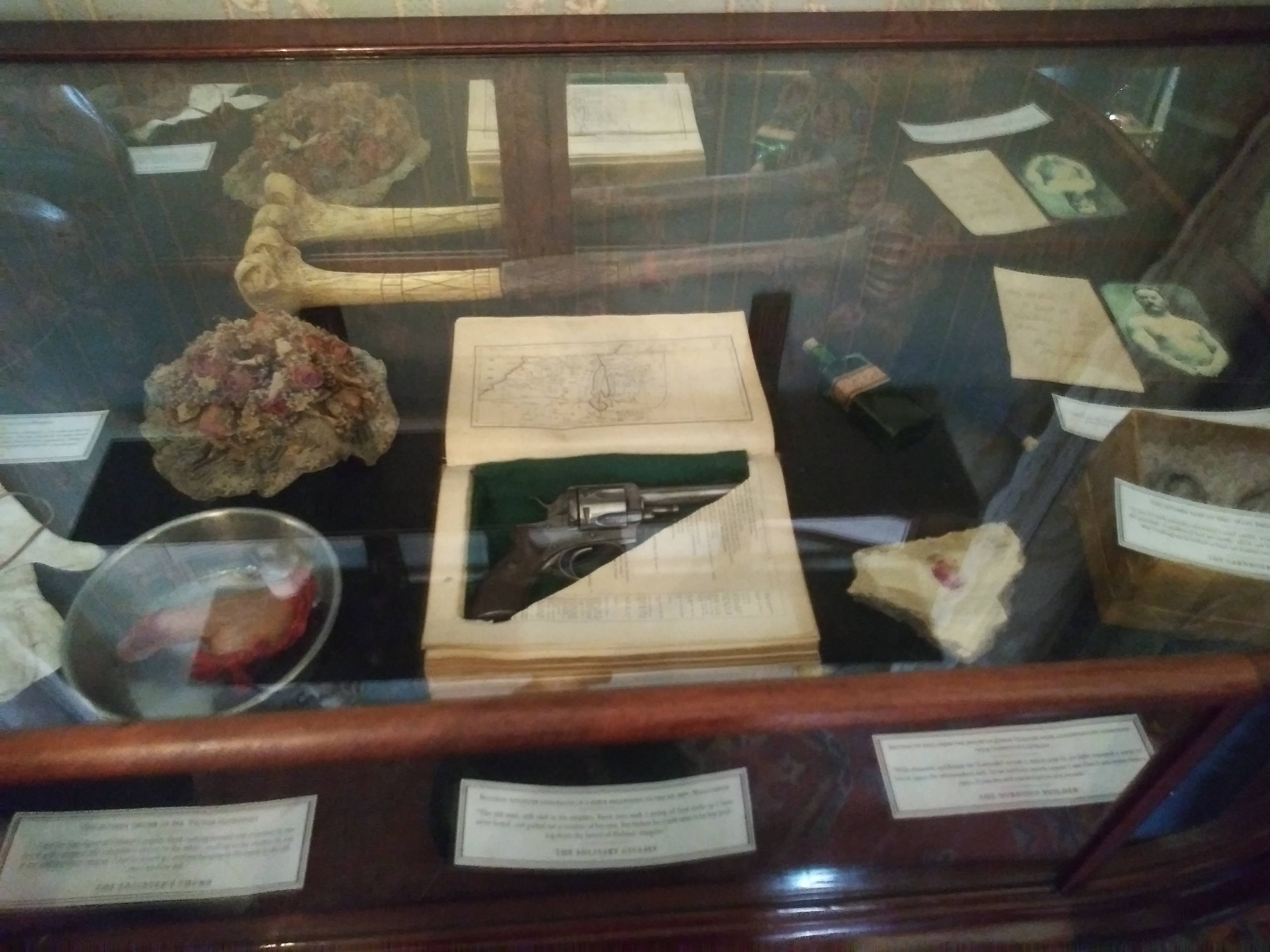
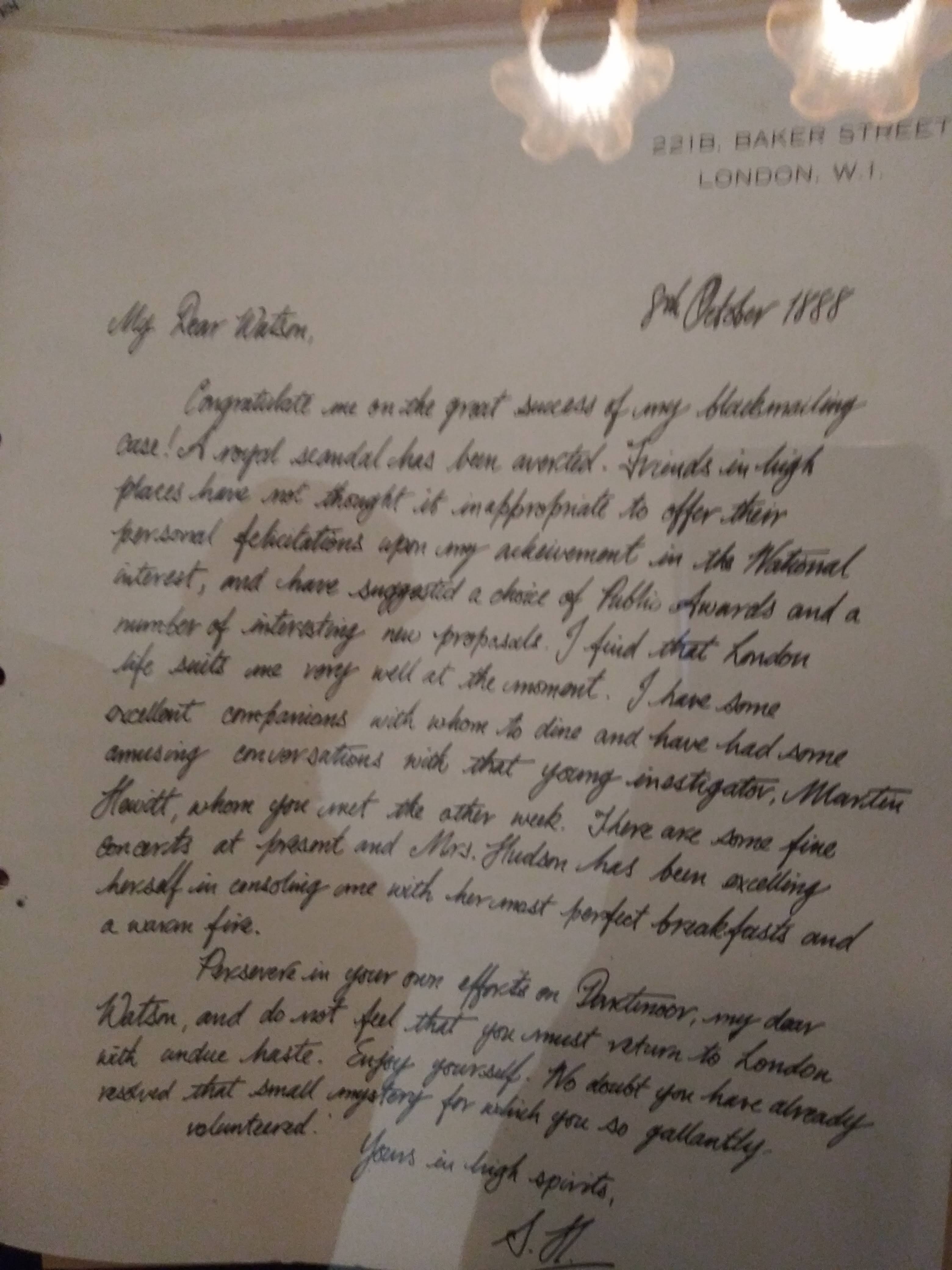
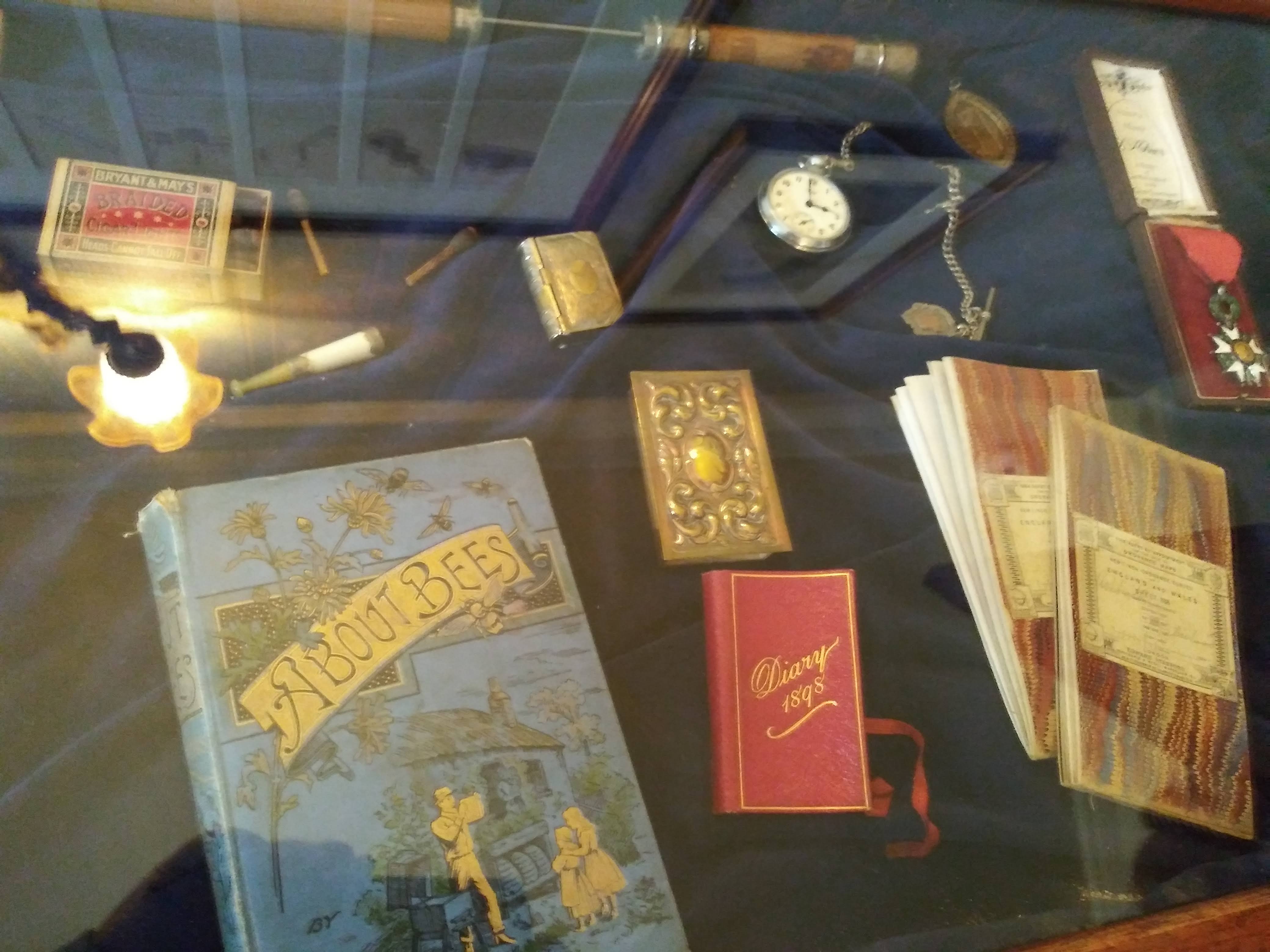
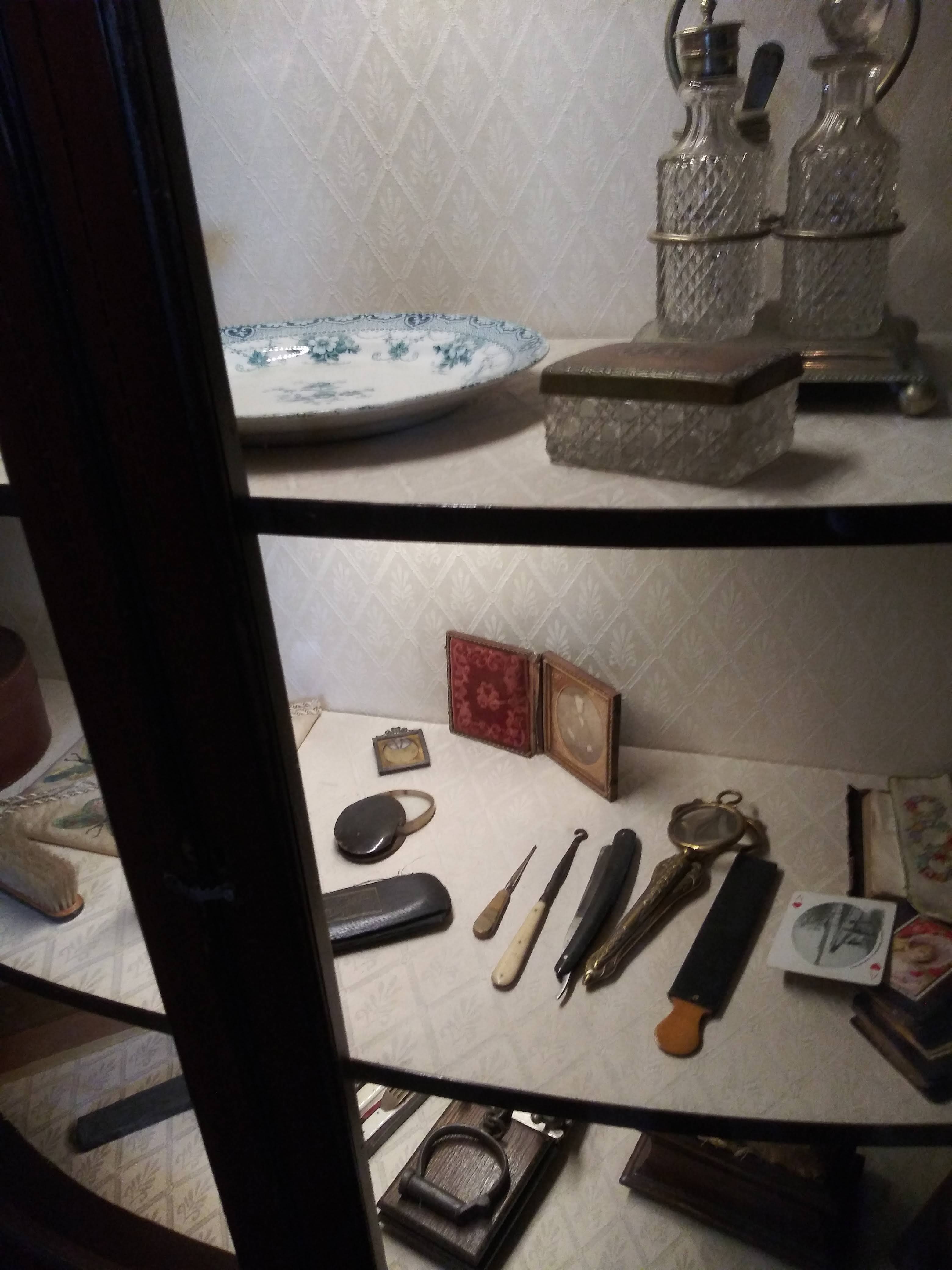
While going through the well-curated museum, visitors get readily transported to the Victorian era, immersing themselves in the gas-lit world of London’s iconic detective. The small and intimate setting of 221b is filled with authentic Victorian furniture and curiosities, and is a treasure trove of items belonging to Sherlock, his friends, and adversaries. Scores of familiar objects and paraphernalia mentioned in different stories are on display. Quite a few characters from his innumerable stories are also featured.
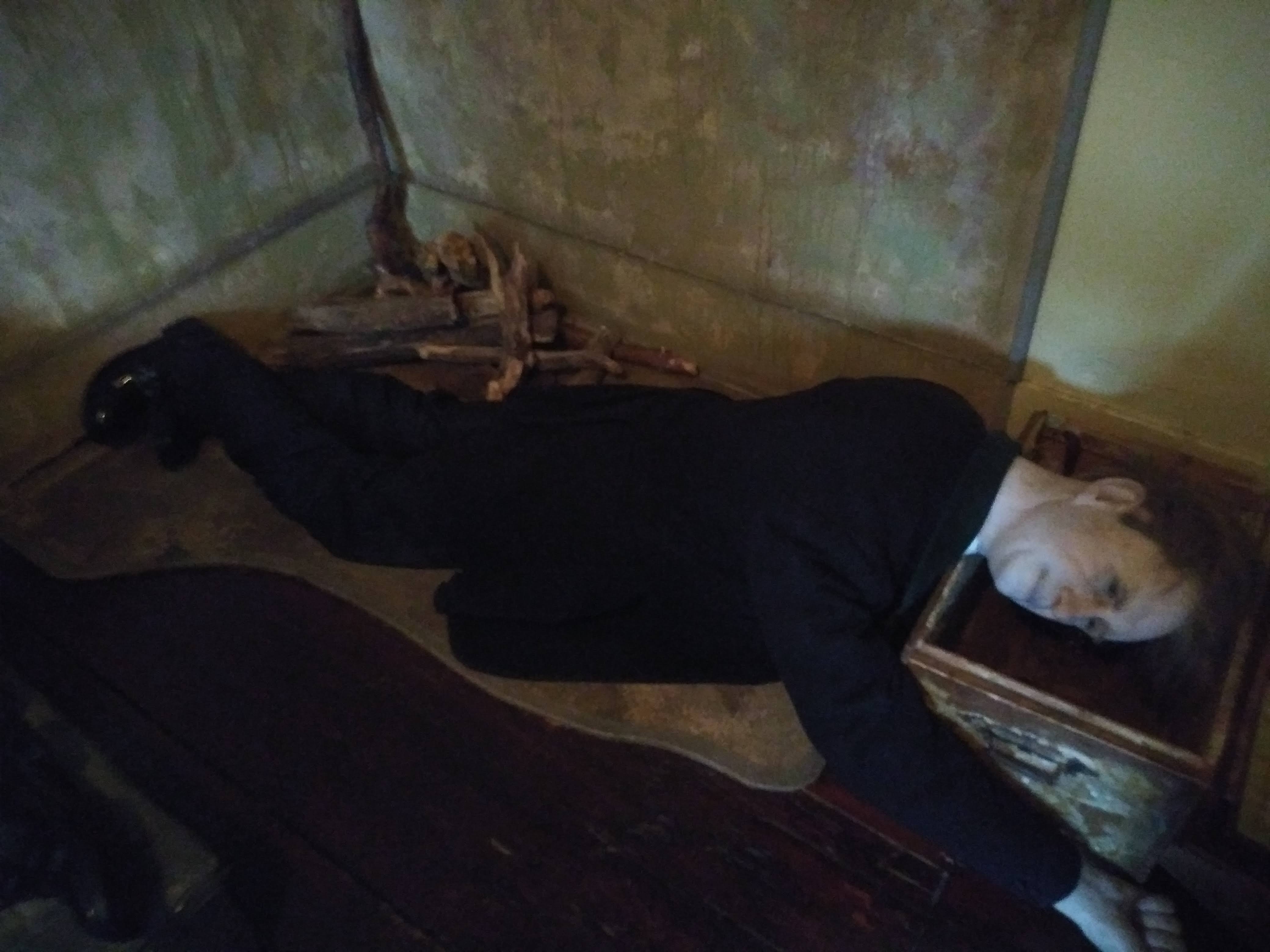
Doctor Watson’s bedroom is said to have been on the second floor, next to Mrs. Hudson’s room, both of which are used now as exhibit rooms. Professor Moriarty, arch enemy of Holmes, peers down menacingly at one from one of the corners.
The pilgrimage soon gets over. As one leaves the museum, one finds oneself wishing that one could simply hail a horse-driven hansom cab to take one to any joint which serves a wide range of tissue restoratives.
The Swiss Connection
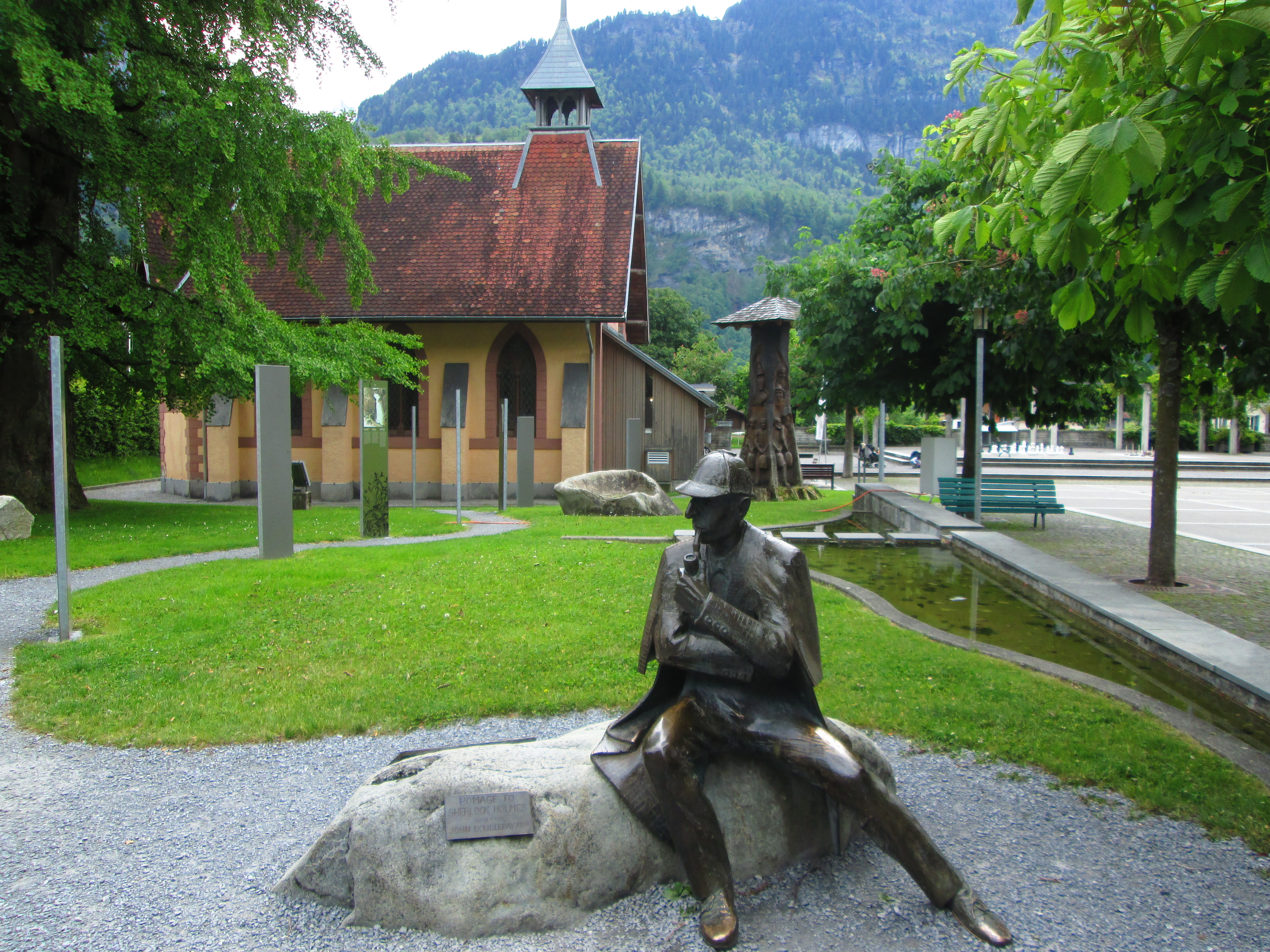
A few years back, I could visit the smaller museum dedicated to the world-famous detective at Meiringen in Switzerland. One marvels at the fact that Sherlock Holmes happens to be an honorary citizen of the township.
Included in the itinerary then was also a visit to the famous Reichenbach falls. That is where Sherlock Holmes was supposed to have met his end while fighting the criminal mastermind Professor James Moriarty. The Final Problem, a short story set in 1891, suggested the death of the detective. However, popular demand made the author eventually bring him back to life!
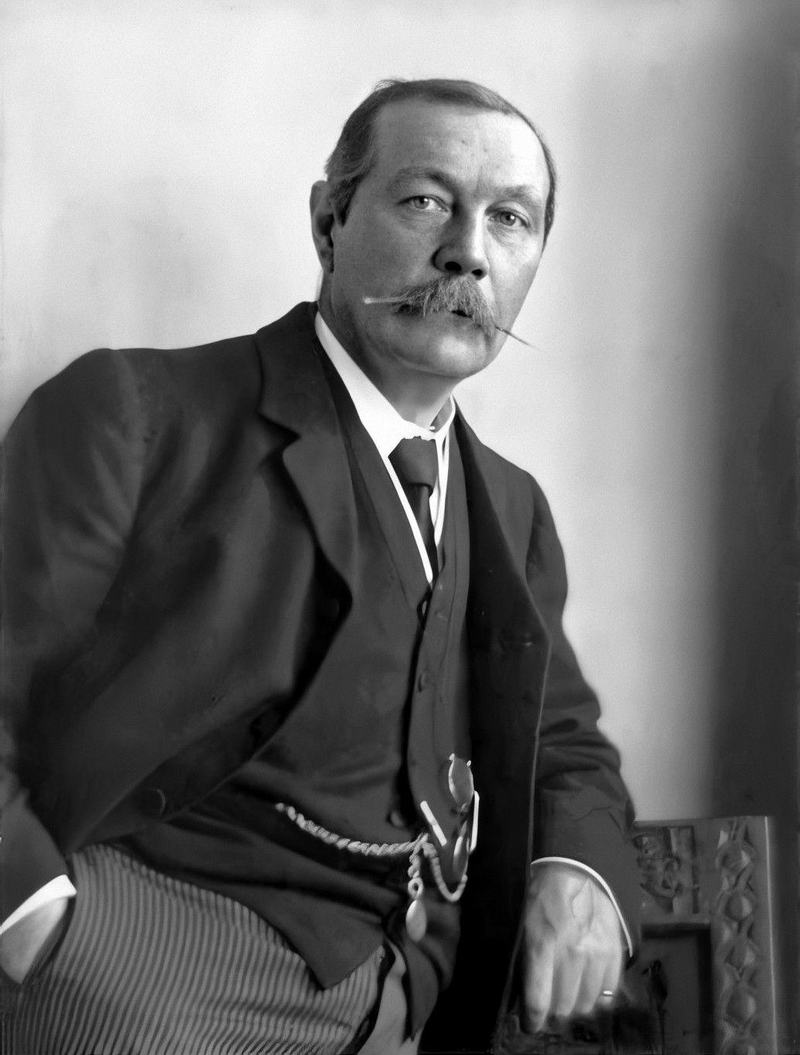
Can a fictional character assume a life and will power of its own? Can he scale heights of popularity and importance greater than those of his author and creator? That is precisely what appears to have happened in the case of Sherlock Holmes whose myth lives on. One marvels at the mental capabilities of a person like Sir Arthur Conan Doyle who created a detective who is more real to most of us than any real person we might have ever met.
In a way, Professor Moriarty still lives on even today. He manifests himself in various forms. Political manipulations, criminal deeds, injustice, disparity in opportunities and incomes, and corruption, just to name a few. However, one can derive satisfaction from the fact that characters like Holmes and Watson also continue to live on amongst us, represented by benign forces opposed to the likes of him.
(The picture of the London museum from outside and the one of Sir Arthur Conan Doyle are both courtesy Wikipedia. Most other pictures are courtesy Dominique Conterno. His contribution towards making the London visit happen is gratefully acknowledged).
What happens when Plum fans get to meet each other at a gig? Some may be known to one from the virtual world most of us inhabit these days. Others may be genial souls whom one meets for the first time, though some of them may soon assume the character of long-lost friends.
After all, Plum himself said somewhere that “There is no surer foundation for a beautiful friendship than a mutual taste in literature.” It follows that if the term “literature” here covers his own oeuvre, a high degree of bonhomie and warmth soon fills one’s bosom. The excitement of discussing his works and discovering some hereto unknown facets of his characters soon surpasses the kind of inner satisfaction Aunt Dahlia would have felt after having managed to corner the much-coveted silver cow creamer for Uncle Tom, thereby brightening the chances of ensuring a fresh lease of life to Milady’s Boudoir.
A feast of reason and flow of soul occurs. Over some browsing and sluicing, many issues get discussed. The myriad ways in which Bertie Wooster avoids many a walk down the aisle. The ethics of Rupert Psmith misleading Eve Halliday with a bunch of lies when on a boat ride in the lake at Blandings Castle. The curious case of Bingo Little who proves Charles Darwin’s Theory of Evolution wrong by undergoing a reverse metamorphosis -transforming from a butterfly during his pre-nuptial days into a caterpillar which is singularly devoted to Rosie M. Banks during his post-matrimony phase. The mystery of the disappearance of Psmith and Eve as a couple. Behavioural traits of not only the prominent loony doctors and ungentlemanly aunts but also of Batholomew, Augustus and Potato Chip come in for a detailed scrutiny.
On all such occasions, time invariably picks up speed, leaving many fans of Albert Einstein’s nodding in agreement. A duration of one hundred and twenty minutes, if spent in the enlightening company of Plum fans, sounds like a mere span of twenty minutes.
A concatenation of circumstances during the month of July 2023 led to yours truly having a couple of Plummy encounters. Here is a brief account of these.
A Mind-bending Quiz at the UK Society Meeting in London
Which breed of the canine species does Bartholomew (who, if you recall, biteth like a serpent and stingeth like an adder) belong to?!
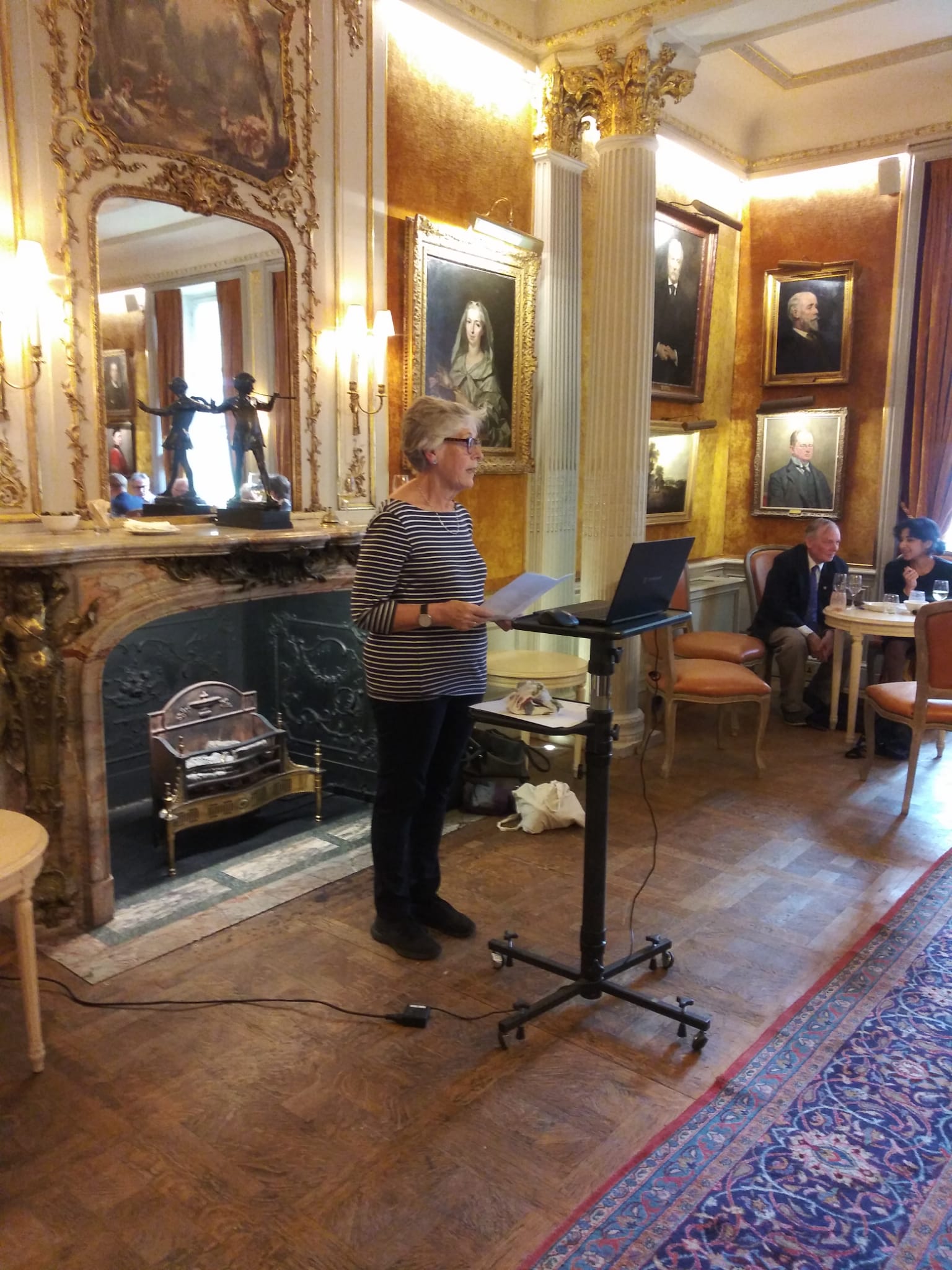
Well, this was merely one of the twenty-five odd questions which got unleashed upon one at a recent meeting of the UK Society in London. Conducted with rare aplomb and felicity by Lasley Tapson, a committee member of the Society, the quiz helped all of us to assess the current level of our respective Pumpkin Quotients. I, for one, found mine to be higher than that of Gussie Fink-Nottle.
Besides the pleasure of meeting many other fans at the gig, I had the privilege of exchanging pleasantries with Tim Andrew, the Chairman of the Society, and Andrew Bishop, the Editor of Wooster Sauce.
Meeting a Fan from Across the Pond
It so happened that a fan of Plum’s from across the pond and yours truly were infesting the environs of London around the same time. Lia Marie Hansen, Doug, the Bingo Little of her life, and yours truly could meet for some time. Lia is a theatre professional who has worked in the past at Vanguard Lyceum Theatre and is currently a Professor at Vanguard University of Southern California.
Given her profession, the exploits of George Bevan were bound to come up for a mention. So was the fascination of Kid Blumenfeld, the dish-faced kid who, despite his tender age, controls the theatrical productions of his father, with McIntosh, Aunt Agatha’s Aberdeen terrier. Gushing references to many of Plum’s characters and instances in his narratives invariably followed. Challenges faced by the world of theatre were discussed. So were matters pertaining to advances in acoustics and a few other realms of human enterprise.
A Visit to the Dulwich College, UK
This was a lovely and instructive encounter with an important part of Plum’s life. Some of you might have already come across details of this visit of mine here.
The Orange Plums
Gangs of Plum fans, whether masquerading as societies or otherwise, can be found all over the world. Besides the United States of America, United Kingdom, Netherlands, Sweden, Norway, France, Italy, Russia, Japan, Australia, and Canada also boast of devoted fans and admirers who keep his works alive by organizing events and conducting various activities from time to time. India, with its sizeable population, also has a liberal smattering of fans, with a latent desire for some browsing and sluicing which often manifests when a fan from another city pops up.
The Wodehouse Society (USA) has many Regional Chapters all over the country. One of these, located in the Orange County of California, is known as Orange Plums. Its members congregate once every month, thereby continuing to spread sweetness and light in their community. Their meetings take place at the Streamliner Lounge and Café which happens to be a diner located on the premises of the Orange train station. The credit of introducing me to the group goes to Thomas Langston Reeves Smith, a fan of Plum’s who infests another part of the country.
To ensure that the group members did not take me to be an imposter, as also to follow Jeeves’ advice that there are no times when ties do not matter, I had worn a Drones Club tie to the meeting. This, despite the sweltering heat outside. But what I had not imagined was the kind of warmth with which the members would greet and receive me. I might as well have worn an asbestos vest. After much ‘What ho’-ing and exchange of pleasantries, I was elated to receive a few mementos from the 2022 San Diego Convention of the Wodehouse Society. Precious gifts, indeed!
All of us are aware of the invigorating properties of the juice of an orange, especially when laced with a liberal dose of tissue restoratives. However, the sheer joy of meeting some fans of Wodehouse located in a different part of the world itself acts as a powerful intoxicant on someone like me. A generally shy, morose, and reticent person like me suddenly turns into a blabbering idiot. I am surely not a loquacious pub raconteur in the same class as that of Mr. Mulliner but a transient bout of chattiness does overtake me on such occasions.
Thus, the Double-Whisky-and-Splash, the Gin-and-Tonic and the Tankard of Ale who had assembled at the venue had to suffer a great deal of coarse buffoonery on my part for close to about one hundred and twenty minutes. However, it goes to the credit of Orange Plums that they withstood the onslaught upon their auditory senses with a chin up attitude which would have made Bertie Wooster proud of them. None of them exercised either of the two options of an escape available to them – either by using their jalopies parked upfront, or by using the back door to catch the trains which were chugging along at regular intervals. Climbing down pipes was ruled out because the café happens to be on the ground floor.
Fans of Plum often hide their talents well. The Double-Whisky-and-Splash, who had coordinated the meeting, turned out to be someone who dishes out not only a monthly newsletter but also two regular submarine-related magazines. He has long studied the art of whipping up TV scripts and producers of shows are watching his progress with keen interest.
The Gin-and-Tonic, a history buff who is in the noble profession of teaching, is also open to schooling others in music appreciation and even participating in karaoke competitions. A genial soul, I am certain that her pupils would have never alluded to her as being a female lion-tamer cast in the mould of either Miss Mapleton or Miss Tomlinson.
The Tankard of Ale happens to be in the service of the Almighty, perhaps delivering Sunday sermons the durations and handicaps of which keep the local betting syndicates agog with excitement. I am sure he has had the company of a goofy kid like Thos for some time and would thus be hotter at his job. A technology geek, he kept on locating various narratives and characters on his technical gizmo, in tandem with the flow of discussion of the group, which involved trading tales and sharing our mutual enthusiasm for The Master.
It was fun meeting a few members of the group. Sometime soon, the Orange Plums are planning to organize a flowerpot throwing competition. They are also keenly looking forward to the next Society Convention, scheduled to take place in Nashville, Tennessee, September 26 – 29, 2024.
I wish Orange Plums a goofy time ahead!
A Wish List
Perhaps the Bard was not much off the mark when he said that the world is an oyster. Just in case my Guardian Angels ever enable another visit either to the United Kingdom or to the southern parts of California, my travel plans may include the various spots said to be the inspiration of many of Plum’s narratives.
By way of an example, I believe that there are two claimants to the Drones Club – the Buck’s Club in London and the Montecito Country Club at Santa Barbara. As to Totleigh Towers, the Hearst Castle at San Simeon, where Plum is said to have stayed for several months during 1930, is said to be the inspiration.
Of course, brainy coves on both sides of the pond would have already listed out several such attractions.
Each encounter of a Plummy kind leaves one feeling enthused about the future of humanity.
May the epidemic of Wodehousitis continue to spread all over the world!
By no stretch of imagination can I be held to be an expert on cats. In any case, I have no clue as to how a cat which has been fed too much of cream would look like. Perhaps, having temporarily overcome its snootiness caused by the belief that in Ancient Egypt it would have been worshipped as a god of some reckoning, the milk of feline kindness would be coursing through its veins. Coming across a healthy mouse, it might just have shrugged its tender shoulders and decided to skip its quota of vitamins for the day. A wide grin would surely be adorning its visage.
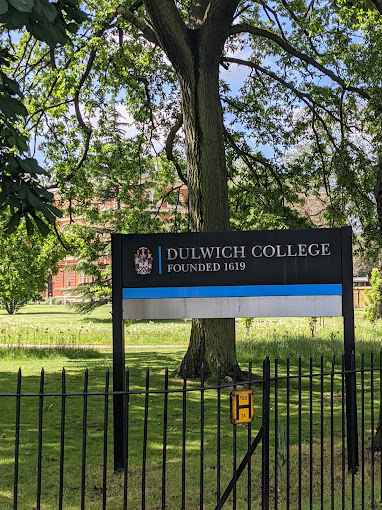
Anyone who had spotted me coming out of the hallowed portals of Dulwich College recently would have noticed the wide grin on my not-so-handsome countenance. She might have seriously suspected me to be a member of the feline species which had just gorged on a diet full of rich cream duly enriched with fat-soluble vitamins. The spotter would have been left twiddling her thumbs trying to figure out the singular absence of the morose look which usually adorns the face of the spotted, making her wonder if the latter had just put in his papers relinquishing his position as the honorary Vice President of the Global Morons’ Association.
She would not have been off the mark. My cup of joy was indeed running over. The sky was bluer. The grass was greener. The air was more fragrant. In short, God was in heaven, and all was well with the world. Peter Mark Roget, had he been around, would have described me as being blissful, chuffed, delighted, elated, ecstatic, glad, grateful, gruntled, pleased, happy, and satiated. At the time, the heart was overflowing with unalloyed joy.
The cause of my having attained this state of blissfulness was two-fold.
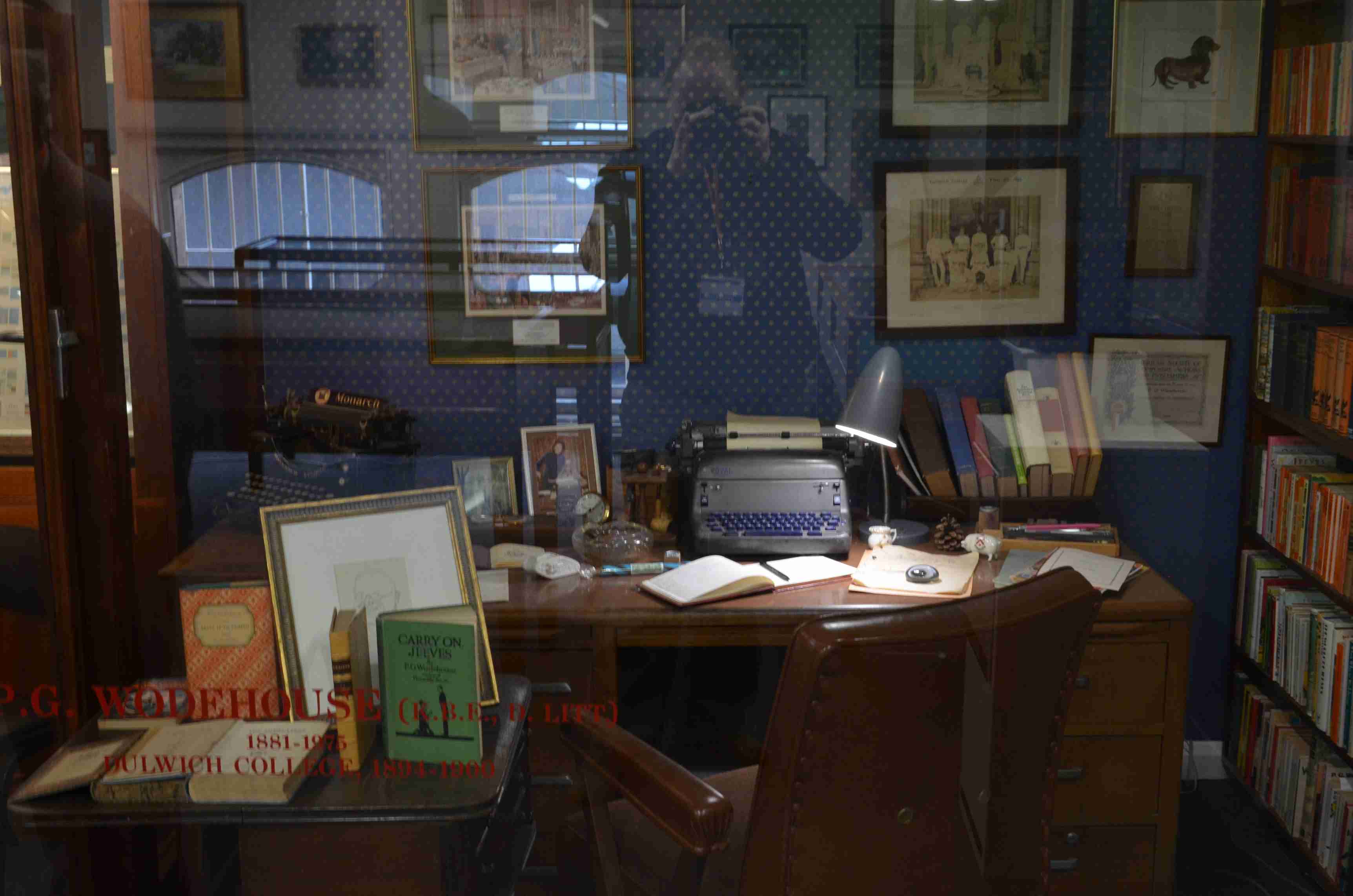
One, Dulwich College had turned out to be a treasure trove of Wodehousean memorabilia. A place where brainy coves who happen to admire the Master Wordsmith of our times could settle down to drink deep from the joyous waters of his works and his methods and dish out some scholarly research papers brimming with erudition of the first order. They could even soak in the ambience of his own study, a recreated version of the one at his home across the pond at Southampton in New York. After his death in 1975, Ethel had donated the same to his beloved Alma mater.
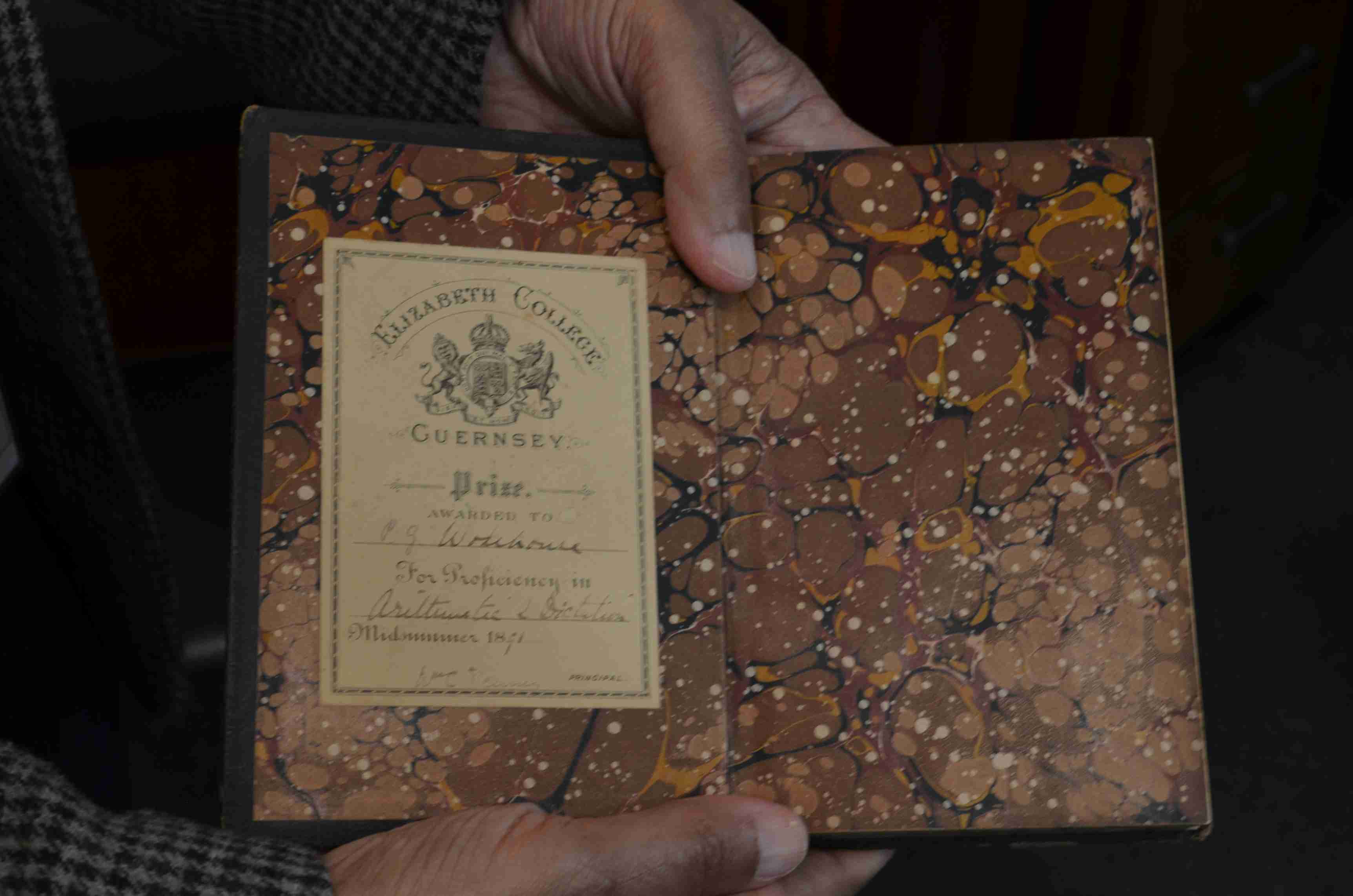
Two, an overwhelming feeling of gratitude pervaded my mortal frame. I was, and continue to be, amazed at the affection, care and conscientiousness with which Dulwich College has built up and maintains multi-faceted records pertaining to Plum. Besides his books and their translations or pastiches in very many languages of the world, one could peruse his academic report cards, cricket score sheets, records of singing and theatrical endeavours, duly embellished with some juicy comments from the Rev. Aubrey Upjohns of his life while he was there from 1894 till 1900.
Sample this specimen:
He has the most distorted ideas about wit and humour; he draws over his books and examination papers in the most distressing way and writes foolish rhymes in other people’s books. Notwithstanding he has a genuine interest in literature and can often talk with enthusiasm and good sense about it.
(Dulwich College report on Wodehouse, 1899)
It is well known that in addition to his sporting achievements, he was a good singer and enjoyed taking part in school concerts; his literary leanings found an outlet in editing the school magazine, The Alleynian.
It may be of interest to note that Plum’s six years at Dulwich were among the happiest of his life. According to a statement made by him:
“To me the years between 1894 and 1900 were like heaven.”
Perhaps it was this sentiment of Plum’s which rubbed off on me when I had the privilege of visiting the college, guided by Calista Lucy, the Keeper of the Archive.
The college was founded by Edward Alleyn in 1619. Since then, many of its alumni have made it proud of their achievements in different realms of human endeavour. A few other celebrities who have passed through its hallowed portals are the writers Raymond Chandler, Graham Swift and Michael Ondaatje, the banker Eddie George (Governor of the Bank of England), and Anand Panyarachun (Prime Minister of Thailand).
The buildings have obviously undergone several additions since 1900, when Plum ended his sojourn at Dulwich College. We entered through the North Cloister, a corridor which was open to the elements during Plum’s days. It was a place where he would do his Larsen exercises.
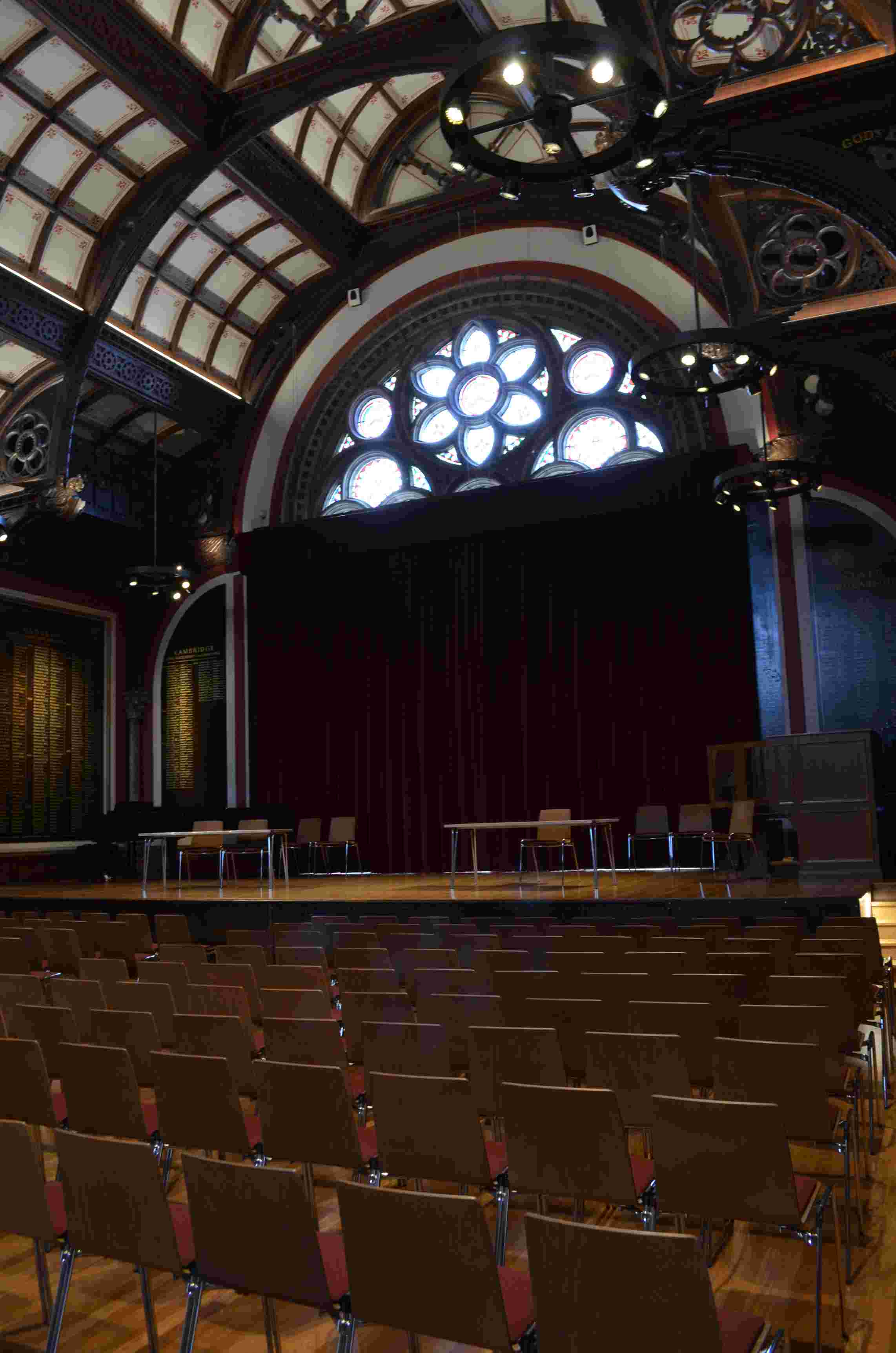
A grand staircase, adorned with portraits of various patrons of the college over time gazing benignly at us, led us to the Great Hall which is used for school assemblies and examinations. When Plum was at school, he and others would have eaten in the hall.
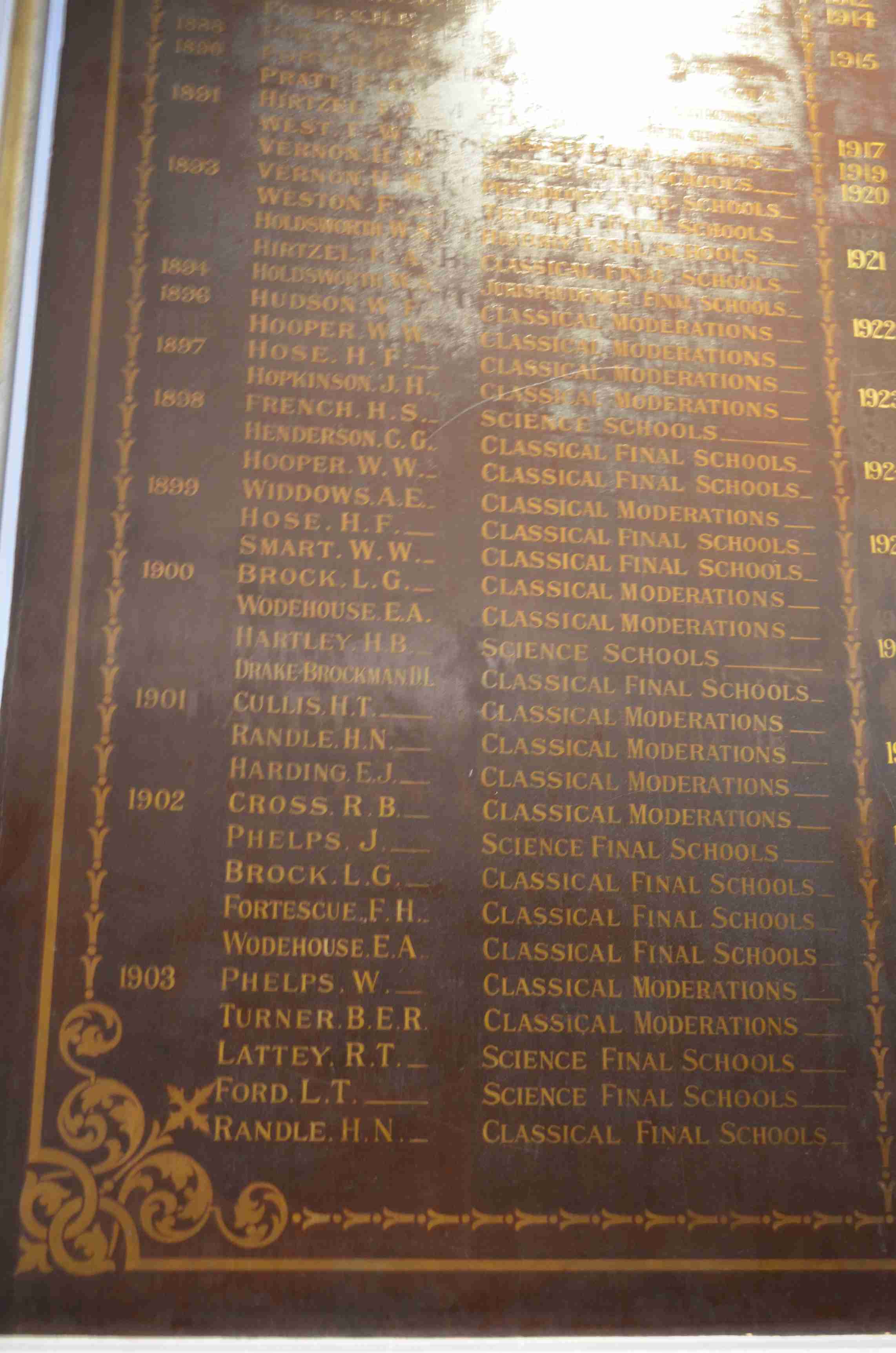
On the Honours Boards, one could see the name of Armine, Plum’s elder brother, who was also at the college. While the brother could subsequently gain admission to Oxford University, Plum was unable to do so owing to the financial difficulties faced by the family then.
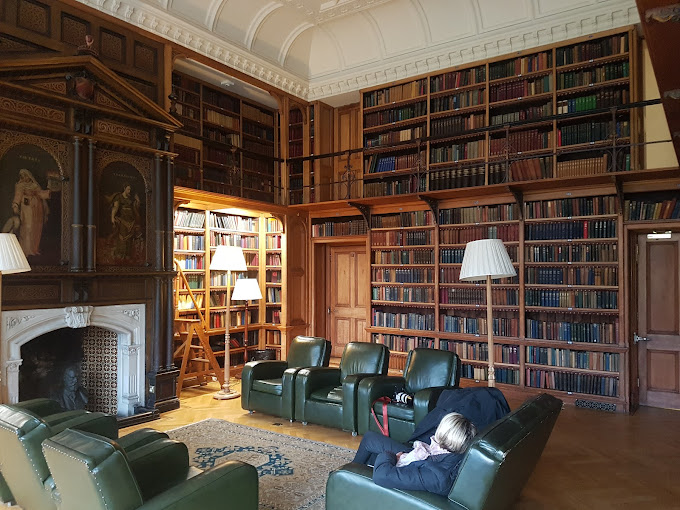
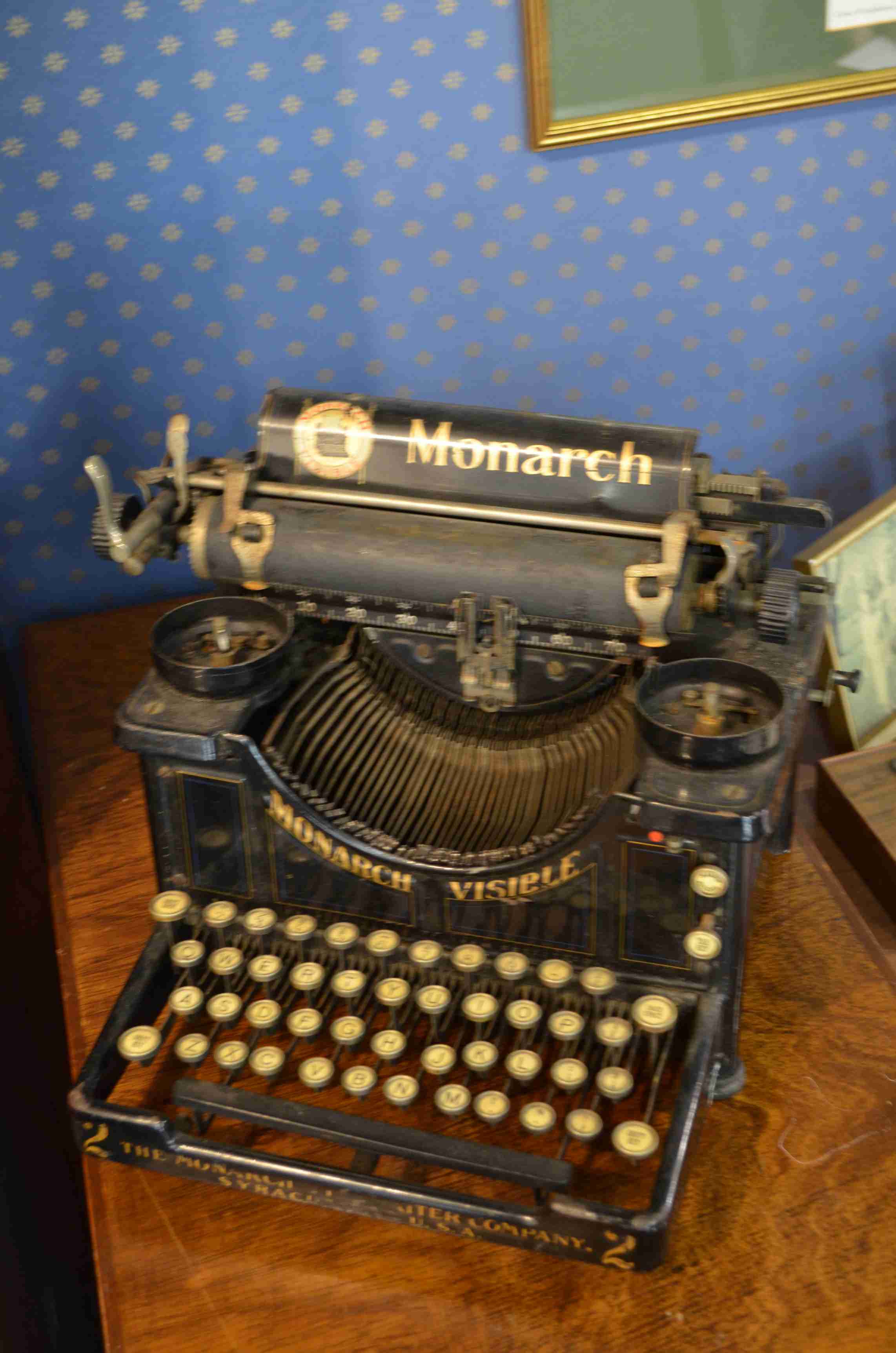
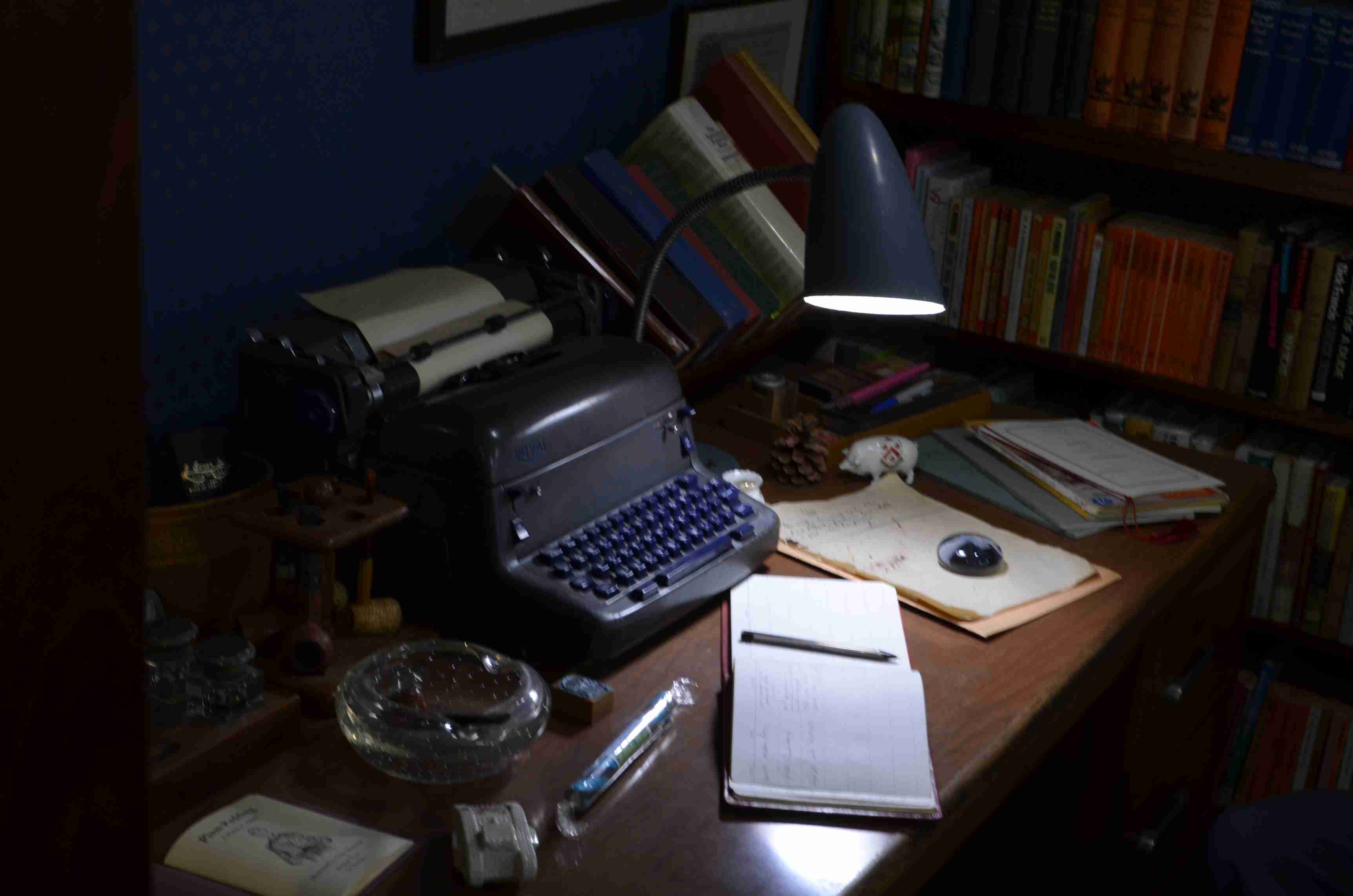
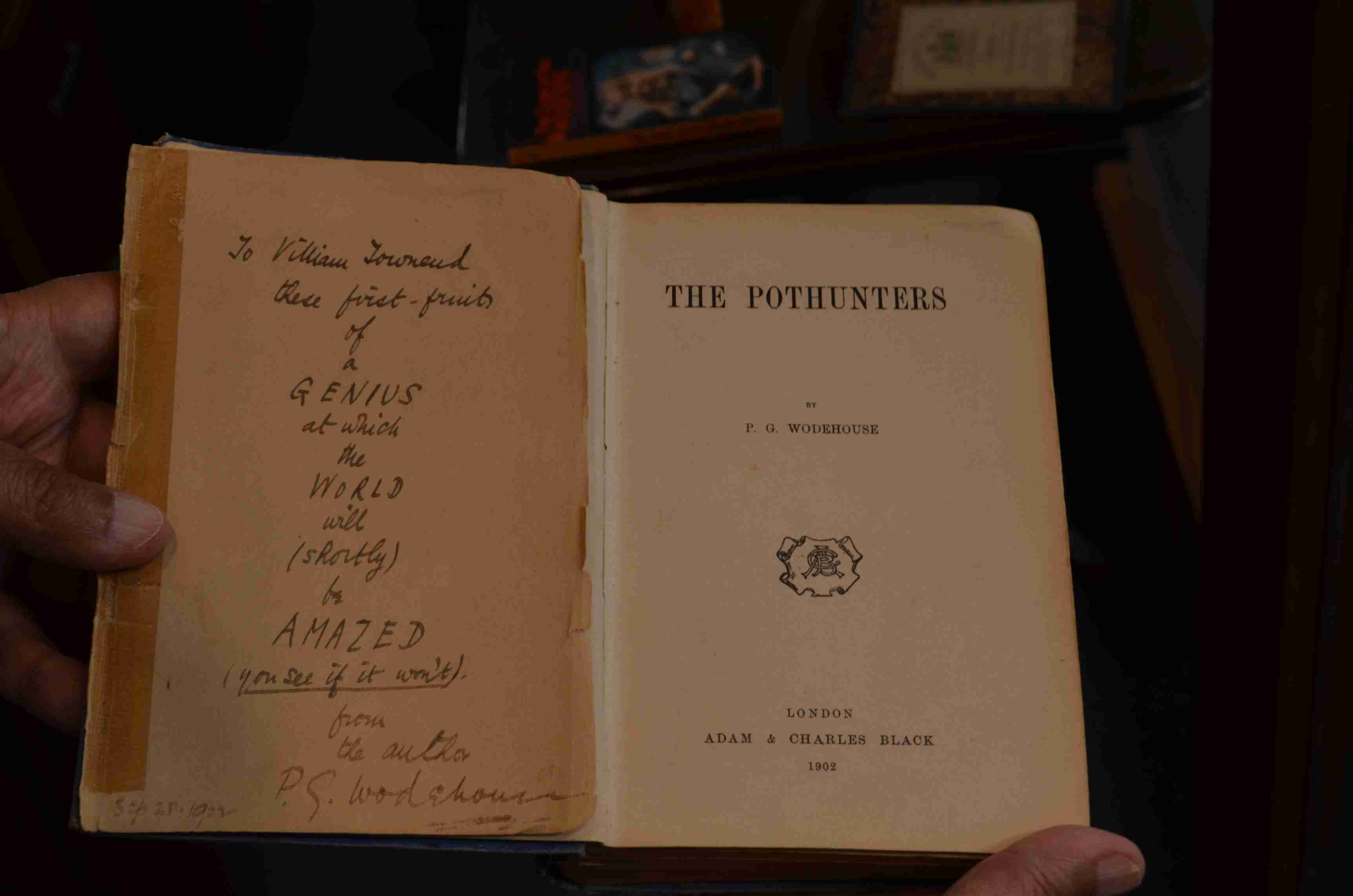
We passed by a well-stocked library of the college, named after Plum. Seeing the reconstructed study of his was a sheer delight. His working table, the chair that he used, two typewriters of his (one manual and another electric), his reading glasses, his pipes, the paperweights, a small figurine, and first editions of several of his books make the room come alive.
Calista was grace personified. She invited me to sit on Plum’s chair. Out of sheer reverence for the great man, I was hesitant, but than gave in to the temptation, merely to feel the vibrations of this genius humourist. The experience was something beyond words to describe, if you know what I mean. A signature in the Visitor’s Book was duly affixed.
What followed was a perusal of his personal collection of books, Dulwich College report cards, cricket score sheets, and his correspondence with various other luminaries and friends, all lovingly catalogued and preserved. The icing on the cake was surely to be able to go through his comments on a manuscript of his own, mostly in red colour. Such comments as “Good,” “OK, but needs to be improved,” and “Not funny enough, rework on this,” gave a sneak peek into the kind of perfectionist he was when it came to dishing out his uproariously funny works.
Passing through a hall which had a bespectacled scholar working on a research project, we came across a room full of translations of his works in many languages and an array of books inspired by Plum’s works and published by authors of different hues, ethnicities, and nationalities in their native lingua franca.
By way of a token of gratitude, I took the liberty of presenting my own compilation entitled “The Indian Curry Dished Out by Sir P. G. Wodehouse,” which is a long essay on various references to India in many of his works.
After expressing sincere gratitude to our gracious host for the time she could spare for us, I and my companion took leave of Calista and the college. If Lewis Carol had then described me as a Cheshire cat, albeit with a benevolent grin on my face, I would have taken the comment in my stride. The heart was aflutter. The world appeared to be full of joy, laughter, light, and sweetness. The everlasting value of the blissful cocoon left behind by Plum for Homo sapiens was driven home, yet again.
I also felt grateful to my Guardian Angels who had felicitated a trip to the Alma mater of P. G. Wodehouse by creating a concatenation of circumstances which had enabled my first ever trip to the United Kingdom.
If Plum and Ethel were then looking down from their cottage in heaven, I am reasonably certain that you would have noticed them both having a twinkle in their eyes. Perhaps, they might even have been waving at me!
Notes
Most of the photos here are courtesy Dominique Conterno, my host in the UK.
A few have been taken from the Dulwich College website.
Caricatures courtesy Suvarna Sanyal.
Plum at Dulwich courtesy the world wide web.
Inputs from Calista Lucy towards giving this article a better shape are gratefully acknowledged.
In most biographies and essays in papers P. G. Wodehouse is regarded as naïve. He is politically ignorant and not interested. This fact in some way explains the great mistake of his life when speaking in the German radio 1941 to his readers in USA, which Goebbels later retransmitted to Britain. He has been compared with Lord Emsworth as he himself described him in Something Fresh 1915:
“Other people worried about all sorts of things – strikes, wars, suffragettes, diminishing birth rates, the growing materialism of the age, and a score of similar objects. Worrying indeed, seemed to be the twentieth century´s speciality. Lord Emsworth never worried.”
This comparison is very unfair. Already in the above number of problems Wodehouse is mentioning you notice his awareness of actual problems. My aim with the following analysis is to show how Wodehouse kept himself well informed politically if you read his stories…
In most biographies and essays in papers P. G. Wodehouse is regarded as naïve. He is politically ignorant and not interested. This fact in some way explains the great mistake of his life when speaking in the German radio 1941 to his readers in USA, which Goebbels later retransmitted to Britain. He has been compared with Lord Emsworth as he himself described him in Something Fresh 1915:
“Other people worried about all sorts of things – strikes, wars, suffragettes, diminishing birth rates, the growing materialism of the age, and a score of similar objects. Worrying indeed, seemed to be the twentieth century´s speciality. Lord Emsworth never worried.”
This comparison is very unfair. Already in the above number of problems Wodehouse is mentioning you notice his awareness of actual problems. My aim with the following analysis is to show how Wodehouse kept himself well informed politically if you read his stories and not the least his letters to his friends. Many letters have been published in Performing Flea 1953 and in Yours Plum, a collection of letters by Francis Donaldson 1990.
Between the wars
During these years the dictatorship ideologies became increasingly influential and Wodehouse make them ridiculous in his writing. The communist system is described by Comrade Psmith: It´s a great scheme. You work for the equal distribution of property and start collaring all you can get and sitting on it. You find the same description in The New Class by Milovan Djilas 1957.
In The Clicking of Cuthbert Vladimir Brusiloff explains the new situation in Russia: The latest news which Vladimir Brusiloff had had from Russia had been particularly cheering. Three of his principal creditors had perished in the last massacre of the bourgeoisie…
Later Vladimir tells about the golf match in Nisjni Novgorod against Lenin and Trotskij when some-body tries to kill Lenin with a revolver – …you know that is our great national sport, trying to assassinate Lenin with revolvers…
In Ring for Jeeves we learn thatBertie Wooster had thought it prudent to attend a course in which the aristocracy is taught to fend for itself, in case of the social revolution should set in with greater severity. And in Money for Nothing Bertie notices that the Bolscheviks are a permanent threat and he is sent for a course in darning of stockings.In Archibald and the Masses 1935 you get a glimpse of the proletariat in Bottleton East and what they think. Bingo Little´s love affair with the revolutionary Charlotte Corday Rowbotham reveals even more (Charlotte Corday was the girl who killed Marat during the French Revolution). And finally: in Psmith in the City Wodehouse is very engaged in the social problems of New York and its gangsters.
The classic examples
Perhaps the most cited example is from Buried Treasure 1936, when the discussion in The Angler’s Rest has come on Hitler´s moustache: he has to decide to let it grow or cut it off, there are no other options. Hitler has to show what he is up to! And also the episodes with Roderick Spode and his Black Shorts (Lederhosen) which is how Wodehouse makes the English Nazi leader Oswald Mosley look ridiculous.
The letters of Wodehouse
During the 1930´s Wodehouse is very clear about his opinion of the political situation in the world and Europe. In a letter to William Townend Dec. 2 1935 he comments upon the Italian attack on Abyssinia: Isn´t this sanctions the craziest thing you ever came across. All we need had to do was just leave Italy and Abyssinia alone and nobody would have got hurt, because I can´t imagine anything safer than being in an Italo-Abyssinian war. As far as I can make out, neither side has yet come within fifteen miles of the other.
Wodehouse was in good company with the English government who secretly had planned to let Italy take Abyssinia. (The Hoare-Laval affair 1935) He was also worried about the Japanese-Chinese war and how that would threaten British interests: Letter to William Townend Sept. 4 1937:
What a hell of a mess the world has got into! I suspect plots all around me, don´t you? I mean, this Japan business, for instance. My idea is that Italy and Germany said to Japan,´Hey! You start trouble in the East and do something to make England mad. Then they will take their Mediterranean fleet over to Shanghai, and then we´ll do a quick jump on their neck while they have no ships on this side`. I´ll bet they´re sick we haven´t fallen for that.
However, Wodehouse shares the common opinion in England that a war in Europe is out of the question. He sounds like an echo of some politicians in this: Letter to W. Townend April 23 1939:
Do you know, a feeling is gradually stealing over me that the world has never been further from war than it is at present… I think if Hitler really thought there was a chance of a war, he would have nervous prostration…
Incidentally, doesn´t all this alliance forming remind you of the form matches at school— I can´t realise that all this is affecting millions of men. I think of Hitler and Mussolini as two halves, and Stalin as a useful wing forward. Anyway, no war in our lifetime is my feeling. I don´t think wars start with months of preparation in the way of slanging matches. When you get a sort of brooding peace, as in 1914, when a spark lights the p. magazine that´s when you get a war. Nowadays, I feel that the nations just take it out in blowing off steam. (I shall look very silly if war starts on Sunday, after Hitler´s speech!)
The ghastly thing is that it´s all so frightfully funny. I mean, Hitler asking the little nations if they are in danger of being attacked. I wish one of them would come right out and say, ´Yes, we jolly well do´!
The war starts and Wodehouse writes to W.Townend Oct. 3 1939: Didn´t you think that was a fine speech of Churchill´s on the wireless? Just what was needed, I thought. I can´t help feeling that we´re being a bit too gentlemanly. Someone ought to get up in Parliament and call Hitler a swine.
And Dec. 8 1939 to W. Townend: I have been reading all Churchill´s books – e.g. the World Crisis series (1:st. World War). Have you read them? They are terrific. What strikes me most about them is what mugs Germans were to take us on again. You would have thought they must have known that we should wipe them out at sea and that there never has been a war that hasn´t been won by sea power…..I never realised before I read Churchill that the French started off in 1914 by losing four hundred thousand men in the first two weeks. Also, what perfect asses the Germans made of themselves. There was a moment when all they had to do was strike East and they needn´t have worried about the blockade. Instead of which, they went for Verdun, which wouldn´t have done them any good if they had got it.
The phoney war had been going on for almost 5 months when Wodehouse wrote Jan. 23 1940 to W. Townend: I agree with you about the weariness of war. I find the only thing to do is to get into a routine and live entirely by the day. I work in the morning, take the dogs out before tea, do a bit of mild work after tea, then read after dinner. It is wonderful how the days pass… My only fear is that Germany will be able to go on for years on their present rations. Apparently a German is able to live on stinging nettles and wood fibre indefinitely.
Wodehouse is quite aware of the war but doesn´t seem to worry much about the situation. He writes two short stories in December 1939 and February 1940 in Punch in which hemakes fun of Hitler´s war (The Big Push and Shock Dogs). In some way he had accepted Italy´s war in Africa and now Germany´s occupation of Poland to establish economic basis for their countries. He is not at all conscious of any threat against France and England and decides to stay in Le Touquet.
The Punch Articles
In The Big Push Wodehouse tells a story about a meeting at Wilhelmsstrasse with Hitler and the general staff at the headquarters. They discuss how to continue the war and conquer England. Hitler proposes an invasion of England by pocket battle ships. “You did say”, he added turning to Goebbels, “that we had destroyed the British Fleet?” Goebbels answers: “Well, we have sunk the Ark Royal seven times, but…” – “OK”, Hitler says, “let´s wait till the North Sea freezes, and skate across”. Someone remarks that by some rule the North Sea doesn´t freeze like the Baltic. Hitler says: “Oh well, then let´s destroy France”. – “We have some difficulties Leader”, says general Brauchitsch,”the Maginot line…” “Why wasn´t I told about this Maginot Line”, Hitler asks. “We are rather trying to conciliate France”, says Ribbentrop. And the discussion continues until they find the solution: invading Britain with German Brass bands, which will play day and night so no one can sleep. The English will have to pay the bands to go away, and that will ruin England. Field Marshall Goering shouts: “Heil Hitler. Against this secret weapon of our Leader´s the British have no defence.”
This demonstrateshow ridiculous Wodehouse regarded the German leaders. In Shock Dogs 1940 the story takes place at “Angler´s Rest” where Mr. Mulliner leads the discussion about the German hostilities in the war. The news is that Germany has employed a large number of dogs to dig under the Maginot Line and undermine the foundations. You must be prepared for every emergency, Mr. Mulliner and points to what happened in Finland in the winter war. The Russians had concentrated large forces at the railway to send to the front. But when going to take their seats on the train they found that the Finns had raided the booking office and destroyed all the third-class tickets. To send the soldiers first-class would be very expensive so it had to be cancelled.
By this Wodehouse hinted at the great problems Russia had when trying to invade Finland in the winter 1939-40 and lost a lot of soldiers. The cost of sending them first-class (well equipped and trained) would have ruined Russia. The same with the dogs. To feed them, to give them all the Iron Cross etc. would ruin Germany, so Hitler kept the German army at home and didn´t start an attack and tried to see what France would do during the “Phony War”. Wodehouse thought he was safe in Le Touquet and that no real war would come. A lot of people thought the same in England at that time.
P.G.Wodehouse’s early writings in the beginning of the century: The Parrot-period 1903 and onwards.
Towards the end of 1903 Wodehouse was asked to write daily poems for the front page of the Daily Express, commenting on a topical political controversy. He wrote at least 19 of the 51 poems which appeared on the front page of the paper between September 30 and the end of the year, in which a Parrot commented on its perception of the consequences of a proposed change in economic policy.
Joseph Chamberlain was eager to charge a duty on the import of cheap food from the colonies and drop the policy of free trade, which had been followed for a century. His motive was that the income from customs should be invested in industries in Britain´s colonies. The Unionist Party also wanted to protect the British farmers. This would mean that food prices would rise and affect those with low incomes. Wodehouse gives his view of the problem through the Parrot:
On the fore-top-gallant spanker
Of a first-class cruiser´s anchor,
Sat a handy-man of Plymouth,
And he warbled `John Bull´s Store´
With a face like a tomato
He had reached the pizzicato,
When a parrot, perched beside him,
Said `Your food will cost you more’.
(Oct 28, 1903)
In the usual Fleet-street garret
Sat a poet; and the parrot,
Full of quaint misinformation,
Fluttering idly through the door,
Found him dashing off a sonnet
He was gently musing on it,
When the parrot broke the silence
With `Your food will cost you more`. (Nov. 9 1903)
In A solitary Triumph 1903 Wodehouse has noticed that men are more criminal than women:
Oh, the progress of Woman has really been vast,
Since Civilization began.
She´s usurped all the qualities which in the past,
Were reckoned peculiar to Man.
She can score with a bat, use a rod or a cue;
Her tennis and golf are sublime.
Her aim with a gun is uncommonly true,
But Man beats her hollow at crime.
Wodehouse often uses language and similes from sports as in his reports from football matches in Punch 1913 when the reporters D-v-d Ll-yd G—oge, W-nst-n Ch-rch-ll and S-lv-a P-nkh-rst write about what happened, but their political views influence their sport reports.
One of my favourites among Wodehouse´s political poems is The Phalanx from 1906. England had a coalition ministry under Cambell-Bannerman, in which ministers with different political views had great difficulty to cooperate. Among these were Herbert Asquith, Winston Churchill, Edward Grey, H J Gladstone, and David Lloyd George. Wodehouse calls them The Happy Cabinet in his poem:
Of course it´s true that some of us
Hold views that scarce agree
With those expressed by all the rest:
Still, l hang it. Thought is free.
Besides, it´s not exactly what
You´d call a hitch or jar.
We are a happy Cabinet.
We are! We are!! We are!!!
If Winston Churchill thought the same
As Asquith, Burns or Grey;
If Asquith, too, affairs could view
In Herbert Gladstone´s way;
And if Lloyd George could be surpressed,
We´d then do better far.
We are a happy Cabinet.
We are! We are!! We are!!!
´Twere well if we united minds
To Ireland could apply,
On Rand Chinese, and points like these
Could see things eye to eye.
But as to details such as this
We´re not particular.
We are a happy Cabinet.
We are! We are!! We are!!!
In 1935 the English government was not to strong and didn´t expect any real danger from Hitler and Mussolini, so the Almanack below by Old Law demonstrates a situation where the members of the government sit calm and enjoy themselves.
The import of Chinese labour to South Africa in the beginning of the 20th century was not very popular, and the Ireland question was always present. Wodehouse must have been well informed when he could write his commentaries in such pregnant way.
At the same time he worked at The Globe, in which he commented world politics in Our Rapid Calendar. In By The Way Book you find calendars for 1908-1909 in which he jokes about the German Emperor trying to deceive England regarding navy disarmament. As Wodehouse writes: The German Emperor says his Navy is wanted to watch Switzerland (Oct. 1908) The German Emperor says his Navy is wanted to protect Germany from invasion by Persia (Nov.1908) et.sec. He also mentions President Roosevelt´s ambition to take action against the Trusts, a question which is still with us today. So, Wodehouse was following the political questions fairly well.
The political situation in Europe before World War I gave Wodehouse 1909 inspiration to write The Swoop, in which he describes the invasion of 9 foreign armies in England. The scout Clarence Chugwater is the hero who saves England, and later in 1915 even America as well when the invasion armies came there. The Swoop is joking with the mentalities of different states and emphasizes the British common sense.
So, if you consider these examples from different early writings by P. G. Wodehouse, it is not correct to characterize him as politically ignorant and not interested. But his aim was not to take part in political discussions and have a message to his readers, he wanted to amuse his readers, not worry. But his knowledge of political affairs was good.
P. G. Wodehouse in Germany 1940-41
When Germany invaded France in spring 1940, Wodehouse was taken as prisoner and interned at Tost until June 21st. 1941, when he was released and taken to Berlin. There he was persuaded to make his 5 talks via the German radio to his readers in USA from June 28st. to Aug. 6th. which caused an immense debate in England and he was condemned as being a traitor when talking in the Nazi radio. On July 19th 1941 Saturday Evening Post after the second talk published an article by Wodehouse, My War with Germany in which he describes his situation at Tost. This article was read and translated in Sweden only 2 months later under the title “Mitt krig med Hitler” (My War with Hitler)
The translator believed that the article was the second talk by Wodehouse, but it is written besides the talks. Wodehouse tries to be stiff upper lip in describing the time in the Nazi camp. The article has nothing political at all in it and the American readers get a picture of the camp life Wodehouse has at Tost. Quite remarkable that it was read and translated in Sweden so soon.
I will not discuss the Berlin talks here, only mention that one passage from his talks has been unfairly related later. In June 26 1941 Harry W. Flannery conducted an interview on the radio with Wodehouse. Flannery had written the manuscript in advance and he and Wodehouse read it from the script. In discussing his writings Wodehouse said: I´m wondering whether the kind of people and the kind of England I write about will live after the war – whether England wins or not, I mean. Flannery´s answer: Your characters will always live, Mr Wodehouse. Maybe in a different setting. (Assignment to Berlin p. 246) What Wodehouse actually was thinking when saying those words is impossible to know 72 years later, but my opinion is that he had his writing in mind, not the end of the war. (See also letter Dec. 8 1939!) After the war when Wodehouse was questioned by MI 5 and the circumstances around the talks, he was declared completely innocent of treachery, but the records of the questioning were kept secret for many years until he was completely acquitted.
If you consider the course of his life you notice, that he lived most of the period 1909-1920 in USA, though he spent some time in England as well up to 1914. He commuted between the UK and US, with an occasional visit to France in the 1920s. In the 1930s he started with 18 months in Hollywood. Then he had his base in England or France for the rest of the decade with another year in Hollywood 1936-37. Therefore he remained in his mind in the England as it was before 1920.
Consequently he probably was influenced by the situation in two isolationistic nations (UK and USA) who would not pay much attention to Europe´s political development until it was too late around 1937. The appeasement policy determined Britain´s conduct almost up to the annexation of Tchecoslovakia in March 1939. Wodehouse held the same opinion as the leading political groups inEngland (except Churchill), but he became the victim of a government under great pressure 1941, eager to find suitable scapegoats in an extremely threatening situation.
In Homage to P.G. Wodehouse 1973 Auberon Waugh has a good point when discussing the Great English Joke. Mr Waugh had noticed that very few in the British Cabinet had ever read Wodehouse; only two enjoyed him, several had never heard of him. “The political world does not take kindly to alternative perceptions of its own importance. Politicians may be prepared to countenance subversive political jokes, but the deeper subversion of totally non-political jokes is something they can neither comprehend nor forgive. It is no accident that of all twentieth-century English writers, Wodehouse is the one they have chosen, in their time, to persecute most bitterly.”
Auberon Waugh is of the opinion that Wodehouse´s influence politically is his sense of the ridiculous. “By teaching us that the best jokes completely ignore everything in which men of authority try to interest us, Mr. Wodehouse has kept the torch of freedom burning in England more surely than any avowedly political writer could ever have done.”
I agree with Mr. Waugh, that the political impact of Wodehouse on British society and thinking must be great. Through viewing the society and its problems with the glasses of humour, you get the right proportions of them, of the men and women who have influence, politically or economically, of pomposity and selfishness. And that strengthens the dignity of common people and thereby also democracy. So, my conclusion together with Auberon Waugh and many others is that Wodehouse was really politically interested and well aware of what was going on. There are a lot of examples in his books and letters that prove that! But his aim was not to take part in politics, only to amuse.
(Note: Bengt Malmberg is a Member of the Wodehouse Society Sweden. This article had first appeared in Plum Lines in 2014. His permission to publish it here is gratefully acknowledged. Illustration courtesy www)
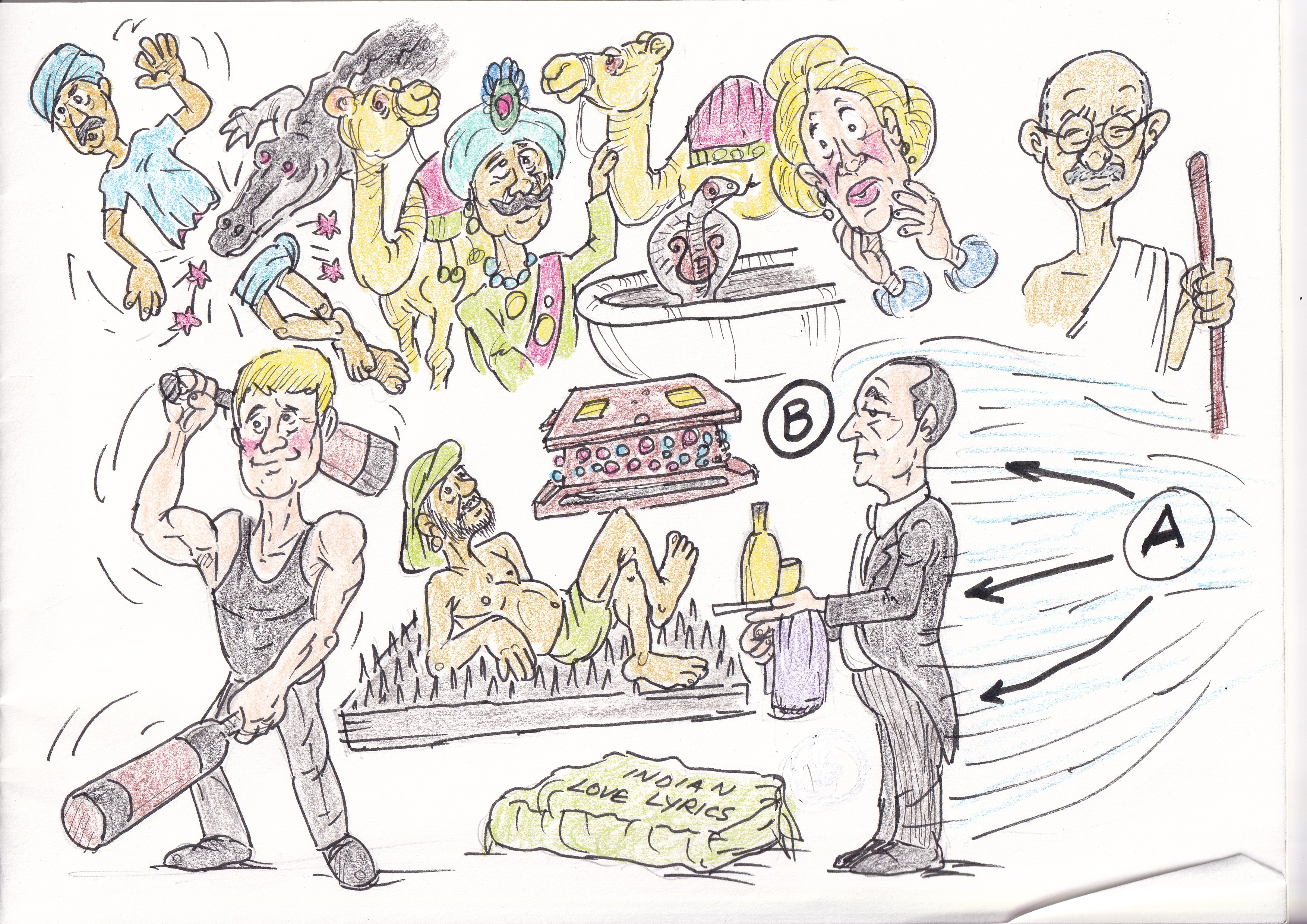
In Plum’s narratives, we encounter American millionaires, French cooks, Russian peasants, Italian waiters, Spanish ladies and white hunters and huntresses who keep popping up in Africa. We also get to meet well-endowed American ladies who are on the lookout for castles which are owned by impecunious English gentlemen.
When it comes to India, we get introduced to military men, royals and others who narrate some juicy details or the other about that exotic land. He also gives us a sneak peek into the civil disobedience movement of Mahatma Gandhi, the Father of the Nation of India. Rabindranath Tagore’s dietary habits, like those of Mahatma Gandhi, get commented upon. Taj Mahal finds a mention.
Some of his characters are even desirous of trooping down to India to study its social conditions while some emulate the mystics contemplating on the infinite in caves in Himalayas or elsewhere. We come to know of some cities as well.
To Plum’s credit, he even quotes Rudyard Kipling, the India-born author whose works were inspired by his country of birth:
‘I’ve said it before, and I’ll say it again – girls are rummy. Old Pop Kipling never said a truer word than when he made that crack about the f. of the s. being d. than the m.’ (Right Ho, Jeeves)
But if he had wanted to, Plum could have used a number of other Indian resources to further enrich his narratives.
Alas, we do not find any mention of such literary figures as Kalidasa, besides Aryabhata or Ramanuja, the famous mathematicians. The four Vedas are nowhere to be found. References to India’s soft power comprising such aspects as spirituality, its multi-layered scriptures and various dance forms are sadly missing.
Above all, the mind-numbing diversity of the spirit of India is missing. Its wide spectrum of ethnicities, languages, beliefs, practices and cuisines is nowhere to be found. These are facets of India which have missed out on his wit and wisdom. It is indeed a delectable irony of sorts that this write up is labelled as The Indian Curry Dished Out by P G Wodehouse, even though it has not thrown up even a single reference to any Indian dish!
Imagine a distraught Gussie Fink-Nottle pining for Madeline Bassett and sending messages to her through clouds passing overhead, a la ‘Meghadut’, the classic poem penned by Kalidasa. Poets like Ralston McTodd would have been found drawing some inspiration from the creative outpourings of Tagore. Personalities like Indian scientists and mathematicians would have helped some sleepless guardians of the peace – like Constable Oates – to improve their methods of investigation, improving the prospects of their being noticed by Scotland Yard. To improve Bertie’s intellect, all Florence Craye had to do was to insist that he peruse at least one of the chapters of the ‘Bhagavad Gita’. Laura Pyke could have drawn some inspiration from the science of ‘Ayurveda’, the healthy-lifestyle system that people in India have used for more than 5,000 years. Anatole could have been found whipping up ‘chhole bhature’ or ‘dosa’s!
Yoga could have helped someone like Ashe Marson to treat his clients suffering from acute dyspepsia to heal faster and better. Sir Roderick Glossop could have gone about advising his loonier patients to make meditation an essential part of their mundane lives. Vicars could have lived a happier Thos-infested life while brooding on spiritual tenets dished out by Indian scriptures, thereby becoming hotter at their jobs. George Bevan, while working on one of his next musical comedies, could have been drawing inspiration from the ‘Natya Shastra’ of Bharata Muni. Gentlemen aspiring for India rubber legs could have been practising such dance forms as ‘Kathak’ or ‘Bharatnatyam.’
The possibilities are endless. The mind boggles. But one would do well not to be concerned with what might have been. Instead, the focus needs to be on the rich legacy Plum left behind for us to rejoice in.
A Consistent Depiction, Despite 1947
The India that Plum would refer to belongs to an era which is long since bygone. India gained independence in 1947, but his works published during the period from 1947 (Joy in the Morning) till 1974 (Aunts Aren’t Gentlemen) do not reveal much change in his imagination. If one were to compare allusions to India based on Wodehouse’s works published before and after 1947, one notices a singular consistency. Astral bodies, scorpions and cobras continue to rule the roost.
The insignificance of the year of India gaining independence from the British Raj in Plum’s works has its own merits. Much like the relationship between Bertie Wooster and Tuppy Glossop, which soured for some time when the former was forced to take a dip in the water even when suitably attired, a friendly spirit of joie de vivre appears to have prevailed and both countries have moved on.
Malcolm Muggeridge, who was an editor of Punch, had spent two extended periods in India, once during 1923-26, as a lecturer in English at a college in Kerala, and then during the early 1930s as an assistant editor of the Statesman. According to Ruskin Bond, he is reported to have said that ‘the only real Englishmen to be found in the world were to be found in India.’
Many enlightened Indians who take a broad view of things, or those who were born much after 1947 and have not suffered the birth pangs of their country, admire the Crown rule for having left behind a rich legacy in terms of a legal framework, a bureaucracy, a railway network, partial linguistic proficiency in English and a fine army with its own traditions. The genesis for such a legacy to have come about could have been rooted in stark commercialism and a stiff-upper-lip-type control over the people, but that need not distract us from the fine institutions created and left behind by the British in 1947.
But many others, especially those who have been exposed to the personal trauma of partition which ended up displacing an estimated 10 to 20 million people along religious lines, or their descendants who have heard the horror stories of those trying times, and many others, would speak of the manner in which Indians of yore were exploited by the British. They would lament the decline of their country’s share in the global Gross Domestic Product from roughly 27 percent in the 1700s to roughly 3 percent in 1947. (Sources: Wikipedia and a talk by Dr. Shashi Tharoor, a famous fan of Plum’s and a Member of Parliament of India, https://www.youtube.com/watch?v=OB5ykS-_-CI)
In the present scenario, both the countries, the erstwhile rulers as well as the ruled, enjoy a healthy and vibrant relationship. Even during the two World Wars in the 1900s, Indian soldiers had made the supreme sacrifice, supporting the British/Allied forces. Over time, close to 150,000 soldiers are said to have died while supporting the wars fought by the Empire. A private sector steel company in India had produced rails much to the satisfaction of the rulers. Sure enough, there were mutinies, internal skirmishes and episodes of non-violent civil disobedience, but there were clear signs of good collaboration between the two even prior to 1947.
In any case, it should come as no surprise that Plum maintains consistency throughout his canon while using Indian condiments for the curry he serves. During 1947, the Indian subcontinent was undergoing some major changes. But these did not register on the Plumsville radar.
From a global perspective, the devastation caused by the Second World War (1939–45) was then the main area of concern, rather than the fact of India gaining independence on 15 August 1947. Plum had personally suffered in his life owing to political developments then and had relocated from Europe to USA during April 1947, never to visit Europe again. One believes that the press in the USA had then covered the fact of India gaining independence rather prominently, probably because it was the first significant nation to have gained independence from the British after the USA, which had achieved the feat some 171 years earlier, in 1776. However, due to his preoccupation with other matters then, perhaps the last thing on his mind would have been the British (or American) reaction to the events unfolding in India. Hence his storylines and characters never touched upon the emergence of an independent India.
Even though his works do not offer any commentary on the politics of the day, at times he does not refrain from deploying the communist ideology to amuse and entertain his readers. Psmith brims over with socialist ideas. George Cyril Wellbeloved has strongly communistic views. At one stage, even Bingo Little becomes a member of the ‘Red Dawn’. Roderick Spode happens to be a born crusader and revolutionary. Vanessa Cook leads protest marches and appears to be gravitating towards politics by chance. Stilton Cheesewright, who is otherwise content being a vigilant guardian of peace at Steeple Bumpleigh, gets egged on by Florence Craye to pursue a career in politics.
(Continued)
Notes:
The inspiration for this essay comes from the scholarly work done by Ms. Masha Lebedeva, who had earlier whipped up a research paper entitled The Russian Salad by P. G. Wodehouse.
The author expresses his sincere gratitude to an eminent expert on Plummy matters for having spared the time to go through a part of this composition and provide insightful suggestions. Some fans of P. G. Wodehouse have also suggested improvements in its contents.
Thanks are also due to Mr. Suvarna Sanyal for dishing out the main illustration in Part 1; also, to Ms. Sneha Shoney, who has edited the text.
Those of you who wish to cruise through this essay in its entirety may kindly write to akb_usha@rediffmail.com for a PDF version of the complete document to be mailed to them.



































 ashokbhatia