Feeds:
Posts
Comments

Archive for the ‘Management Lessons’ Category

Branding is a term which originates in the realm of marketing management but is generally applicable to any product, service, entity or person which stands out amongst the crowd and calls out for any Unique Selling Proposition of its. It could be applied to countries, movie directors and even to some fictional characters from literature!

Here are some examples which demonstrate this point better.

Countries


After the Trump era (2016-20), studies have popped up claiming that the USA has slid down significantly on its soft power in the world. Same is said to be the case with many other countries where brutal suppression of dissent has become a way of life and where human rights have been trampled upon.

China keeps expanding its soft power by promoting movies out of Hollywood exposing the world to its culture. India offers spirituality and its own culture to the world.

The movie Eat, Pray, Love (2010) illustrates the point rather well. A heart-broken heroine travels through different countries. She discovers the true pleasures of the table in Italy, the soothing power of payer in India and the inner peace and balance of love in Indonesia!

Movie Directors 

Apart from other celebrities, those who wield the megaphone in the movie industry often exude soft power.

I confess I am a movie buff. Quite early in life, I discovered that a movie should be selected for viewing not based on its cast but based on its director. Each director has a distinctive perspective on life, and the manner in which he/she presents a theme is as unique as, say, one´s finger prints. Admittedly, the core brilliance of a movie is determined by the producer-director duo. But the unmistakable stamp on the narrative is that of the director. The script, the screenplay, the music, the camera work, the background score, the sets, the costumes, the editing, all these transport us to a different realm for a limited time.

To put it simply, if you sit down to watch a movie by either Steven Spielberg or Gulzar saheb, you know what to expect. Seeing a movie which is directed by, say, David Lean, is as much enriching an experience as seeing one directed by either Hrishikesh Mukherji or Basu Chatterji.

Over a period of time, a movie director builds up a brand equity for himself. It comes from the uniqueness of his style, the choice of his scripts, consistency in quality of his directorial ventures and sheer attention to detail in all the departments of movie making. This earns a well-deserved respect from the discerning viewers, crowned by some degree of commercial success.

The CEO of a Dream Merchandise Factory

A director’s role in shaping a movie would perhaps be comparable to that of either the CEO of a company or the conductor of an orchestra. A CEO’s mindset determines the business strategy of a company. His style of functioning and his value system permeates across all levels of the company. Likewise, the conductor of an orchestra blends the notes of stringed, percussion and other instruments, creating a symphony which is unique. Like a CEO guiding a company or a conductor presenting a symphony, the director also balances the strengths and weaknesses of his team members and comes up with a movie which is entertaining – and possibly educative – in the social context.

A director surely knows how to touch our heart-strings in a meaningful way. In the process, he delivers deep messages, whether social, political, economical or the spiritual kind.

Some Literary Brands

Those of us who have admired the exploits of Sherlock Holmes and Reginald Jeeves are occasionally overawed by the kind of popularity these literary figures enjoy. Both may be fictional, but the influence they exert on our consciousness is exemplary. One would not be wrong in perceiving both of them to be brands in their own right.

Sherlock Holmes: An Honorary Citizen of Meiringen
Ever heard of the charming Alpine town of Meiringen in Switzerland? It is a municipality in the Interlaken-Oberhasli administrative district in the canton of Bern in Switzerland. Ringed in by snow-covered peaks, it is located on one of the most important trade routes through the Alps for centuries.

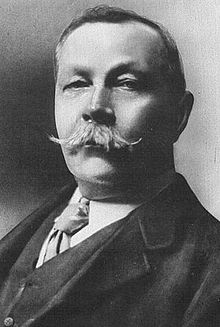
One of Meiringen’s attractions is the Sherlock Holmes Museum which recreates the detective’s abode at 221A, Baker Street in London, besides Victorian era memorabilia. The nearby Reichenbach Falls are where, in The Final Problem, Sir Arthur Conan Doyle made his hero suffer a premature death at the hands of his adversary Dr Moriarty, only to resurrect him later in The Adventure of the Empty House on persistent demands from the detective’s fans. Well, quite some time back, it had granted an honorary citizenship to Sherlock Holmes.

It stands to reason that the town had granted an honorary citizenship to Sherlock Holmes. A certificate to this effect is displayed in the museum. Also, at the base of the falls, there is a rock inscription to this effect!
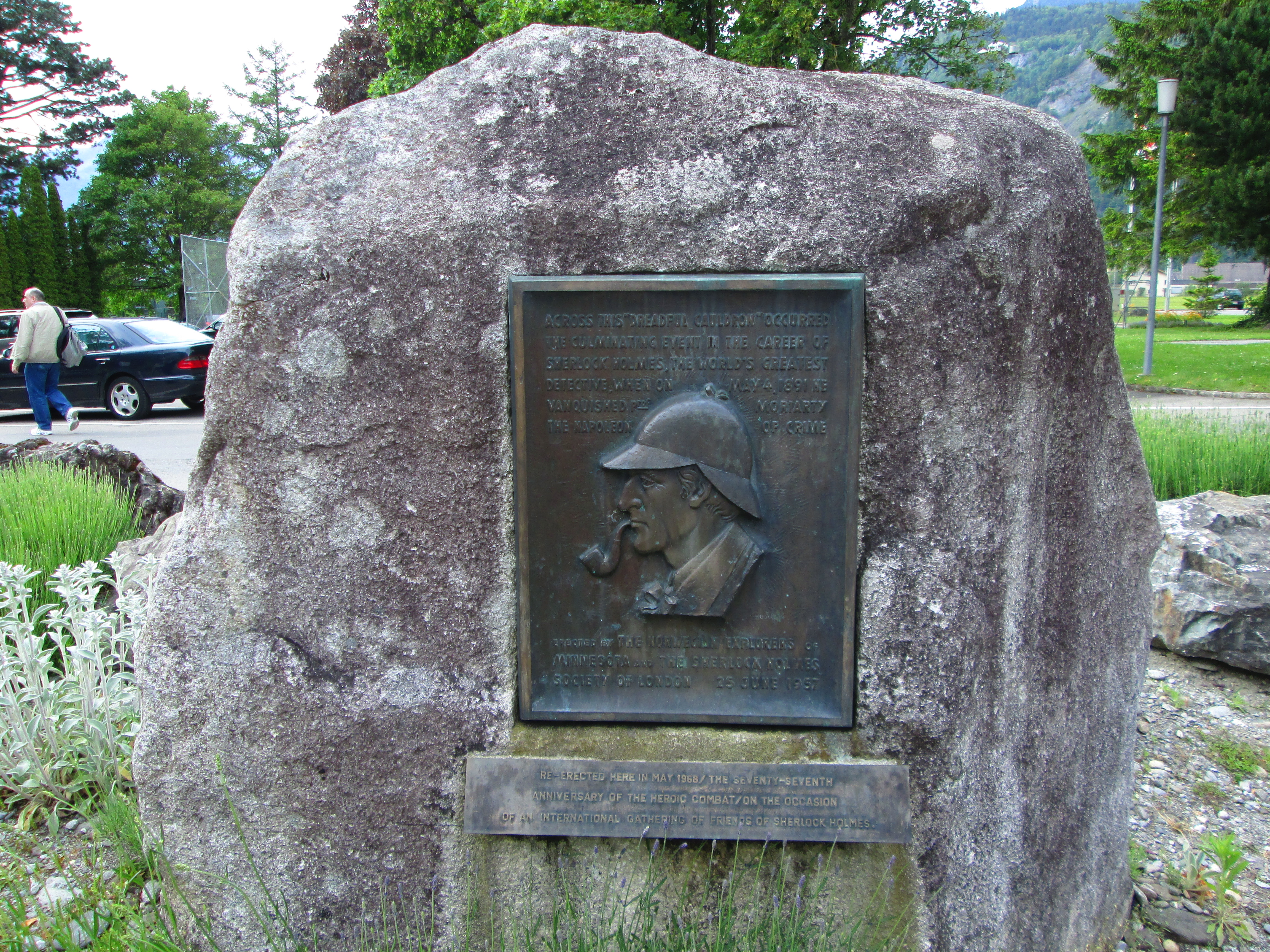
When one picks up a Sherlock Holmes story, one is assured of good value for one`s time and effort. Backed by hard-nosed judgment, insightful observations and above-par analytical skills, he delivers. Go to him with a mystery and he demystifies it. His methods and skills have provided clues to investigators in many countries. He is utterly reliable. He delivers. These are the very attributes which go on to build up a brand.

Gentlemen’s Personal Gentleman
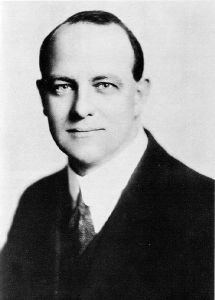
Likewise, Jeeves, created by P G Wodehouse, stands for impeccable service and a capacity to deliver results beyond the expectations of the bosses. The manner in which he helps his boss Bertie Wooster retain his bachelor status is a sterling example of his feudal spirit as also an inner cunning. His methods are often rough, but there is no doubt as to his capacity to deliver satisfactory results. He believes that bosses are like wild horses; they need to be managed with tact and resource.

In the United Kingdom, one is apt to run into laundry and other services which bear his brand name.

Many examples can be quoted from literature, fine arts and other creative fields of human endeavour.

In an earlier post, we had considered the perks of building and sustaining a shimmering brand in the market place. The focus there was on companies and individuals. Examples cited above go on to reveal to us the kind of hard work, consistency of effort and persistence which enable a softer brand to emerge. The essential principles underlying the creation and sustenance of a brand remain the same.


(Related Posts: 

https://ashokbhatia.wordpress.com/2021/03/15/the-perks-of-a-shimmering-brand-equity

https://ashokbhatia.wordpress.com/2017/12/13/a-brand-called-jeeves

https://ashokbhatia.wordpress.com/2014/05/28/sherlock-holmes-the-honorary-citizen-of-meiringen-switzerland

https://ashokbhatia.wordpress.com/2012/08/11/hats-off-to-these-movie-directors)



Read Full Post »


Earlier on, we had touched upon the importance of brand equity. One can undervalue the criticality of this attribute only at one’s own risk and peril.

Corporate Brands

Companies benefit immensely from making conscious efforts to keep their brand images shimmering. If asked to quantify the resultant financial uplift though, their CFOs would be found twiddling their thumbs. But it is not difficult to see the kind of benefits which accrue from having a shimmering image, whether in matters of human resources, sourcing or marketing, besides in such grey areas as liaison and government dealings.

Several instances can be quoted from my own stints with the Tata group.

When a INR 5 crore modern leather processing factory was established at Dewas in 1975, the plant was commissioned without any delay, with all necessary government approvals in place. No government officials had to be appeased, whether in cash or in kind. In fact, the then government of Madhya Pradesh went all out to support the complex being set up.

In another case, a senior manager deputed to the headquarters of the Electricity Board to secure power connection for a small manufacturing unit ended up assuring a demanding government officer that a measly amount would be paid upon the issue of the necessary permission. A 50% advance paid to the officer concerned was shown in the manager’s travel expenses claim. A furious general manager called in the manager and gave him a severe dressing down. Yours truly was called in and asked to resolve the issue. My visit to the place cost the company five times the amount demanded. Somehow, I could secure the permission without any further underhand payment and got back to my desk with a feeling of triumph and pride at what had been accomplished. The senior manager soon left the company and moved on to a greener pasture.

Tatas are well known for their sound values and systems. They have a unique way of handling under-the-table demands by all and sundry. When it comes to compliance, the emphasis is on avoidance and not on evasion. As to corporate governance, their 150 year old record is blemish free.

Tatas repersent a fine example of what Alan Wallner is apt to call a Conscious Brand. As one of the thought leaders who happen to be a part of the Conscious Enterprises Network, he believes that branding is not just about physical attributes; rather, it is about the inner presence of a person and of the team that creates the brand of a business – it’s the way we treat other people and work together to create something remarkable.

A Mighty Responsibility

To keep a brand duly buffed up and shining is no mean task. Besides management back-up, a positive culture and clear policies which facilitate an ethical approach to business dealings, it needs extensive training at the front level of any organization.

Experiences of Customer Delight

Sometime during the late 1980s, I once had a problem with a Kodak camera I had bought just about a few months back. Somehow, I had not been careful enough to save a copy of the purchase proof with me. I contacted the shop from where I had bought it and he refused to entertain me in the absence of either a bill or a receipt. But when I contacted the Kodak office in person, they made no fuss. A technician checked my camera and within twenty minutes, I walked out with a brand new fresh camera in my hands.

As a lay customer, I once had a problem with my TataSky direct-to-home service account. When nothing satisfactory happened for a week, I gave a piece of mind to the next person I could manage to speak to. Within a day, not only was the problem addressed but even a senior person called me up to apologize for the inconvenience caused.

Such first-hand experiences restore one’s faith in a brand, thereby giving it a unique advantage – that of free word to mouth publicity!

Converting Ex-employees into Brand Amassadors

At HCL Infosystems, another large company, a separation with a disgruntled star performer was handled very delicately. The outcome was that he ended up being an ambassador for the company, referring candidates for several other key positions in the following years.

Even a massive plant closure involving over 1,000 persons was handled so very decently that there were no protests and red flags of any kind, nor any interference from the local politicians or communities. Key personnel who could not be accommodated were assisted in securing alternative career opportunities, with the Human Resources Department playing a key role.

Caring for the Delicately Nurtured

Unilever recently stated having introduced a policy with zero tolerance towards domestic violence.


A ten-year stint of mine with Tatas matched well with my own upbringing. However, by the time the episode touched upon by me earlier occurred, I was in a bubble at the other end of the spectrum of values. I had perhaps permitted my honest visage and sincere disposition to be put to nefarious uses. Sure enough, the fault of accepting a situation of this kind lay somewhere within me.

Personal Brand Equity

It stands to reason that one’s brand equity is built over a long period of time. Once built, it becomes like the fragrance of an exotic flower. It travels much ahead of one, often opening up new vistas, offering a wider canvas for one to perform and excel at whatever one undertakes to do. The observant ones amongst those around us are surely able to size us up much quicker than we can manage to do ourselves.

Professionals need to step back every once in a while and check if their brand image is bright and shining. Keeping one’s brand value burnished helps in career progression. It is also an immensely satisfying slice of life which promotes self-worth and boosts self-confidence.

My experience tells me that these are the kind of inputs which go into keeping a professional’s brand value burnished.

Under-promise, over-deliver

Being aware of our core strengths as well as limitations helps us to assess our chances of success in delivering on a project. By ensuring that we commit conservatively but deliver zealously, we build up a reputation of reliability. There are indeed times when a polite ‘no’ could save us from denting our reputation.

Honesty and openness in relationships

Our colleagues and team members are equally smart. They are quick to sense a touch of opacity on our part. They detest a lack of transparency in us. Dealing with those around us with honesty ensures that they repose their faith and trust in us. As a result, our capability of getting things done improves.

Being a friend, philosopher and guide

All of us have some expertise which may not be directly relevant to our Key Result Area. It could be an insight into the realm of alternative therapies which a colleague can use for one of her family members. It could be about handling rebellious teenagers at home. If we put such expertise to use by helping others around us, word goes around and others rush in to seek our counsel. We might have the image of a tough task master, but this softer aspect of our personality helps us to build a unique brand for ourselves.

Networking

Whether within the organization or outside, networking goes a long way in building up our reputation. The trick, however, is in avoiding those with a negative outlook, while promoting ties with those who have positive vibes.

Keep learning

Keeping the saw sharpened always helps. By refreshing our knowledge pool continuously, we remain a leader in more ways than one. Often, a dash of humility is all it needs to remain ahead of the curve.

Being genuine

By being ourselves, we enhance our dependability. Others feel reassured and refreshed after each encounter with us. They do not mind confiding in us. In turn, this helps us to understand and address their anxiety and concerns better. Our ability to deliver improves.

A brand is all about reliability and dependability. It offers good value for money. So do professionals who work on the basis of deliverables. Smart ones realize that an image cannot be built up purely based on optics and communication. It needs to be backed by real inputs so one’s brand value remains intact and is kept shimmering at all times.

One of the key factors in building a brand and sustaining its image is the kind of value system it represents; moreover, the purpose which guides it.


(Illustration: Keller’s Brand Equity Model)


(Related Posts:

https://ashokbhatia.wordpress.com/2012/12/27/bidding-an-adieu-to-mr-ratan-tata

https://ashokbhatia.wordpress.com/2013/11/28/building-up-the-employee-brand-value-3

https://ashokbhatia.wordpress.com/2020/12/29/a-not-so-plummy-encounter-with-an-arm-of-the-law)

Read Full Post »

ashokbhatia's avatarashokbhatia

Of Swollen Minds and Shallow Hearts

A vast majority of managers fall in this category. With money power ruling their lives, they cannot be blamed for behaving like robots, relentlessly chasing materialistic goals. With the heart playing a subservient role to that of the mind, analytical skills rule supreme. Intuition, feelings and emotions take a back seat, leading to rapid burnouts and build up of stress. We run into managers who are driven entirely by results, a prospect tolerated with much glee by top managements. Often, they lose the trust and confidence of their team members, resulting into a human relations crisis. External titillations offered by life provide transient moments of gratification. The inner glow of happiness eludes them.

This tribe, which puts a premium on the ‘I and Me’ approach to decision-making, experiences a hollowness within. Minds are whirling with ideas, indicating the dire need to practice brain-stilling, as…

View original post 540 more words

Read Full Post »

ashokbhatia's avatarashokbhatia

Sir Wilhelm Rontgen, I have just started my career in a large company. I am clueless how to understand the real motives of Scientist Roentgenpeople around me. There is no correlation between what they say and what they actually do.

Try to tune your mind to frequencies ranging from 30 peta-hertz to 30 exa-hertz and just X-ray their minds. You will then be able to understand people better. Putting yourself in their shoes (or sandals, if you prefer), finding about their family backgrounds and upbringing, discovering the underground cable connections they have within the company you have just joined, et al, are all inputs which would help you to understand them at a deeper level.

Use your common sense and intuitive insight to peep into people’s minds, much like the way my X-rays do for the physical body. If you take people around you at face value, you will always feel…

View original post 937 more words

Read Full Post »

ashokbhatia's avatarashokbhatia

Quite a few of the managers I run into are frustrated because they could never make it to the top slot. The corner office with plush seating and an exclusive wash room has somehow always managed to elude them. I admit that the power and pelf a Number One slot bestows upon a manager is alluring as well as intoxicating. But I believe that being a Number Two is also not too bad a proposition; in fact, it could be more rewarding, instructive and exciting!PROMOTIONS

Now, don’t get me wrong. I am not advocating a drive against perfection or excellence in whatever you do. I am only trying to say that there is divine contentment in being a Number Two as well – relish it!

The Perils of Being a Number One

Being a Number One is rewarding as well as challenging. Take it from someone like me who has…

View original post 1,009 more words

Read Full Post »


These days, while boarding a flight, one’s nerves are all of a twitter, wondering which model of aeroplane will be ferrying one. If it happens to be a Boeing 737 Max, the soul sickens in horror. One imagines the plane crashing within a short time of having taken off. One starts reviewing one’s insurance covers. One worries about the welfare of the family. One thinks of the kind of closure the near and dear ones may never get if one’s mortal remains are never traced.

This is not to say that one necessarily fears death. Like taxes, it is inevitable. But what one shudders to think of is the kind of trauma one may undergo a few minutes prior to the actual event, after which, nothing else would really matter!

Thus, while boarding a plane these days, a lay passenger perhaps has two prayers on her lips. The first one is that the plane lands at its destination safely. The second one is that the captain will not be flying it while working from home. Whatever the advances in technology, a human being is still valued as a safer bet!

All this is thanks to the Boeing 737 Max issue which has been making headlines since 2018. Just to jiggle our memory cells a wee bit, here are the facts as yours truly understands them.

Some Facts of the 737 Max Case

In October 2018, Indonesia’s Lion Air flight plummeted to the ground shortly after taking off, killing all 189 people on board. Subsequently, in March 2019, a crash happened in an eerily similar manner in Ethiopia, killing all 157 persons aboard.

Boeing claims to work on such ‘enduring values’ as integrity and safety.  The company defines integrity as taking ‘the high road by practicing the highest ethical standards.’ Likewise, safety is captured thus: ‘We value human life and well-being above all else and take action accordingly,’ the company suggests, and that ‘by committing to safety first, we advance our goals for quality, cost, and schedule.’

But to match the launch of A320neo by Airbus, said to be 15% more fuel efficient, Boeing moved fast and launched the 737 MAX nine months after Airbus’s announcement. Regulatory approvals were apparently rushed through, by simply declaring the 737 MAX to be merely a ‘derivative’ model of the company’s cash cow – 737. Technical changes of a material kind were apparently made, but the need for pilot training was never highlighted. The Flight Crew Operating Manual was not modified to reflect the changes. If this had been done, perhaps the pilots might have been in a better position to know what to do should the plane begin to behave unpredictably after take-off due to bad sensor data.

According to a Reuter’s report, a Joint Authorities Technical Review done in 2019 had harshly criticized the US Federal Aviation Administration’s review of a safety system on Boeing‘s 737 Max jet that was later tied to two crashes that killed 346 persons.

An 18-month probe into the sordid affair subsequently led a US congressional committee to put the blame on ‘repeated and serious failures by Boeing and air safety regulators.’ The committee spoke of ‘a culture of concealment’, whereby the company withheld key information from regulators. Undue influence unleashed upon the FFA seniors marred oversight.

The plane remained grounded worldwide from March 2019 to November 2020. In November 2020, the plane was once again certified by the USA authorities as being fit to fly once necessary modifications had been made. Regulators in the EU are expected to do so now.

In January 2021, Boeing agreed to shell out a compensation package of $ 2.5 billion to settle a Justice Department investigation and admit that employees misled regulators about the safety of its 737 Max aircraft. The US government and the company said that the settlement includes money for the crash victims’ families, airline customers and a fine.

This obviously does not bring back the dead. Nevertheless, it is a matter of some satisfaction that Boeing finally revealed a streak of consciousness in their dealings with diverse stakeholders.

The New Story of Business

Western experts had originally recommended Command and Control as a means to generate wealth and had gone on to imply that stark materialism is the way to seek peace and happiness. However, the Eastern approach is based on an inward blossoming, an inner growth and development. This approach holds an inner glow of success to be superior to sensual gratification of an external nature.

By proactively adopting a Conscious Capitalism approach, several businesses have already recognized the truth that they have a greater purpose, much beyond delivering value to their own stakeholders.

Conscious businesses have trusting, authentic, innovative and caring cultures that make working there a source of both personal growth and professional fulfillment. They endeavour to create financial, intellectual, social, cultural, emotional, spiritual, physical and ecological wealth for all their stakeholders.

There are many labels for an approach of this kind. Compassionate Capitalism, Humane Capitalism and Inclusive Capitalism are some. Socially Responsible Investing and Impact Investing are others. Nilima Bhat and Raj Sisodia label this as Shakti Leadership, highlighting the need for balancing masculine and feminine aspects in decision making. R Edward Freeman refers to it as Stakeholder Capitalism. According to him, profit and purpose, humanity and economics, business and ethics can go ‘and-in-hand’!

Is Boeing now taking a Conscious Capitalism route?

One has no information in the public domain as to the internal changes made by Boeing so an incident of this kind does not recur. But based on what one already knows, the following conclusions may be safely drawn:

  1. In order to beat the competition, Boeing 737 Max was declared to be a ‘derivative’ of its predecessor and not a new model.
  2. Regulatory approvals were rushed through.
  3. Software changes were not effectively conveyed to pilots; Flight Crew Operating Manuals were not upgraded.
  4. It took a rap on its knuckles by a Congressional Committee, and then by the Justice Department, for Boeing to admit to misleading regulators and declaring the compensation package.

In this case, we may all draw our own conclusions.

Corporate’s tendency to cosy up to regulators and the governments of the day is understandable. But when it amounts to disregarding their self-proclaimed values of safety and integrity, thereby endangering human lives, they would appear to believe in the model of inhumane and unconscious capitalism.

Those who happen to advocate the cause of Conscious Capitalism and Ethics in Business fondly hope that this case eventually proves to be a ‘Corporate Soul Awakening Moment’ of sorts for the 105 year old outfit.


(Notes:

  • Written with no malice towards anyone!
  • A version of this post would appear in a yet-to-be released book which connects Bhagavad Gita to Management) 


Read Full Post »


Life is not necessarily fair. Once in a while, when one’s Guardian Angels appear to have gone off on a long furlough, it appears to derive a sadistic pleasure in hurling huge rocks at one, leaving the clueless soul twiddling its thumbs trying to figure out as to what it has done to deserve the honour. ‘Why me’ is invariably the query which reverberates in one’s consciousness.

The encounter with an arm of the law described earlier was surely not the only nasty experience yours truly has had. There have been few other incidents as well which squarely fall in the category of a ‘harsh chiselling’ of mine. Many others would surely have undergone far more traumatic experiences. Yet, it is worthwhile to touch upon some of these here, so we may unravel the precious lessons each such experience brought in.

Some Once-in-a-Blue-Moon Experiences

A Low Point in the Career

While working in a company which was steadily going downhill due to very high overheads and also an unhealthy level of internal bickering and politics, a highly embarrassed moment had to be faced. In a meeting of all senior managers, yours truly was somehow singled out my boss and publicly lynched for much of what was going wrong with the operations. The unfairness of it, and that too delivered in wide public view, left me shaken to my core. Whereas all those who know me personally can vouchsafe for my chin-up attitude towards life, on this particular occasion, I confess that suicidal thoughts plagued my mind. Always appreciated for my work and sincerity, this was indeed the lowest point in my career.

Late evening, though, my boss offered his sincere apologies. Thoughts of a spiritual nature and a dash of equanimity helped me to regain my mental balance, so to say. A few months down the road, I moved on to a much better position in another outfit.

The Kidnapping Fiasco

While working in a very senior position with a company located in a small town in India, on one fateful night, I and my son were kidnapped by a gang of four and kept in captivity overnight. They were under the impression that I was the owner of the business I was employed by at the time. They had a ransom demand which I would never have been able to meet.

While held in captivity, I could imagine the sequence of events if they decided to bump me off and dump the body at a desolate location. Concerns about my son’s safety reigned supreme. But tact and imagination, coupled with a dash of faith in a higher power helped. Despite a language barrier, I could explain my financial constraints to them. We could eventually manage to get released without much physical harm by the time the next day dawned. No money was ever paid.

Swift police action followed. Based on my cell phone records, the miscreants were identified and nabbed. Support from the law enforcement agencies was timely and effective. But it took me a very long time to mentally recover from the trauma suffered. For quite a few weeks, I could not manage to sleep in my own home.

Some Deadly Glass Bottles

Due to financial and administrative reasons, a small factory within the ambit of a large business conglomerate had to be shut down. Some operators who were of a violent nature decided to vent their ire over me and a colleague of mine. An expatriate customer who had visited us on the previous day was treated with soft drinks. Some empty glass bottles in the office cabin came in handy for the agitated workers to beat us up mercilessly.

The company took prompt care but the personal trauma lasted a few months.

Confronting Jealousy

I was one of the better students throughout my academic forays. Teachers and lecturers invariably liked me. The result was perhaps a general feeling of jealousy amongst other students, something I realized very late in my life. I would often be the butt of jokes – theoretical as well as practical – in the class. On one occasion, I was even bashed up by a class fellow, for reasons unknown to me till date!

Some Precious Lessons

I confess that after each of these incidents, the brow was indeed furrowed. The heart was leaden. Chirpiness, if any, was missing. Shoulders were drooping a wee bit more. The usual spark in the eyes was sorely absent. At the time, one may easily have been appointed the Honorary President of a Global Morons’ Club.

But with the benefit of a 20/20 hindsight, one could subsequently analyze and identify the crucial lessons learnt from each of these experiences.

If the low point in career could be handled with the help of humility, equanimity and one’s own job knowledge, skills and attitude, the kidnapping incident could be overcome with faith, tact and resource. The importance of networking with law enforcement agencies was effectively brought home. As to the glass bottles episode, it brought home the point that consequences of all kinds need to be weighed in and pre-emptive steps taken before a crucial decision gets implemented. Not being humane in decision making could lead to adverse consequences.

If the first mentioned experience here went against the basic rule that one must praise in public and reprimand only in private, the glass bottles one highlighted the need to always put our people first in our managerial decision making processes. The last mentioned one could not be helped, but perhaps indicated the need to be humble, especially when being successful at something.

A Cat with Too Many Whiskers?!

‘Do not judge me by my success, judge me by how many times I fell down and got back up again,’ says Nelson Mandela.

Let me hasten to assure you that it is not that I have faced only negative situations in my life or career! Although some dark clouds may hover above us and some rain may fall in our lives, bright sunshine is sure to follow. But before we take the narrative in that direction and the author run the risk of being perceived to be blowing his own trumpet, let us consider a basic thread running through whatever he has shared so far.

The 2020 Corona Trauma

If Homo sapiens were astounded, shocked and awed during the first half of the year 2020 by the sudden arrival of this pandemic, hope was the key sentiment expressed by all and sundry by the time they hit 2021. Many jobs were lost. Many careers went for a toss. Many businesses went bust. But then there was a resurgence of positivity. Wheels of commerce started moving, howsoever grudgingly. Large businesses with deep pockets still laughed all the way to their banks. Pharmaceutical companies reactivated their corporate grey cells and saw an upsurge in their fortunes. Governments with a streak of dictatorship in their character pushed through unsavoury laws, clipping the wings of dissenters and ‘undesirable’ elements in the society.

The basic nature of human beings has this unique plasticity or resilience in it. Add to this the spirit of innovation and flexibility to adapt, and we get a winning situation at hand. We may be down for some time, but never out.

So, if I survived the harsh slings and arrows of life, there was nothing spectacular about it. It was true to form. Perhaps, in the process, I acquired some hard-earned wisdom!


(Related Post:

https://ashokbhatia.wordpress.com/2020/12/29/a-not-so-plummy-encounter-with-an-arm-of-the-law

https://ashokbhatia.wordpress.com/2020/06/20/of-lockdowns-p-g-wodehouse-and-the-milk-of-human-kindness)


Read Full Post »

ashokbhatia's avatarashokbhatia

What is it that makes a professional fondly look back and remember the time spent with a particular organization?

The initial package sounds jaded over a period of time and the Law of Diminishing Utility eventually kicks in. The seniority for which one so adroitly negotiates at the entry stage fails to charm after some time,  unless backed by further achievements, recognition and rewards, added responsibilities and advancements. Time also takes the glow and shine off the social prestige which goes with being associated with one of the better known brands in the industry.

So, what is a professional left with after having left an organization?

The Lingering Sweetness

Much after the association with an organization has come to an end, the everlasting impression one carries in one’s mind depends on two simple factors. One, professional achievements which were individually attained but facilitated and enabled by the support systems ingrained…

View original post 1,367 more words

Read Full Post »


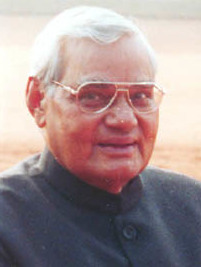
A deluge of homage thru editorials, articles, opinions, blog posts poured in after Shri Atal Bihari Vajpayee left his mortal coil. The electronic media was abuzz with discussions on the tallest leader that India has ever produced. After those exhaustive and emotional encomia showered by everyone, the opposition included, what else is there to write? After every paean has been sung what is left for me to say?

But it is believed that a tribute is truly paid only when you emulate the leader and walk his path. For doing that one has to understand Atalji’s exemplary leadership style.

Despite many thousands of empirical studies, leadership remains a tantalizing enigma for many – me included. Is it possible to annotate Atalji’s actions? Is it at all possible to codify the colossus called Atal Bihari Vajpayee?

To fit his great persona into a frame, to capture his myriad methods and to titrate his thoughts would greatly tax even a scholarly brain – but the practical value of that exercise will be invaluable for the country. Therefore I will make an attempt.

His Leadership Style – Elusive yet Effective

All the leadership theories espoused by the west are inadequate to describe Atalji’s style. His style straddles the oldest to the latest western theories effortlessly – but the core of his unique leadership style is completely elusive. Not much has been understood about the guiding ‘force’ behind his style.

When Atalji addressed the ISKON meeting on Ram Navami 5th April 1998, he said “I am all in favor of globalization of the message of the Gita and messages of all the sacred books of the world with which the message of Gita bears close conformity” – This openness expressed by him would have been categorized at best as a collaborative or an inclusive style by the Western theories but ‘NITI Shastra‘ of Kautilya would elevate the same to a higher level of ideological depth – ‘Which country, which faith is foreign to a man of True Learning?’ it says.

After the 1999 Pakistan coup, Prime Minister Atalji had to deal with the crafty general Musharraf. Atalji persisted with his offer of friendship but when that was resisted by Musharraf, he made another attempt at Agra which also failed. But three years later, it was Musharraf who made the long walk at the SAARC Summit in Islamabad to greet him. He made a commitment then not to allow any territory under Pakistan’s control to be used for terrorist activities against India!

No western style, however contemporary, explains this persistence and patience of Atalji.

However, the eastern tradition of TAOism highlights this kind of engagement. “The leader who is centered and grounded can work with erratic people and critical groups without experiencing harm. The wise leader is like the water that can YIELD yet LEAD!”

A RAJARISHI Leads the Coalition

Atalji was the great harmonizer. He aligned different coalition partners and managed to drive major reforms during his tenure as the Prime Minister. He was the great unifier who built bridges between different ideologies, political parties and countries.

What made the Coalition partners align with Atalji? Why was he was fondly referred to as the  ‘Gentle Giant’and ‘Ajatahshatru’ (someone who has no enemies)?

According to Kautilya, a leader will turn into a ‘Rajarishi-a King Sage’ through purity of speech, of the mind, of heart and of the senses – all these can be acquired only through ‘Indriyajayah’ – control over the senses- lust, anger, pride, arrogance and fool hardiness.

The traditional philosophies Taoism and Buddhism also explain how leaders deal with the complex dilemmas of the real world. Taoism explains this craft beautifully – “Because the leader does not push, the group does not resent or resist: A moderate ego demonstrates wisdom: remain open and receptive, no matter what issues arise: Learn to lead without coercion. Both praise and criticism should not excite – Interestingly Indian scriptures too praise ‘Sthitaprajna (to remain stable through intellect) as a great leadership trait !

Atalji was known for long spells of silence and contemplation. The Tao principle, ‘Wu-wei’ generally translated as non-action or non-doing is the most powerful of all. Paradoxically it’s not about inaction but is about ‘Action without Effort’. All the tenets of Tao resonate with our very own ancient prayer to the universe “Samastha Lokaha Sukhino Bhavantu” (May everyone in all the worlds be happy).

No wonder Atalji the Rajarishi could lead the largest coalition effortlessly.

His style was HARMONY in WAR

Atalji’s biggest success in foreign affairs was in bringing relations with the US back from the brink after the US imposed sanctions on India– This cannot be explained effectively by any theory, only AIKIDO can.

AIKIDO, a Japanese martial art, is where practitioners defend themselves while protecting their attacker from injury. The tactic of blending with an attacker’s movements for the purpose of controlling their actions resembles a dance rather than a fight. How Atalji restrained the US to protect India, yet rallied support for the US later by controlling China’s nuclear aggression, is but the skill of an AIKIDO Master!

His style is BEYOND THEORY

No theory spoke about how ‘silence’ can silence the enemy or how ‘contemplation’ can control the situation. No leadership theory spoke about poetry paving pathways into people’s hearts. No theory praised a dignified ‘retreat from public life’ as a laudable leadership trait.

ALT is the key for India

His leadership style, call it the ‘Mother Leadership’ that is intuitive and all giving or the ‘Mother of Leadership’ styles that straddles all existing theories is the key for India’s progress.

The exercise to codify his leadership style will have far reaching implications for the country’s progress. For patriots it should be a blueprint to follow. For people in power it should be taught as a refresher course and for the newly elected politicians, it should be introduced at the orientation training.

ALT – Atal Leadership Theory – is as much about ALT key of change as it is about Altruism– it is a theory about Impact, Influence and Inspiration. A Master Class on leadership paradoxes- for ALT, WHEN I GIVE MYSELF I BECOME MORE is but the MOMENT OF TRUTH !

Karuna Gopal

President, Futuristic Cities

Global Thought Leader, Advisor on Smart Cities, Governance & Policy

Published on 22-Aug-2018

The Hans India


(Note: Sh Atal Bihari Vajpayee was the 10th Prime Minister of India from 1998 to 2004)

(Permission from the author to blog this piece here is gratefully acknowledged. Details about her work can be seen at http://www.karunagopal.com)

Read Full Post »

(Sanjay Sehgal is Chairman & CEO at MSys Technologies, USA. His profile is accessible at https://www.linkedin.com/in/sehgalsanjay. In this post, he examines the relevance of some of the basic tenets of Bhagavad Gita to real-life business situations.)


The saying “As you sow, so shall you reap,” is considered one of the best-known representations of the concept of “Karma.” It got me thinking when it comes to work, how far can we caution ourselves about what we are “sowing” into our business (money, work, culture, decisions, conflicts, resolutions, etc.)? More importantly, how will we know if our dealings are in line with constructive evolution (the good side of the scale of karmic balance) or submerging us further into karma’s vicious cycle (the bad side of the scale of karmic balance)?

A rare tale of a leap of good faith

I still remember reading this inspiring news that made me smile with moist eyes. In 2015, Dan Price, the CEO of Gravity Payments, raised the minimum wage of all his employees to $70,000 a year. Dan had slashed his salary to $70,000 from $1.1 million to do so. Dan had once pronounced that he wishes to buy his dream car. To return the favor, 120 employees of Dan’s firm saved their one month’s salary and gifted him his dream car. It was Karma unfolding in its classic style.

Karma – the good, the bad, and the ugly

The notion of karma is comparable to a balance sheet, with the golden principle – debit in, credit out. You earn credit for all your debits. This credit will be good, bad, or ugly, depending on the debit you produce.

When you marry karma and business, you are bounded by the law –

A.   Good karmic debits = Good Credit>input

B.    Bad karmic debits = Bad Credit >input

C.   Ugly karmic debits = Ugly Credit >input

Where karmic debits are your intentions, the input is your action based on intentions, and credit is your output. In any way, your output is greater than the input. Therefore, rule A is what we all must aim.

After having set up several ventures, and mentoring start-up enthusiasts I’ve consolidated the five Sutras of Karmic Management, which I feel can be applied in almost all situations:

1. The Law of Growth

While starting a new project, venturing out to materialize an idea, or managing a team, hasten the course of inevitable failure and stop doing anything that is not working out. That way, you may fail fast but it will turn out better if you also learn fast, and can help you grow faster. Take a new path that promises to take you to your destination. The great Abraham Lincon lost elections eight times and failed in business twice. But, he quickly moved on by failing fast and recovering faster for success.

2. The Law of Synchronicity

You’re thinking of replacing your car while driving on a highway, and you drive past a billboard, which advertises a good exchange offer on a car. This phenomenon is called synchronicity. The law of synchronicity is looking out for signals or events in the external surroundings that can help us achieve our objectives. You’re attracted to such signals unconsciously; as you’re constantly thinking of your objective, you are linking everything around to it.  Logically, the idea emanates from the bedrock of curiosity that makes one look for the answer in everything around. Therefore, you are more aware of the external world that attracts you to the desired answer quickly, just like the law of attraction.

3. The Law of Reflection

We reflect our surroundings, and our surroundings mirror us. When we carry positivity within, we also reflect the same in people around us. Resultant – you are appreciative of people’s efforts and become a source of motivation. On the contrary, when you’re always complaining and criticizing, it is a clarion call to look within and reignite the fire of positivity. Take someone like Mahatma Gandhi, who was filled with hope and selflessness. He invariably saw the same in everyone and inspired the whole world to lead the life of righteousness.

4. The Law of Focus

In the face of problems, if you tend to lose direction, you are giving way to insecurity and rage. Instead, the best way to rise above challenges is by seeing them as opportunities to focus on your goals. Despite hurdles and lawsuits, the great Nicolas Tesla never lost sight and created over 300 patents to his name. It is said that he once worked 84 hours straight.

5. The Law of Significance and Inspiration

Your good returns are the fruits of your energy and intent. Fair use of intelligence is to have positive intentions and to put your energy into fructifying them. Invest in improving your business conduct. Use the profits to thank, encourage, and improve the lives of those who helped you succeed. Humility is the best form of investment.

The Karmic Philosophy of Business Sustainability

The core objective of any business is sustainability. A good business Karma will ensure a long run for any organization. Let’s decode further. The business Karma consists of four key elements

  • Strategy – Implementing decisions that are thought through and would reap long term benefits. For example, mergers and acquisitions or product diversification.
  • Transparency – Acting per policies and communicating in all openness, honesty, and goodwill to employees and customers. For example, intimating clients in case of an operational-hiccup.
  • Nurturing – Promoting a culture of care and empowering employees to grow in the system. For example, a manager guiding his/her team by sharing expertise and wisdom.
  • Objectivity – Acting fair by ensuring pragmatic criteria to arrive at a decision. For example, eliminating personal biases when addressing employee grievances.

When actions comply with these four elements the good business karma is manifested in form of sustainability. On contrary, bad business karma will impact a business’s lifeline.

(Link: https://yourstory.com/mystory/apply-good-karma-business?utm_pageloadtype=scroll)


(Related Posts: 

https://ashokbhatia.wordpress.com/2019/03/27/when-ceos-are-left-twiddling-their-thumbs-bhagavad-gita-could-help

https://ashokbhatia.wordpress.com/2019/08/01/the-karma-operating-system

https://ashokbhatia.wordpress.com/2018/06/11/ignoring-the-small-stuff-focusing-on-values-in-business)

Read Full Post »

« Newer Posts - Older Posts »