When the brow is furrowed and the pangs of separation from one’s beloved have dethroned reason from its coveted seat, the mood turns a shade of deep blue.
Like all other strands of emotion captured by Bollywood, separation from the beloved has also not escaped the attention of our dream merchants. There are several songs which depict the intense feeling of desolation experienced by someone when the soul mate has gone missing. Whereas some herald the end of doom, so to say, few others are easier on the frayed nerves, laced as they happen to be with uplifting optimism and point to the possibility of a rosier future.
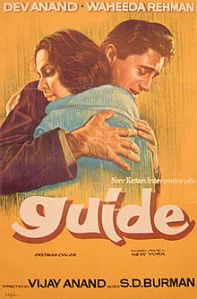
There is a beauty to sad songs which cannot be captured in words. These tug at one’s heart-strings and provide solace to a tormented soul. First off, let us relish a composition which celebrates the genre of sad songs.
The Royal Academy of Goofy Technologies hereby invites nominations for its annual awards meant to spread the affliction of Wodehousitis all over our planet.
The Aubrey Upjohn Award
For teachers who have:
Taken effective steps during the year to introduce their wards to the pleasures of reading the works dished out by P G Wodehouse.
Developed syllabi which make learning at school fun, inducing students to read humorous books, especially those from the canon of the Master. The continuous giggling, guffawing and laughing out loud moments at school must comprise at least 25% of the total number of hours spent by them within the walls of the institution they happen to be a part of.
The A B Filmer Award
Meant for politicians who have taken adequate measures to persuade the governments of their country to:
Introduce the works of P G Wodehouse in the college level curriculum for all…
Peter Nieuwenhuizen, president of the Dutch Wodehouse Society, gave an original and delightful talk at the 17th US Wodehouse Society (October 19, 2013) convention of The Wodehouse Society in Chicago. Here is a reworked version of the same, reported first in Plum Lines. Fans of Plum will enjoy his scholarly study of the evolution of the heroic Sir Philip Sidney’s famous battlefield quotationin Plum’s works.
Portrait of Sir Philip Sidney (1554-86) c.1620 (oil on panel) by Decritz, John the Younger (1600-1657)
A longtime ago, in 1586, Sir Walter Raleigh sailed to the east coast of America to start a settlement in North Carolina. He did this for Queen Elizabeth I of England. The United States was not yet a twinkle in anyone’s eye.
In the same year in The Netherlands, my ancestors had to deal with the Spanish conquerors. During this strife, a noble British knight, Sir Philip Sidney, fought alongside the Dutch soldiers and died at the age of 31 from wounds suffered in a battle. Poet, husband, and nobleman, athletic and courageous, he dedicated his life abroad to his queen, country, and church.
Much later, another knight, Sir P.G. Wodehouse, was touched by this small piece of history and wrote about it in his novels—not once, not twice, but twenty times. So it must be important, but why? Let us explore this little historic jewel.
Philip Sidney was born in 1554, in the reign of Mary Tudor. He was named after Mary’s husband, the Spanish king Philip II.
Philip Sidney grew up at Penhurst Place, a magnificent estate in Kent. He was well-educated, becoming a pupil at the Shrewsbury School at the age of ten. As a boy of twelve, at the side of his uncle Robert Dudley, the Earl of Leicester, he witnessed the festive procession of Queen Elizabeth in Oxford. At the age of fourteen he started studying at Oxford, and four years later he made a grand tour on the continent and visited Paris, where he met Lodewijk (Louis) of Nassau, the brother of the Dutch governor, and, later, William of Orange, the founder of The Netherlands. Philip Sidney went on to visit Germany, Austria, Hungary, Italy, Poland, and Antwerp before he returned to England. He had traveled for three years and returned wiser, a man of the world.
In England he stayed at the court of Elizabeth and studied music and poetry, wrote sonnets, learned to fight, took part in tournaments, and developed into a noble knight, a gentleman pur sang, as our French friends would say.
After those two years at court, though only 23 years old, he became a diplomat for England. He first served in Germany and later in The Netherlands, where he witnessed the baptism of Elizabeth, the eleventh child of William of Orange.
Back in England he went to live at his sister’s place near Salisbury, where he started to write his famous poetry. He wrote Astrophel and Stella, The Defence of Poesy, and The Countess of Pembroke’s Arcadia.
(Battle of Zutphen)
By now you’re probably wondering what was going on in The Netherlands and why Philip Sidney was involved. Well, the Dutch were overwhelmed by the Spanish in a war that would last for eighty years. William of Orange was shot dead by Balthasar Gerards in 1584 in Delft. Obviously, the Dutch needed help and appealed to England. Queen Elizabeth sent 5,000 soldiers under the command of Philip’s uncle, Robert Dudley. In return, Elizabeth got some Dutch cities as security, including Den Briel and Flushing (Vlissingen). Philip Sidney became the governor of Flushing and sailed to The Netherlands. In Flushing, he found his soldiers to be underpaid, ill-armed, hungry, and sick. It was not a good start for an ambitious 31-year-old governor.
Maurits of Orange, the son of the murdered William of Orange, welcomed Sidney and his uncle. They made a grand entrance in cities like Delft, The Hague, Amsterdam, and Utrecht.
The Duke of Parma, Alexander Farnese, launched an offensive in 1586 and conquered several cities. It was imperative that Maurits, Dudley, and Sidney take action. They conquered the city of Axel and went on to Zutphen, a strategic city on the river Ijssel that was occupied by the Spanish.
With five hundred soldiers and fifty noblemen (the latter of whom were anxious to witness a real battle – from a distance, of course), they started the Battle of Zutphen on October 2, 1586. At dawn they realized that the Spanish far outnumbered them, and they retreated.
But alas, near the hamlet of Warnsveld, a few miles away, Sir Philip Sidney was mortally wounded. He took a Spanish musketball to his thigh and tumbled to the ground in great pain. One of his servants present at the battlefield – a Jeeves avant la lettre – hurried toward him with a cup or chalice of water. But instead of drinking this water, this life elixir, he handed it to a dying soldier on a stretcher, saying: “Thy necessity is yet greater than mine.” He didn’t recover, and three weeks later he died. His body was transported back to England, and he was buried in St. Paul’s Cathedral.
(Memorial at Warnsveld where Sidney was shot)
From this event the legend was born. Sir Philip Sidney became revered as a great warrior, although he had mostly fought at court tournaments. On the artistic side, his sister Mary, the Countess of Pembroke, had his sonnets and other work published, and he gained a successful posthumous literary career. In the nineteenth and twentieth centuries, statues were erected in his memory. One still stands in England at his old school in Shrewsbury, and another can be found in Zutphen in a park named after him.
Somewhere along the line, that other writer and later a knight, Sir P.G. Wodehouse, heard this beautiful story about Sir Philip Sidney. According to Norman Murphy’s Wodehouse Handbook, one of Plum’s cousins attended the Shrewsbury school where a statue of Sidney stood on the playground, and Shrewsbury was the model for Wrykyn in The White Feather.
Wodehouse was so impressed by this legend, this noble deed of Sir Philip Sidney, that he used variations of the famous phrase “Thy necessity is yet greater than mine” in various forms twenty times in his novels and stories.
The very first reference that we have found is a peculiar one. For the June 1915 Strand magazine, Wodehouse wrote the story “Black for Luck,” in which a black cat is a central character. Both James Renshaw Boyd and Elizabeth Herrold considered the stray cat as their own, and it was a good luck charm for both of them. Elizabeth finally gave up the cat for the sake of James, the playwright: “In any case, it would be like Sir Philip Sidney and the wounded soldier—’your need is greater than mine.’ Think of all the people who are dependent on your play being a success!”
A cat replaced the cup of water. Oddly, when this story was published in The Man with Two Left Feet in 1917, the sentence was altered to: “Never mind about me.” Alas, no reference to Sir Philip and his heroic deed.
In 1920, Wodehouse used the Sidney legend again in the novel Jill the Reckless (U.K.), aka The Little Warrior (U.S.). Freddie Rooke is going to meet his friend Algy Martyn in the Drones Club, but, not being a member, he can’t receive a snifter:
There he sat, surrounded by happy, laughing young men, each grasping a glass of the good old mixture-as-before, absolutely unable to connect. Some of them, casual acquaintances, had nodded to him, waved, and gone on lowering the juice – a spectacle which made Freddie feel much as the wounded soldier would have felt if Sir Philip Sidney, instead of offering him the cup of water, had placed it to his own lips and drained it with a careless “Cheerio!”
This is a wonderful reference but in fact the opposite of what happened on the battleground. Wodehouse used the reverse to emphasize the fierce desire for something and not getting it.
Later in the canon, the soldier of legend transforms into “a stretcher case,“ but the supply of a drink remains. In Ring for Jeeves, Jeeves comes to the rescue:
Jill collapsed into a chair…. Jeeves was a kindly man, and not only a kindly man but a man who could open a bottle of champagne as quick as a flash. It was in something of the Spirit of the Sir Philip Sidney who gave the water to the stretcher case that he now whisked the cork from the bottle he was carrying. Jill’s need, he felt, was greater than Bill’s.
“Permit me, miss.”
Jill drank gratefully.
A year later, Jeeves did it again. In Jeeves and the Feudal Spirit, Aunt Dahlia is talking to her nephew Bertie. Dahlia longs for a cocktail and, of course, some advice from Jeeves. At the start of this excerpt, Bertie gives Dahlia hope:
“He should be with us at any moment now. He stepped out to get me a tankard of the old familiar juice.”
Her eyes gleamed with a strange light.
“Bags I first go at it!”
I patted her hand.
“Of course”, I said, “of course. You may take that as read. You don’t find Bertram Wooster hogging the drink supply when a suffering aunt is at his side with her tongue hanging out. Your need is greater than mine, as whoever-it-was said to the stretcher case. Ah!”
Jeeves had come in bearing the elixir, not a split second before we were ready for it. I took the beaker from him and offered it to the aged relative with a courteous gesture. With a brief “Mud in your eye” she drank deeply.
Over time, Wodehouse changed the water not just to other beverages but also to objects or actions. The third chronological reference to the legend was in 1921, and here the drink was transformed into a kiss. Wodehouse wrote in Indiscretions of Archie:
He kissed her fondly.
“By love!” he exclaimed. “You really are, you know! This is the biggest thing since jolly old Sir Philip What’s-his-name gave the drink of water to the poor blighter whose need was greater than his, if you recall the incident. I had to sweat it up at school, I remember. Sir Philip, poor old bean, had a most ghastly thirst on, and he was just going to have one on the house, so to speak, when… but it’s all in the history books. This is the sort of thing Boy Scouts do!”
And only two years later, the cup of water became an umbrella. In Leave It to Psmith, Psmith borrows Walderwick’s umbrella without permission for the rescue of Eve Halliday in the rain. Psmith then praises Walderwick for his sacrifice: “You are now entitled to rank with Sir Philip Sidney and Sir Walter Raleigh!”
After a cat, cocktail, kiss, and umbrella, Wodehouse took the reference even further: the noble act becomes money. In 1925’s Sam the Sudden, Sam Shotter rents a cottage in Valley Fields and “borrows” the rent money, without permission, from his friend Braddock. He slips a note in Braddock’s wallet:
Dear Bradder: You will doubtless be surprised to learn that I have borrowed your money. I will return it in God’s good time. Meanwhile, as Sir Philip Sidney said to the wounded soldier, my need is greater than yours.
Trusting this finds you in the pink.
Yrs. Obedtly,
S. Shotter.
Wodehouse completely reverses the myth: it is the opposite of what Sir Philip Sidney said. This adds more comic effect for the readers who know the real legend.
(The statue of Sir Philip Sidney that stands on the lovely grounds of Sidney Park in Zutphen, The Netherlands)
After this joke, Wodehouse does not refer to the legend for seven years. In 1932, it surfaces again in Hot Water. Packy Franklyn tries to impress his fiancée Lady Beatrice Bracken by cutting the hair of Senator Opal: “To go and hack at this old buster’s thatch would be to perform a kindly and altruistic act, very much the same sort of thing for which Sir Philip Sidney and the Boy Scouts are so highly thought of.”
The smuggling of a pearl necklace by Reggie Tennyson is a relief for motion-picture magnate Ivor Llewellyn, in return for a movie contract. In 1935’s The Luck of the Bodkins, Mr. Llewellyn is grateful:
There was nothing in the look which Mr. Llewellyn was directing at Reggie now to awaken the critical spirit in the latter. It was entirely free from that pop-eyed dislike which the young man had found so offensive in the early stages of this conference. It was, indeed, very much the sort of look the wounded soldier must have directed at Sir Philip Sidney.
In 1936 in Laughing Gas, Joey Cooley, inhabited by the narrator’s spirit and personality, says:
“Prunes! … Hi! Give me a lick!” I cried, in a voice vibrant with emotion.
He passed it over without hesitation. If he had been Sir Philip Sidney with the wounded soldier, he couldn’t have been nippier.
The issue of morals is also seen through the lens of the Sidney legend. As we all know, Bertie Wooster is a fine lad, but sometimes morally unsound. In The Mating Season, Bertie remembers the lessons of his youth:
When I was a piefaced lad of some twelve summers, doing my stretch at Malvern House, Bramley-on-Sea, the private school conducted by the Rev. Aubrey Upjohn, I remember hearing the Rev. Aubrey give the late Sir Philip Sidney a big build-up because, when wounded at the battle of somewhere and offered a quick one by a companion in arms, he told the chap who was setting them up to leave him out of that round and slip his spot to a nearby stretcher-case, whose need was greater than his. This spirit of selfless sacrifice, said the Rev. Aubrey, was what he would like to see in you boys—particularly you, Wooster, and how many times have I told you not to gape at me in that half-witted way? Close your mouth, boy, and sit up.
So, for objects and actions, drinks and water, and a moral compass, the Sir Philip legend is useful for almost everything.
When Gussie in Right Ho, Jeeves refuses to distribute prizes, he says that “the square, generous thing to do was to step aside and let you take it on, so I did so. I felt that your need was greater than mine.”
But now we stumble upon a problem. The reference to Sir Philip Sidney has disappeared, as have the cup of water and the wounded soldier aka the stretcher case. Wodehouse does this several times, as if to say that by now everybody is familiar with the legend in his works over the past years. Examples of this abridged version of the legend follow:
Laughing Gas: “The goldfish were looking up expectantly, obviously hoping for their cut, but my need [for a breakfast leftover] was greater than theirs.” (Another reversal of the legend.)
Uncle Fred in the Springtime: Lord Ickenham says to Pongo, in reference to money for Polly Pott for the onion soup bar, “All I can say by way of apology is that her need is greater than yours.”
Quick Service: Joss Weatherby, the artist, after having his money embezzled, says that “the lawyer who had charge of it [was] getting the feeling one day that his need was greater than mine.”
Barmy in Wonderland: referring to a frog in the hotel bathroom: “but that your need was greater than his. I thought it showed a nice spirit in the lad.”
Sir Philip is still remembered by the Dutch. A beautiful statue stands in Sidney Park in Zutphen and bears this inscription in Dutch: “Nobleman, Poet, Statesman, Fighter for our Freedom. Sir Philip gave his life for The Netherlands.” In Warnsveld, where Sidney was shot, there is a small marker with the famous words engraved: “Thy necessity is yet greater than mine.” And at the Gunpowder Tower in Zutphen there is this plaque, installed by the Dutch P. G. Wodehouse Society:
This is our way to show respect for two great knights and literary heroes, Sir Philip Sidney and Sir Pelham Grenville Wodehouse.
An epitaph of Sir Philip Sidney: “England has his body, for she it fed; Netherlands his blood, in her defence shed; The Heavens have his soul, The Arts have his fame, The soldier his grief, The world his good name.”
There are indeed instances in one’s life which leave one shaken and stirred. Scales fall from one’s eyes. Like Bertie Wooster, one feels befuddled, bewildered, fazed, flummoxed, and perplexed. The reality of one of the several facets of life gets revealed, much like a mountain making a reappearance once the fog has vanished and the sun has come out in all its glory.
While travelling in a local train in Switzerland recently, I had a rather unpleasant experience when a gentleman of Swiss origin ridiculed me for being an Indian.
It happened on the 1st of January 2023. The family had boarded a train to Lucerne to enjoy the fireworks display in the evening hours. Few stops before Lucerne, very many people boarded the train. We are used to overcrowding in trains in India, but this was a new experience for me – to see this happening in one of the advanced countries. I was already sitting on one of the few spring-back chairs available.
A gentleman, surely cast in the mould of Roderick Spode, had just come in along with many others. He looked at me sternly and asked me to get up. I got up and enquired if the gentleman wanted to occupy the seat. The gentleman clarified that he had asked me to stand up so that there is more space for others to squeeze in. So far, so good. But then he went on to give me a supercilious look and added rudely that such things happen only in India.
The basic message from the gentleman was right, but the rude and insulting way he said it hurt all of us. The fact that he insulted my country really hit hard. My daughter-in-law and my son intervened to say that he could have discussed this cordially, rather than being abrasive about it. But he went on arguing about it, claiming that he had spent a good deal of time in India and knew about how things worked there. Other passengers nearby kept telling us to avoid listening to his comments.
To give him a benefit of doubt, perhaps he had had a fight with his wife before leaving home that evening. However, a realization also dawned – that beneath a veneer of polite manners and sweet smiles, quite a few people in other countries may carry some deep-seated prejudices against those of Indian origin.
Jeeves would concur with me if I were to say that our psychology is such that when we love something, we somehow feel entitled to criticize it and make fun of it. But when someone else does it, we take offence! We are left twiddling our thumbs. I confess this is what happened to me on the day. I felt deeply embarrassed and wondered what I had done to deserve a treatment of this kind.
I admit I am a bit fluffy headed and forgetful, but by no stretch of imagination can I match the high standards set by Lord Emsworth in that department. I found it very difficult to forget this incident. On the contrary, it made me recollect many earlier instances when I did not have a satisfactory response to some meaningful and thought-provoking questions asked about India by those living abroad.
A cabbie in New York asking me as to why the government in the country was against Muslims and Christians.
A tourist from Canada who had just returned from India asking why the cab drivers in most parts of the country tended to either overcharge or harass customers. I wonder if she had ever lapped up the book ‘India and the Indians’, written by Lady Malvern who had spent some time in India.
A young lady in Norway enquiring whether it was safe for her to travel to India alone. She quoted frequently reported rape and murder cases in the country she had read about.
Another lady in Sweden checking as to why Indians have a practice of shaming the victim in a rape case rather than putting the spotlight on the perpetrator of the crime.
A person of German origin asking if our metro cities did not have enough storm drains to ensure that periodic flooding did not take place.
A movie enthusiast of French origin enquiring why, despite the presence of a film certification body, people kept calling for boycotts of some movies. She wondered how Indians have become so intolerant, especially when they pride themselves on being an ancient civilization and have really demonstrated how to be a multi-ethnic society.
A teenager from Denmark asking why Indian households do not segregate their domestic waste and why the country lacks enough capacity to handle such waste.
A person from Denmark who asked me why India was so noisy.
A group of businesspersons from Finland wondering why it was far easier to deal with businesses in the west and the south of India than with those in the north of the country. Some of them said they had been cheated by the latter.
What I quote above happen to be snippets of conversations with lay citizens of different countries, spread over the past few years. Those of us who believe we have already acquired the status of a Vishwa Guru – A Global Teacher – and who are swayed by the nationalistic fervour so very fashionable in India these days, may immediately jump to enquire who gave the rights to people in advanced countries to judge India and Indians. They might even suspect and allege a global conspiracy to defame India.
It is no one’s case that our First World countries happen to be perfect. Of course, these suffer from many ills. Graffiti in public spaces is a common sight. So are cigarette butts in otherwise pristine public gardens.
But the point here is that if we Indians can ape the west in terms of fashion, social relationships and in so many other ways, why can’t we do something about the kind of courtesy we show to tourists and fellow citizens in public spaces? Why do we need a Prime Minister to tell us to improve our levels of hygiene and keep our public spaces spick and span? Why can’t we respect the law, rather than priding ourselves in breaking it? Why do our political parties depend on criminals to win over the voters? Why do justices of our Supreme Court have to get involved in ensuring that road safety standards improve across the entire country? Why are we worried about elections and inane internal issues when an enemy is gleefully usurping our territory on our borders? The mind boggles.
We live in a multipolar world where interdependence between countries is an essential fact. Yes, as a country, India remains a work-in-progress. But we have tremendous soft power, whether in terms of our ancient scriptures, rich culture, music, dance, movies and the like. The diverse cuisine we have is popular across all countries. When it comes to frugal engineering, we shine on the global stage. The manpower we offer to the world is unique in many ways.
It is surely not wrong to be proud of our heritage. Nor is it improper to demand respect from others. But to remain blissfully unaware of our weaknesses and to do nothing to address the same will simply go on to ensure that chinks in the Brand India armour continue to fester.
A sister of Bertie Wooster’s lives in India. It follows that he would be gravely concerned about this situation. Perhaps, he may seek Jeeves’ advice on the issue. If so, I wonder if Jeeves would recommend a public relation campaign to improve India’s brand image worldwide. He may also suggest a mass communication drive within the country and ways to make a genuine effort to improve our civic infrastructure. Someone like Rupert Psmith may get one of his rich uncles to buy out a premier media house in a western country.
But the nub of the matter is that we, the Indians, need to indulge in a bout of introspection, and work upon improving our own civic habits and our behaviour towards others. The buck stops at us!
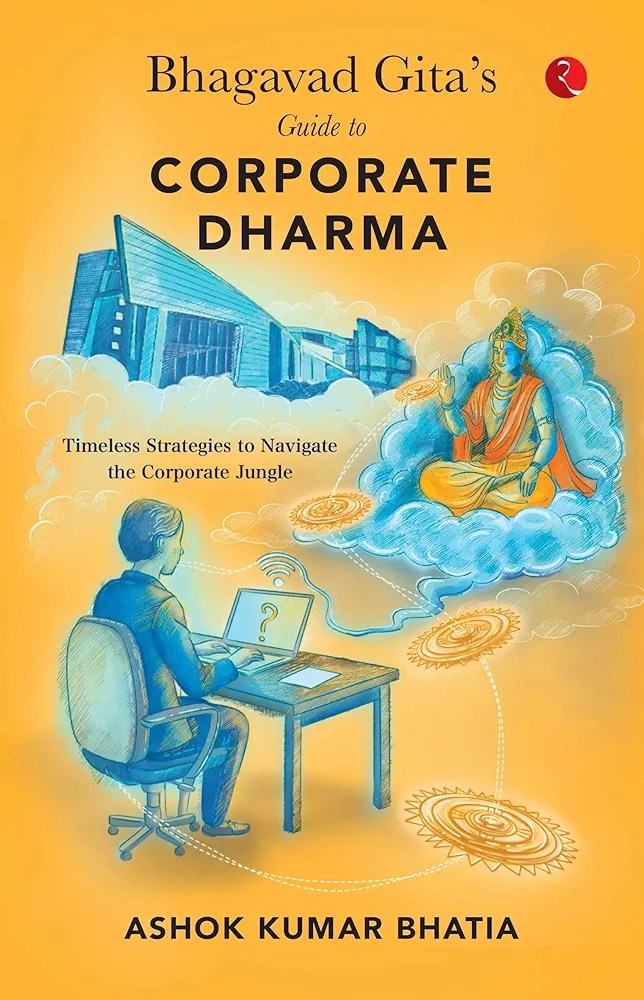
A culture which is rooted in Consciousness does not throw up hapless leaders who keep burning the proverbial midnight oil in their relentless pursuit of commercial goals only, while shoving concerns such as the environment, the society and human resources under the corporate carpet. It does not merely mean that our marketing honchos are doing their best in servicing our customers effectively and efficiently; instead, it implies that they do so while ensuring that the product/service as well as its packaging is environment-friendly.
It means that those toiling on the operations side design the processes in such a way that the carbon footprints are at least neutral, if not positive; that our financial wizards keep nudging the organization towards maximizing returns to all its stakeholders; and the human resource executives keep burning the midnight oil to ensure that people and processes respect human values and dignity, while keeping the costs…
Most of the songs in the movies being churned out by Bollywood happen to portray feelings of love. One often wonders as to how the heroine and the hero keep changing their outfits in each of the stanzas, keeping the wardrobe designers and producers laughing all the way to their respective banks. The high walls of manmade borders melt away, as they are seen wandering about on different continents of the world without any visa/immigration hassles, proving the age-old adage of Vasudhaiv Kutumbukam. Not to speak of the bevy of choreographers and a 100-piece orchestra which keeps following them scrupulously, without missing a single beat.
But once in a blue moon, we get treated to a love song which is more spontaneous in its depiction. The lyricist and the music director obviously work harder on creating such songs which appear as if these are getting composed by the couple in real time on the screen.
Consider the following songs which fall in this category.
One of the very few love songs which has an office setting as a background.
Jaane kahaan mera jigar gaya ji…
Movie: Mrs and Mr 55 (1955)
Singers: Mohd. Rafi, Geeta Dutt
Music Director: O P Nayyar
Lyricist: Majrooh Sultanpuri
Here is a flirtatious song from an otherwise serious movie. The back-and-forth chat between the heroine and the hero is a sheer delight.
Hum aapki ankhon mein…
Movie: Pyasa (1957)
Singers: Mohammed Rafi, Geeta Dutt
Music Director: S D Burman
Lyricist: Sahir Ludianvi
What happens when a lovers’ tiff results into a lovelorn backchat between the pair?
Achha ji main haari chalo…
Movie: Kala Pani (1958)
Singers: Mohd. Rafi & Asha Bhosle
Music: S.D. Burman
Lyricist: Majrooh Sultanpuri
A mischievous heroine puts the poor hero through an ordeal and then has the cheek to teasingly ask as to how he is feeling!
Haal kaisa hai janaab ka…
Movie: Chalti Ka Naam Gaadi (1958)
Singers: Kishore Kumar, Asha Bhosle
Music Director: S.D.Burman
Lyricist: Majrooh Sultanpuri
Claiming some dues from the party of the other part can happen even during a stage performance!
Paanch rupaiya barah anna…
Movie: Chalti Ka Naam Gaadi (1958)
Singers: Kishore Kumar, Asha Bhosle
Music Director: S D Burman
Lyricist: Majrooh Sultanpuri
How did you fall in love with me, asks the heroine coyly!
Sach bata tu mujh pe fida…
Movie: Sone ki chidiya (1958)
Singers: Asha Bhosle, Talat Mehmood
Music: O P Nayyar
Lyricist: Sahir Ludhianvi
Yet another song where bickering between a couple takes place during a stage performance.
Tere pyar ka aasra chahta hoon…
Movie: Dhool Ka Phool (1959)
Singers: Mahendra Kapoor, Lata Mangeshkar
Music Director: N. Datta
Lyricist: Sahir Ludhianvi
A romantic poem gets composed as the hero plays a muse to the heroine.
Chupke se mile pyaase pyaase…
Movie: Manzil (1960)
Singers: Geeta Dutt, Mohammed Rafi
Music Director: S. D. Burman
Lyricist: Majrooh Sultanpuri
The lovers list the precautions the party of the other part should take, lest any harm may come to the flora and fauna around.
Bikhra ke zulfien chaman mein na jaana…
Movie: Nazrana (1961)
Singers: Mukesh, Lata Mangeshkar
Music Director: Ravi
Lyricist: Rajendra Krishan
A delectable confluence of Carnatic and Hindustani music, this song captures the rivalry between two persons, both trying to woo the young lady.
Ek chatur naar…
Movie: Padosan (1968)
Singers: Manna Dey, Kishore Kumar
Music Director: R D Burman
Lyrics: Rajendra Krishan
Getting the beloved to accept that she loves the lover.
Baagon mein bahaar hai…
Movie: Aradhana (1969)
Singers: Lata Mangeshkar, Mohd. Rafi
Music Director: S D Burman
Lyricist: Anand Bakshi
Even surreptitious meetings between a couple get overshadowed by the heroine’s wish to return home early!
Achha to hum chalte hain…
Movie: Aan Milo Sajna (1970)
Singers: Kishore Kumar, Lata Mangeshkar
Music Director: Laxmikant-Pyarelal
Lyricist: Anand Bakshi
Strictly speaking, only the first portion of this song happens to be dialogue-driven. Nevertheless, overall, it surely has a dash of spontaneity to it!
Sa re ga ma pa…
Movie: Abhinetri (1970)
Singers: Lata Mangeshkar, Kishore Kumar
Music Director: Laxmikant-Pyarelal
Lyricist: Majrooh Sultanpuri
The subtle art of dodging the police by showcasing a clandestine meet as a lovers’ date.
O mere raja, khafa na hona…
Movie: Johnny Mera Naam (1970)
Singers: Kishore Kumar, Asha Bhosle
Music Director: Kalyanji Anandji
Lyricist: Rajinder Krishan
A budding romance soon gets transformed into a life-long commitment.
Aap yahaan aaye kisliye…
Movie: Kal Aaj Aur Kal (1971)
Singers: Kishore Kumar, Asha Bhosle
Music Director: Shankar Jaikishan
Lyricist: Neeraj
Social barriers and taboos keep the heroine on tenterhooks, whereas the hero is not worried about such mundane issues.
Gir gaya jhumka…
Movie: Jugnu (1973)
Music Director: S D Burman
Singers: Kishore Kumar, Lata Mangeshkar
Lyricist: Anand Bakshi
Two playful songs, depicting the sprouting of romantic feelings between two teenagers.
Mujhe kuchh kehna hai…
Hum tum ek kamre mein band hon…
Movie: Bobby (1973)
Singers: Shailendra Singh, Lata Mangeshkar
Music Director: Laxmikant Pyarelal
Lyrics: Anand Bakshi
Couplets (dohas) of such Sufi poets as Rahim and Kabir have regaled generations with pristine wisdom, duly laced with an earthy common sense. Trust Rajshri Productions to string some of these together for our sake.
Bade badaai na karen…
Movie: Ankhiyon Ke Jharokhon Se (1978)
Singers: Hemalata, Jaspal Singh
Music Director: Ravindra Jain
Lyrics: Dohas of Rahim and Kabir
Keep the dialogue on and love will soon follow it its wake!
Suniye, kahiye…
Movie: Baton Baton Mein (1979)
Singers: Kishore Kumar, Asha Bhosle
Music Director: Rajesh Roshan
Lyricist: Amit Khanna
The hero regales a bunch of kids with a juicy story about his encounter with a lion.
Mere paas aao mere doston…
Movie: Mr. Natwarlal (1979)
Singer: Amitabh Bachchan, Master Ravi
Music Director: Rajesh Roshan
Lyricist: Anand Bakshi
The hero and the heroine are cooing to each other like turtle doves. They keep rhyming words and phrases and end up creating an impromptu song!
Kaise ho pagal…
Movie: Chashme Buddoor (1981)
Singers: Raj Kamal, Hemanti Shukla
Music Director: Raj Kamal
Lyricist: Indu Jain
When his six younger brothers fall hopelessly in love, the elder one guides them!
Pyaar tumhen kis mod pe le aaya…
Movie: Satte Pe Satta (1982)
Singers: Kishore Kumar, Bhupinder and others
Music Director: R D Burman
Lyricist: Gulshan Bawra
These are songs which, I believe, showcase a higher level of creativity on the part of our lyricists and music directors. To bring in a spontaneity of this kind is no mean task. Alas, these are very few and far between.
Can you think of any songs which could be added to this list? If so, please leave behind a comment below.
{Note: Inputs from Ms Madhulika Liddle, Mr Sunil Jain and Ms Pooja Agrawal are gratefully acknowledged}.
China’s actions to keep violating its borders with India with impunity continue unabated. So do its endeavours to create a ‘string of pearls’ around India. Time will tell if its plans to become a global superpower fructify, but when it comes to its southern neighbour, it may never be able to win over the hearts of Indians.
Rewind to 1962
India observes National Solidarity Day on the 20th of October every year. This day is observed to honour her Armed Forces. China had begun its assault on India on this date in 1962, giving a good thrashing to Indian forces which were ill-prepared then to meet the challenge.
As a child of around 10 years then, I still remember the kind of patriotic fervour which had sprouted amongst the country’s citizens at the time. Tension in the air. Ears glued to the news bulletins of All India Radio. Blackened windows at home. Stocking of groceries. Half-blackened headlights on all the motorized vehicles. Patriotic songs at school. Movement restrictions. People rushing to train stations to convey their best wishes to departing jawans. Blankets, woollens, medicines, and jewellery being openly donated to strengthen the country’s response.
Not surprisingly, Bollywood had unleashed its soft power to counter the aggression. At trade fairs and other public spaces, a song, Awaaz do hum ek hain, featuring some of the popular heroes of the era, was getting shown.
What followed were visits by popular stars to the frontier, cheering up the jawans. And, of course, the immortal song, Ae mere watan ke logon, rendered by Lata Mangeshkar in the presence of Jawaharlal Nehru, at a function in January 1963.
Movies like Haqeeqat (Chetan Anand, 1964) brought the harsh reality of war to our cinema halls.
Cut to the present
Beginning on the 5th of May 2020, Chinese and Indian troops engaged in aggressive melee, face-offs, and skirmishes at different locations along the Sino-Indian border. In late May, Chinese forces objected to Indian road construction in the Galwan river valley. According to Indian sources, melee fighting on the 15th/16th of June 2020 resulted in the deaths of many Chinese and Indian soldiers. A low-voltage conflict persists till date, with occasional flare-ups across the border having become the norm.
This time round also, Bollywood has not failed us, but in a different way. The patriotic fervour is not getting whipped up. Instead, nationalistic sentiments appear to be already occupying the centre stage. Increasingly, it appears as if the soft power of Bollywood is being deployed to keep our attention away from the predatory tactics of our northern neighbour.
In 2020, the suicide of one of Bollywood’s popular stars, Sushant Singh Rajput, and his alleged girlfriend Rhea Chakraborty, kept us riveted to our television screens, conveniently forgetting the attack on our territorial integrity and even the raging pandemic.
These days, an unsavoury and inane controversy has been whipped up around the colour of the bikini worn by a Bollywood diva in a song of a movie which is scheduled to get released in January 2023. Sure enough, such issues as an aggression on our borders, galloping inflation, increasing unemployment, rising social distrust and polarization, and more people having gone down the poverty line in India have got swept under the carpet. The voyeuristic eyes of the so-called sterner sex of our species are having a field day. As luck would have it, the movie has ended up grabbing our eyeballs much before it would hit the screens.
We appear to be living in an era of strident nationalism, backed by attempts to keep the fire of communal disharmony burning bright, ostensibly with a view to encashing the same for electoral gains for the ruling dispensation. We keep playing the victim card favouring the majority community to the hilt, painting the minor ones in villainous shades. Patriotism appears to have taken a backseat in our mental space.
Of movies and patriotism
Amitabh Bachchan, a doyen of the industry, had made some insightful observations at a public function recently. He had spoken of the way in which the movie industry had always stood up against oppression of any kind, right through the days of British occupation of India in the past. For your ready reference, here is the link to his speech which I refer to:
He bemoaned the jingoism and imaginary historical movies which are in tandem with the current political discourse and even referred to the boycott culture which appears to be making light of the formal system of film censorship which India follows.
In a way, Vijay, the disgruntled hero of the iconic movie Pyaasa (Guru Dutt, 1957) was very much like the Vijay of Deewaar (Yash Chopra, 1975), played by Amitabh Bachchan himself. Both stood up against the traditional norms of society. Ganashatru (Satyajit Ray, 1990), mentioned by the renowned actor in his speech referred to above, gave us hope that howsoever rotten the system may be, the youth stand up to support a fair and just approach to problem solving.
Bollywood deserves to be commended for the staple diet of opium it keeps dishing out for the Indian masses. However, this time around, the support of a pliant media, backed by a motivated use of social media channels, appears to be magnifying its endeavours at keeping us engaged, entertained, and enthused, enveloping us in a kind of selective amnesia, putting some critical issues on the backburner.
A time for some introspection?
In one of his articles, Prof Badri Raina had distinguished between nationalism and patriotism as under:
Nationalism enjoins upon us to believe that our air is the most salubrious, our water magical, our sunsets and sunrises uniquely blessed, our accumulated histories and legends superior to those of all others, our culture the only worthwhile culture, our religious faiths nearest to god, and our stores of knowledge beyond compare.
Patriotism acknowledges that where I live is my beloved space, warts, and all. It makes no claims to exceptionalisms that are thought to be God’s unique gift to us. It recognises that our streets are shabby, our lanes full of clutter, our habits shoddy, our resistance to rationality often grossly debilitating, our defiance of law a routine habit of mind, our male chauvinism shameful and violent, our casteism or racism or communalism deleterious to the most desirable ideals of human rights and human oneness.
While the dragon keeps giving us the chills at the borders, our trade relations continue to show a heart-warming trend. Total merchandise trade between India and China rose 34% to $115.83 billion in the 12 months to March 2022, according to data from the Commerce Ministry released to parliament some time back.
Time for us, the denizens of India, to look within and check if we have lost our innate sense of patriotism; or have we outsourced our thinking prowess and discriminatory powers, thereby losing our ability to sift the wheat from the chaff? Have we got used to getting distracted by inane internal issues and resigning to a relentless bullying by China thus? Can we demolish the narrow walls we have built around ourselves and take a strategic call on meeting external challenges of this kind?
Hopefully, our dynamic government is already working on the same.
Gone are the days when teachers could terrorize their students with nasty looks, well-oiled canes, and threats to suspend them without seeking any explanations. Now a days, it is the hapless teachers who are at the receiving end, having to justify taking any action against their pupils. Principles of natural justice apply. Pupils, and their doting parents, often demand a democratic style of education, where both the teacher and the taught get treated as equals.
One of the safest courses for the teachers to take these days is to write non-threatening and non-accusatory letters to the parents, conveying only their love for the misdemeanours of the pupils and pointing out the ways of reforming them. Being polite and ensuring a positive tone is of paramount importance.
Imagine rogue kids like Thos, Seabury, Bongo, Peggy, Edwin the Scout, Sebastian, and Clementina studying in any of the present-day schools. What would the harvest be?
Let us consider some of the e-mails and letters recently said to have been received by their blissfully ignorant guardians.
Dear Ms Gregson,
We are delighted to inform you that your child, Master Thomas Gregson, displays remarkable initiative. Not for him the simple-minded obedience to teachers. He believes in thinking out-of-the-box and shows early traits of growing into a business leader with a manipulative mindset.
We refer to his admirable refusal to do homework. We have, however, humbly requested him to stoop to our level and condescend to do his homework.
We also find his habit of leaving visiting dignitaries stranded on the small island in the lake at our premises by setting their boats adrift a trifle disturbing. One of them was recently attacked by an angry swan and vowed to put a hold on his annual contributions of a rather generous nature, thereby forcing us to shut the swimming pool funded by a charity in his wife’s name. This has led to widespread protests by other students. One of the governors was even wondering if we could request you to henceforth foot the bill. We have also counselled him to stay at home on the days when any dignitary visits us next.
Your support in the matter will be appreciated.
Yours anxiously,
Teacher
Dear Lady Chuffnell,
We are pleased to let you know that Master Seabury is doing as well in his studies as in bullying those who happen to annoy him. We support him in his belief that the art of bullying is what a kid needs these days, to survive and do well, especially when getting trolled for some inane stuff. Authority is something he does not care much about. He believes in equitable and fair treatment. He can look his Latin teacher and warden in the eye and demand protection money. In case it does not get coughed up within the due date, he takes appropriate steps.
He has developed a keen interest in an innovative use of all kinds of dairy products. The in charge of the school mess is never surprised when the slabs of butter stored in the cold store vanish overnight. If the protection money is not paid, he loses no time in creating a butter slide on the steps of the warden’s cottage. Since the latter is covered by the school’s group insurance policy, we merely counselled your child to avoid taking such steps in future and to ensure that at least some quantity of butter is left behind, so the children may not suffer at breakfast time the next morning.
We convey this only by way of information, not as a complaint. We are hopeful that he will one day become a famous dairy expert.
With best wishes,
Principal
Dear Ms Travers,
Reg: Master Bonzo Travers
We write this to inform that your child’s distaste for mundane subjects such as mathematics shows an imaginative mind which appears to be more appreciative of subjects in the realm of humanities and fine arts. Why, he wonders, does the square of the hypotenuse have to be equal to the square of the other two sides in a right-angled triangle? He also demands proof that (x + y)-squared translates into x-squared plus y-squared, plus 2 times x into y. It is no wonder that he has scored a splendid zero in his math exam. Unfortunately, even brilliant students must pass exams. Could you gently break that news to him?
We are of the view that given his inquisitive mind, he has a bright future ahead of him as a movie critic, provided he gives up his current infatuation with Emma Corrin.
Yours entreatingly,
Teacher
Dear Prof. Mainwaring,
Your child Ms Peggy Mainwaring and few of her close friends at school are good at making visiting lecturers nervous. They simply start giggling while the lecture if going on. They also keep staring at the hapless lecturer who is left shuddering from the top of his head to the base. We are of the opinion that she has a great future as a psychoanalyst.
But what we get unduly concerned about is that she slyly persuades the visitor to part with his cigarette case. Often, we have noticed her and her friends hiding away in the shrubbery and puffing contentedly, breathing in the deadly fumes which could do their tender lungs a great deal of damage. We have, of course, counselled her against this, pointing out that Covid is yet to melt away and it is a significant risk she is taking.
While we admire her social and leadership skills, on the academic front, we have recently found that she submitted a blank paper for last week’s science test, influenced by Albert Camus who said, ‘Whether the earth or the sun revolves around the other is a matter of profound indifference’. Your daughter shares that profound indifference, undoubtedly for philosophical reasons.
You may desire to have a word with her as to her developing a smoking habit. Could you kindly also inform her that to study psychology, she must pass class eight first?
Yours plaintively,
Ms Tomlinson
Hon’ble Lord of Worplesdon,
We have always been appreciative of the kind of scientific and engineering flair displayed by Master Edwin Craye. He deserves to be applauded not only for his innovative skills but also for the daily acts of kindness he keeps performing, bringing much succour to his teachers and fellow students.
He can be often found making earnest attempts to open and repair the smart phones of his teachers, after the same have been stolen and then thrown by him into the small fishpond on the school campus. After many of his failed attempts, tiny parts of the damaged phones are found spread all over the corner of the Physics laboratory where he works on some utopian projects.
Leaving lizards and frogs between the sheets of his hostel mates is his way of learning biology.
Whenever the canteen chimney gets clogged, he rushes in to clean it with gunpowder and paraffin. Just the other day, he inadvertently ended up starting a major fire on the premises. Luckily, the fire tenders came in promptly and brought the blaze under control. There was no loss of life or limb. However, a banjo and many other musical instruments used by the school orchestra for a practice session the previous evening were burnt to ashes.
He has a taste in literature, owing to the influence of Lady Florence Craye, his elder sister. It is unfortunate that he is yet to read Types of Ethical Theory. Instead, he appears to be under the influence of Friedrich Nietzsche’s Beyond Good and Evil, which is perhaps why he was copying from the boy next to him during yesterday’s test. Like Nietzsche, he believes that Supermen like him have little use for conventional notions of morality. The teacher who caught him copying is a conventional type and promptly gave him a zero.
Yours desperately,
Teacher
Dear Ms Moon,
Regarding: Master Sebastian Moon
We are impressed by your child’s knowledge of martial arts. In the past month, he has broken two legs, four arms and three noses. He also shows prudence while fighting, taking care to pick on weaker boys. For some reason, however, the fathers of the boys who were beaten up are planning to come over to your home with hockey sticks.
He also happens to be besotted with Drew Barrymore, a Hollywood diva of yesteryears. If you can arrange for him to see more of her movies at home, especially those in the Charlie’s Angels series, he might mend his aggressive ways, try to rise to his higher self, and demonstrate that he is worthy of her affection.
Yours wretchedly,
Teacher
Dear Parent,
Your ward, Ms Clementina, is a very resourceful student. She is an expert at putting sherbet in the ink pots in her classroom. She has also learnt the art of going AWOL on her birthdays, persuading Ms Roberta Wickham, a cousin of hers, to organize a dinner-cum-movie outing to celebrate the occasion, with the active assistance of Bertie Wooster, her friend.
When Bertie came in to make a courtesy call on Ms Mapleton, our principal, he ended up helping St. Monica’s by chasing away some intruders, even though a guardian of the law happened to be present and only managed to distract him. In the ensuing melee, Clementina managed to sneak in unnoticed and was subsequently found sleeping peacefully in her bed. A letter praising Bertie’s exemplary conduct was promptly despatched to Aunt Agatha.
We are always concerned about the safety and wellbeing of our wards. We suggest such escapades of your daughter get attempted only against a letter of prior approval directly from yourself.
Worriedly yours,
Warden and Class Teacher
(Illustration concerning Thos had originally appeared in The Strand magazine; it has been sourced through https://www.madameulalie.org/index.html. Illustration concerning Peggy is courtesy Suvarna Sanyal)
Recently, your truly had the privilege of addressing members of the Rotary Club of Pondicherry Mid Town. Business lessons from some of the cartoons created by the inimitable R K Laxman and Mario Miranda were presented.
Since the orange juice served before the talk was not laced with an appropriate tissue restorative, yours truly was all of a twitter. At such occasions, one tends to get tongue-tied, much like a Gussie Fink Nottle when he runs into a Madeline Bassett. Nevertheless, the Wooster policy of a chin-up attitude comes to one’s rescue. Services of one’s nerves of chilled steel have to be called upon. It also helps not to have any giggling girls in the audience.
This is how yours truly was introduced to the audience.
“Mr Bhatia is a management guy by profession and a romantic at heart. He did his MBA in what he labels as the pre-Jurassic period…
There are indeed times when one is feeling rather chuffed and believing that God is in heaven and all is right with the world, and it is precisely at times such as these that life plays a cruel joke on one. Residents of Plumsville would agree that it quietly sneaks up behind one and strikes at the not-at-all-bulging-at-the-back head of one with a hollow lead pipe, duly stuffed with cast iron pellets.
A straight forward person like yours truly would never aspire to walk in the footsteps of someone like Soapy Molloy or Sid Marks. But life recently played a prank and made me come very close to such an experience.
I had just returned to my home and hearth in Pondicherry, India, from a lovely trip to Europe, full of sweet memories of the time spent with my children and grandchildren who inhabit that part of the world. The…