Feeds:
Posts
Comments

ashokbhatia's avatarashokbhatia

Caring Michelangelo's_Pieta

If we look a little deeper, we are apt to find that lifestyle diseases not only represent a crisis in our lives. These also provide us an opportunity for a spiritual upliftment of sorts.

Take the case of a patient suffering from diabetes. The manner in which this affliction leads one to progress on the path of spirituality can be readily appreciated by considering what a hapless patient has to go through.

Surely, no one aspires to have a silent killer like diabetes as a part of the package of challenges life offers. But once known to be afflicted by it, it takes courage to accept the fact – internally as well as socially. One’s propensity to accept things in a courageous manner goes up.

Willingly having to forsake the pleasures of the palate, the patient learns the art of humility. Delectable sweets get banned from one’s dining table…

View original post 316 more words

Other than its trademark dish – fondue – which are a few other things that describe the unique landlocked country in Europe known as Switzerland?

The first words which obviously pop up in our minds are cheese, chocolate, banking, cuckoo-clocks, watches, lakes, and snow-topped mountains which often look like giant chocolate-pistachios ice cream cones covered with a drool-worthy vanilla topping.

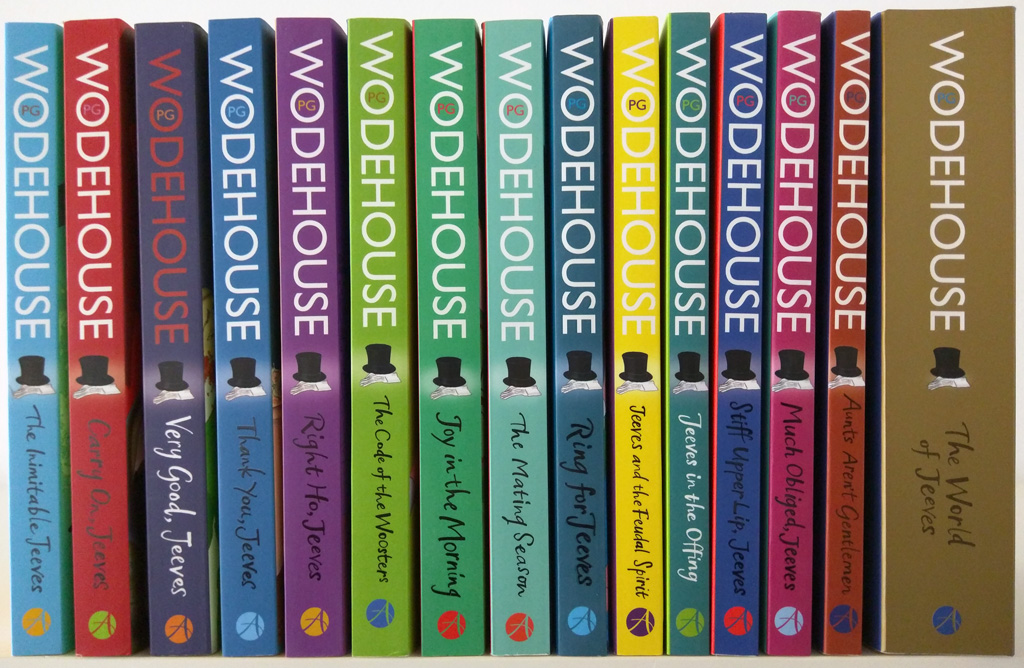
Many of these attributes of this beautiful country have often figured in the stories and 100-odd books which Wodehouse, fondly referred to as Plum, wrote during his highly creative life.

All inputs were invariably grist to the humour-producing mill of P. G. Wodehouse. He had this unique talent for turning and twisting even the most inconsequential of things into something which would leave his readers chuckling, guffawing, rollicking, laughing, and falling from their couches. All his works are like beehives dripping with honey; these possess the unique property of making one look at the sunnier side of life. His sole aim was always to amuse, entertain, educate, and uplift his readers. Give him an enchanting country like Switzerland and he delivers utmost satisfaction.

Here, we look at some of the ways this beautiful country dotted with lakes, mountains and greenery has been depicted by him in several of his narratives. All these references go on to make a delectable fondue.

His Visits

For someone as knowledgeable as Plum, visiting a country appears to have had no relation to the number of times he refers to that country in his works. By way of example, around a year ago, yours truly endeavoured to compile Wodehouse’s references to India. Surprisingly, several popped up, even though he had never visited India. Of course, since he was born in UK and had then settled in the USA, these two countries get covered the most, closely followed by France.    

Switzerland has also been fortunate to attract his humorous gaze occasionally. Plum is likely to have visited Switzerland several times. Letters exchanged between two friends of his reveal that at least in 1923 and 1936, he had stayed at the Carlton Hotel at St. Moritz.

William Tell Told Again

As early as 1904, he wrote the story of this legendary character from the country. It comprises prose and verse with illustrations. The main prose element was written by Plum, while Philip Dadd supplied the frontispiece and 15 full-page illustrations, all in colour. The 15 illustrations were each accompanied by a verse written by John W. Houghton, who also wrote the prologue and epilogue in verse.

The book was dedicated “to Biddy O’Sullivan for a Christmas present”, who was much later identified as the young daughter of Denis O’Sullivan (1869–1908), an actor and singer who was a friend of Wodehouse in the early 1900s.

The title of the book comes from its prologue, which is told in verse by John W. Houghton:

The Swiss, against their Austrian foes,

Had ne’er a soul to lead ’em,

Till Tell, as you’ve heard tell, arose

And guided them to freedom.

Tell’s tale we tell again—an act

For which pray no one scold us—

This tale of Tell we tell, in fact,

As this Tell tale was told us.

There’s a very nice online scan of William Tell Told Again at the Library of Congress: https://memory.loc.gov/cgi-bin/ampage?collId=rbc3&fileName=rbc0001_2003juv55413page.db&recNum=0

Swiss Waiters

Switzerland is famous for its hospitality as well as for its grooming of staff in the best traditions of the trade. Swiss waiters get frequently mentioned in Plum’s works. To those of us who have travelled to Switzerland in modern times and have been impressed by the quality of service in Swiss hotels, Wodehouse’s disparaging references to Swiss waiters are difficult to understand, unless Switzerland made a point of exporting their less-competent staff to work in other countries. A more likely explanation could perhaps be the desire of hotels in other countries to use the services of Swiss waiters at the lowest rung of proficiency, thereby saving on costs.

  • Stanley Featherstonehaugh Ukridge is a charismatic opportunist who will do anything to increase his capital—except, of course, work. The stories in which he appears generally involve his get-rich-quick schemes. In Ukridge and the Home from Home, he has been left in charge of his Aunt Julia’s house and comes up with the ingenious idea of renting out rooms to an exclusive clientele of boarders while she was away.

Owners of large private houses find it’s too much of a sweat to keep them up, so they hire a couple of Swiss waiters with colds in their heads and advertise in the papers that here is the ideal home for the City man.

  • In Farewell to Legs, we meet Evangeline Brackett whose betrothal to Angus McTavish is built, in large part, on the way she bites her lip and rolls her eyes when she tops her drive, says the Oldest Member. But when Legs Mortimer takes up residence in the Clubhouse, Evangeline’s mind wanders from her golf, and Angus worries that she is losing her form for the Ladies’ Medal. Legs is a practical joker and life of the party who tries to steal Evangeline away from Angus. But the scales fall from Evangeline’s eyes when Legs does the unthinkable on the links.

In the story, at one point, Evangeline speaks of Legs Mortimer thus:

I met him when I was over in Switzerland last winter and saysthat Legs yodelled to the waiters because they were Swiss.

  • In Doctor Sally, we find yet another mention of Swiss waiters.

On the Front—or Esplanade—of Bingley-on-Sea stands the Hotel Superba; and at twenty minutes past four the thin mist which had been hanging over the resort since lunch time disappeared and there filtered through the windows of suite number seven on the second floor that curious faint gamboge light which passes for sunshine in England. Its mild rays shone deprecatingly on one of those many coloured carpets peculiar to suites at south coast hotels, on the engraving of “The Stag at Bay” over the mantelpiece, on the table set for tea, and on Marie, maid to Mrs. Higginbotham, who had just deposited on the table a plate of sandwiches.

In addition to the sunshine, there entered also the strains of a dance band, presumably from the winter garden below, where Swiss waiters prowled among potted palms and such of the Superba’s guests as wished to do so were encouraged to dance.

  • In The Girl on the Boat (Three Men and a Maid), the maid of the title is a red-haired, dog-loving Wilhelmina “Billie” Bennett, and the three men are Bream Mortimer, a long-time and long-suffering suitor of Billie; Eustace Hignett, a shy poet who is cowed by his domineering mother but secretly engaged to Billie at the opening of the tale, and Sam Marlowe, Eustace’s dashing cousin, who falls in love with Billie “at first sight”.

The four of them find themselves together on a White Star ocean-liner called the Atlantic, sailing for England. Also on board is a capable young woman, Jane Hubbard, who is in love with Eustace. Wodehousean funny stuff ensues, with happy endings for all except Bream Mortimer.

In Chapter 8, Swiss waiters come up for a mention.

The Swiss waiters at the Hotel Magnificent, where Sam was stopping, are in a class of bungling incompetence by themselves, the envy and despair of all the other Swiss waiters at all the other Hotels Magnificent along the coast.

Swiss Cheese

Switzerland produces over 475 varieties of cheese, a milk-based food produced in a large range of flavours, textures, and forms. Cow milk is used in about 99 percent of the cheeses Switzerland produces. The remaining share is made up of sheep milk and goat milk. It stands to reason that Swiss cheese occupies a place of pride in many of narratives dished out by Plum. However, he focuses more on cheese holes, whether he is referring to vicious dog bites or to weak evidence in a legal matter, or even to the inner structure of a gun.  

  • A Very Shy Gentleman (The Mixer) is an autobiography of a member of the canine species. At one point, the protagonist describes itself thus:

I am jet black, with a white chest. I once overheard Fred say that I was a Swiss-cheese-hound, and I have generally found Fred reliable in his statements.

  • In Stiff Upper Lip, Jeeves, Bertie Wooster is a guest at Totleigh Towers, the castle belonging to Sir Watkyn Bassett. When he sees Major Brabazon-Plank, a detractor of his, visiting the place, he is unable to avoid meeting him by escaping from a window since he fears that the dog Bartholomew may take him to be a burglar. After all, he biteth like a serpent and stingeth like an adder.

My first thought was to wait till he (Plank) had got through the front door and then nip out of the window, which was conveniently open. That, I felt, was what Napoleon would have done. And I was just about to get the show on the road, as Stiffy would have said, when I saw the dog Bartholomew coming sauntering along, and I knew that I would be compelled to revise my strategy from the bottom up. You can’t go climbing out of windows under the eyes of an Aberdeen terrier so prone as Bartholomew was always to think the worst. In due season, no doubt, he would learn that what he had taken for a burglar escaping with the swag had been in reality a harmless guest of the house and would be all apologies, but by that time my lower slopes would be as full of holes as a Swiss cheese.

  • In A Pelican at Blandings, Gally hears from Linda Gilpin that her engagement to Halliday is no more, and Halliday himself visits, to explain the incident (a grilling he was obliged to give Linda as a witness in a court case he was defending) which led to their split. He is keen to meet Linda in person, but Gally sends him home, promising to do his best on his behalf.

G. G. Clutterbuck is a chartered accountant for whom John Halliday was appearing in the action of Clutterbuck versus Frisby. And Frisby is the retired meat salesman whose car collided with Clutterbuck’s in the Fulham Road, shaking Clutterbuck up and possibly causing internal injuries. The defence, of course, pleaded that Clutterbuck had run into Frisby, and everything turned on the evidence of a Miss Linda Gilpin, who happened to be passing at the time and was an eyewitness of the collision.

It was my duty to examine her and make it plain to the jury that she was cockeyed and her testimony as full of holes as a Swiss cheese.

  • In Do Butlers Burgle Banks, Horace Appleby, who lives in London suburb Valley Fields, looks and acts like a butler. This makes it easier for him to locate jewels for his burglar gang as a butler. Charlie is an American safe blower who loves carrying a gun on his person, whereas Horace detests guns. Charlie locates Horace and wants to scoop up all the money lying on a table. Horace is a man of peace. His speciality is brainwork, and he is painfully aware that, in the encounter that then threatened to develop, brainwork would not serve him.

The thought that somewhere in the recesses of Charlie’s neat custom-made suit there lay concealed the gun which had started all the unpleasantness would have been enough to disconcert a far braver man, for it was a gun, Horace suspected, as liberally pitted with notches as a Swiss cheese, and one more, he feared, to be added almost immediately.

Migration to learn English 

Out of School (The Main Upstairs) introduces us to James Datchett who happens to be an assistant master at Mr. Blatherwick’s private school, Harrow House, a well-reputed boarding school for the younger generation. He is also a poet. In his Oxford days he had contributed to the Isis; and for some months past now he had been endeavouring to do the same to the papers of the Metropolis, without success, until a day when he opens a letter he had received at breakfast from the editor of a monthly magazine, accepting a short story. Elated, he goes out for some fresh air and the first person he runs into is Violet.

Violet is a housemaid who works at the residence of Mr. Blatherwick.

It is not a part of James’ duties as assistant master at Harrow House to wander about kissing housemaids, even in a brotherly manner. But in a state of joy, he does precisely that.   

James thought the incident was closed. But Violet did not. Retribution came James’ way. The weapon she chose was Adolf, the servant of the house.

He was one of that numerous bands of Swiss and German youths who come to this country (the UK) prepared to give their services ridiculously cheap in exchange for the opportunity of learning the English language.

Adolf starts blackmailing James, earning some money, and even taking English lessons from him. But Fate often has this tendency to contrive to make amends after doing us a bad turn. The story eventually ends on a positive note.

Swiss Navy Admirals

In Heavy Weather, Lady Julia Fish, a handsome middle-aged woman of the large blonde type, and of a personality both breezy and commanding, decides to pay a visit to Lord Tilbury, the founder and proprietor of that vast factory of popular literature known as the Mammoth Publishing Company. She hopes to secure a job for her son Ronnie Fish who is trying to marry a chorus-girl. It seems to her that if Ronnie were safe at Tilbury House, inking his nose and getting bustled about by editors and people, it might take his mind off the tender passion.

Offices of all kinds specialize in keeping unwelcome intruders, wannabe authors and imposters out of their premises. Top honchos build impenetrable walls around themselves. Mammoth Publishing Company is no exception. Tall gentlemen with quasi-military uniforms and forbidding stiff-upper-lips welcome one at its doors. Liveried boys make you fill up all kinds of forms and visitors’ slips.

This is how Lady Julia opens the conversation with Lord Tilbury:    

“So this is where you get out all those jolly little papers of yours, is it? I must say I’m impressed. Quite awe-inspiring, all that ritual on the threshold. Admirals in the Swiss Navy making you fill up forms with your name and business, and small boys in buttons eyeing you as if anything you said might be used in evidence against you.”

Admiral of the Swiss navy is understood to be a US Armed Forces slang for a self-important person.

Merry Swiss Peasants

Narrative of The Prince and Betty takes us to the tiny island of Mervo where millionaire Benjamin Scobell gets the hero to build a casino that will rival Monte Carlo. We are told of the unique way the interiors of the Mervo Casino had been designed, with various cubicles representing different countries.

Although the UK and US versions of the aforesaid narrative have substantially different texts, the quotation below appears in each edition.   

Imposing as was the exterior, it was on the interior that Mr. Scobell more particularly prided himself, and not without reason. Certainly, a man with money to lose could lose it here under the most charming conditions. It had been Mr. Scobell’s object to avoid the cheerless grandeur of the rival institution down the coast. Instead of one large hall sprinkled with tables, each table had a room to itself, separated from its neighbour by sound-proof folding-doors. And as the building progressed, Mr. Scobell’s active mind had soared above the original idea of domestic coziness to far greater heights of ingenuity. Each of the rooms was furnished and arranged in a different style. The note of individuality extended even to the croupiers. Thus, a man with money at his command could wander from the Dutch room, where, in the picturesque surroundings of a Dutch kitchen, croupiers in the costume of Holland ministered to his needs, to the Japanese room, where his coin would be raked in by quite passable imitations of the Samurai. If he had any left at this point, he was free to dispose of it under the auspices of near-Hindoos in the Indian room, of merry Swiss peasants in the Swiss room, or in other appropriately furnished apartments of red-shirted, Bret Harte miners, fur-clad Esquimaux, or languorous Spaniards. He could then, if a man of spirit, who did not know when he was beaten, collect the family jewels, and proceed down the main hall, accompanied by the strains of an excellent band, to the office of a gentlemanly pawnbroker, who spoke seven languages like a native and was prepared to advance money on reasonable security in all of them.

Of Swiss Vice-Presidents

  • In The Rise of Minna Nordstrom (Blandings Castle) we come across Jacob Z. Schnellenhamer, the popular president of the Perfecto-Zizzbaum Corporation. Like all good men, he loves his well-stocked cellar at home and is stunned to find that it is empty. So, there will not be anything to drink at the party he is hosting that very night for a hundred and eleven guests including not only a British Duke but also the Vice-President of Switzerland.
  • Open House introduces us to Eustace Mulliner whose godfather, Lord Knubble of Knopp, tries to persuade him to join the British Embassy in Switzerland. Eustace stoutly refuses to avail himself of the offer. He wants to stay in London. He is the favourite nephew of his wealthy and elderly Aunt Georgiana, Lady Beazley-Beazley, and wants to continue earning her affection to stay in her will. Eustace also wants to continue courting Marcella Tyrrwhit.

However, things turn out differently when he is caught throwing cucumber sandwiches at Francis, a feline creature which is a favourite of his Aunt Georgiana. At the time, two more characters pop up, taking a jaundiced view of the proceedings. One of these is Marcella, who is upset about Eustace having gifted her favourite dog to another lady friend of his.

His obduracy evaporates. He decides that Switzerland is a safer country to be in. He does exceedingly well in his job at the British Embassy in Berne, and is awarded the Order of the Crimson Edelweiss, Third Class, with crossed cuckoo-clocks, carrying with it the right to yodel in the presence of the Vice-President.

Of Wars and Treaties

  • In The Luck of the Bodkins, Albert Peasemarch, the well-intentioned but goofy steward onboard the New York bound ship RMS Atlantic, says:

“What caused the war? That bloke in Switzerland shooting the German Emperor.”

The incident usually considered to have been the immediate cause of the First World War was the assassination of the Archduke Franz-Ferdinand, the heir to the Austrian Emperor, at Sarajevo in Bosnia, by the Serbian nationalist Gavrilo Princip (28 June 1914). Peasemarch surely has his facts delightfully mixed up.

  • The last time the Swiss fought a military battle was 500 years ago, against the French. (The Swiss lost.) Two hundred years ago, Switzerland was acknowledged as a neutral state in the Treaty of Paris. Since 1815, the country has become globally famous for its neutrality.

However, in a comically fictional account titled The Swoop!, Wodehouse treats us to a scenario wherein England has been invaded by as many as nine armies at the same time.

The invaders are the Russians under Grand Duke Vodkakoff, the Germans under Prince Otto of Saxe-Pfennig – the reigning British monarch of the day was Edward VII of the House of Saxe-Coburg-Gotha — the Swiss Navy, the Monegasques, a band of Moroccan brigands under Raisuli, the Young Turks, the Mad Mullah from Somaliland, the Chinese under Prince Ping Pong Pang, and the Bollygollans in war canoes.

Simultaneously the Mad Mullah had captured Portsmouth; while the Swiss navy had bombarded Lyme Regis, and landed troops immediately to westward of the bathing-machines.

Raisuli, apologising for delay on the ground that he had been away in the Isle of Dogs cracking a crib, wrote suggesting that the Germans and Moroccans should combine with a view to playing the Confidence Trick on the Swiss general, who seemed a simple sort of chap.

Half-way through the Swiss general missed his diamond solitaire, and cold glances were cast at Raisuli, who sat on his immediate left.

The combined forces of the Germans, Russians, Swiss, and Monacoans were overwhelming, especially as the Chinese had not recovered from their wanderings in Wales and were far too footsore still to think of serious fighting.

The European parties form an alliance and expel the other invaders. The Swiss soon leave, to be home in time for the winter hotel season, and when Prince Otto and Grand Duke Vodkakoff are offered music hall engagements and the leader of the army of Monaco is not, he takes offence and withdraws his troops.

The two remaining armies are overcome thanks to the stratagems of the indomitable Clarence Chugwater, leader of the Boy Scouts. By causing each commander to become jealous of the other’s music hall fees, he succeeds in breaking up the alliance and, in the ensuing chaos, Clarence and his Boy Scouts are able to overcome the invaders.

  • In Ukridge’s Dog College, Ukridge comes up with a scheme to train dogs for the music hall stage. He thinks he will groom performing dogs. He believes there is pots of money in it. He plans to start in a modest way with six Pekingese. When he has taught them a few tricks, he will sell them to a fellow in the profession for a large sum and buy twelve more. He will then train those and then sell them for a large sum, and with that money buy twenty-four more.

However, the scheme fails when an irate landlord of Ukridge’s pinches the dogs in lieu of unpaid rent. The narrator then comes up with the idea of approaching George Tupper who works at the Foreign Office. He is the sort of man who is always starting subscription lists and getting up memorials and presentations.

He listens to the Ukridge story with the serious, official air which these Foreign Office fellows put on when they are deciding whether to declare war on Switzerland or send a firm note to San Marino, and was reaching for his chequebook before I had been speaking two minutes.

  • A Bit of Luck for Mabel has Ukridge again touching George Tupper for a fiver. However, this time around, he is not in a positive frame of mind.

“It’s very bad for you, all this messing about on borrowed money. It’s not that I grudge it to you,” said Tuppy; and I knew, when I heard him talk in that pompous, Foreign Official way, that something had gone wrong that day in the country’s service. Probably the draft treaty with Switzerland had been pinched by a foreign adventuress. That sort of thing is happening all the time in the Foreign Office. Mysterious veiled women blow in on old Tuppy and engage him in conversation, and when he turns round he finds the long blue envelope with the important papers in it gone.

When Insulin Puts One on a Pedestal

Hierarchy rules even amongst those who are indisposed. A Covid patient takes a dim view of someone having a common cold. A cancer patient believes he is superior to someone suffering from a mere bout of gout. Someone dependent on an imported medicine treats another one gobbling up a local medicine with mute contempt. 

Romance at Droitgate Spa (Eggs, Beans and Crumpets) speaks of the high status of those amongst the patients of the spa who have been out in Switzerland taking insulin for their diabetes. Sure enough, in the medical/social rank within the spa, they rank higher. 

Skiing, Glaciers and Golf  

  • In Jeeves in the Offing, we meet an old friend of Bertie Wooster’s – Reginald “Kipper” Herring. While at Brinkley Court, the lair of Aunt Dahlia, they meet Phyllis Mills who is goddaughter of Aunt Dahlia and stepdaughter of Rev. Aubrey Upjohn, who was once Bertie and Kipper’s oppressive headmaster.

At one point in the story, Kipper says to Bertie about Phyllis Mills:

“We met out in Switzerland last Christmas.”

Later, Phyllis tells Bertie:

“We were in the same hotel in Switzerland last Christmas. I taught him to ski.”

  • In The Letter of the Law, this is how the golfing skills of Wadsworth Hemmingway’s get described:

When eventually he began his back swing, it was with a slowness which reminded those who had travelled in Switzerland of moving glaciers.

Later, another character by the name of Legs shins up a tree with an adroitness born, no doubt, of his Swiss mountaineering.

  • In Right Ho, Jeeves, a hapless Bertie Wooster is sent off by Jeeves on a midnight bicycle ride, to fetch a house key which was, in any case, readily available.

While cycling through a jungle without a lamp, Bertie faces many perils. Part of his experience gets recounted thus:

I recalled the statement of a pal of mine that in certain sections of the rural districts goats were accustomed to stray across the road to the extent of their chains, thereby forming about as sound a booby trap as one could well wish.

He mentioned, I remember, the case of a friend of his whose machine got entangled with a goat chain and who was dragged seven miles—like skijoring in Switzerland—so that he was never the same man again. And there was one chap who ran into an elephant, left over from a travelling circus.

But all is well that ends well. Bertie’s absence of a few hours sets many things right. All the other characters unanimously hate Bertie for having rung the fire alarm bell in the middle of the night, and this leads to mutual reconciliation on all the fronts. Angela and Tuppy get reconciled, Gussie and Madeline become engaged again, the French cook Anatole withdraws his resignation, and Uncle Tom writes Aunt Dahlia a cheque for 500 pounds.

  • Hot Water introduces us to American millionaire Patrick “Packy” Franklyn. This is how he gets described when he is at a Festival with a roll in his hand:

He seemed undecided whether to throw it at the leader of the orchestra or at an obese, middle-aged Gaul with a long spade-shaped beard who, though his best friends should have advised him against it, had come to the Festival dressed as a Swiss mountaineer.

  • In Jeeves and the Greasy Bird, while rehearsing for a scene which involves a passionate embrace between himself and a young lady, Bertie describes his experience thus:

She made it good, and I felt like a Swiss mountaineer engulfed by an avalanche smelling of patchouli.

Bellringers and Echoes in the Mountains

  • In Barmy in Wonderland, Cyril “Barmy” Fotheringay-Phipps ends up investing in a play titled Sacrifice. The play opens in the try-out town of Syracuse and proves to be a disaster of sorts. Fanny, the wife of one of the producers and a World-Famous Juggler recommends a troupe of Swiss bellringers to cover a dead spot in a show.
  • Uncle Dynamite touches upon the difficulty one faces in carrying out a conversation with a stiff-upper-lip rozzer.

      “Ho!” he cried, startled.

      “Ho!” said Constable Potter, like an echo in the Swiss    mountains.

  • In Ukridge Starts a Bank Account, we find a dialogue between Aunt Julia and her nephew Ukridge.

“Do you mind if I take two or three books of yours about antique furniture? I’ll return them shortly.”

She sneezed sceptically.

“Or pawn them,” she said. “Since when have you been interested in antique furniture?”

“I’m selling it.”

“You’re selling it?” she exclaimed like an echo in the Swiss mountains.

Likewise, there is a mention of echoes in Swiss mountains in many other narratives of Wodehouse.

Company for Henry

“If it occurred to Clarkson that his overlord was modelling his conversational style a little too closely on that of an echo in the Swiss mountains, he did not say so.”

Jeeves in the Offing

“Make up your mind whether you are my old friend Reginald Herring or an echo in the Swiss mountains. If you’re simply going to repeat every word I say—”

Pearls, Girls and Monty Bodkin

‘Make up your mind, Bodkin, whether you are a man or an echo in the Swiss mountains,’ said Mr Llewellyn with a return of his earlier manner.

Uncle Fred in the Springtime

“Good God, Connie, don’t repeat everything I say, as if you were an echo in the Swiss mountains.”

Full Moon

When Col. Wedge speaks to Lord Emsworth, he feels thus:

The latter’s habit of behaving like a Swiss mountain echo or the member of the crosstalk team who asks the questions might well have irritated a more patient man.

The Girl in Blue

Yes,” said Crispin, justifiably irritated, for no uncle likes to converse with a nephew who models his conversation on that of an echo in the Swiss mountains.

St. Bernard dogs

The spirit of the Italian monk Bernard of Menthon would be delighted to know of the innumerable references by Plum to this sterling species which is famous for its rescue missions in the Alps. Even though their operations extend to Western Alps which straddle not only Switzerland but also Italy, I am tempted to mention some such references. 

The Mating Season

“You wouldn’t blame a snowbound traveller in the Alps for accepting a drop of brandy at the hands of a St. Bernard dog.”

Joy in the Morning

“One should always carry a flask about in case of emergencies. Saint Bernard dogs do it in the Alps. Fifty million Saint Bernard dogs can’t be wrong.”

Performing Flea: “Huy Day by Day”

“We are elderly internees, most of us with corns and swollen joints, not Alpine climbers. If we are supposed to be youths who bear ’mid snow and ice a banner with the strange device ‘Excelsior’, there ought to be Saint Bernard dogs stationed here and there, dispensing free brandy.”

The Code of the Woosters

“…that brandy came in handy. By the way, you were the dickens of a while bringing it. A St Bernard dog would have been there and back in half the time.”

Much Obliged, Jeeves

“I was badly in need of alcoholic refreshment, and just as my tongue was beginning to stick out and blacken at the roots, shiver my timbers if Jeeves didn’t enter left centre with a tray containing all the makings. St Bernard dogs, you probably know, behave in a similar way in the Alps and are well thought of in consequence.”

The Old Reliable

Bill Shannon to Phipps:

“You really ought to go around with a keg of brandy attached to your neck, like Saint Bernard dogs in the Alps. No delay that way. No time lag.”

Pigs Have Wings

And indeed the years had dealt lightly with the erstwhile Maudie Montrose. A little more matronly, perhaps, than the girl with the hourglass figure who had played the Saint Bernard dog to the thirsty wayfarers at the old Criterion, she still made a distinct impression on the eye…

Big Money

“She stood behind the counter, waiting, like some St Bernard dog on an Alpine pass, to give aid and comfort to the thirsty.”

Cocktail Time

“Another of the same, please, Mr. M,” he said, and Rupert Morrison once more became the human St. Bernard dog.

Money in the Bank

“They sent out the St. Bernard dogs, and found him lying in the snow, lifeless and beautiful.”

Pearls, Girls and Monty Bodkin

He remembered the creamy stuff as particularly palatable, and it seemed to him incredible that Ivor Llewellyn had not jumped at it like a snowbound wayfarer in the Alps reaching for the St. Bernard dog’s keg of brandy.

Spring Fever

It astounded him to think that he could ever have disliked this St. Bernard dog among butlers.

Summer Moonshine

He directed his steps to the public bar and was glad to find it unoccupied except for the blonde young lady who stood behind the counter and played the role of St. Bernard dog to the thirsty wayfarers of Walsingford Parva.

Right Ho, Jeeves

St. Bernard dogs doing the square thing by Alpine travellers could not have bustled about more assiduously.

The Luck of the Bodkins

“…I’m to buy a pack of St. Bernards, am I, and train them to go out and drag them in?”

Something New

It was Adams’ mission in life to flit to and fro, hauling would-be lunchers to their destinations, as a St. Bernard dog hauls travelers out of Alpine snowdrifts.

Of Divorce Rates

In an autobiographical account, Over Seventy: Christmas and Divorce, Plum refers to Switzerland divorce rates as being far behind those of the USA.

In one field of sport America still led the world. Her supremacy in the matter of Divorce remained unchallenged. Patriots pointed with pride at the figures, which showed that while thirteen in every thousand American ever-loving couples decided each year to give their chosen mates the old heave-ho, the best, the nearest competitor, Switzerland, could do was three…

About a judge who denied a woman her thirteenth divorce:

It may be that it is this judge who is lacking in team spirit… Has this judge never reflected that it is just this sort of thing that discourages ambition and is going to hand the world’s leadership to the Swiss on a plate with watercress round it?

The Untapped Ingredients in the Fondue

Just in case Wodehouse had also paid attention to a few other unique characteristics of Switzerland, some of his characters might have been etched out differently.

Madeline Bassett, a mushy and dreamy member of the tribe of the delicately nurtured, might have been working as an apprentice at the Sphinx Observatory near Jungfraujoch, trying to ascertain if stars indeed go on to form a part of God’s daisy chain.

American millionaires of the stature of J. Preston Peters (of Something Fresh fame) and Donaldson (the owner of the conglomerate known as Donaldson’s Dog-Joy Biscuits Inc.) would have been found frequenting some of the top banks in Switzerland, surreptitiously operating their numbered accounts and lockers therein.

The likes of Mrs. Spottsworth (of Ring for Jeeves fame, at the mere mention of whose name, the blood-sucking leeches of the Internal Revenue Department raise their filthy hats with a reverent intake of the breath), and Mr. J. Washburn Stoker (in Thank You, Jeeves, he is keen on buying Chuffnell Hall) would have been scouting around for juicier real estate deals in Switzerland.

Anatole, the French cook, and God’s gift to our gastric juices, would have been the Catering Director of one of the premium hotel management schools in Switzerland.  

Lord Emsworth (of the Blandings Castle fame) would have been found ruing the inevitable loss of the Empress of Blandings, his favourite Berkshire sow, at the annual pig race Hotschrennen on New Year’s Day in Klosters.   

Roderick Spode, the leader of the Saviours of Britain, would have been busy engaging researchers in Switzerland, aiming to develop advanced versions of Velcro-reinforced laces which could be used in the new designs of lingerie to be marketed under his brand name Eulalie.

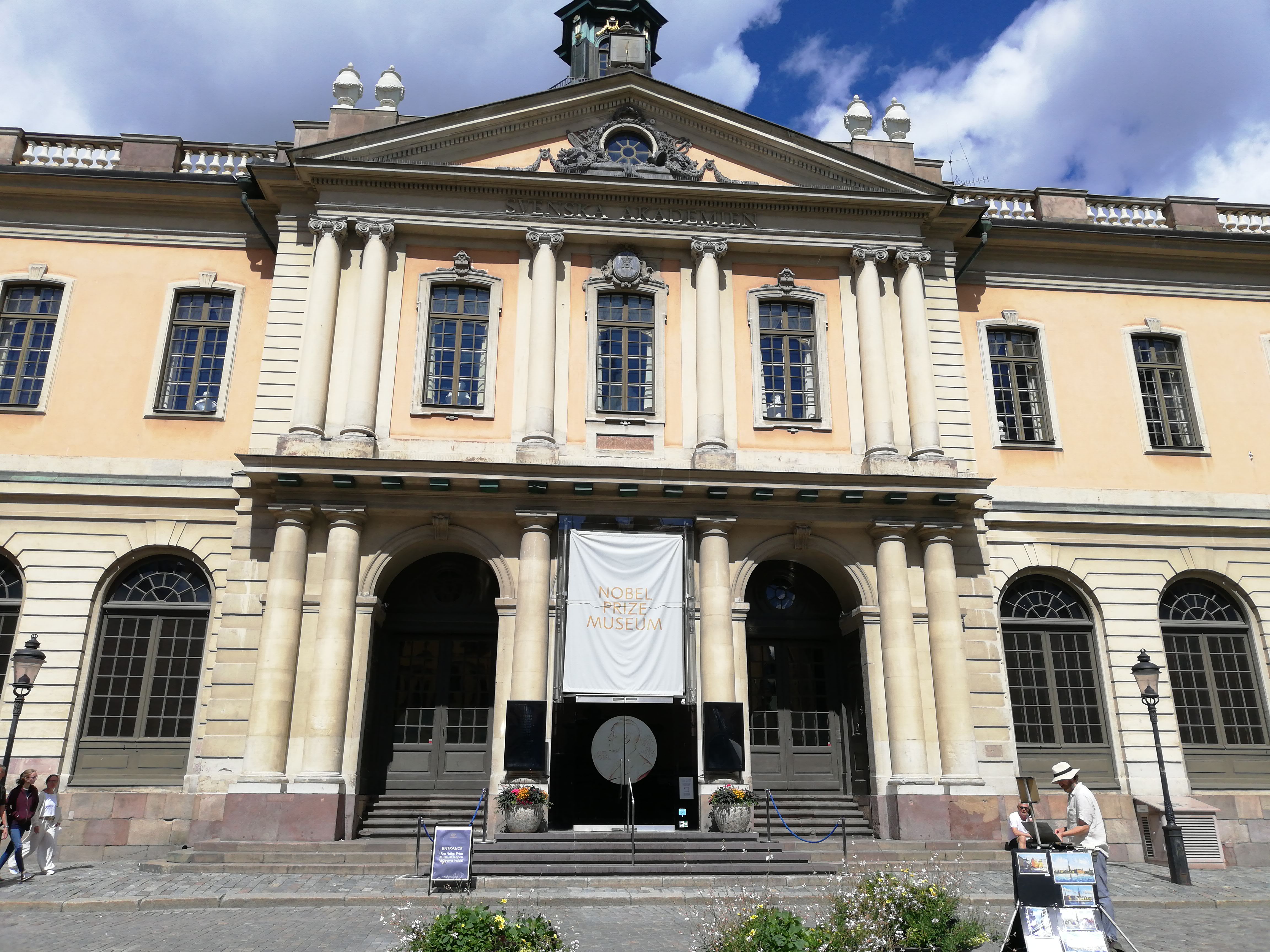
When it comes to innovations and discoveries, Switzerland is amongst the top countries in the world. Consider the number of Nobel Prizes awarded till October, 2019 per 10 million of population. As per Wikipedia, if Luxembourg clocked a score of 33.8, Sweden 33.0, UK 19.4 and USA 11.7, Switzerland stood at 31.6.

It is quite likely that Wilfred Mulliner, the well-known analytical chemist, and the inventor of Buck-U-Uppo, Mulliner’s Raven Gypsy Face Cream, Mulliner’s Snow of the Mountains Lotion and other preparations used by the nobility, would have, by now, won a Nobel nomination or two. Or, he would have turned his attention to launching a new range of mega-chocolates, duly fortified with fat-soluble vitamins, which, when fed to elephants in Indian and African jungles, would make them face fierce lions with a jaunty sang froid.

Reginald Jeeves, the inimitable valet of Bertie Wooster, would have been found doing a brief stint at the Swiss Foundation for Alcohol Research and might have already patented his trademark pick-me-ups.

Not to forget Gussie Fink-Nottle, our amateur herpetologist, who would have been found doing advanced research on the mating patterns of newts as a scholar under the Swiss Amphibian and Reptile Conservation Program.    

Pauline Stoker, who believes in swimming a mile before having her breakfast and then follows it up with at least five sets of tennis matches, would have been running a tennis academy under the guidance of either Roger Federer or Martina Hingis.

Roberta Wickham would have been found developing precision laser-guided hot water puncturing needles under the aegis of an institution like the Paul Scherrer Institute, thereby giving sleepless nights to politicians who keep foisting wars on their neighbouring countries.

Doctor Sally might have been discovered working on advanced medical procedures using sub-atomic particles at CERN.

George Bevan, the famous American composer of successful musical comedies, would have been learning the nuances of harp music at an outfit like Harp Masters.

Using the countless bridges across the many rivulets in the country, Bertie Wooster would have been busy honing his skills at pushing Oswald Glossop into the gushing waters below, thereby increasing the chances of his pal Bingo Little winning over the affections of Honoria Glossop, Oswald’s elder sister.

Freddie Threepwood, the son of Lord Emsworth, would have been making frequent marketing trips to this country, promoting Donaldson’s Dog-Joy biscuits. For a country where as many as 5,440,000 dogs were estimated to be living in 2021, he just could not afford to miss an opportunity of this magnitude. Moreover, since he always likes making frequent trips from Blandings to London, he could even study the systems and procedures followed by SBB to ensure the punctuality of its trains.   

If all this had indeed happened, someone like Reginald Jeeves, who stands as a beacon of light for all those trying to render flawless and impeccable service in any field of human endeavour, might have already been declared an honorary citizen of any pub-infested city in the country, much like Sherlock Holmes happens to be an honorary citizen of the City of Meiringen, which, incidentally, also boasts of a small museum dedicated to Sir Arthur Conan Doyle, a friend and cricket-mate of Plum’s.

The possibilities are endless. The mind boggles. However, rather than worrying about what-might-have-been, let us focus on what-we-already-have.  

The Master Wordsmith of Our Times

Some Swiss fans of P G Wodehouse who have a chin-up attitude like that of Bertie Wooster and, also a hearty capacity to laugh at themselves, may have appreciated the kind of Swiss-centric similes Wodehouse listed out above, capturing the behaviour and the utterances of his characters.

Wodehouse used a mixture of Edwardian slang, quotations from and allusions to numerous literary figures, and several other literary techniques to produce a prose style that has been compared to comic poetry and musical comedy.

Other than the Bible and the omnipresent Bard, his works occasionally refer to Agatha Christie, Sir Arthur Conan Doyle, Browning, Burns, Frost, Keats, Kipling, Omar Khayyam, Spinoza, Tolstoy, Tennyson, Wordsworth and many others.

Few writers have Plum’s mesmerizing command over English. He uses it in an innovative manner, leaving the reader steeped to the gills with an overdose of Vitamin H(umour). It comes as no surprise that English-speaking people the world over simply adore him. I say so even though so many of his works have been translated into several other languages.

Nevertheless, he has left behind for us a delectable fondue to savour, making Switzerland shine through in so many ways through a vast array of his novels and stories.

Notes:

  1. The author wishes to emphasize his moral rights over the contents of this essay, save and except quotations from the books/stories of P. G. Wodehouse, the rights to which belong exclusively to the Wodehouse Literary Estate, UK. Anyone planning to publish any part of this essay including quotations from Wodehouse’s writing would do well to obtain appropriate consent from the Trustees of the Estate. Some material has been sourced from Wikipedia.
  2. Many of the inputs in this essay are courtesy Neil Midkiff and the website https://www.madameulalie.org/SiteSearch.html)
  3. The author is grateful to Tony Ring, an expert on all Plummy matters, who made several suggestions towards improving the contents of this aricle.
  4. The author is also grateful to Chris Starling, President of the Anglo-Swiss Club of Lucerne, who has taken the trouble of reviewing this article before its publication.     

Related Posts:

It is said that Mr. R. M. Lala, an editor, writer and publisher of repute, once commented to Mr. J. R. D. Tata that the latter believed in excellence. The great man is said to have retorted thus: “Not excellence. Perfection. You aim for perfection; you will attain excellence. If you aim for excellence, you will go lower.”

But even achieving excellence is not a cake walk. Many leaders are not clear how to go about doing it. The mirage of excellence is elusive, and most often, it is not a surrogate for achieving outstanding business performance alone by measuring and surpassing business results. There is more to it than what meets the eye.

Satyendra Kumar’s book endeavors to answer this question.

The author shares distilled insights from his four decades of accumulated learning from various organisations to portray the fundamentals — that are often elusive —in building organisational excellence. 

This book is a valuable treasure trove of insights. It has the potential to enable as well as enrich the thinking process of business leaders when it comes to achieving excellence in a sustainable manner.

Elusive Secrets in Seven Chapters

The book etches out seven steps to facilitate the process of achieving excellence, each step being covered in a separate chapter.

The Foundation is obviously laid by a leader’s spark of genius beyond intelligence, evoking intuitive facets to nurture essentials that fuel a never-ending appetite for learning.

This leads to the concept of Learning Forever, which, in turn, instills a norm of Measurement and Predictability.  

A climate of learning and measurement provides an impetus for Productive Working that leads to a build-up of confidence across teams and groups entrusted with the task of achieving business goals. 

This brings out the criticality of The People Factor which is an important ingredient in creating a Culture of Improvement and Transformation.  

Last, but not the least, is the Invisible Backdrop of a deep purpose guided by values and ethics that the author presents as it loops back to the very essence in the acts towards building the Foundation.

Each chapter progressively enhances the value of the conversation with an elevated level of awareness, thereby igniting the intuitive mind to grasp what is relevant and necessary.

Every company eager to protect its soul and spirit for worthy outcomes could benefit from reading this book.

Author’s Profile

Satyendra Kumar has enhanced the quality systems for world-class global organisations with his contributions for over 40 years. He has served on several industry bodies and has received numerous awards in shaping the conversation for progress with his deep understanding of the systems view of an organisation that is a precondition for nurturing a culture of excellence.

Kumar today continues his passion by helping organisations strengthen their systems maturity by providing his rich experience as an Independent Advisor and Consultant to several large and medium-scale institutions and enterprises since 2013. Kumar was the Global Head and Senior Vice President – Productivity & Quality, Technology Tools & Software Reuse at Infosys Limited (2000 – 2013). He has worked as Vice President at IMR Global, the USA, between 1998 and 2000. As Deputy Chief Executive for Tata Quality Management Services – Tata Group between 1996 and 1998, he provided an intellectual impetus in laying the foundation for instituting the Tata business excellence initiative. Kumar’s rich experience spans his consulting expertise to over 50 national and multi-national clients in areas of Business Excellence, Operational Efficiency, Customer Satisfaction Management, Business Continuity Management, Project and Programme Management, and Quality Management.

He has served on many Boards and Panels such as Board member (QuEST USA), On the Panel of Judges – Wisconsin State Award (USA), Administrative Reforms Committee of Indian Institute of Science, Bengaluru, and Chief Technical Advisor to the Confederation of Indian Industry – Institute of Quality. Has been a recipient of the IEEE-Software Engineering Institute (Carnegie Mellon University) International award (2011) and honoured with the “Lifetime Achievement Award for Quality and Business Excellence” by an IT industry association.

Some Accolades

Satyendra Kumar’s relentless and unfettered focus on excellence played an important role in the high percentage of repeat business Infosys obtained from customers. This book is a distilled wisdom of his impactful journey at Infosys during 2000 – 2013 and many other companies during his professional career. I recommend this book to leaders, managers, and development professionals in any company to read it, learn from it, and deploy the lessons.

— N.R. NARAYANA MURTHY
Co-founder Infosys Ltd

Satyendra and I worked together at Infosys till 2009 … I believe his relentless pursuit of excellence played a seminal role in the evolution of Infosys. As you read through this book, you will get a glimpse of what I believe are the fundamentals that need to be put into place to aspire for excellence. The best part is that you will hear them from Satyendra first-hand! I hope that the next generation of leaders invests time and patience to learn from this work and find ways to incorporate it into their leadership, culture, and the basic fabric of their organisations.

— NANDAN NILEKANI

Chairman and co-founder Infosys Ltd, Chairman and co-founder EkStep Foundation

Achieving excellence in business is an arduous journey. One has to design for quality and innovation, and plan for longevity, a truer measure of business success. Satyendra Kumar, with his experience in steering quality movement in the IT industry, provides a practical guide for future leaders in building organisational excellence.

—  KRIS GOPALAKRISHNAN,
Former CEO and Co-Founder Infosys Ltd, Chairman Axilor Ventures

Satyendra Kumar’s book bestows upon the reader his wisdom, expertise, and countless years of professional and personal experience. We are fortunate that Kumar has taken the time to document his life’s work. One will learn from his many incredible successes and will also learn how to avoid or overcome difficulties he encountered over time. I enthusiastically recommend and endorse this book.

— STEVEN HOISINGTON,

Retired senior executive, leadership coach.

I have seen Satyendra Kumar in action for three decades. His unwavering focus on building a culture of learning and improvement with long term focus is amazing. This book elegantly reflects his experiences and should be leveraged by start-ups or established companies to instill these great practices for long term success.

— ARUN NARAYANAN, 

President and the Mentor, US Technologies Global Ltd

Despite the enormous body of literature from the academic and consulting worlds, Organizational Excellence is still elusive to most people. This book precisely addresses this issue through interesting anecdotes, case studies, and experiential stories. It reflects — how organisational learning, people caring, and ethical governance can lead to long-term organisational excellence and sustenance. Satyendra Kumar has nicely brought out many hidden facets that business owners and leaders born or made, and passionate entrepreneurs should read and take advantage of.

— MITALI CHATTERJEE,
Former Director General, STQC, Ministry of IT, Govt of India

A powerful and elegantly written book with deeper insights.

— MADAN MOHAN,
EVP Coforge Ltd

Satyendra Kumar has written an interesting book backed by years of experience. His narrative is experiential, giving guidance and insights into systems, implementation, and achieving organisational excellence. I recommend this book to everyone in the corporate world who wish to focus on organisational excellence.

— S.D. SHIBULAL,

Former CEO and Co-Founder Infosys Ltd

Satyendra Kumar as a practitioner and leader brings three decades of his rich experience relevant to businesses and business leaders of various types. Quality is not just a buzz word but is about its leaders, their values or ethos and purpose imbibed through a long journey is well brought out.  It was a pleasure for me to have been part of leading this journey with him in Infosys as well as relive that journey on reading it.

— K. DINESH,
Chairman AHT Foundation and Co-founder Infosys Ltd.

Satyendra Kumar has distilled into this book, decades of his experience in creating a culture of excellence in some of the worlds most successful corporations. His incisive and yet simple principles are relevant equally for large corporations and young start-ups. I have seen him passionately inculcate excellence in every aspect of business at Infosys and I am confident that the book will be a key guide for leaders navigating an increasingly competitive world. Each chapter of the book provides a vivid road map for creating excellence through pragmatic steps. A must read for leaders who aspire to create world-class organizations!

— M.D. RANGANATH,
Chairman, Catamaran Ventures, Independent Director, HDFC Bank

For Additional Information

https://striking-ideas.com/elusive-secrets

Links to Acquire a Copy of the Book

USA: https://a.co/d/3EDMaCy

INDIA: https://amzn.eu/d/crfISyg

Related Posts:

In one of her several tributes to Hemant Kumar, Lata Mangeshkar, one of the God’s supreme gifts to our musical ears, had likened his voice to that of a monk singing a devotional song in a temple.

She could not have been much off the mark. His repertoire of songs covers a wide range of the spectrum of human emotions. If some bring out the unalloyed bliss of love, others highlight some philosophical truths of life. Some are like soothing lullabies whereas others are highly patriotic. Many others convey the acute pain of loneliness while few caress us with vibes of positivity arising out of the despondency one feels after facing the harsh slings and arrows of fate. In many cases, his haunting voice even teases the listener with a mystery of sorts.

Here are some of his songs I have relished from my childhood. Even today, these never fail to either soothe my frayed nerves or uplift my spirits. Dimming the lights around and simply listening to one of these songs envelopes me in a comforting ambience. The decaying cells of a bruised soul get regenerated and perk up, just like a recently watered flower would.

Non-film Songs

Bhala tha kitna apna bachpan…

Singer: Hemant Kumar

Music: Kamal Dasgupta

Lyricist: Faiyyaz Hashmi

Kal teri tasveer ko…

(1943)

Music: Kamal Dasgupta

Lyricist: Faiyyaz Hashmi

Anchal se kyon baandh liya…

Music: Kamal Dasgupta

Lyricist: Faiyyaz Hashmi

Film Songs

Yaad kiya dil ne…

Movie: Patita (1953)

Music: Shankar Jaikishan

Singers: Hemant Kumar, Lata Mangeshkar

Lyricist: Hasrat Jaipuri

Zindagi pyaar ki do chaar ghadi…

Movie: Anarkali (1953)       

Composer: C. Ramchandra

Singer: Hemant Kumar

Lyricist: Rajendra Krishan

Na ye chaand hoga…

Movie: Shart (1954)

Music/Singer: Hemant Kumar

Lyricist: S H Bihari

Tere dwaar khada ek jogi…

Movie: Nagin (1954)

Music/Singer: Hemant Kumar

Lyricist: Rajinder Krishan

Chandan ka palna…

Movie: Shabaab (1954)

Music: Naushad

Singers: Hemant Kumar, Lata Mangeshkar

Lyricist: Shakeel Badayuni

Teri duniya mein jeene se…

Movie: House No. 44 (1955)

Music Director: S.D.Burman

Singer: Hemant Kumar

Lyricist: Sahir Ludhianvi

Jaane wo kaise log the…

Movie: Pyaasa (1957)

Music Director: S D Burman.

Singer: Hemant Kumar

Lyricist: Sahir Ludhianvi

Ganga aaye kahaan se…

Movie: Kabuliwala (1961)

Music: Salil Chowdhury

Singer: Hemant Kumar

Lyricist: Gulzar

Na tum humein jaano…

Movie: Baat Ek Raat Ki (1962)

Music: S D Burman

Singers: Suman Kalyanpur, Hemant Kumar

Lyricist: Majrooh Sultanpuri

Bequaraar karke humein…

Movie: Bees Saal Baad (1962)

Music Director and Singer: Hemant Kumar

Lyricist: Shakeel Badayuni

Jagat bhar ki Roshni ke liye…

Movie: Harishchand Taramati (1963)

Music: Laxmikant Pyarelal, Hridaynath Mangeshkar

Lyricist: Kavi Pradeep

Ya dil ki suno…

Movie: Anupama (1966)

Music Director and Singer: Hemant Kumar

Lyricist: Kaifi Azmi

I am not mentioning four of his songs which I have already covered elsewhere. These include Ye raat ye chandni… (Jaal, 1952), Aa neele gagan tale… (Badshah, 1954), Nain so nain… (Jhanak Jhanak Payal Baaje, 1955) and Tum pukaar lo… (Khamoshi 1970).

According to Wikipedia, Hemant Kumar (16 June 1920 – 26 September 1989) was a legendary Indian music composer and playback singer who primarily sang in Bengali and Hindi, as well as other Indian languages like Marathi, Gujarati, Odia, Assamese, Tamil, Punjabi, Bhojpuri, Konkani, Sanskrit and Urdu. He was an artist of Bengali and Hindi film music, Rabindra Sangeet, and many other genres. He was the recipient of two National Awards for Best Male Playback Singer and was popularly known as the “voice of God”.

Hemant joined the Bengal Technical Institute at Jadavpur (now Jadavpur University) to pursue Engineering. However, he quit academics to pursue a career in music, despite objections from his father. He experimented with literature and published a short story in a Bengali magazine Desh. He focused on music by the late 1930’s.

The US government honoured Hemant Kumar by conferring upon him the citizenship of Baltimore, Maryland; the first-ever singer of India to get USA citizenship. He refused Padma Shri and Padma Bhushan awards but had won so many other awards and accolades for his work.

By the end of his life, he had become an institution, a beloved and revered personality who was a courteous and friendly gentleman. His philanthropic activities included running a homeopathic hospital in memory of his late father in their native village in Baharu, in the South 24 Parganas district of West Bengal.

Creative geniuses like him surely descend upon this planet from a higher plane of consciousness. They help us to wash off the dirt which gets accumulated on our souls while living our mundane lives, thereby enabling us to reconnect us with our inner beings and enjoy a state of unadulterated joy and bliss.

Related Posts:

Beating those blues….

ashokbhatia's avatarashokbhatia

There are indeed times when the harsh slings and arrows of Life weigh one’s soul down with woe. The intensity of each succeeding sling shot becomes more acute. The frequency also registers an uptick. Life seems to be overtaken with a Thos-like propensity – to test the depth of one’s reserves of patience and fortitude. It appears as if each arrow is doused in paraffin and is being shot by an Edwin the Scout to douse an already raging fire in one’s cottage. One’s Guardian Angels appear to have gone off on a long vacation. The air is congested with a series of W-shaped depressions which keep hitting one at regular intervals. Even before one has had a chance to pull oneself out of the preceding episode, the next one follows, leaving one all of a twitter. The soul remains in a phase of perennial torment.

When faced with a…

View original post 644 more words

Here is a delectable pastiche which fans of Plum are likely to enjoy thoroughly.

Jon's avatarSloopjonb

The Yuletide season generally finds Bertram in a suitably festive spirit. I am suffused with goodwill to all, and entirely favourable to the notion of peace on Earth. This year – this particular year I am going to tell you about, not this year right now, you understand – was no different, but I confess that my stores of goodwill were much depleted, and if peace was general throughout the Earth, it was decidedly on the short side in the Wooster household.

View original post 4,479 more words

(Some autobiographical notes from a member of the canine species; based on true incidents; inspired by ‘The Mixer’, a story written by P G Wodehouse; I confess having fallen into the temptation of shamelessly borrowing some parts of the original story, for which I seek advance forgiveness.) 

Looking back at my life, I always consider that my career as a dog proper really started when I was bought over by a lovely – and loving – family. That event marked the end of my puppyhood.

I was pleasantly surprised to know that they paid a princely sum to acquire an ugly and thin pup like me. Suddenly, I realized that I was worth something in life. Moreover, the knowledge that I was considered worthy of the love of a family filled me with a sense of pride and new responsibilities. It also sobered me because howsoever interesting life may be at the small ken in a chalet up above the hills in a beautiful country where I was born and I used to live, it is only when you go out into the world that you really broaden your outlook and begin to see things. You get an opportunity to learn many new aspects of life. You come to know what refinement, manners and true culture means. The whole world becomes an oyster, as a brainy cove whose name I forget now said once upon a time. All you got to do is to sniff at it, lick it, prise it open, and savour it to your heart’s content.   

Within its limitations, my life till then had been singularly full and vivid. I was born, as I say, in a ken occupied by my doting Mother and a few playful and goofy set of brothers and sisters. I have heard that my then Master was a breeder of the canine species. I therefore suspect that my extended family may include several stepfathers, uncles, aunts, cousins, nieces, and nephews.

There was plenty of excitement. Before I was six weeks old, I had upset three visitors to the Master who inhabited the chalet by getting between their legs when they came round to the side-door, thinking they had heard suspicious noises; and I can still recall the interesting sensation of being chased twelve times round the yard with a broom-handle after a well-planned and completely successful raid on the flower beds so lovingly maintained by Master. I do not really blame him, because much like Lord Emsworth of Blandings Castle fame, he used to love flowers and would often be found pottering about in his garden while wearing a not-so-tidy pair of trousers.

When I separated from Mother, she barked advice, telling me to be a credit to the family. Of course, I was then too excited to listen to her. But I did carry the thought in my bosom.

About Me  

I believe that I am a Yorkshire terrier, perhaps not of a Scottish origin but of a sub-breed which subsequently originated in Germany. I say this with some confidence because I am not particularly fond of chasing and catching rats. I have a long bushy tail which I can wag rather well. My hair is fluffy. My eyes are brown but can hardly be seen because of being covered by a mass of hair. My skin is white, though with large patches of black. My head has a golden-brown hue to it.

I have never disguised it from myself, and nobody has ever disguised it from me, that I am not a handsome dog. Even Mother never thought me beautiful. You may call me a European-cheese-hound if you like. No offence will be taken. As they say, beauty is only skin deep.

Like all those belonging to my breed, I believe I have far more strength than I really possess. I am playful and energetic. I like to make friends. While on a walk outside, if I run into another dog, I try my best to make it a point to exchange greetings in the finest tradition of our species – that of sniffing at each other’s snouts and so-called private parts. In case the perception is positive, we part with feelings of mutual acceptance and admiration. If either one feels threatened by the party of the other part, we bark at each other, our tails high up in the air. If hostilities ensue, our respective owners are bound to take prompt action and disentangle us. Then we go off our separate ways.

Just like humans, dogs also behave differently. If some suffer from an inferiority complex, there are many others who behave as if they are God’s gift to the universe. I am not fond of dogs who cast supercilious glances at me, simply ignore me and go on, holding their heads high in a haughty manner. Nor do I like the large ones who are not democratic in nature and start barking even before the first greetings have been exchanged. Mother always said: “A dog without influence or private means, if he is to make his way in the world, must have either good looks or amiability.” Since I have followed her advice and have cultivated an amiable disposition, I wish even my detractors well in their lives. By harbouring any anger against them, I know I shall be hurting myself more, even while they might continue to be blissfully unaware of my feelings towards them.

The Psychology of a Dog

We, the dogs, tend to be philosophical by nature. We soon forget such setbacks. We forgive. We do not waste time regretting what might have been. Nor do we worry ourselves sick thinking about what the morrow may bring. We live in the present. We relish it fully. Our idea is to simply enjoy our lives as much as we can. Our Intelligence Quotient levels may not be much to write home about. But our Emotional and Spiritual Quotients are rather high.

We are quick to understand the vibes of different persons and readily empathize with them. When they are in an uplifted mood, we also play around, often jumping with joy, wagging our tails, and licking their toes. When their brow is furrowed owing to a setback in life, we try to cheer them up by curling up near their feet and looking at them with soulful eyes. We are no match to Jeeves, but, like him, when we realize that our company is no longer desired, we respectfully slink away from point A to point B and reappear only when necessary.

We may not be able to deliver intellect-rich lessons from the Bhagavad Gita, the much-revered Indian scripture. But anyone observing us keenly will readily see how we could teach a thing or two to humans when it comes to living a happy and contented life. As Mother used to say, “Don’t bother your head about what doesn’t concern you. The only thing a dog need concern himself with is the quality of care and food he gets.” In some ways, Mother’s was a narrow outlook, but she was never hesitant to dish out some sane advice based on unalloyed common sense. 

My Parentage

Mother prided herself on being the best watchdog in the entire township. I hear that in her younger days, she had been a popular local belle with a good deal of sex-appeal. As to the question of my paternity, only she may be able to comment on it. I merely suspect that my father might have been one of the several stud-dogs who would have become enamoured of her charms over her long reproductive career. Otherwise, those who understand genealogy and are familiar with the concept of DNA tests might be able to throw some light on the subject. 

Many of the Homo sapiens are keen on forging what they label as matrimonial alliances. I am happy to see that over time, they are learning something from my species and living a free life, leaving owners of labs specializing in DNA and related tests laughing all the way to their banks.   

Since my puppyhood days, I have been restless, unable to settle down in one place and anxious to get on to the next thing. This may be either due to a nomadic strain in my ancestry or owing to my artistic temperament which makes me love nature. Perhaps, I acquired this temperament from a great grandfather who had been trained to perform in an orchestra at the famous Ukridge Academy of Performing Arts for Canines.

I owe the fullness and variety of my earlier life to this initial phase of restlessness of mine. However, I confess, I feel ‘settled’ now after having become a member of a doting Family. I keep learning the usefulness of family values from all its members. I no longer wish to move out of my newly acquired home to follow some perfect stranger who might mistreat me.

The Family   

The Family which has adopted me has many interesting characters.

There is a trim-and-slim father who is an upcoming entrepreneur. I hear that he is highly educated and has previously held senior management positions in companies in different European countries. He is an amiable and compassionate gentleman. He is fondly referred to as Ba.

Then there is a mother who is highly skilled at home making and fawns over her two kids and, of course, me. When it comes to cooking, she could easily beat Anatole hollow. Her Bollywood dancing classes are also very popular. She is known as Mumma.

The couple has an intelligent, cute, and loving daughter who is not only good at studies but also in drawing and story-writing. They also have a dashing son who is equally intelligent and physically active. He cuddles me fondly, though, at times, he punches me in the ribs in an unfriendly fashion. But, like all other dogs, I can always take the rough with the smooth.

The Family has named me Chicco.

The Family has relatives living not too far off. All the three families keep visiting each other frequently, making me feel responsible for the safety and security of all of them. Then there are family seniors who come visiting us occasionally. I am always pally with them, especially with those who fondle me, tickle me behind my ears, and take me out for regular walks. These ensure that I keep my muscles agile and rippling. Walks outside also help me to avoid soiling their homes. Besides, there are many perks of breathing in pristine air, and soaking in the beautiful scenery this unique country dotted with mountains and lakes offers. I love lolling about in lush green grass and hunt for some worms; this helps me to easily fulfil my daily quota of consuming around 200 calories.  

Another reason of my liking a saunter in the great open spaces is that I often run into my cousin Mailo. He has also been adopted by a loving family in the neighbourhood. Whenever we run into each other, we goof around quite a bit, vigorously sniffing and licking each other.   

In general, being of an amiable nature, I like humans. The smell of their feet, footwear, lower garment, and speech appeal to me. When they look me in the eye and address me, my spirits get uplifted, and I express my gratitude by wagging my bushy tail. I am rather unlike Bartholomew, a pet of Stiffy Byng’s, who is to be watched closely if he gets near anyone’s ankles, for he biteth like a serpent and stingeth like an adder.

We also get many visitors. Those who are the regular ones, I welcome them warmly. When the family praises me endlessly to any of the visitors, I blush and feel elated. At others, I bark, trying to frighten them out of their wits. There are indeed times when I behave like the dachshund Poppet who charges at people with the apparent intention of seeing the colour of their insides but, closer to destination, he merely rises like a rocket and licks people on the chin. My feudal spirit prompts me to use my vocal cords and my body language effectively, so the family and its members remain safe. No harm should ever come their way.

Well, I ask you, I ask any dog, what else would you do in my place? Ever since I was old enough to listen, Mother had told me repeatedly what I must do in a case like this. It is the A.B.C. of a dog’s education. “If you are in a room, and you hear anyone trying to get in,” Mother used to say, “bark. It may be someone who has business there, or it may not. Bark first and inquire afterwards. Dogs were made to be heard and not seen. Your bark must always be worse than your bite.”

Whenever imposters, intruders or unknown people pay us a visit, I simply lift my head and yell. I have a good, deep, and throaty voice, possibly due to the hound strain in my pedigree. I also have strong lungs. Back at the chalet, when there was a full moon and I yelled because I thought something was amiss, I had often had the Master come rushing out to investigate what was wrong. On such occasions, I felt an inner glow of satisfaction, knowing that I had done my job well.

Some Adventures

I am happy that I have never had the experience of dog McIntosh who had to be extracted from a hotel room using aniseed powder which is popular in the dog-stealing industry. But I have lived through quite a few harsh slings and arrows of Fate. By practising equanimity, I have not only managed to survive these but have also added to my knowledge bank about various aspects of life.

Whenever I became restless and went on about wanting to go out into the world and see life, Mother often used to say, “You’ll be sorry when you do. The world isn’t all bones and liver.” On a few rare occasions, life has made me realize how right she was.

Learning About Gravity

On a fine day in summer, Family had decided to spend some time at a swimming club. Since dogs were not allowed near the main facility, they decided to smuggle me in, over a wire-net boundary, parking themselves in a remote corner of the vast lawns, quite some distance away from the main pool. The idea of not leaving me behind all alone in the house was indeed very appealing to me. All went well and I thoroughly enjoyed the open spaces, though I was not free to chase the birds and squirrels visiting the place and giving me envious looks owing to the kind of high-quality food I was consuming intermittently.   

While being smuggled back outside, I was hauled back over the boundary, with one person each on either side of the fence. That is when disaster struck. I slipped from the hand of one of the persons, leaving me mid-air, struggling to find my feet. A traumatic experience it was. However, it lasted a few seconds only and I was safely hauled back into the loving hands of the daughter. It reminded me of Sam Goldwyn who had likewise got into the loving arms of Corky once.

It’s a funny thing, but it seems as if it always happens that, when you are feeling most miserable, you end up learning something new in life. This brief experience taught me about the forces of gravity which pull all things down to the ground. Some brainy cove known as Newton had apparently discovered this force long time back, when, while sitting under an apple tree, he saw an apple fall on to the ground. If you ever get to see Newton, you can tell him that he is an ass. If I had been in his place, I would have rushed to put that apple down the hatch, rather than exercising my grey cells about the laws of nature. 

Causing A Highway Blockade

You never know what kind of adventure life hurls at you on any given day. Family had to go out to an amusement park quite far off and decided to leave me behind in the care of a neighbour of ours, who lives next door.

Mumma had apparently forgotten something, and she returned home soon for a brief visit to pick up the stuff. I could sense her presence from within the neighbour’s flat. Finding the door open, I ran out to tell her how lonely I was feeling. However, before I could reach her, she sped off in her car, on to the highway next to our community.

Dogs have an innate sense of direction, coupled with basic intelligence, ingenuity, and a sense of enterprise. I am no exception. To crawl beneath the fence and rush on to the highway was with me the work of a moment. But this was an unnerving experience, what with all the trucks and cars zipping past, making all kinds of threatening noises and spewing some poisonous fumes.

But drivers in my country need to be praised for their sense of decency and respect for life. Traffic came to a halt. A long queue soon piled up, blocking the highway. Shaking out of fear from the tip of my snout till the end of my tail, I ran underneath the chassis of the first car which had screeched to a halt near me. I felt more secure there. Luckily, the owner turned out to be an Air Force vet who somehow managed to entice me into his loving hands and put me in his car.

I am lucky the traffic police did not come over, sirens blaring, to arrest me for a patent illegality. I do hope that their chief gets awarded the highest civilian honour by the local government for his ethical and humane treatment of a member of the canine species; much like Eustace Mulliner, who excelled in his performance at the British Embassy in Berne and upon whom the Swiss government had conferred the Order of the Crimson Edelweiss, Third Class, with crossed cuckoo-clocks, carrying with it the right to yodel in the presence of the Vice-President.

The friendly Air Force officer took me to his home some 90 kms away. Unlike humans, dogs do not really mind when it comes to getting tagged and living in a surveillance state. The officer could easily identify the Family. He contacted them, and assured them that all was well, and that he would return me after a week or so, when he was due to come back for a visit to the area that the Family lives in.

He also found me a little skinny for my age and advised them about some changes in my diet. While with him, I got some sumptuous meals, rich in fat soluble vitamins, nutrients, and minerals of all kinds. After my return, the Family put me on an improved dietary regime.

I soon felt like a dog raised on Donaldson’s Dog-Joy biscuits and went on to become one of those fine, strong, upstanding dogs who go about with their chins up and both feet on the ground and look the world in the eye. If Freddie ever comes to know of me, he could feature me in one of his company advertisements. In the process, I could earn something for the Family.

Of Love, Care and Affection

Circumstances and incidents often alter our perception of life. We realize how our Guardian Angels ensure that we get all the love and care that we deserve.

Out on a biking expedition, I was sprinting behind Ba and the son when disaster struck yet again. One of my feet somehow came under the back wheel of one of the bikes. A painful fracture followed. Since the local vet was busy, I was rushed over to another one, some 75 kms away. A plaster was put, and I had to laze about on my comfortable bed in the house for a six-week period of rest and recuperation. It was great initially but soon became rather boring.

What stood out was the gentle care and affection the entire Family showered on me during the whole episode. They made a great fuss over me, pampering me with my favourite dishes, often making me forget the pain I had undergone. In about six weeks’ time normalcy returned to my life.

Family Values

By now, you might have noticed the kind of rich lessons I have learnt so far in my life. The virtues of practising forgiveness and equanimity. The perks of living in the present. Handling the harsh slings of arrows of fate with a chin-up attitude. Being amiable. Standing up to bullies. Judging people wisely. Cultivating a feudal spirit.

Given my introspective nature, I am sure many more will follow, broadening my outlook in life. For a dog, nothing could be more fulfilling. Flowers are in bloom, God is in heaven, and all is well with the world.

Families are all about caring and sharing. I hope, wish, and pray that all other puppies in the world are as lucky as I have been in getting adopted by a loving family. 

A hearty woof, woof!

(Illustration of Highway Blockade by Shalini)

Related Posts:

Thanks to several instant and overwhelming responses received from the brainy coves who infest the Fans of P G Wodehouse group on Facebook, to a query about fiction writers in the Wodehousean canon, Joe Stickney recently whipped up a piece as follows.

Rosie M. Banks might be his most memorable author and certainly his most prolific. She qualifies, I suspect, as a-novel-a-year romance author. While not in the same class, Lady Florence Craye penned the novel ‘Spindrift’ which ran five editions and was turned into an unsuccessful play. Meanwhile, even death couldn’t contain that romance writer Leila J. Pinkney. Her mystery writing nephew James Rodman begins writing and living a romance novel after moving into her former home Honeysuckle Cottage in possibly the oddest Halloween appropriate story ever.

Nor must we forget the works of Vladimir Brusiloff – that dark, mysterious and dull Russian novelist – who helped in the narrative titled Clicking of Cuthbert. Mark Twain once said of Russian novels that he figured out that the translations must be defective after he had wadded through a good dozen weighty and listless tomes. He learned Russian to read them in the original language so that he might find what made them great. However, after reading them in the Russian language, Mr. Twain claimed that the translators had improved upon them.

Grand dames and a few gallant gentlemen with great pretensions gather literati around themselves in a number of Plum’s works. Maybe the most notable amongst them is Ralston McTodd in Leave it to Psmith. Our hero, naturally impersonating the Canadian poet, has to attempt to explain that legendary line, Across the Pale Parabola of Joy.

Speaking of the Blandings saga, the first novel Something Fresh features that creator of Gridley Quayle himself, Ashe Marson. As Freddie Threepwood, the son of the house, is a fan of detective fiction meeting the author of one of his favorite series is as great a thrill to him as if we could somehow step back in time and meet Mr. Wodehouse himself. Freddie’s collection of thrillers would later be passed on to the castle butler Beach and play a role in a number of novels. The Lord of the Manor has no time for such trivial material as he dines on ‘Whiffle’s Care of the Pig’. Finally, on the Blandings side, we all wish that the riotous work of Gally Threepwood had seen print, particularly the story of the prawns.

James “Corky” Corcoran as the scribe for that ne’er-do-well Ukridge is something of a stand-in for Wodehouse himself and, of course, Bertie Wooster pens the yarns we are currently reading. Nor should we forget the great literary triumphs of Bertie’s; he not only won a prize in scripture knowledge but also went on to become a published author in his aunt’s struggling magazine, ‘My Lady’s Boudoir’.

All across the canon, several memoirs, authored by various noblemen, leave many others twiddling their thumbs, trying to steal manuscripts which, if published, may prove to be embarrassing to them. In Summer Lightning, Lady Constance is distracted with worries that the book of memoirs her brother Galahad is writing will bring shame to the family. Rupert Baxter gets rehired, so he may steal the manuscript. Sir Gregory Parsloe-Parsloe also hires Pilbeam to retrieve them. However, Galahad tells Lady Constance that he will suppress his book if she agrees to sanction Sue and Ronnie’s marriage, and to persuade her sister Julia to do likewise. Family’s reputation gets protected.   

We are told to write what we know best, and Mr. Wodehouse took this to heart as he wrote of writers and their craft with a twinkle in his eye.

About the Author

Joe Stickney is an American admirer of P G Wodehouse who is slowly writing a book about reading a Wodehouse book a week for 52 weeks. A Year with Wodehouse, if that makes sense. So, he has been considering Plum’s works quite a lot recently. He can’t think of anything to qualify him as being an outstanding human being, save and except for his current passion of devouring Wodehouse’s works. One wonders if he is someone in the mould of Lord Ickenham, who even worked as a cowboy once, albeit with literary tastes.

His permission to reproduce this piece here is gratefully acknowledged. Yours truly confesses having made a few changes to the original post.

One wishes him the very best in his literary endeavours and would surely watch his future works with a keen sense of eager anticipation.

Related Post:

Life is often full of contradictions. Our desire for companionship of someone special in our life co-exists with a gnawing realization that we need to accept the reality and be happy to live in a state of separation, if necessary, and not keep complaining about it. Women need the necessary space in a relationship to be able to pursue their own ambitions and career goals.

Tere bina…

Movie: Aandhi (1975)

Singers: Lata Mangeshkar, Kishore Kumar

Composer: R D Burman

Lyricist: Gulzar

Songs with simple lyrics and a dash of classical music never fail to regale one!

Jab deep jale aana…

Movie: Chitchor (1976)

Singers: K J Yesudas, Hemlata

Composer/Lyricist: Ravindra Jain

The male version of this lovely song is a song of passionate romance, whereas the female one deeply resents a separation forced by circumstances. Pandit Shiv Kumar Sharma and Pandit Hariprasad Chaurasia regale us with this poignant composition.   

Neela asmaan so gaya…

Movie: Silsila (1981)

Singers: Amitabh Bachchan, Lata Mangeshkar

Composers: Shiv, Hari

Lyricist: Javed Akhtar

This one captures the agony of a lover who believes that the other one deserves a better soul mate in life.

Tumko dekha to ye khayal aaya…

Movie: Saath Saath (1982)

Singers: Jagjit Singh, Chitra Singh

Composer: Kuldeep Singh

Lyricist: Javed Akhtar

When we turn a hypocrite and try to hide our tears with an artificial smile, a person who really cares for us is quick to spot it.

Tum itna jo muskura rahe ho…

Movie: Arth (1982)

Singer/Composer: Jagjit Singh

Lyricist: Kaifi Azmi

Some time back, I had listed out my favourite lullabies from Bollywood. Permit me to list here an outstanding one.

Surmayee akhiyon mein…

Movie: Sadma (1983)

Singer: K J Yesudas

Composer: Ilaiyaraaja

Lyricist: Gulzar

Here is an introspective song which makes us think of what the purpose of our life really is. Do we really know what we desire and yearn for? 

Aye dil-e-naadaan…

Movie: Razia Sultan (1983)

Singer: Lata Mangeshkar

Composer: Khayyam

Lyricist: Jan Nisaar Akhtar

There are times when even a highly talented person like Gulzar outshines himself. This song is a ready example of the same and showcases the yearning of a beloved for closure in a relationship. 

Mera kuchh saamaan…

Movie: Ijaazat (1987)

Singer: Asha Bhosle

Composer: R D Burman

Lyricist: Gulzar

Lilting music, captivating visuals, and the sizzling chemistry between the lead couple – all these go on to make this song an enticing romantic offering!

Tere mere hothon pe…

Movie: Chandni (1989)

Singers: Lata Mangeshkar, Babla Mehta

Composers: Shiv, Hari

Lyricist: Anand Bakshi

Rains have arrived, but the beloved is yet to arrive, despite his having promised to do so!

Jhooti mooti mitwa aawan bole…

Movie: Rudaali (1993)

Singer: Lata Mangeshkar

Composer: Bhupen Hazarika

Lyricist: Gulzar

Here is a lovely romantic song from the stable of Rajshri Productions.

Pehla pehla pyar hai…

Movie: Hum Aapke Hain Koun (1994)

Singer: S. P. Balasubrahmanyam

Composers: Raam Laxman

Lyrics: Dev Kohli

This song gives us hope that there is always someone out there in the universe who is destined to be our soulmate.

Ek dooje ke vaste…

Movie: Dil To Pagal Hai (1997)

Singers: Lata Mangeshkar, Hariharan

Composer: Uttam Singh

Lyricist: Anand Bakshi

This beautiful composition is surely dedicated to those who have suffered the pain of unrequited love; also, to those whose spouses have chosen to move on from this planet to the Brighter World.

Main bhool jaun tumhe…

Album: Silsilay (1998)

Singer/Composer: Jagjit Singh

Lyricist: Javed Akhtar

As mentioned elsewhere, here is a touching lullaby which would surely put a kid to sleep.

Door kahin ek aam ki bagiya…

Movie: Zubeida (2001)

Singer: Lata Mangeshkar

Composer: A R Rehman

Lyricist: Javed Akhtar

The love between Radha and Krishna is the stuff of legend and folklore. Bollywood has never quite shied away from offering famous song-and-dance sequences to us based on the same. Songs like Hamen gop gwala kehte hain…(Navrang, 1955) and Mohe panghat pe…(Mughal-E-Azam, 1960) readily pop up in our minds. The latest version brings in the dancing skills of Madhuri Dixit, duly backed by Birju Maharaj’s choreography, music and lyrics.

Kaahe chhed chhed mohe…

Movie: Devdas (2002)

Singers: Birju Maharaj, Madhuri Dixit, Kavita Krishnamurthy

Composer/Lyricist: Birju Maharaj

This song effectively captures the innate desire of a female to bear a child, her vivid imagination of the physical form much before she brings him/her into this world.  

Kyun baar baar…

Movie: Filhaal (2002)

Singer: K S Chithra

Composer: Anu Malik

Lyricist: Gulzar

Some directors happen to have a keen ear for soulful music. Think of Raj Kapoor, Gulzar, Sanjay Leela Bhansali, and, of course, Yash Chopra. Decades may have passed, but the embers of undying commitment between two star-crossed lovers and their affection for each other continue to glow unabated. 
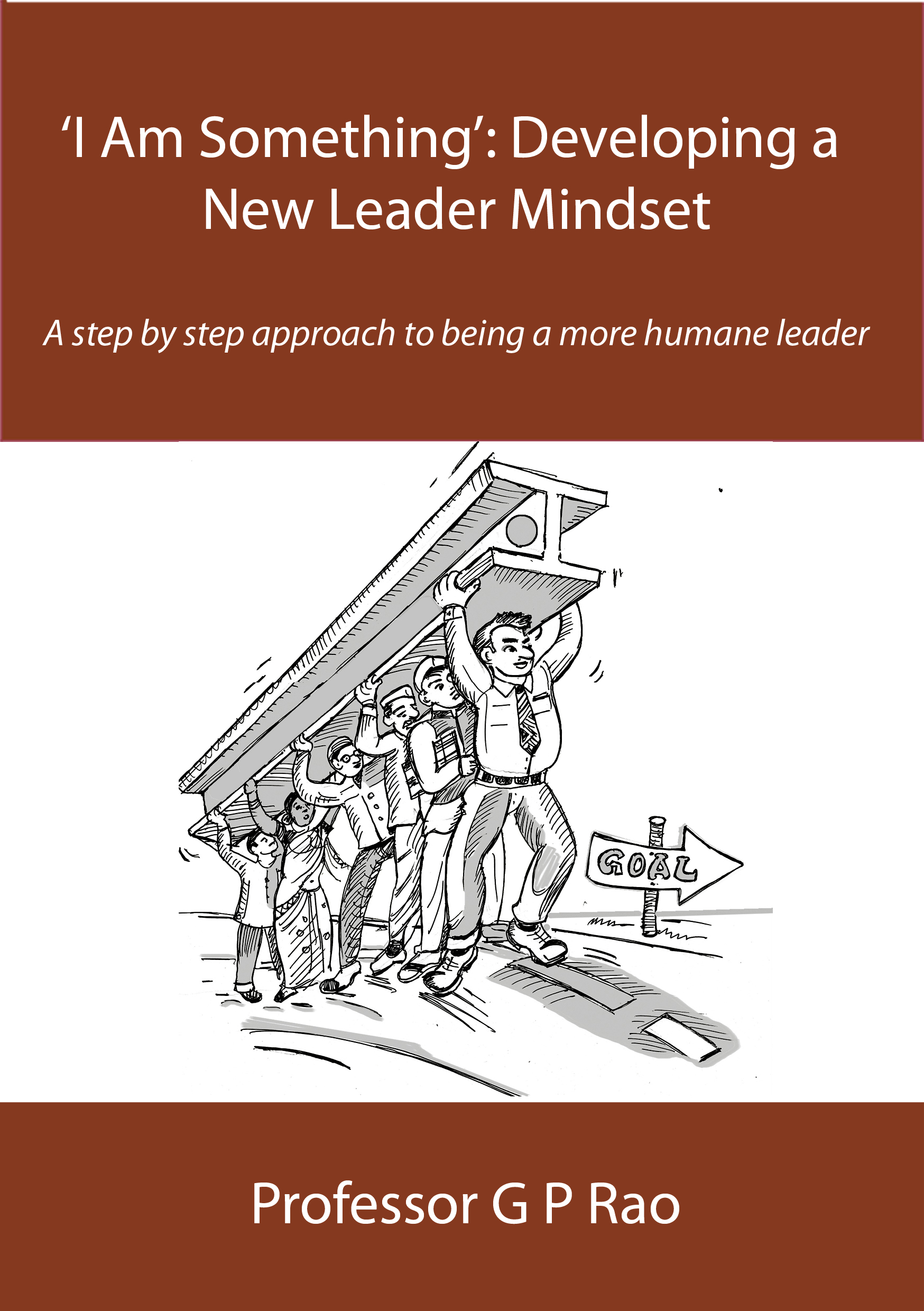
Tere liye…

Movie: Veer Zaara (2004)

Singers: Suresh Wadkar, Lata Mangeshkar

Composers: Madan Mohan, Sanjiv Kohli

Lyricist: Javed Akhtar

A lovely romantic song which captures the growing affection between two lovers separated by the high walls of material wealth and other societal concerns.

Piyu bole…

Movie: Parineeta (2004)

Singers: Sonu Nigam, Shreya Ghoshal

Composer: Shantanu Moitra

Lyricist: Swanand Kirkire

Indian scriptures tell us that the unbound souls in the universe decide the kind of next life they need in view of their past karma and choose their parents accordingly. Children descend from the heavens above and bestow profound hope and joy upon their family seniors. They deserve all the love and respect they can get.      

Taare zameen par…

Movie: Taare Zameen Par (2007)

Singers: Shankar Mahadevan, Bugs Bhargava, Vivinenne Pocha

Composers: Shankar-Ehsaan-Loy

Lyricist: Prasoon Joshi

All of us have role models in our lives. These are persons who are better gifted than us in so many ways. We go to great lengths to remain in their orbits. This song vividly captures the search of three class fellows for their long-lost role model.   

Kahaan gaya usey dhoondo…

Movie: 3 Idiots (2009)

Singer: Shaan

Composer: Shantanu Moitra

Lyricist: Swanand Kirkire

Our homes and hearths are not mere blocks of bricks and mortar. Small moments of shared happiness, an abiding love and harmony between those who populate a dwelling, and tantalizing dreams, bring in the real warmth. And that is how a house becomes a home.   

Itti si khushi…

Movie: Barfi! (2012)

Singers: Shreya Ghoshal, Nikhil Paul George

Composer: Pritam

Lyricist: Swanand Kirkire

Yet another love song which captivates our hearts.

Chaar kadam…

Movie: PK 2014

Singers: Shaan, Shreya Ghoshal

Composer: Shantanu Moitra

Lyricist: Swanand Kirkire

Bollywood has offered us a few songs where the virtues of a mother are showcased by a loving son. Here is a rare one where it is the daughter who is expressing her love and admiration for the mother.

Meri pyari ammi…

Movie: Secret Superstar (2017)

Singer: Meghna Mishra

Composer: Amit Trivedi

Lyricist: Kausar Munir

I am rather hesitant to take this subjective list any further for two reasons.

One, by no stretch of imagination can this list be considered an exhaustive one. There are so many good songs which are available to us. However, out of respect for your time and attention, I cannot simply go on adding many other songs. That would go on to make the listing a wee bit unwieldy. I confess that selecting the songs listed above has not been an easy task for me.

Two, even though there are many which are of recent origin and happen to be popular as of now, we need to allow them more time to mature and acquire an alluring flavour in our emotional casks. I think the shelf-life of these can only be assessed after the lapse of a few years. I allude to such songs as Yaadon ki almaari…(Helicopter Eela; 2018), Teri mitti…(Kesari; 2019), Kitthe chaliye…(Shershaah; 2021) and Meri jaan…(Gangubhai Kathiawadi; 2022).

The Evolution of Bollywood Music

Over the decades, our songs have evolved in more ways than one.

One kind of transformation which has taken place is in the character of the lyrics. In the past, elements of nature used to play an important role, especially when it came to effectively capturing the emotions being depicted on the screen. Think of Aaja sanam madhur chandni mein hum (Chori Chori; 1956) and O sajana, barkha bahaar aayi (Parakh; 1960). This is no longer true. Now, once in a while, we get treated to a song like Suraj hua maddham (Kabhi Khushi Kabhi Gham; 2001).

Also, gradually, the orchestra and the sound have elbowed out the lyrics somewhat. Songs which appealed to the audience not only for their deep layered meaning but also for their soulful music have become part of a rare breed. Philosophical truths of life have got relegated to the background. Thus, we have become used to getting entertained by offerings which accord a higher priority to our ears than to our minds. 

Moreover, with the new-found zeal for quick cuts, adroit camera work and the razzle-dazzle of a heightened visual appeal, we have virtually stopped hearing songs and have willy-nilly become reconciled to seeing them. Cinematography rules. Locations keep changing in quick succession. Even before we have had the chance to savour one, the next one pops up. The camera has become obtrusive. Even if a patriotic song like Teri mitti…comes up, we are exposed to a visual world which is in the fast forward mode. Since our eyes are constantly being bombarded with visual information, the hapless ear often has no other option but to take the back seat.  

Whatever may be the direction of evolution of songs, music remains a nourishment for the soul. The genre does not really matter. Our choices and preferences may differ widely. But what matters is the way it touches our hearts and resonates with our inner being.

Music makes us experience a glowing harmony between our inner and outer selves. It helps us to dig beneath the veneer of several masks that we wear in our mundane life. It also acts as a catalyst in our quest for our true inner selves, thereby raising our level of consciousness. Indeed, like all other forms of fine art, it washes off the dirt of our mundane lives and nurtures our souls.

Related Posts:

Music forms an integral part of movies. If the background score keeps capturing human emotions of different hues in each of the scenes, songs heighten the sentiments in diverse situations faced by those on the screen. Lyricists play a crucial role by not only depicting the feelings of the characters involved, but also conveying deep philosophical truths of life at times.  

Some songs elevate our spirits and motivate us to get up after each tumble and restart chasing our dreams. Others bring us happiness, even if some of these might be intrinsically sad.

Some of you may remember a song which Talat Mehmood had rendered in his velvet-like soothing voice long time back:

Hein sabse madhur woh geet jinhen hum dard ke swar mein gaate hain…

Roughly translated, this says that the songs which are the sweetest are the ones which are set to the melody of sorrow! You may agree that Shailendra was not much off the mark when he wrote this for the 1953 movie Patita. https://www.youtube.com/watch?v=XagIs_0zgaY

Each song is a multi-layered offering. If the lyricist pens something heartful, the composer sets it to music which tugs at our heart strings. The characters finally breathe life into it, either by lip-syncing it or by going through the motions while the song itself plays in the background.

Here is a collection of some of the songs which are close to my heart. Songs appear here in a chronological order, ranging from the year 1939 and coming forward up to 2017.   

Whenever the chips are down and dark clouds cover your inner space, here is a song which can motivate you to move ahead in life with a steely resolve and a chin-up attitude.   

Karun kya aas niras bhayi…

Movie: Dushman,1939

Singer: K L Saigal,

Composer: Pankaj Mullick

Lyricist : Aarzoo Lucknowi

When a lover’s heart is pining away for the beloved, this song comes in handy.  

Suhaani raat dhal chuki…

Movie: Dulari (1949)

Singer: Mohammed Rafi

Composer: Naushad

Lyricist: Shakeel Badayuni

Here is a light-hearted and delightful experience in the art and craft of serenading, eventually prompting a reluctant heroine to overcome her hesitation and rush to meet the hero. Yet again, nature plays an important role in the proceedings.

Ye raat ye chandni phir kahaan…

Movie: Jaal (1952)

Singer: Hemant Kumar

Composer: S D Burman

Lyricist: Sahir Ludhianvi

This one is a romantic song which has soulful lyrics set to lilting music. The part that I find very touching is where the heroine imagines doing her make up while the hero quietly sits opposite her! Unfortunately, a YouTube search did not throw up the original movie footage.

Aa neele gagan tale pyar hum karein…

Movie: Badshah (1954)

Singers: Lata Mangeshkar, Hemant Kumar

Composer: Shankar Jaikishan

Lyricist: Hasrat Jaipuri

V. Shantaram had a penchant for offering us movies with a distinctive touch of classical music replete with songs which used different elements of nature to enhance a contemplative communion with it. Here, we find someone of the stature of Gopi Krishna showcasing his enchanting dancing skills opposite Sandhya. This movie had used santoor for the first time, played by the inimitable Pt. Shivkumar Sharma.   

Nain so nain nahi milao…

Movie: Jhanak Jhanak Payal Baje (1955)

Singers: Lata Mangeshkar, Hemant Kumar

Composer: Vasant Desai

Lyricist: Hasrat Jaipuri

Here is a flirtatious song from an otherwise serious movie. The back-and-forth chat between the heroine and the hero is a sheer delight.   

Hum aapki ankhon mein…

Movie: Pyasa (1957)

Singers: Mohammed Rafi, Geeta Dutt

Composer: S D Burman

Lyricist: Sahir Ludianvi

Amongst the many songs steeped in chivalry that Bollywood has brought to us over the years, this one takes the cake. 

Pyar par bas to nahin…

Movie: Sone ki Chidiya (1958)

Singers: Talat Mehmood, Asha Bhosle

Composer: O P Nayyar

Lyricist: Sahir Ludhianvi

What really defines true living? According to this song, there are three elements: having someone whose smiles you can fall for, borrowing and shouldering someone else’s pain, and having love for someone in your heart!

Kisi ki muskarahaton pe ho nisaar…

Movie: Anari (1959)

Singer: Mukesh

Composers: Shankar Jaikishan

Lyricist: Shailendra

How do we enthuse a soulmate to share his/her suffering with you? Here is a poignant appeal from a beloved, set to unobtrusive music by Jaidev.

Jahaan mein aisa kaun hai…

Movie: Hum Dono (1961)

Singer: Asha Bhosle

Composer: Jaidev

Lyricist: Sahir Ludhianvi

When a passionate wooer praises the one being wooed rather profusely, how does the latter respond? Towards the end of the song, the heroine starts wondering if the excessive praise being showered upon her could lead her to entertain feelings of unjustified pride. Here is a lesson in humility and equanimity.

Bahut shukriya badi meharbani…

Movie: Ek Musaafir Ek Haseena (1962)

Singers: Asha Bhosle, Mohammed Rafi

Composer: O P Nayyar

Lyricist: Raja Mehdi Ali Khaan

Here, Sahir Ludianvi tells us that issues which cannot be resolved in life are best concluded with a loving twist!

Chalo ek baar phir se…

Movie: Gumraah (1963)

Singer: Mahendra Kapoor

Composer: Ravi

Lyricist: Sahir Ludhianvi

Each song sung by Manna Dey is unique. Interestingly, this one is open to two interpretations. At the mundane level, the lady is wondering how she can return to her home and hearth when a part of her attire is soiled. At a spiritual level, it expresses the yearning of a soul to be reunited with God. 

Laaga chunari mein daag…

Movie: Dil Hi To Hai (1963)

Singer: Manna Dey

Composers: Roshan and Omi Sonik

Lyricist: Sahir Ludhianvi

The pathos of a failed love which does not get reciprocated by the party of the other part, so very aptly rendered by Rafi here, leaves one speechless. Simple lyrics and soothing music make it the perfect song for those facing a similar situation in life. 

Mein ye soch kar…

Movie: Haqeeqat (1964)

Singer: Mohammed Rafi

Composer: Madan Mohan

Lyricist: Kaifi Azmi

Here is another song which tugs at one’s heartstrings by capturing the frustration of loneliness arising out of a misunderstanding in a relationship. 

Din dhal jaaye…

Movie: Guide (1965)

Singer: Mohammed Rafi

Composer: S D Burman

Lyricist: Shailendra

When lovers express their gratitude for the other person’s presence in their lives, unalloyed joy swirls around in their midst. Also, a dash of the Karma theory propounded by Bhagavad Gita raises the philosophical quotient of this song rather high.     

Somewhere in my youth or childhood, I must have done something good…

Movie: The Sound of Music (1965)

Singers: Julie Andrews and Christopher Plummer

Composer: Richard Rodgers

Lyricist: Oscar Hammerstein II

Those who hail from the tribe of the delicately nurtured and believe in female empowerment these days might scoff at this song. However, the fact remains that love based on a deep-rooted loyalty towards each other is truly a sentiment to be cherished.  

Chhupaa lo yuun dil mein pyaar mera…

Movie: Mamta (1966)

Singers: Hemant Kumar, Lata Mangeshkar

Composer: Roshan

Lyricist: Majrooh Sultanpuri

Many movies have captured the ambience of matrimonial bliss, with the couple exchanging meaningful and loving glances with each other. These are surely couples who have no use for the much-touted phrase ‘I love you’. Their body language says it all. Here is a song which never fails to touch my emotional chords.

Dheere dheere machal ae dil…

Movie: Anupama (1966)

Singer: Lata Mangeshkar

Composer: Hemant Kumar

Lyricist: Kaifi Azmi

Here is an uplifting offering which also fits rather well with the sustainability issues we just appear to be waking up to in our chaotic times when Mother Nature often sounds as if she is trying to punish homo sapiens for destroying its beauty and plundering its limited resources.  Human greed has taken over prudence, thereby increasing the entropy in the natural system.   

Ye kaun chitrakaar hai…

Movie: Boond Jo Ban Gayi Moti (1967)

Singer: Mukesh

Composer: Satish Bhatia

Lyricist: Bharat Vyas

By now, most of us are aware of the ills of social media, where people often talk without listening, dumping what they wish to say and completely ignoring what others are wanting to say. In movies, we keep running into those who talk without speaking. Their eyes, facial expressions and body language say it all. This song touched upon this aspect of our lives many decades back!

The sound of silence…

Movie: The Graduate (1967)

Singers/Composers: Paul Simon, Art Garfunkel

Lyricist: Paul Simon

When lyrics get penned in chaste Hindi by someone of the stature of Neeraj, set to music by the inimitable S D Burman, rendered by a multi-talented Kishore Kumar and the song features the evergreen Dev Anand, something unique happens. Add the picturesque locales of Switzerland, and magic follows!   

Phoolon ke rang se…

Movie: Prem Pujari (1970)

Singer: Kishore Kumar

Composer: S D Burman

Lyricist: Neeraj

Here is another heart pining for the beloved; sung by Hemant Kumar in his eternally soothing voice.

Tum pukaar lo…

Movie: Khamoshi (1970)

Singer/Composer: Hemant Kumar

Lyricist: Gulzar

Over the years, Bollywood has offered us many songs centred around the heroine’s eyes. Here is just one such which strengthens one’s desire to live a full life.

Jeevan se bhari teri aankhen…

Movie: Safar (1970)

Singer: Kishore Kumar

Composers: Kalyanji, Anandji

Lyricist: Indeevar (Shyamalal Babu Rai)

When one is in love, one accepts the person of the other part with all his/her strengths and weaknesses.

Koi jab tumhara hriday tod de…

Movie: Purab aur Paschim (1970)

Singer: Mukesh

Composer: Kalyanji, Anandji

Lyricist: Indeevar (Shyamlal Babu Rai)

One of the enchanting melodies from the inimitable Geeta Dutt, capturing the tender emotions of love between a couple.

Meri jaan, mujhe jaan na kaho…

Movie: Anubhav (1971)

Singer: Geeta Dutt

Composer: Kanu Roy

Lyricist: Gulzar

Life often makes us suffer the harsh slings and arrow of Fate, separating us from those whom we love. However, our Guardian Angels offer us life-long relationships with perfect strangers. Mukesh makes us brood over this facet of our lives.

Kaheen door jab din dhal jaaye…

Movie: Anand (1971)

Singer: Mukesh

Composer: Salil Chowdhury

Lyricist: Yogesh

When those who hurt us are the ones we consider our own, the hurt is indeed very deep.

Chingaari koi bhadke…

Movie: Amar Prem (1972)

Singer: Kishore Kumar

Composer: R. D. Burman

Lyricist: Anand Bakshi

Death of a spouse brings about a sense of despondency which refuses to wither away even after a long time.  

Beeti na bitayee raina…

Movie: Parichay (1972)

Singers: Lata Mangeshkar, Bhupinder Singh

Composer: R. D. Burman

Lyricist: Gulzar

When relations between husband and wife turn sour, a tragedy proves to be a blessing in disguise, bringing them together, yet again. 

Tere mere milan ki ye raina…

Movie: Abhimaan (1973)

Singers: Lata Mangeshkar, Kishore Kumar

Composer: S D Burman

Lyricist: Majrooh Sultanpuri

What happens when there is uncertainty and confusion in our relationships in life? Here is a soulful song which speaks of our yearning to seek a clarity in our thoughts by controlling the endless desires of our heart.

Kayi baar yoon bhi dekha hai…

Music: Rajnigandha (1974)

Singer: Mukesh

Composer: Salil Chowdhury

Lyrics: Yogesh

(Continued…)

Related Posts: