Feeds:
Posts
Comments

ashokbhatia's avatarashokbhatia

World over, one activity which keeps ordinary citizens delightfully preoccupied is that of exercising their right toelection voting choose the government they deserve. Travel to any continent, and one is apt to find a set of either countries or states which have either held an election, or are gearing up for the same.

Indians had their share of the fun in 2014 itself. Citizens of Zambia and Italy enjoyed casting a vote earlier this year. So did the denizens of Israel, UK, Poland, Mexico, Turkey and Singapore. Those who live in Portugal have just cast their votes. The ones who inhabit Egypt, Switzerland and Canada are just relishing the build-up of election rhetoric in their respective countries. Citizens of Myanmar, Spain and US are surely looking forward to the experience.

The Amusement Quotient

The process of holding aloft some core democratic values is not bereft of its entertainment value. Hapless citizens…

View original post 1,278 more words

Netizens who happen to be on Facebook come in different sizes, shapes, hues and ethnicities. Their value systems, personalities, mentalities and quirkiness quotients form a captivating rainbow of humanity. The psychology of the individual varies for all. So do their posts.

Even though the Posters and the Postees on Facebook are merely prisoners of their own individual psychologies, one can discern broad patterns in their behaviour. Some are compulsive Posters who consider a day wasted if they are not able to pass by their Facebook account. Others are casual by temperament and saunter in occasionally, sharing something on their timeline and then getting busy with the mundane affairs of their lives. Many others, who form but a minority, create an account and then blissfully forget all about it.

(The term Poster here refers to those who post on Facebook. The term Postee alludes to the hapless souls who have no choice but to go through it in their daily feed.)

If Rupert Psmith (of P G Wodehouse fame) were to endeavour to classify different kinds of Posters normally found on this social media platform, the results may be somewhat along the following lines.

  1. The Conscientious Poster

The Poster posts something of genuine interest to many, gets beefed up by the number of ‘likes’ and comments received, and a healthy discussion ensues.

If the Postees happen to be chasing their own dreams in life and no ‘likes’ and comments ensue, the Poster is likely to get into a V-shaped depression which takes some time to wear off.

Such bouts of depression are not dissimilar to the kind of traumatic phases Lord Emsworth passes through when the Empress of Blandings starts refusing her daily dose of nourishment.

The popularity and longevity of a post depends on many factors: (a) Contemporary relevance of the topic, (2) The time at the disposal of the Postees, (3) The degree to which the topic is controversial, and (4) Whether the Poster keeps responding to the steady stream of comments pouring in.

  1. The Ghost Poster

The Postee gets a notification from someone like Stiffy Byng on her friends’ list providing a link to something which interests the Postee. However, upon visiting the link, the Postee finds the item alluded to missing, much like a fakir of yore doing his vanishing trick.

Perhaps the administrators, in their infinite wisdom, decided to dump the link, deeming it to be inappropriate for civilization at large.

  1. The Detached Poster

Such Posters follow the advice dished out by Lord Krishna in Bhagavad Gita. They merely exercise their right to post things which, in their opinion, could interest the hoi polloi. They do not crave for any results from such posts. Having posted, they move on to perform other duties in their lives, only to return with yet another post. ‘Likes’ and comments on their posts are none of their concerns. They post in the true spirit of a detached soul. They happen to be true practitioners of renunciation.

  1. The Share-a-Crap Poster

Some people are in the habit of unleashing every single thing they find in their notification upon all the unsuspecting persons on their friends’ list, leaving many of the Postees twiddling their thumbs trying to figure out the rationale of such posts. Many of them, particularly those who believe in the power of introspection, start wondering as to what they have done to deserve the honour of receiving such inane posts.

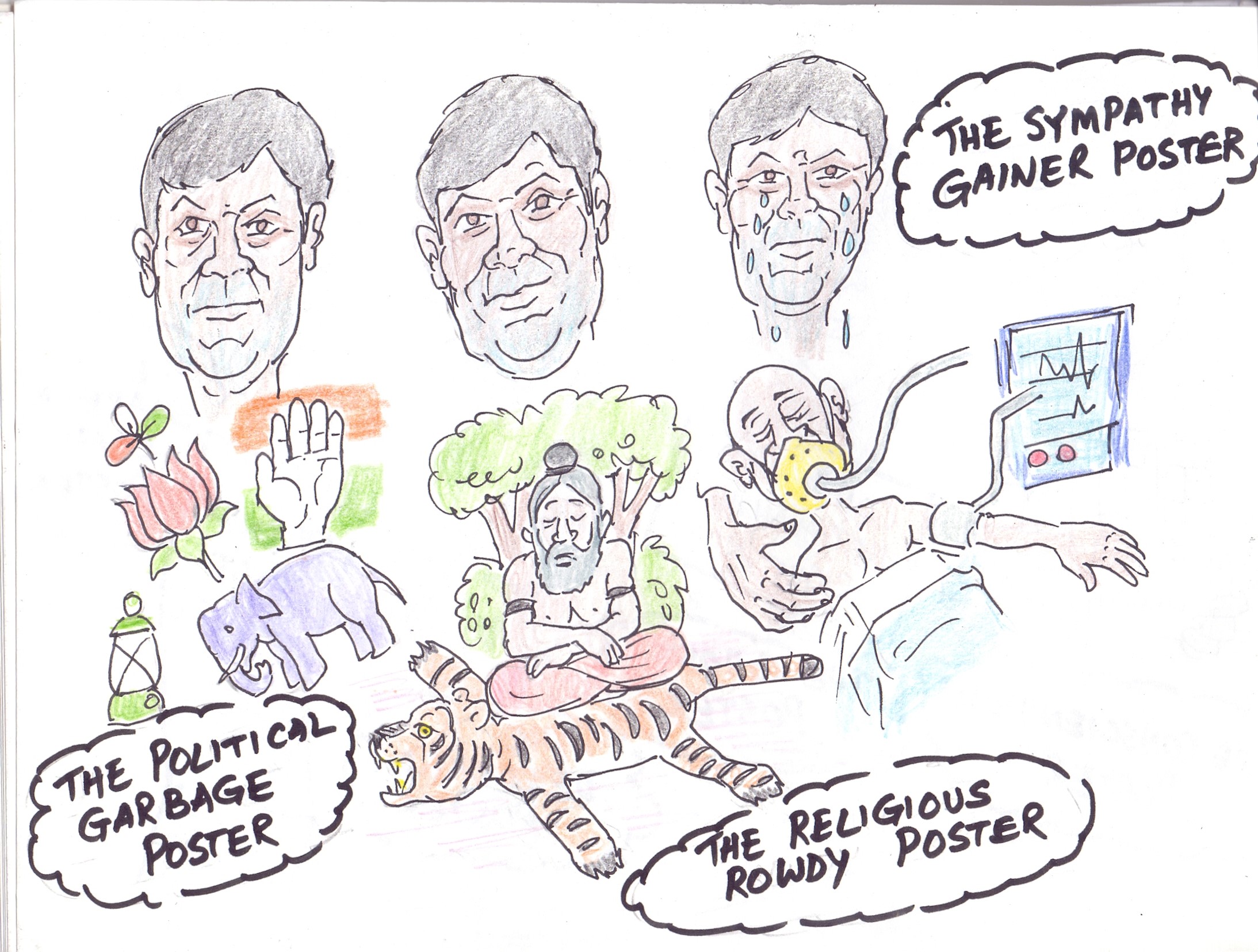
  1. The Political Garbage Poster

Nowadays there are many arm-chair political analysts who keep posting their political opinions disguised as deep analyses about everything happening on either the national or the international stage. They keep unleashing unwarranted garbage of all kind on the clueless Postees, while themselves living in a delusional bubble of superior knowledge and analytical stills on matters in which they have no real responsibility of their own. It is a superb exercise in flattering the fledgling ego of the Poster.

Come election time and such posts further heighten the decibel level of the kind of rhetoric and jingoism which is sometimes made to look like hyper nationalism. Roderick Spode would heartily approve.

The presence or absence of ‘Likes’ and comments on their posts fail to dampen their enthusiasm; they keep posting relentlessly on matters of national and international geopolitics.

  1. The Religious Rowdy Poster

The Posters of such posts forward photos of some benevolently smiling God over Himalayas or a boon-granting Goddess with the backdrop of a jungle, both clearly a result of some clever photo-shopping. The hapless Postees are then threatened with dire consequences if they fail to share forward the post within 3 seconds of having set their eyes on it.

The fate of Postees who do follow such instructions is not known; what is certain, however, is that such chain-posts do keep the Facebook guys and the internet service providers laughing all the way to their respective banks.

When the same Poster keeps posting about the same God most of the times, he willy-nilly ends up offending the Gods left out, who take a jaundiced view of the proceedings. The risk of inviting their collective wrath keeps going up with each offending post.

  1. The Sympathy-gainer Posters

These are Posters who follow the rules of commerce laid down by Ukridge. They have perfected the art of playing with the Postees’ heart-strings. Emotional blackmail of this kind could take the shape of either a blood-smeared kid or an IV lined ICU patient whose photo is posted, claiming that Facebook gives them One rupee for every ‘Like’, Five Rupees for every Share and 10 Rupees for a comment. Some posts even try and touch the wallets of the gullible Postees.

One can be certain that poor Mark Zuckerberg has enough troubles on his plate other than facing the prospect of going bankrupt thus.
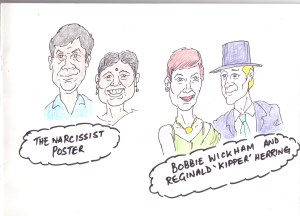
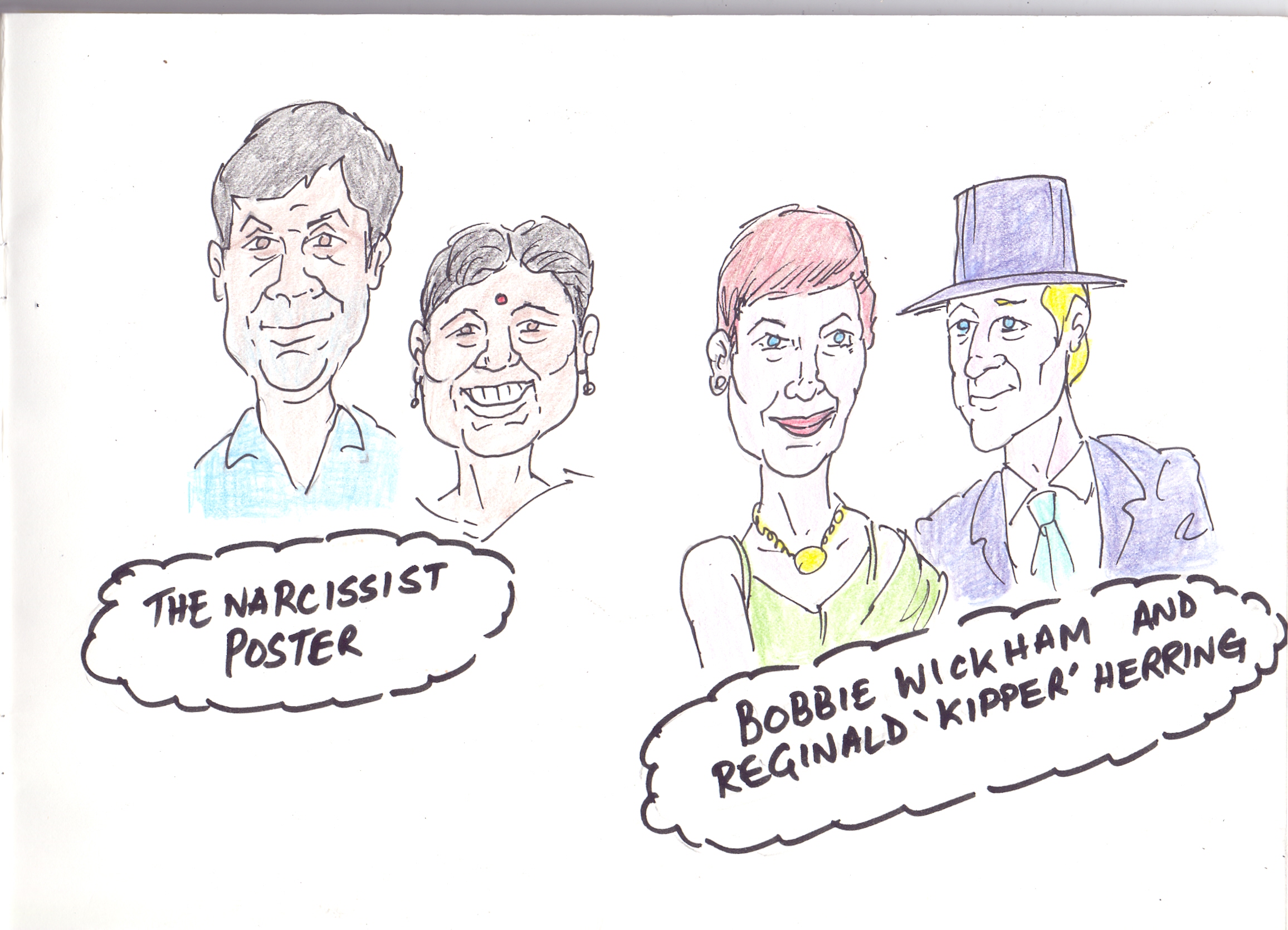
  1. The Narcissist Poster

In the universe of this brand of Posters, God is always in heaven. There is never a problem in sight. The sun never sets. Rain never plays a spoil sport.

Hourly updates concerning themselves, their families and friends, their pets, their escapades in life and anything that happens to them under the sun keep popping up at such regularity as to put even atomic clocks to shame.

It is common to find an apparently loving wife posting an anniversary greeting to her equally apparently loving husband; fathers greeting their sons on their birthdays, even when both are living under the same roof, and doting daughters wishing their mother on her birthday, etc.

The underlying belief obviously is that love for their near and dear ones needs to be expressed publically and not in private; that public approval of a private sentiment is necessary.

Imagine Bobby Wickham having access to Facebook. In order to get her mother to approve of her intentions of walking down the aisle with Reginald “Kipper” Herring, all she has to do is to announce her feigned plan of marrying Bertie Wooster on her timeline, accompanied by a selfie of herself and her mentally negligible fiancée beaming happily together at an exotic locale.

Under this category, there exist several sub-categories of Posters.

a. The Foodie (Bakasura) Posters, who post photos of what and where they are eating at any point in time.

Fast food joints like McDonalds’ and CCD just love such Posters, though it is not clear why they don’t offer freebies to such promotional creatures. For all the Postees care, they could be swallowing some form of poison or the other.

After all, drooling over the snaps of a 32 course meal dished out by a local Anatole is injurious to the lining of the stomach of any of the Postees who might already be suffering under strict instructions from their physicians and better halves to lay off the succulent variety of vitamins.

b. The Travelling Posters, who keep posting photos of their national or international sojourns, thereby keeping not only airlines, hotels and other service providers but even robbers back home in brisk business.

The destination as well as the mode of travel is often highlighted so as to make the Postees green with envy.

Often, the Posters forget that one is permitted to catch a flight or a train without having to compulsorily post it on Facebook. Sure enough, they believe in the sage counsel from Jeeves – that travel is highly educational.

c. The Emotional Posters: They could be feeling sad or elated at some event and would post a soulful quote of a famous poet or lyricist. They simply forget that when they cry, the Postees are not interested in sharing their bad fortune. Yes, some might make sympathetic noises. Also, when they laugh, quite a few may join in, but are not enthused enough to get out on the street and shake a leg or two.

  1. The Thoughtless Posters

It is a sad commentary on the kind of times we live in when we find that even terrorists decide to become tech-savvy Posters.

Gullible Postees who act like headless chickens, lose no time in becoming Posters themselves, thereby giving instant publicity and wide coverage to such heinous acts.

The case for a Social Media Detox

Some posts are amusing and anecdotal in nature. Some are entertaining. Few are educational. Quite a few are inane and eminently forgettable. But a vast majority of the posts basically share information about happier occurrences in the lives of a Poster with the Postees in their circle of friends and acquaintances.

Those who have become addicted to social media are more to be pitied than to be censured. Rather than using a platform like Facebook as a useful tool in life, they have opted to become its slaves.

Perhaps, there is a strong case for more of such hapless souls to join SPIN, the Society for Prevention of Internet Narcissism! Or, taking up an internet de-addiction course offered by the Droitgate Spa!!

(Note: Sriram Paravastu is an ex-Indian Air Force professional. When he decides to take a dig at some of our social ills, he uses the laser beam of a soldier-like discipline and precision to carpet bomb the issue at hand.

This blog post is penned by him. Yours truly is guilty of having taken quite a few liberties with his original text.

Illustrations are courtesy Suvarna Sanyal, a retired banker who has an eye and an ear for all there is to see, listen to and laugh at in this world.)

(Related Posts:

https://ashokbhatia.wordpress.com/2014/08/04/mirror-mirror-on-the-wall-who-is-the-smartest-of-them-all

https://ashokbhatia.wordpress.com/2019/01/05/the-droitgate-spa-now-offers-net-detoxification-programs)


findshars's avatarMy Views On Bollywood

By

Sharada Iyer

Lyrics impart soul to the song and form an integral and important part of any song. Not only do the lyricists have to use their talent to express in words a variety of feelings and emotions but they also need to have the knack to fit the words into a 3-minute song format to suit the character and the demands of the scene as conceived by the director. Indeed it requires tremendous skill, a lot of imagination and mastery over the language to come up with winning results.

Our film industry has been blessed with some brilliant poets and lyricists in every era but not all of them attained the same level of popularity. Though we may recollect the names of some top lyricists like Shailendra, Hasrat Jaipuri, Sahir Ludhianvi, Anand Bakshi, Indeevar, Majrooh Sultanpuri, etc., not many of us can remember lyricists like Naqsh Lyallpuri, S…

View original post 1,952 more words


Here are some more gems of wisdom from the book:

  1. I am what I am.
  2. Samuel Johnson: There lurks, perhaps, in every human heart a desire of distinction, which inclines every man, first to hope, and then to believe, that Nature has given him something peculiar to himself.
  3. ‘I Am Something’ mindset believes that I am neither above you, nor below you. I am neither in front of you, nor behind you. I am neither away from you, nor near to you. I am along with you. I am however different and distinct. So are you.
  4. Mukesh Ambani, Indian industrialist: In the journey of an entrepreneur, the most important thing is self belief and the ability to convert that belief into reality.
  5. Maxwell Maltz: Low esteem is like driving through life with your hand brake on.
  6. The significance of being insignificant.
  7. Ravi Thilagan, Management Educator: ‘I Am Something’ is assertion. ‘I Am Everything’ is aggression and ‘I Am Nothing’ leads to submission. ‘I Am Something’ perhaps leads to courage and humility in right proportion?

(Yours truly has contributed some of the chapters in the book and has also edited it.)

(Related Post: https://ashokbhatia.wordpress.com/2019/03/11/some-quotable-quotes-which-appear-in-the-book-on-leader-mindsets)


The Guardian Angels who preside over the affairs of yours truly recently enabled a short trip to Netherlands. Other than a wonderful meeting with some fans of P G Wodehouse in Amsterdam, one could also visit Zaanse Schans and Rotterdam.

Of tilting at windmills

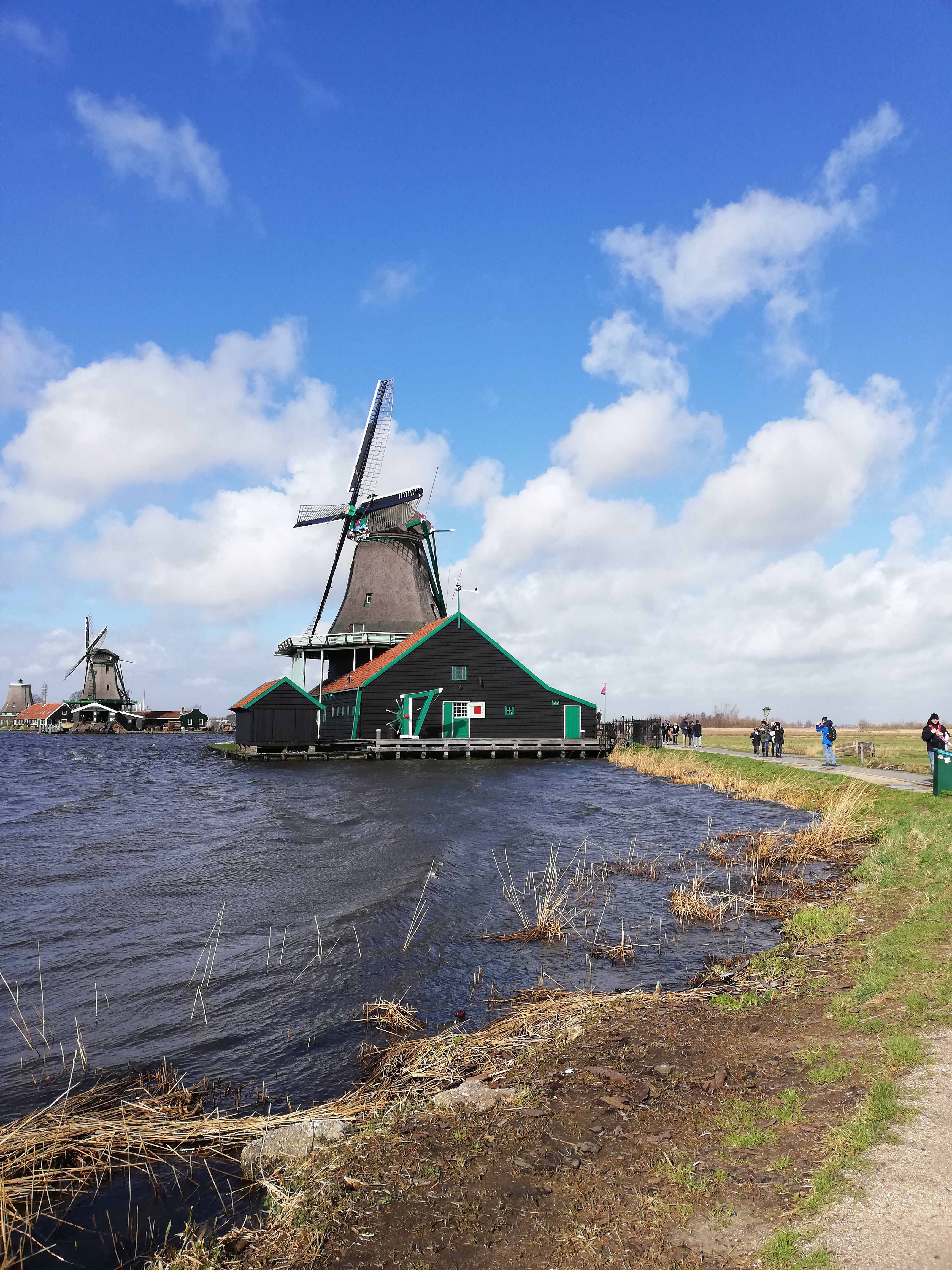
Zaanse Schans in Netherlands is best known for its collection of well-preserved historic windmills and houses. Built from 1576 AD onwards, these windmills have been used for multiple purposes. Claude Monet was so impressed that he came up with several paintings depicting these.

From 1961 to 1974 old buildings from all over the Zaanstreek were relocated to the area, so as to preserve this unique architectural heritage and to promote this as a unique open air museum of windmills, old houses and traditional crafts.

While crossing the windswept bridge over the river Zaan, one is captivated by the panoramic view of windmills. One could be excused to feel like a Don Quixote who is firming up plans to tilt at some of the magnificent wooden giants.

Much before the management concepts of Customer Orientation and Flexible Manufacturing Concepts came into vogue, the entrepreneurs owning the windmills had put these into practice. The mills were producing whatever the market demanded.

Tobacco leaves were chopped and pulverized in the past to produce snuff in as many as 83 windmills in the Zaan region. From 1675, around 20 smaller windmills were used to crush mustard.

Over time, in keeping with the demand pattern, windmills underwent a transformation. For example, one of the mills was originally a paint mill, but went on to be a mustard mill, tobacco grinder and board sawmill. Post 1911, it was converted into a timber factory with biscuit boxes being made for the Verkade brand. From 1961 onwards, the famous Mustard was produced here.

Of aniseed products and cow creamers

Some of the windmills have been making spices. Some of you may know that herbs and spices form an integral part of the Dutch cuisine. Spiced biscuits and sweets are commonly found. Mulled wine, aniseed milk and even some sandwich toppings containing aniseed have these. Traditionally, the birth ritual celebrating the arrival of a newborn baby involved the proud father stirring a cinnamon stick into the kandeel, a liqueur, providing strength and warding off evil spirits.

If Jeeves and Bertie Wooster had ever visited the area, the duo would have been delighted to have had an easy access to aniseed products. Luring back a dog McIntosh would then have been the work of a moment for them, enabling them to avoid a trip across the Atlantic so as to escape the fury of Aunt Agatha.

While in Rotterdam, yours truly was delighted to have had the opportunity of sneering at the cow creamers displayed in one of the stores. Being aware that these were indubitably of modern Dutch origin, one lost no time in registering scorn. The same was the treatment meted out to some distant cousins of the Empress of Blandings on the next shelf. However, all this sneering and scorning did not leave the sales girl on the counter amused.

But the aim of one’s life is never to keep sales girls amused. Rather, it is to outgrow the inane desires to possess material objects and thereby enjoy unalloyed bliss.

(Related Post: https://ashokbhatia.wordpress.com/2019/03/08/another-drones-club-meeting-in-amsterdam)


  1. Dr S Radhakrishnan, former President of India: Man is the cause of the problem, as also its solution.
  1. Sri Aurobindo, the great thinker: Mastery means the knowledge of handling certain vibrations; if you know how to handle these vibrations you have the mastery. 
  1. Jean-Paul Sartre: Everything has been figured, except how to live. 
  1. Confucius: It’s better to light a small candle than to curse the darkness in our lives.
  1. Ekanath Easwaran: M K Gandhi’s faith in the power of the individual formed the foundation for his extremely compassionate view of the industrial era’s large scale problems as well as of the smaller but no less urgent troubles we find in our lives. One person can make a difference. 
  1. Atal Bihari Vajpayee, former Prime Minister of India: What matters is this/That there must be expanse with height /So that a man /Is not fixed and dead as a stump /But blends in and belongs with others. 
  1. Dr Ananda Reddy, Director, Sri Aurobindo Centre for Advanced Research, Pondicherry, India: The mindset of ‘I Am Something’ presents a judicial combination of management and philosophy.
  1. Marcel Proust (French Novelist, 1871- 1922): Love is space and time measured by the heart.

(Yours truly has contributed some of the chapters in the book and has also edited it.)

(Related Posts:

https://ashokbhatia.wordpress.com/2019/02/04/a-brand-new-way-of-increasing-leadership-effectiveness

https://ashokbhatia.wordpress.com/2019/02/10/a-word-about-the-book-on-leadership

https://ashokbhatia.wordpress.com/2019/02/19/key-takeaways-from-the-book-on-leader-mindsets

https://ashokbhatia.wordpress.com/2019/02/26/of-leadership-and-its-myriad-lenses)


‘Is Mr. Little in trouble, sir?’

‘Well, you might call it that. He’s in love. For about the fifty-third time. I ask you, Jeeves, as man to man, did you ever see such a chap?’

‘Mr. Little is certainly warm-hearted, sir.’

‘Warm-hearted! I should think he has to wear asbestos vests.’ 

(The Inimitable Jeeves)


If one happens to be an ardent fan of P G Wodehouse pottering about Amsterdam, and gets an opportunity to meet up local members of the P G Wodehouse Society there, one would be wise to wear an asbestos vest before popping up at the gig. One does not necessarily allude to romantic possibilities here, but only to the kind of warmth, sweetness and courtesy which welcomes one at such events.

When yours truly, in the garb of Bingo Little, passed by Amsterdam recently, Psmith, the journalist and cricket historian, lost no time in organizing a small get together. Galahad, the charming President of the Society, took some time off from his linguistic and scholarly pursuits and decided to join in. Pop Glossop, yet another linguist and a communication expert, trooped in, duly braced for the loony festivities.

A lay person could be excused for believing that not much gets discussed at such gigs. Nothing could be farther from the truth. Besides the characters and narratives dished out by Plum, the events which led one to come under the spell of the Wodehouse canon get recounted. Different lenses with which his works can be viewed – social, economic, political, psychological, and the like – get discussed. The relevance of the same in our tension-ridden contemporary times is subjected to a pitiless analysis. The need for new books which try and imitate the Master comes up for a mention. Personal experiences which remind one of some Plummy instances get shared. The work being done by various Wodehouse societies the world over to spread Wodehousitis gets appreciated.

Bingo Little, fresh from his international travels over the past two years, had an intensive discussion with Galahad. Copious notes made by the latter may soon result in an article which could get unleashed on the unsuspecting members of the Society in the June 2019 edition of its journal, Nothing Serious. He also received a treasure trove of books – Dutch translations of some of the Master’s works and a compendium of the wit and wisdom of Wodehouse by Tony Ring – from Galahad and Psmith. Bingo obviously felt honoured and chuffed, especially because after the gig got over, Pop Glossop ensured that Bingo’s return to his temporary abode in the city was comfortable.

Earlier, during a leisurely stroll around the Amstel, Psmith was quick to point out to Bingo Little the various attractions of the city. One of these was a statue of Spinoza, ‘the Prince of Philosophers’, in front of the Amsterdam City Hall by the Zwanenburgwal. As we know, Spinoza is held in high esteem by none other than Jeeves himself.

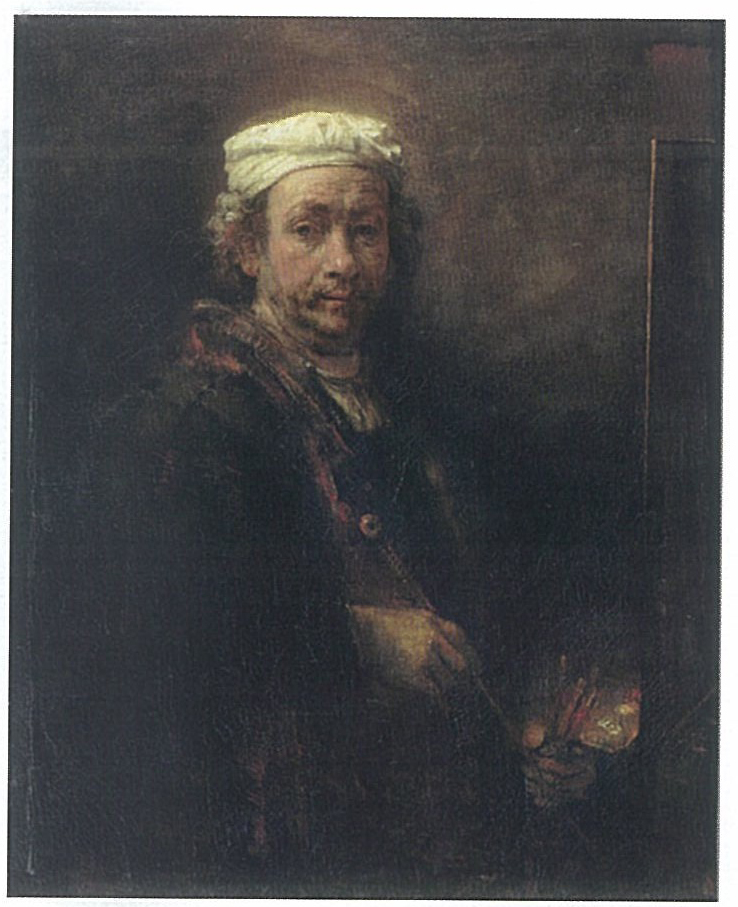
The duo also passed by the house where Rembrandt had lived for some time. It is common knowledge that there are many reasons for the centuries-old popularity of the renowned artist – the tremendous volume of his output, the range and the quality of his work, and the kind of unique life he lived. But beneath all this is the undercurrent of human psychology that his work represents. Look at any of his subjects, and you can somehow surmise the kind of slings and arrows that Fate might be bestowing upon them at the time of facing the artist’s easel.

Rembrandt

The narratives dished out by Plum are not different. The psychology of the individual reigns supreme. Whether one comes across mentally negligible bachelors, intelligent valets, goofy females, maiden aunts, helmet-pinching curates, eccentric bishops, or even senile aristocrats and their nagging sisters, it is their psychology which determines the flow of the goings on. Even those from the animal kingdom get presented to a reader with unique insights into their behavioural patterns.

It stands to reason that Netherlands, which produced creative geniuses of the stature of Spinoza, Rembrandt and Vincent van Gogh and many others, has one of the few societies which spread sweetness and light globally by keeping the Wodehouse canon alive and kicking.

It does not really matter that the backdrop of his oeuvre is the vanished world of Edwardian England. What matters is that his work continues to educate, engage and entertain all those who decide to take a saunter down the streets of Plumsville, soaking in its brilliant sunshine and savouring low-hanging fruits of pristine humour on the trees lined up on both their sides.

(This article was reproduced in the May 2019 issue of Nothing Serious, the newsletter of the P G Wodehouse Society of Netherlands.)

(Related Posts:

https://ashokbhatia.wordpress.com/2017/05/03/a-drones-club-meeting-in-amsterdam

https://ashokbhatia.wordpress.com/2018/03/13/p-g-wodehouse-fans-some-meetings-during -2017)

When Bollywood directors decide to etch out the character of either a mother or a soul mate in finer detail, lullabies come in handy.

It is widely believed that lullabies, when sung with minimal words and unaccompanied by any kind of music, have more of a soothing effect on a baby. However, given the penchant of the Indian audience to lap up lyrics only when dished out along with some lilting music, our directors make some compromises and come up with songs which not only boast of some soulful lyrics but are also accompanied by a wide range of musical instruments playing softly in the background.

The result is that many of these tend to soothe the frayed nerves of not only a baby but even some adults who appear to be passing through a challenging phase in their lives. In other words, the lullabies on our silver screens not only put babies to sleep but also get deployed as a clever device to provide succour to anguished souls in other age brackets.

Let us recapitulate some of the outstanding lullabies dished out by Bollywood over the past few decades.

For kids in all kinds of circumstances

A key feature of parenthood is the desire to protect one’s child from the harsh slings and arrows of Life. A lullaby could get sung in a protective environment. It could also get rendered when either a mother or a caretaker is seriously concerned about the future of the child.


Do Bigha Zamin

(1953, Music: Salil Chowdhury, Lyrics: Shailendra)


Vachan

(1955, Ravi, Prem Dhawan)


Do Ankhen Baarah Haath

(1957, Vasant Desai, Bharat Vyas)


Pardesi

(1957, Anil Biswas, Prem Dhawan or Ali Sardar Jafri)


Sujata

(1959, S D Burman, Majrooh Sultanpuri)


Mujhe Jeene Do

(1963, Jaidev, Sahir Ludhianvi)


Brahmchari

(1968, Shankar Jaikishan, Shailendra)


Koshish

(1972, Madan Mohan, Gulzar)


Mukti

(1977, R D Burman, Anand Bakshi)


Masoom

(1983, R D Burman, Gulzar)


Zubeidaa

(2001, A R Rahman, Javed Akhtar)


Swades

(2004, A R Rahman, Javed Akhtar)


Providing solace to adults

When a weary soul is on the lookout for some solace, help comes from a loving and devoted companion, who could either be a soul mate or an empathetic person who believes that it is his duty to comfort the other. The music is so soothing as to put the weary person to sleep, thereby helping him or her to cope with distress.

Zindagi

(1940, Pankaj Mullick, Kedar Nath Sharma)


Albela

(1952, C Ramchandra, Rajinder Krishan)


Shabaab

(1954, Naushad, Shakeel Badayuni)


Hum Dono

(1961, Jaidev, Sahir Ludhianvi)


Khandaan

(1965, Ravi, Rajendra Krishan)


Sadma

(1983, Iliyaraja, Gulzar)


The deep yearning to bear a child

Some of you might agree with me that a soothing song which poignantly captures the deep yearning of a woman to bear a child could also be labelled as a lullaby. Even though it expresses tender thoughts for a child who might still be on the horizon, the feelings portray the same love and affection as the ones articulated in a lullaby.

Filhaal

(2002, Anu Malik, Gulzar)


Most of these songs have a different context. But the underlying sentiment of empathy, compassion and love remains the same. The fertile imagination of a director, coupled with the creativity of a music director, ensures a wide spectrum of the genre of lullabies in Bollywood, ranging from yet-to-be-born children to those who are much past the phase of childhood.

Diminishing returns from lullabies?

This post is surely not an exhaustive one. But while compiling the songs, yours truly was struck by the relative absence of lullabies in the movies released in recent decades. For the 1950s, I could come up with 7 of the songs listed above, whereas for the 2010s I could barely trace 3 songs in  this genre!

Perhaps, our producers and directors no longer appear to believe that the presence of soothing lullabies in their offerings to the gullible audience makes the box office ring any louder. It is not that scripts centered on kids do not find favour with them. In fact, the converse could be true. Think of Tare Zameen Par, Nil Battey Sannata, The Blue Umbrella, I Am Kalam, Stanley Ka Dabba and many others which have been eagerly lapped up by the audience in the recent past. But the character of children has undergone a change. No longer are they to be pampered with lullabies. Instead, they are showcased as being smarter kids, somewhat grown up and awash with dazzling inputs from the digital world that surrounds them. They no longer appear to be vulnerable, needing the emotional support of a lullaby to get to sleep.

Perhaps this has to do with the setting of most scripts having become an urban one. With the rise of the nuclear family and the ready availability of technological gizmos, the space for lullabies appears to be shrinking. Choices for hapless parents who are caught in the vicious circle of materialistic pursuits of life have narrowed down. In children’s formative years, perhaps a soothing touch is getting gradually replaced with cold metallic screens streaming inane cartoons and animation movies which are replete with violent sequences. With each passing decade, the threshold of innocence appears to be getting lowered, thereby reducing the utility of a soulful lullaby to add to the box office collections.

But parents and soul mates need not lose heart. Bollywood’s repertoire of lullabies of the past is a rich one. Many of the songs alluded to above could still be of immense utility when it comes to putting their wards to a restful slumber.

Also, there is the hope that the future may somehow see a revival of this unique genre of Bollywood music. However, given the creative imagination of our script writers and lyricists, one would not be surprised to find a humanoid being shown to be crooning a lullaby wherein the moon has got replaced by inter-galactic travel, the stars have given way to the twinkling city lights and a cool breeze has got substituted by gentle air conditioning!

(Related Post: https://ashokbhatia.wordpress.com/2016/11/20/bringing-up-kids)


There are indeed times when one ends up ignoring the sage counsel of Stephen Fry, exhorting lesser mortals to merely bask in the sunlit brilliance of P G Wodehouse and not to analyse it. Here is an analysis which is bound to make some of us wear asbestos vests and start scouring around for several long forgotten narratives dished out by Plum.

Honoria Plum's avatarPlumtopia

This February, I asked readers to nominate their favourite romances from the world of P.G. Wodehouse and to cast their votes in numerous polls on Twitter and Facebook. It’s an admittedly frivolous exercise, but we Wodehouse fans need not be steeped to the gills with serious purpose all the time. If our comments and discussion over the past month have led anyone to pick up a Wodehouse book, we have done our little bit to help spread sweetness and light in the world.

And there’s a lot of sweetness and light to spread — over 80 couples nominated from 58 different novels and story collections published between 1909 (The Gem Collector) and 1974 (Aunts Aren’t Gentlemen). Fans applied a liberal interpretation of ‘romance’ to include favourite couples Dolly and Soapy Molloy, Dahlia and Tom Travers, Bertie and Jeeves, and even Lord Emsworth and The Empress of…

View original post 784 more words

The fascinating process we call Leadership can be viewed through several lenses. Each lens offers a unique perspective. Some are more comprehensive, others less so. But almost all reveal a facet which is distinctive in its own way.

Some of the lenses which management theorists and practitioners have used over the last 150 years to view the enigma called leadership are discussed in brief here.

The Trait Lens

The lens of the Trait Theories makes us notice the kind of personality traits of a leader which make him effective. Domain knowledge, self-confidence, interpersonal skills and charisma are some of the critical components here. However, these presume that the environment and the followers have no role to play when it comes to assessing the effectiveness of a leader. With such a uni-dimensional approach, where the personality traits of the leader alone count, it is neither practical nor desirable to compare this approach to that of the three mindsets under discussion here.

The Behavioural Lens

The lens of the Behavioural Theories of leadership leads us to such operating styles as dictatorial, autocratic, democratic, laissez-faire, and the like. In the spectrum of direct authority exercised, if the dictatorial style implies maximum control, the laissez-faire style would relate to minimum control, though not amounting to abdication.

The Contingency Lens

Yet another lens which we use to view the phenomenon of leadership is that of the Contingency Theories. These posit that the effectiveness of a leader is determined by the interplay of several factors – personality traits, behavioural patterns, nature of the task at hand, the composition of the group being led, and the kind of situation at hand.

An example is that of Fred Fiedler’s theory. It proposes that in extremely favourable or unfavourable situations, task-oriented leaders fare better, whereas in moderate situations, relationship-oriented leaders deliver better results. As a logical corollary, in a business situation which is changing rapidly, a new leader with a more appropriate operating style needs to be brought in.

The Situational Lens

The Hersey-Blanchard Situational Model is yet another lens with which one may view leadership. This one proposes that effective leadership rests on two fundamental concepts: Leadership Style and the group’s Performance Readiness level.

It follows that there is no single ‘best’ style of leadership. Effectiveness of a leader varies not only with the characteristics of the group being led; it also depends on the goal to be achieved.

The level of maturity of the followers determines the leadership style which would work the best. While dealing with new entrants to the organization, a leader would do well to follow a Directing Style. While dealing with seasoned professionals, a Delegation Style would yield better results. The other two styles envisaged are Coaching and Supporting.

The Transactional Lens

Then we have the lens of the Transactional Theories of viewing leadership. These are characterized by a transaction made between the leader and the followers. By implication, these place a higher premium on positive and mutually beneficial relationships between leaders and their respective followers. The effectiveness of leadership is thus believed to be dependent on the alignment between individual and organizational goals.

These theories propose that a system of reward and punishment alone works. A well-defined hierarchy, where everyone knows who the leader is and who is following, is a sine qua non. In a way, this is a premise which subjugates people, reducing them to mere cogs in the wheel, with no concern for social or human values. The adage ‘my way or the highway’ readily comes to one’s minds.

The Transformational Lens

The Transformational Theories provide yet another lens with which one may view leadership. Transformational leaders inspire their followers by their vision, by setting examples which are worthy of emulation, and by the sheer force of their own personality. In the process, they themselves develop as leaders. They are also able to groom leaders out of their more competent followers.

Four components of this model happen to be:

  1. Intellectual stimulation.
  2. Consideration for individual team members.
  3. Inspirational motivation.
  4. Idealized influence.

Transformational leadership theories work on the premise that people are motivated by the task that must be performed. This implies that the culture of the organization is such as to act as a key enabler for such leaders to be effective. There is an emphasis on cooperation, collective action and healthy competition. Tasks are designed to be challenging and desirous. The whole system is geared towards placing the community above individual egos.

The Lens of Three Mindsets

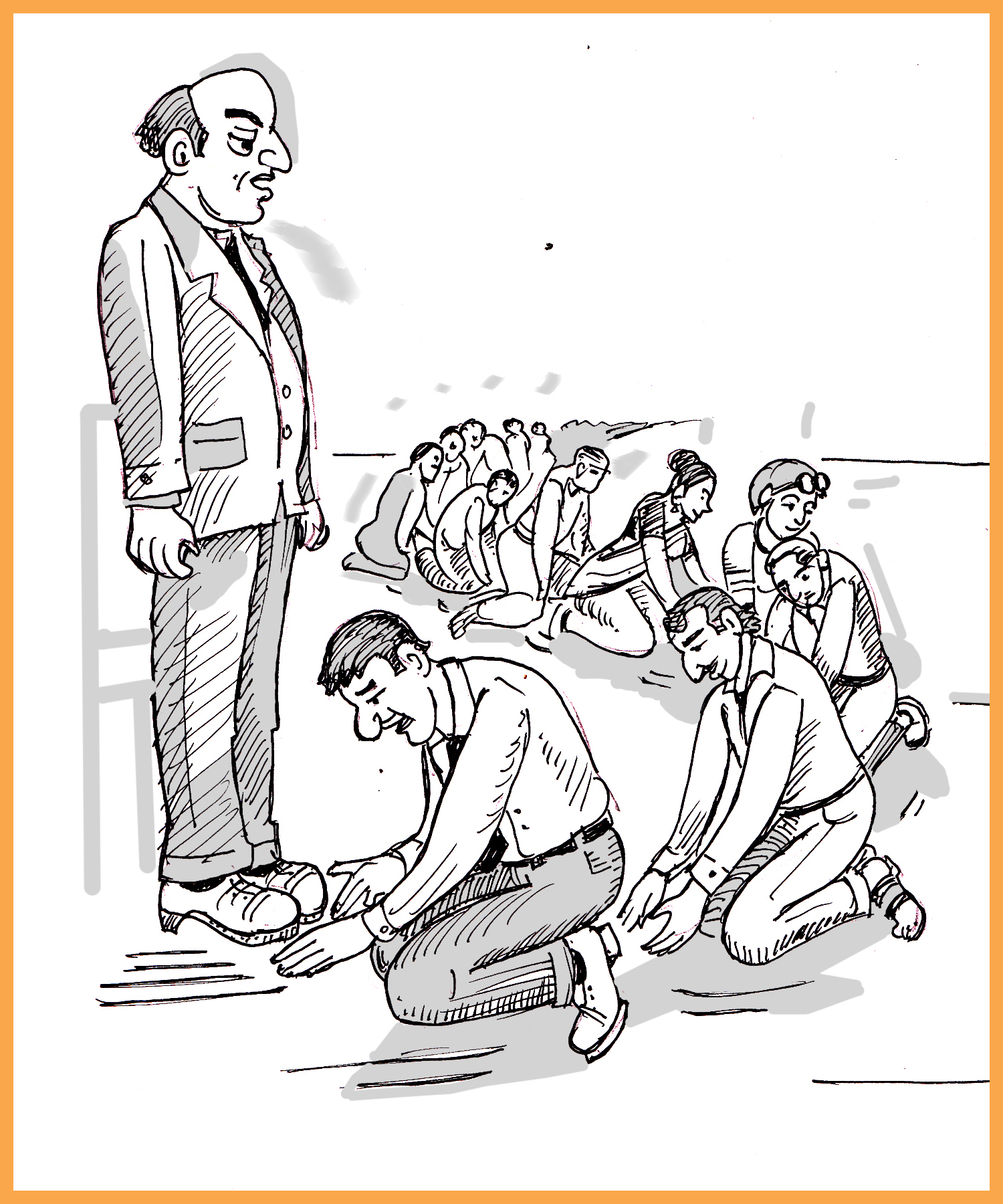
Yes-Men

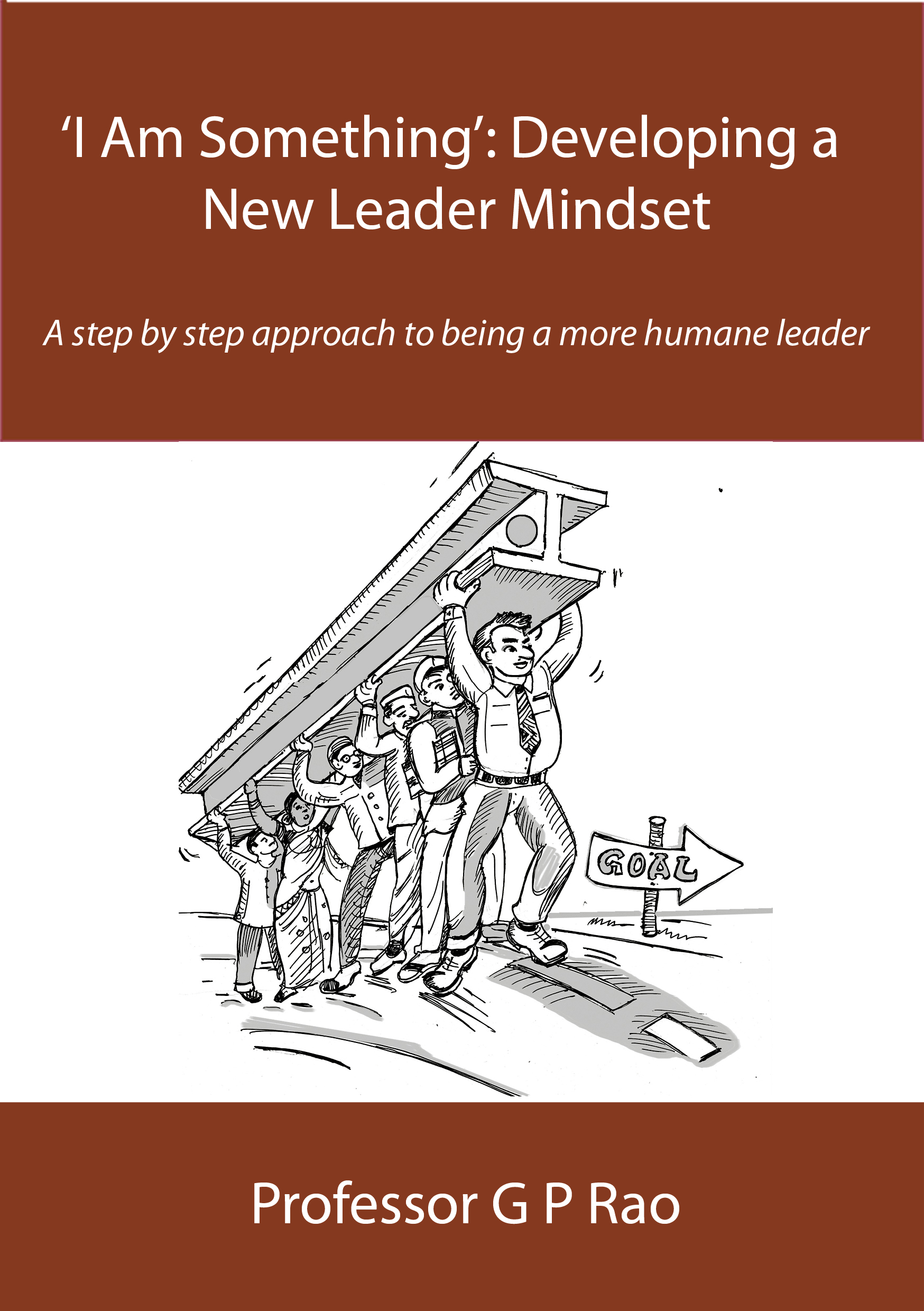
Prof G P Rao, an eminent authority in the field of Organizational Behaviour, has recently proposed a new approach to viewing leadership.

This approach proposes three kinds of leadership mindsets: “I Am Everything’, ‘I Am Nothing’ and ‘I Am Something’. These are not mutually exclusive but co-exist, much like the three traits (Gunas) mentioned in Indian scriptures: Satvik, Rajasik and Tamasik. Time and business environment play key roles in determining the dominant mode of mindset a business leader has at a given point in time.

In a highly favourable business climate, a leader is apt to have an ‘I Am Everything’ mindset. In an unfavourable setting, a leader may end up having an ‘I Am Nothing’ mindset. In a moderate situation, an ‘I Am Something’ mindset is likely to prevail.

The approach is based on an empirical study and has been implemented in an IT organization in India. It has been discussed in detail in the book on Leader Mindsets.

The Composite Lens of Results, People and Ethics

This proposition is based on my own managerial experience of over four decades in the private sector. The basic premise here is that decisions are based not only on commercial considerations but also on sound ethics and values. Decisions which would serve the strategic interests of the organization and would never lead it to a situation of public disgrace and compromise.

If one were to take the liberty of modifying the Blake Mouton Grid, the leadership style of such a CEO would qualify for either a 9,9,9 or a 5,5,5 classification.

The modified grid leads us to 9 different styles which we have already discussed elsewhere in detail.

An Evolutionary Thought Process

Human thoughts forever keep evolving. Newer experiences come about. Refined paradigms surface. But each succeeding step is like a stepping stone. It is built upon the success achieved by, as well as upon the deficiencies noticed in, the previous ones. The different lenses of viewing leadership we have discussed here are no exception.

What we have attempted here is merely indicative and not exhaustive. Many more interpretations of leadership exist. Many more models and theories would emerge in the times to come. As businesses hurtle forward, armed with newer and smarter technologies, the need for humane leaders would only become more acute.

This would surely lead to newer lenses which would be more comprehensive and elaborate, and would better serve the needs of commercial enterprises better in future.

(A version of this article appears as one of the chapters of the book ‘I Am Something: Developing a New Leader Mindset’.)

(Related Post: https://ashokbhatia.wordpress.com/2015/12/24/looking-for-ceos-inspired-by-the-yuletide-spirit)