Posted in The Magic of Movies! | Tagged Binge-watching, Bollywood, Hollywood, Movies, Subtitles | Leave a Comment »
Posted in What ho! | Tagged Humour, Laughter, P G Wodehouse | Leave a Comment »

A comfort zone is a psychological space where a person feels secure, in control, and free from stress. It encompasses habits, routines, and environments that offer familiarity and predictability. While comfort zones provide stability and a sense of safety, they can also hinder growth and limit opportunities if one becomes overly reliant on them.
Management experts of all hues, sizes and shapes keep exhorting us to get out of our bubbles of comfort. Ultimately, growth begins where the comfort zone ends. By stepping into the unknown, individuals not only expand their skill sets but also develop resilience and adaptability. Recognising when to challenge oneself and when to retreat into familiar territory is key to a balanced and fulfilling life. Embracing discomfort as a catalyst for growth can transform how individuals approach challenges, unlocking new possibilities in the process.
Dilip Mohapatra proposes that we keep getting out of comfort zones all through our lives. Most of the times, we may be blissfully unaware of our doing so in an unconscious manner. This is what he has to say:
You cross your first ever
comfort zone when you are
emerging from the womb
your body covered with amniotic fluid
and your umbilical cord
is severed from your mother’s
placenta
and the midwife
picks you up by your legs
and slaps your back for
you to cry out loudly…

Then you are cleaned up
and wrapped up in white linen
into a bundle
and you snuggle upto
your mother’s warmth
and a new comfort zone appears
that soon gets embedded
to your mother’s embrace
assuring you of your security
as you grow up
and finally fly out of your nest
to savour the world outside.

As you taste the uncharted waters
of the boarding schools and colleges
you experience
a new comfort zone
through bonding with your friends
taking care of one another
and creating the safety nets
under you
and a protective circle around
and your membership
guarantees you
comfort and safety
till you venture out
to your hunting ground
for your survival and success.

On your way you meet your mate
and soon you are entrapped
in a new comfort zone
that is built around you
by your partner
its boundaries delineated by
a fence with love as its posts
and possessiveness
born out of insecurities
as its barbed wire…
and you are happy to stay within
its limits
and dare not to move out
to face the consequences
and anxieties outside.

Then in your twilight years
when all fences dissolve away
one after another
you create your own
self made comfort zone
with bricks of experience
and plaster of
accumulated wisdom
and find your recliner
to slowly rock
to the rhythm of
the waves of memory
lulling yourself to
soothing slumber.

Then as you venture into
your spiritual realm
in search of the infinity
the comfort zone
loses its meaning
and you move into
the divine comfort zone
having no boundaries
no limits
and you levitate into
a state of perpetual bliss
that is both ethereal
and eternal.


About the author

A decorated Navy veteran, he wears many hats. Has dabbled in the corporate world. Author. Poet.
(Illustration courtesy the World Wide Web)
Posted in Management Lessons | Tagged Comfort Zones, Development, Growth, Leaving the Comfort Zone, Life, Management, personal-development, Self Development, self-improvement | Leave a Comment »
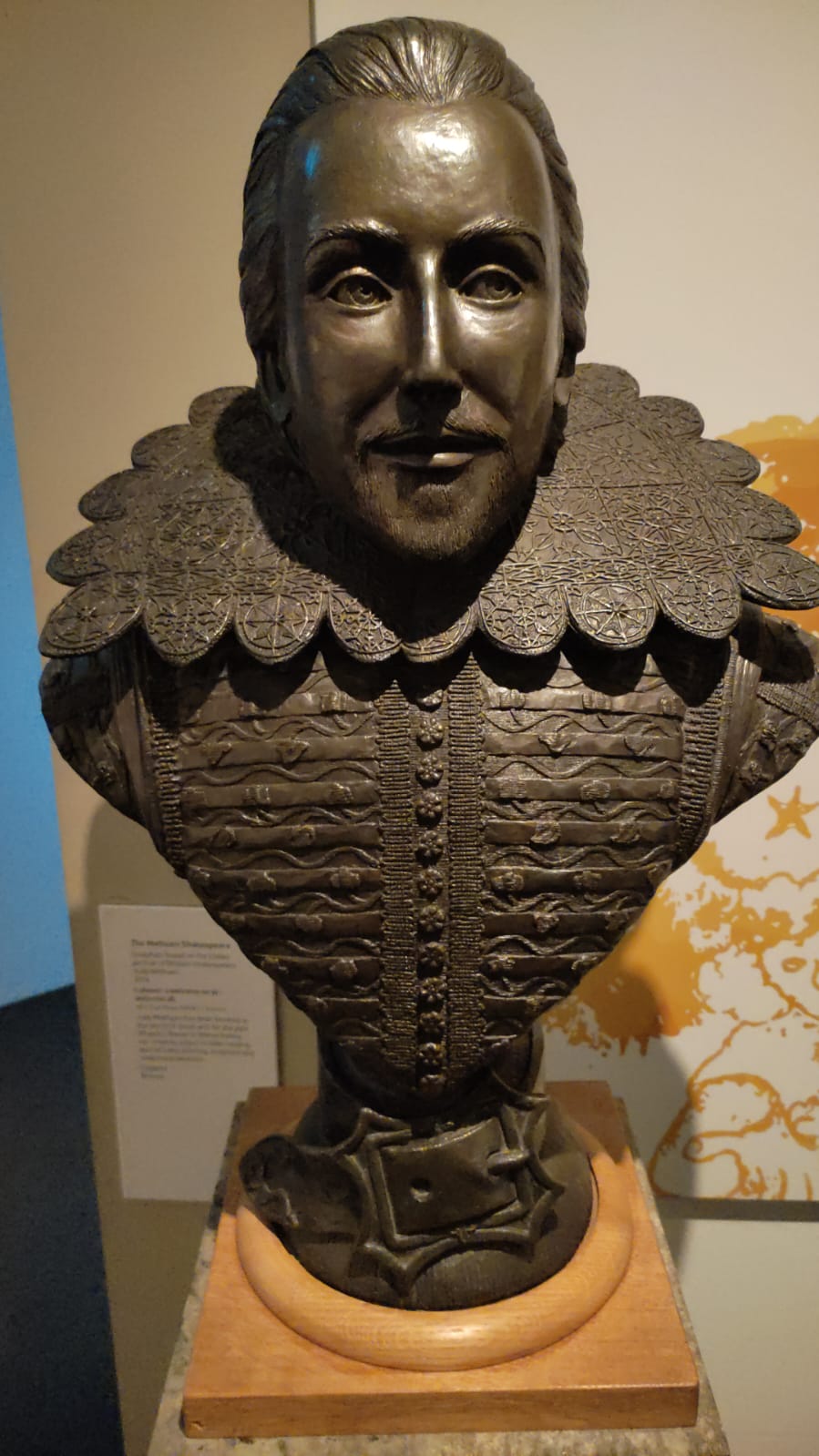
In one of my earlier posts, I had already confessed that I do not suffer from an affliction which could best be alluded to as Shakespearitis. Given the limited supply of grey cells that nature has bequeathed upon me, I can be held to be a person who has a rather high Pumpkin Quotient. William Shakespeare’s literary outpourings need a much higher level of intellect to be understood and enjoyed. Unfortunately, that I simply do not possess. The stuff he has dished out is meant for brainy coves whose eyes shine with keen intelligence and whose heads bulge at the back, much like Jeeves’.
However, all this does not necessarily guarantee peace of mind. On the contrary, it makes life even more of a challenge. The brow is invariably furrowed. The heart is leaden with woe. This is so because he is to be found everywhere and is apt to spring surprises at all times, not a very pleasing prospect for a faint-hearted person like me. Surely, the fault lies in my stars.
My last trip to the United Kingdom proved to be no exception. A few days after I had unpacked the proverbial toothbrush, on a fine morning, my genial host had whipped up a sumptuous breakfast. While tucking into it with much gusto, I was feeling on top of the world. But just when you feel that life is a bed of roses, God is in heaven, and all is well with the world, Fate sneaks up from the back. Your Guardian Angel decides to proceed on a vacation. The blow falls, leaving one shaken and stirred.
I was informed that the birthplace of The Bard was just an hour’s drive from the town I was in at the time. The host, grace personified, thought it was his patriotic duty to drive me down to the place. Hiding my trepidation somehow, I consented. Well, one must be civil, you see.
As you like it
The journey to Stratford-upon-Avon was part of the charm. Surrounded by the serene English countryside, the town turned out to be a beautiful blend of cobbled streets, Tudor-style buildings, and winding pathways that echo centuries of history. The drive had the effect of converting my initial hesitation to a reluctant sense of anticipation.
Visiting William Shakespeare’s birthplace in Stratford-upon-Avon proved to be like stepping into a time machine that transports one to the relatively simpler times of the late 16th century. Nestled in the charming market town in Warwickshire, England, the house on Henley Street is a unique time capsule that offers a glimpse into the life of Shakespeare and his family, set against the backdrop of a picturesque Elizabethan town. It is instructive to see how Henley Street has evolved over time.


Despite being armed with a Google app, we had to repeatedly disturb a few locals to ask for directions to the Shakespeare Centre.

The modern visitor centre serves as an introduction to the playwright’s life, works, and the world in which he lived. It offers exhibits, displays of historical artefacts, and multimedia presentations that set the stage for the main attraction. One can see copper plaques devoted to many of his works, besides creative illustrations that connect him to the contemporary world.
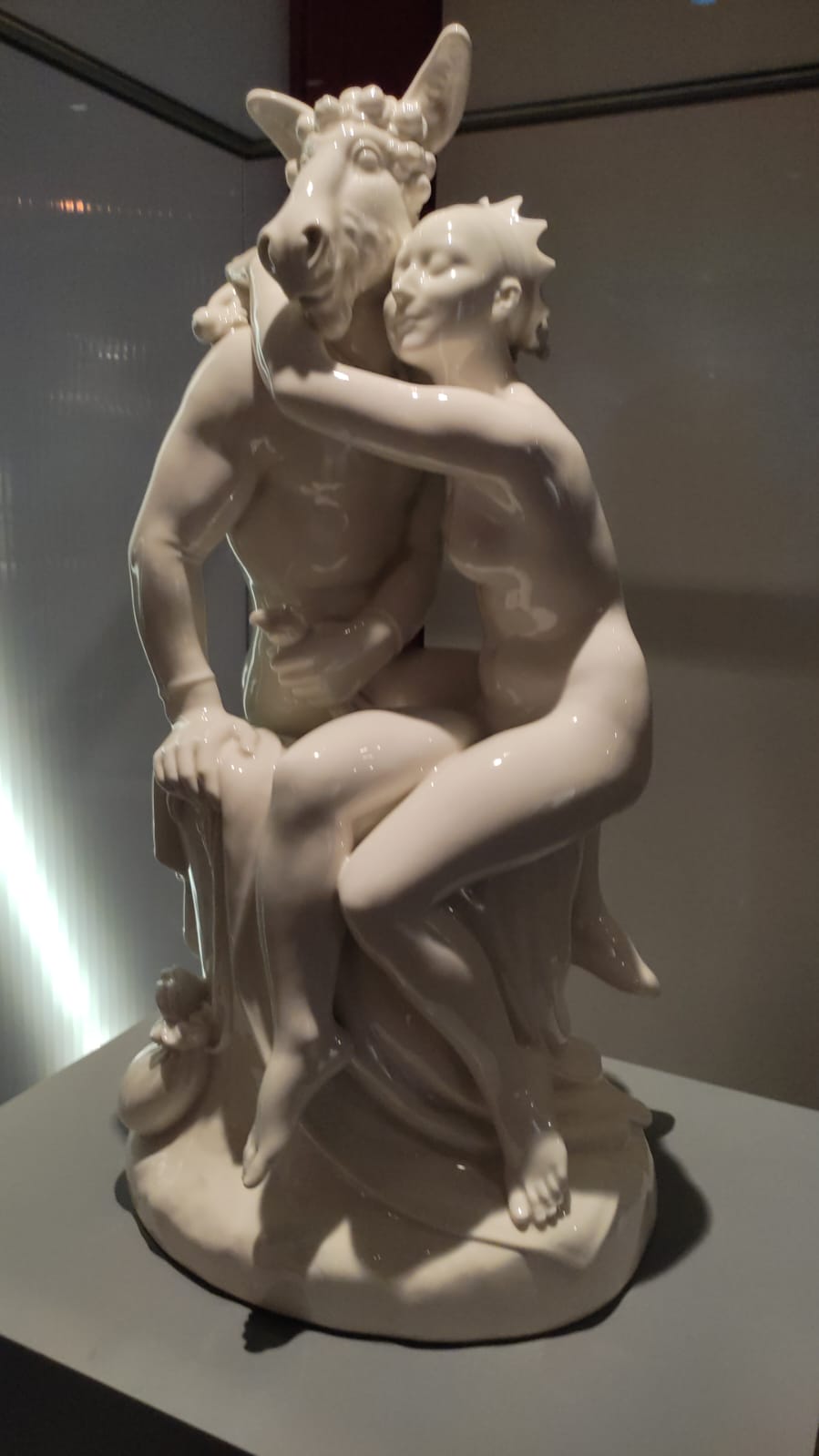


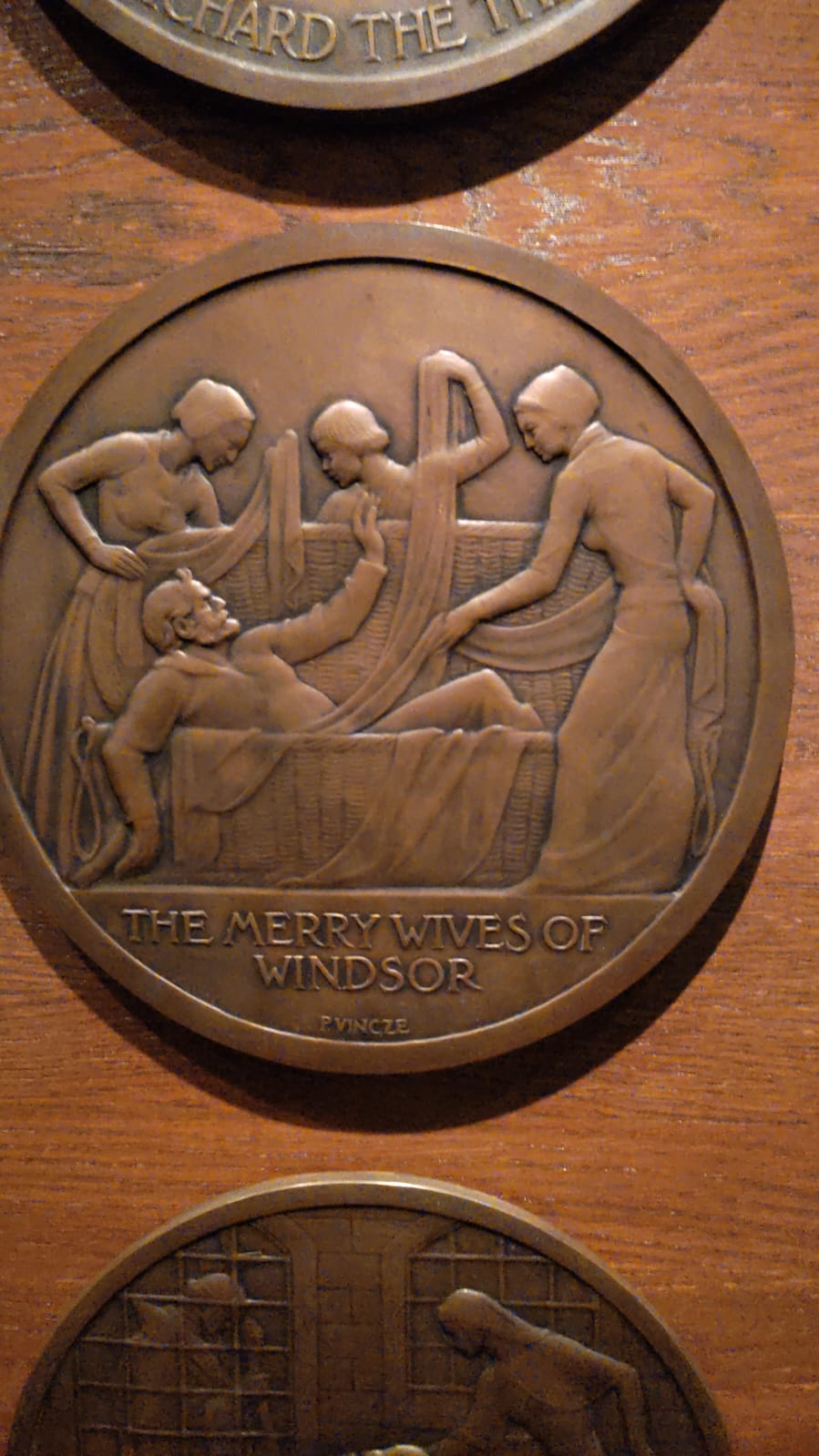

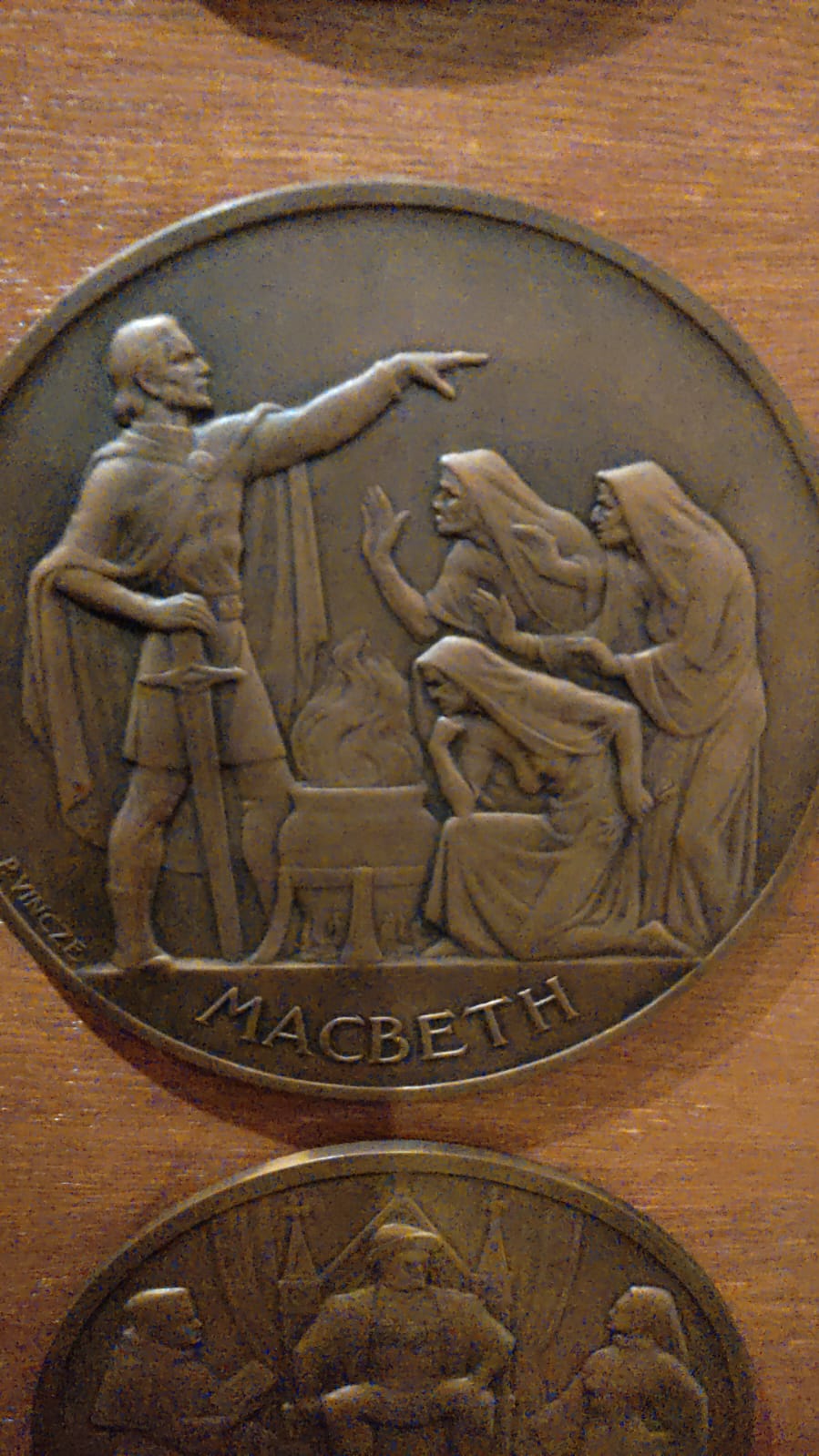
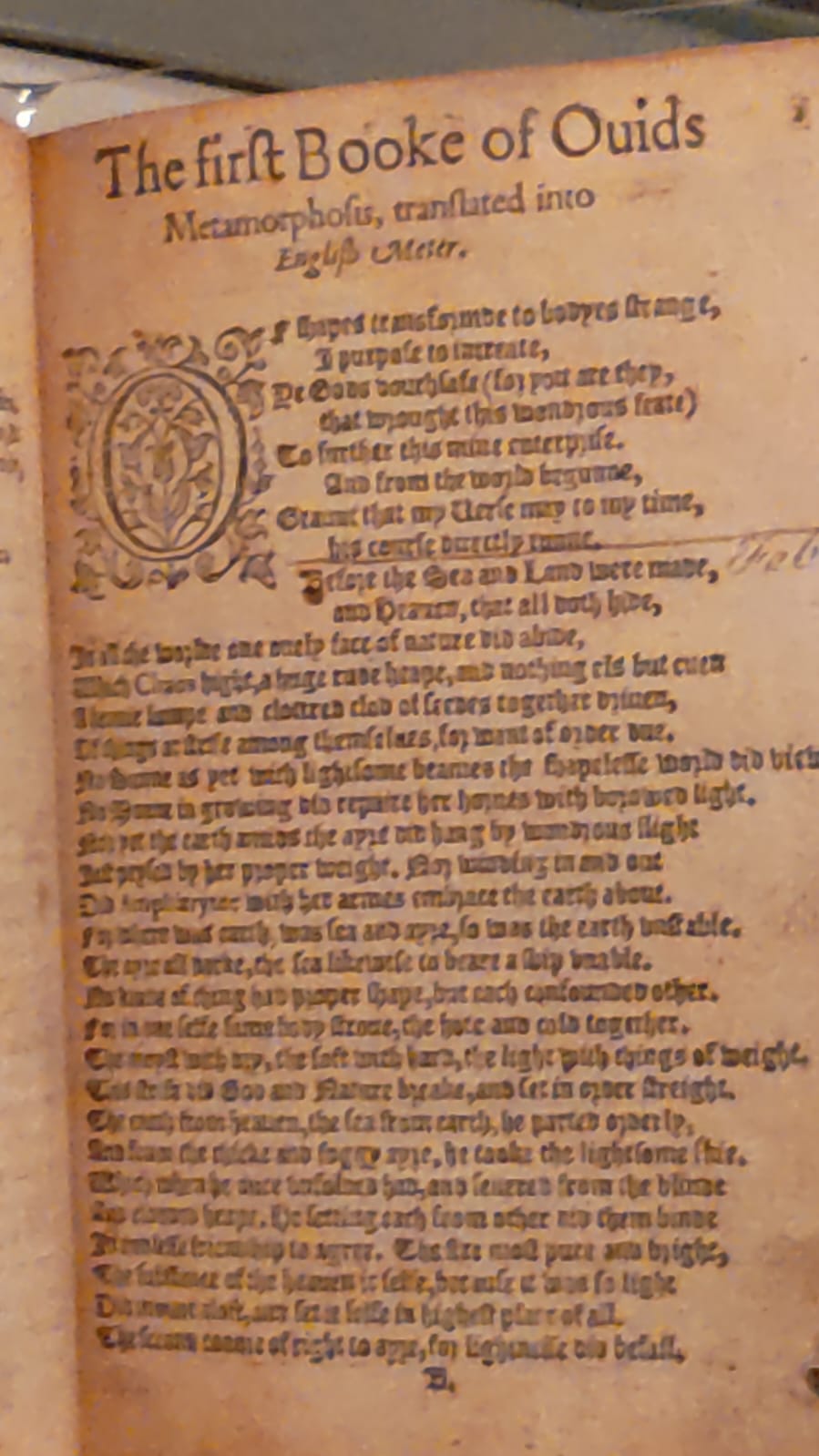
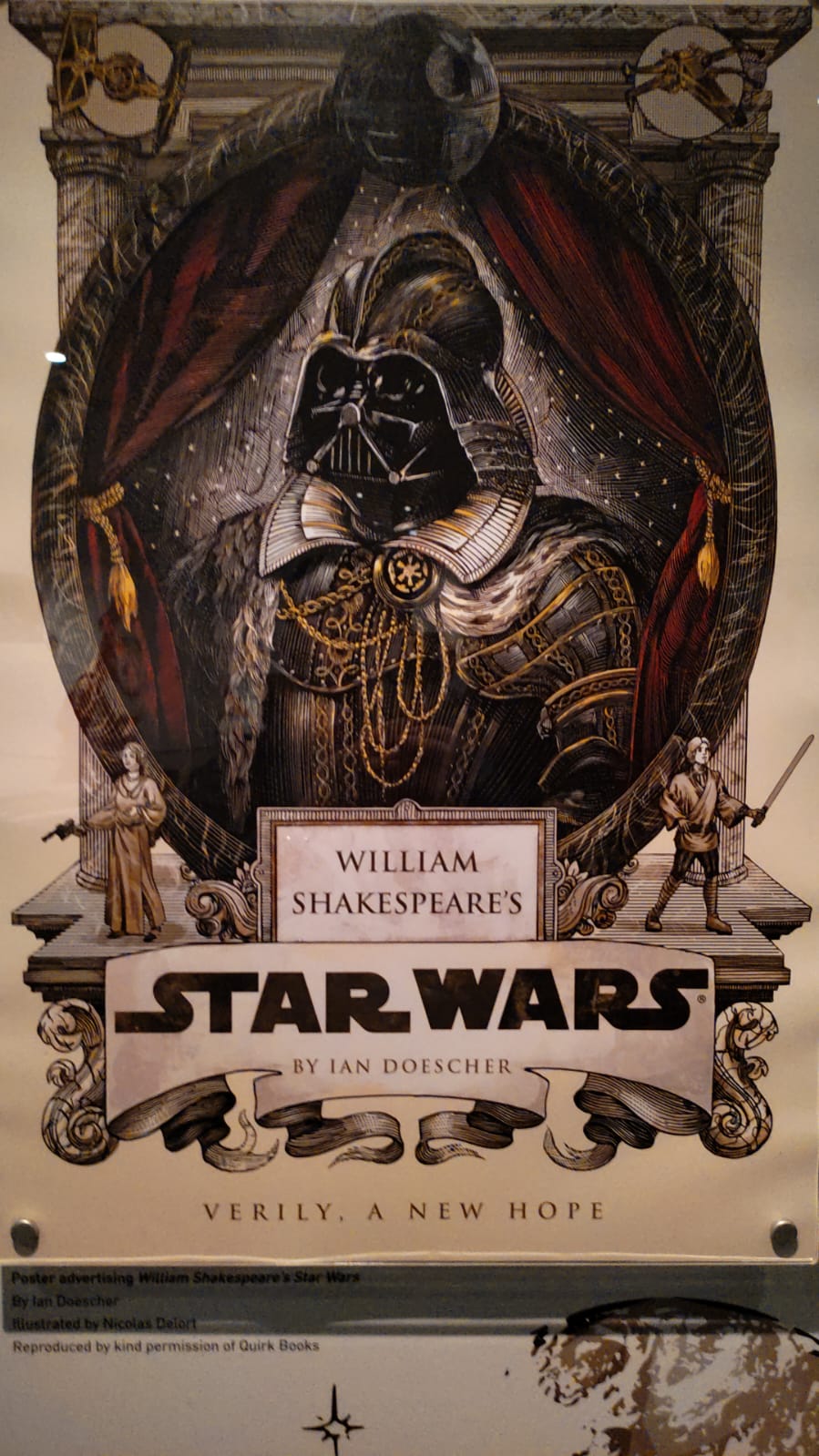


The heaven’s lieutenants
Before we move on to the birthplace itself, a family tree greets us. This is in the fitness of things, because The Bard placed a high premium on families. Some of you may recall this quote of his:
The voice of parents is the voice of gods, for to their children they are heaven’s lieutenants.

I am amazed to find that he was married to a lady by the name of Anne Hathaway; of course, not the Hollywood diva we happen to know since her The Devil wears Prada days!
Home: The place where he could waste his time!
The dwelling is a modest two-story, half-timbered house with a traditional wattle-and-daub construction typical of the Elizabethan era. Its architectural simplicity contrasts with the monumental legacy of the man who was born here in 1564. The house has been carefully preserved and restored to reflect the period as accurately as possible, down to the original furniture styles, wooden floors, and narrow doorways that would have been familiar to Shakespeare. Every corner of the home feels authentic, almost like the Bard himself or his family members might pop up at any moment. (Further details about the place can be found here)

Entering through the main door, visitors walk through the same rooms where young William would have spent his formative years. The ground floor houses a small enclosure where he would have met and entertained visitors. Then comes the main hall where the family would have gathered for meals, with a large hearth and a sturdy wooden table, showcasing how a typical middle-class family of that period lived.

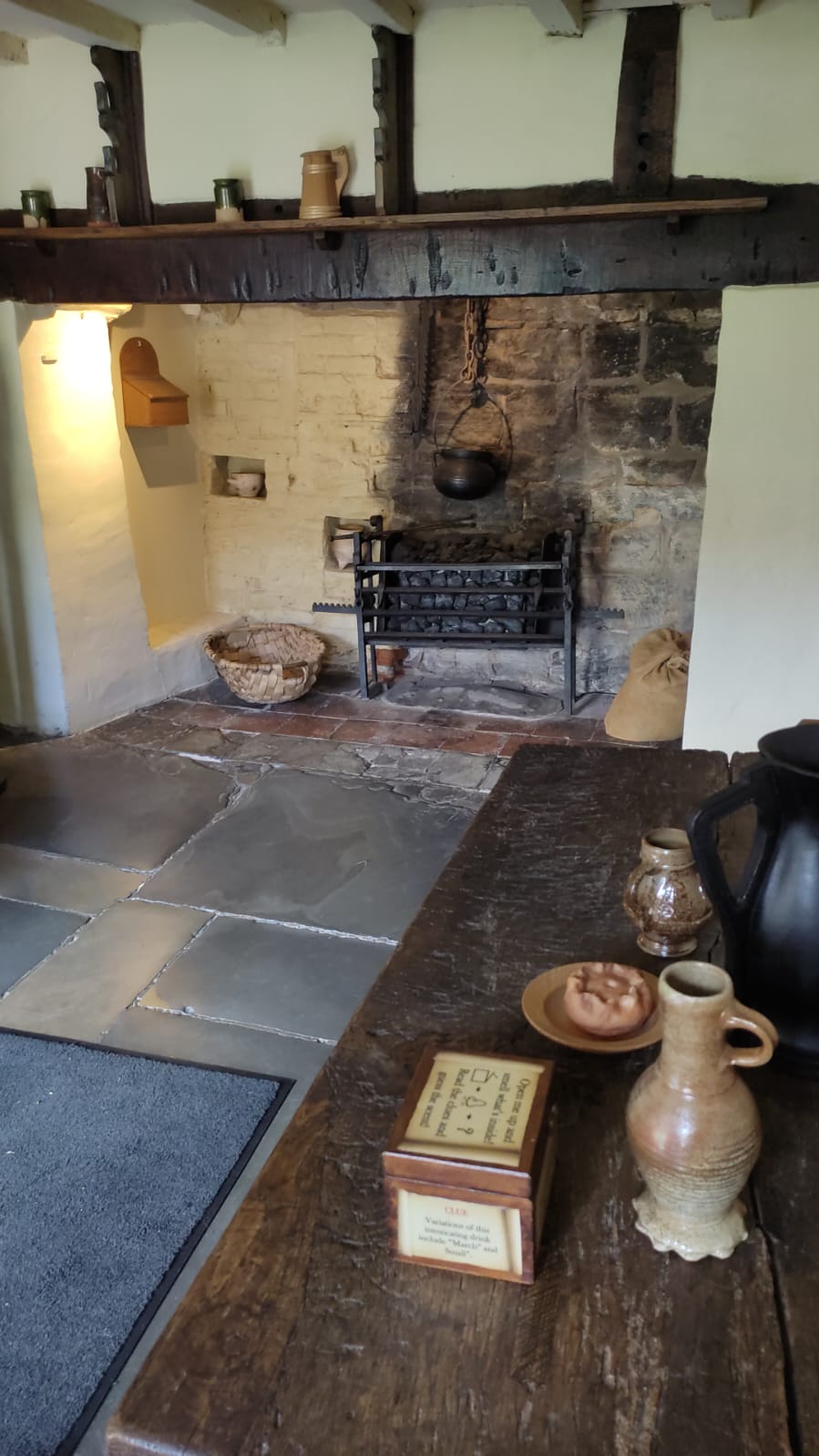
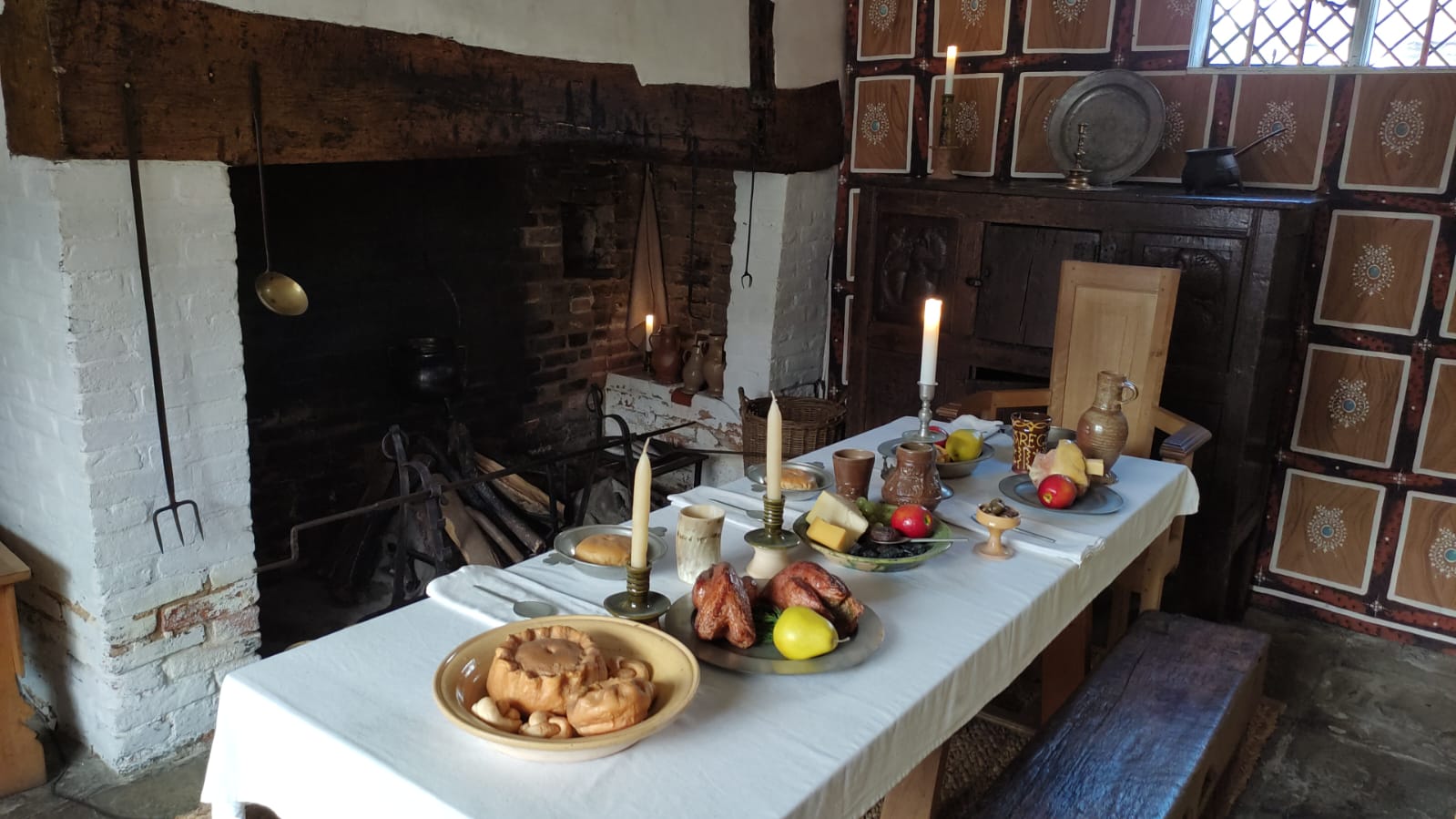
One can readily appreciate how the house served as both a home and a business venue, as Shakespeare’s father, John Shakespeare, was a glove maker and wool dealer. His workspace, along with the tools of his trade, is laid out in one of the rooms, illustrating a connection between commerce and home life in the 16th century.


Upstairs, visitors can see the room traditionally thought to be the room where Shakespeare was born. The tiny window lets in a sliver of daylight, highlighting the simplicity of the furnishings and the room’s plain walls. One can see a tiny cradle where the young one might have had his maiden midsummer night’s dream.




A literary genius who was born great
Standing in that room, it’s hard to reconcile the humble surroundings with the profound literary genius that Shakespeare would become. But as a guide explains stories from Shakespeare’s early life, you get a sense of the young boy’s curiosity and imagination—qualities that must have been nurtured in this very place. Surely, he was not someone who became great, or upon whom greatness was thrust by his Guardian Angels. Indeed, he was born great.
The garden outside the house is another lovely feature. To a fan of P G Wodehouse, it sounds like a miniature version of the ones at Blandings Castle. It is filled with plants and flowers that are mentioned in Shakespeare’s plays and sonnets. Walking through, you may recognize some of the herbs and flowers—like rosemary and pansies—from his writings. There is a sense that these natural elements inspired him, giving rise to his poetic descriptions of the natural world.
Understanding the world that shaped him makes it easier to understand how his plays reflected both the universality of human nature and the specific issues of his time.
To be or not to be
As the visit ends, scales have already fallen from one’s eyes. To be or not to be a fan of the Bard is a question which leaves one baffled, bewildered, confounded, confused, disconcerted, flummoxed, mystified, perplexed, and puzzled. In any case, one leaves with a newfound appreciation for the humble origins of William Shakespeare. His birthplace, though small and unpretentious, radiates with the legacy of a man whose works have shaped literature and drama worldwide and who is revered for his unique contributions to the Queen’s language. I am sure that he must have enriched the language in a manner that might be vaster and deeper than those who have either preceded or succeeded him. But lesser mortals like me, surely at the bottom of the English Proficiency Pyramid, are apt to feel very dense while endeavouring to devour any of his works.

However, for literary coves and linguistic purists, Stratford-upon-Avon remains a pilgrimage site, a place that celebrates not just Shakespeare’s legacy but also the power of words and stories to transcend time and space.
P G Wodehouse was one of those who held the Bard in high esteem. He once said: “Shakespeare’s stuff is different from mine, but that is not to say that it is inferior.” His frequent use of Shakespearean phrases in his stories and books merely attests to the same. Those of you who wish to explore this subject further may find this link useful.
All is well that ends well
Visiting the birthplace of William Shakespeare is more than a historical tour; it’s a journey through the formative environment of a literary legend. It provides a tangible sense of where the world’s most celebrated playwright came from and reminds visitors of the timeless influence of Shakespeare’s words, which continue to resonate across the ages.
Note: Thanks are due to Dominique Conterno, my host in the UK, who enabled this visit.
Related Posts
Posted in A Vibrant Life! | Tagged Birthplace, Blandings Castle, england, English, Jeeves, Literature, P G Wodehouse, Shakespeare, Shakespeare Centre, Stratford-upon-Avon, Travel, UK | 4 Comments »

Introduction
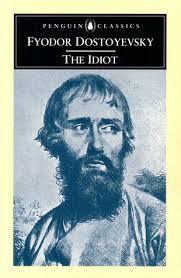
Fyodor Dostoevsky’s The Idiot is a profound journey into the clash between innocence and the disillusionment of a morally complex society. First published in 1869, this novel remains a monument of philosophical inquiry and character depth. Dostoevsky, a visionary in Russian literature, was no stranger to human suffering and societal injustices. His own trials, including facing near-execution, find a voice in The Idiot. Through Prince Myshkin, Dostoevsky ventures into the possibility of purity in a world overcome by cynicism, greed, and moral ambiguity. Can innocence survive in a landscape marred by corruption? Dostoevsky invites us to ponder this question.
Dramatis Personae
- Prince Lev Nikolayevich Myshkin
Known as the “idiot” for his naive, unguarded nature, Myshkin stands as the embodiment of childlike idealism. He is described as a “positively beautiful man,” possessing a purity that starkly contrasts with the self-interest and moral ambiguity of those around him. Myshkin’s nature makes him vulnerable to manipulation, but his unwavering compassion and ability to forgive create an indelible impact on others. His words, “I’m sure you think me incredibly stupid, but I assure you that I understand many things” (Part 1, Chapter 7), resonate as an assertion of his deeper understanding beyond superficial judgments.
- Nastasya Filippovna
A tragic figure, Nastasya Filippovna is tormented by feelings of worthlessness and self-hatred. Her beauty captivates Myshkin and Rogozhin alike, but her traumatic past and self-destructive tendencies create a complex inner conflict. Her declaration, “I’m a nobody, a sick soul, I don’t deserve you” (Part 3, Chapter 3), reveals her deep-seated vulnerability and her struggle with self-acceptance, which drives much of the novel’s drama.
- Parfyon Rogozhin
Rogozhin, passionate and impulsive, serves as a dark counterpoint to Myshkin’s purity. His obsessive love for Nastasya Filippovna leads him down a destructive path, symbolizing love’s potential for ruin when tainted by possessiveness and jealousy. His volatile nature and capacity for violence create a tragic tension that culminates in inevitable disaster. Rogozhin’s intensity and Myshkin’s gentleness interact in a way that illustrates the broader dichotomy between purity and corruption.
- Aglaya Ivanovna
Representing idealism and the potential for happiness, Aglaya is drawn to Myshkin’s goodness but is constrained by societal expectations. Her struggle between her admiration for Myshkin and the weight of social pressure is poignantly expressed in her lament, “Why do they always make me do what I don’t want to do?” (Part 3, Chapter 8). Her character embodies the tension between personal desires and societal demands, further illustrating the novel’s exploration of unattainable ideals.
- Gavril Ardalionovich Ivolgin (Ganya)
An ambitious young man, Ganya seeks social mobility through a marriage to Nastasya Filippovna, driven by his desire for wealth and status. His conflicting feelings for Nastasya and his disdain for Myshkin’s ideals illustrate the personal costs of ambition and moral compromise.
- Ferdyshchenko
A minor character but essential for comic relief, Ferdyshchenko is outspoken and often disrupts social gatherings with his crude humour. He reflects the novel’s theme of hypocrisy by exposing the pretensions of those around him through his blunt honesty.
Plot Summary and Themes
The Idiot traces Myshkin’s return to Russia from a Swiss sanatorium, where his arrival in St. Petersburg sets off a series of events that unveil the moral and spiritual decay of the people around him. His genuine kindness and childlike honesty clash with society’s cynicism, resulting in misunderstandings and conflicts, especially around Nastasya Filippovna and Aglaya Ivanovna. Themes like innocence versus corruption, love’s complexities, and the ongoing struggle between good and evil make The Idiot a timeless masterpiece that critiques societal norms while examining the possibility of redemption. Dostoevsky’s philosophical views on justice and compassion, illustrated by Myshkin’s reflection on capital punishment, reveal his belief in a humane approach to morality—one that transcends the ordinary.
A pivotal moment in the book occurs during Nastasya’s dramatic party, where she throws 100,000 roubles into the fire, daring her suitors to retrieve it. This act symbolises her contempt for wealth and societal values, as she exclaims, “There’s no end to my vileness!” (Part 1, Chapter 15).
Myshkin on Capital Punishment
In The Idiot, Prince Myshkin’s commentary on capital punishment reflects Dostoevsky’s deep moral convictions and individual experiences. Myshkin recounts witnessing a guillotine execution in France, emphasising the psychological torment of the condemned rather than the physical pain. He argues that the preparations for execution—leading a man to the scaffold—are more horrific than the act itself, as they strip away humanity and instil profound fear. Myshkin’s belief that “thou shalt not kill” underscores his view that punishing evil with evil is fundamentally wrong, echoing Dostoevsky’s own traumatic near execution.
Historical and Biographical Context
Dostoevsky wrote The Idiot during a turbulent period in his life. After suffering through the death of his first daughter and facing financial difficulties, he sought to create a narrative that explored the possibility of a genuinely good and beautiful person. The novel was written in the late 1860s, a time of social and political upheaval in Russia, which is reflected in the characters’ struggles and societal critique.
Dostoevsky’s views on capital punishment were profoundly shaped by his firsthand experiences, particularly a mock execution he faced in 1849. Sentenced to death for his involvement in the Petrashevsky Circle, he was blindfolded and prepared for execution, only to be spared at the last moment. This psychological torture left a lasting impact, leading him to explore themes of suffering, compassion, and the moral implications of state-sanctioned death in his works, especially through the character of Prince Myshkin in The Idiot, who articulates the deep anguish of awaiting execution and the inherent cruelty of capital punishment.
Narrative Techniques and Character Relationships
Dostoevsky employs a variety of narrative techniques to bring depth to his characters and their relationships. The novel’s contrapuntal structure allows multiple voices and perspectives to coexist, creating a rich tapestry of conflicting ideologies and emotions. This approach provides insight into the characters’ inner lives and reflects the chaotic and multifaceted nature of human existence.
Prince Myshkin’s relationships with other characters are central to the novel’s exploration of moral integrity versus and corruption. His interactions with Nastasya Filippovna are particularly poignant, as he is drawn to her suffering and seeks to save her despite her self-destructive tendencies. Myshkin’s compassion for Nastasya is evident when he says, “I will follow you wherever you go, even to your grave” (Part 2, Chapter 7). This relationship highlights the tension between Myshkin’s idealism and the harsh realities of the world.
Similarly, Myshkin’s bond with Rogozhin is marked by a blend of friendship and rivalry, underpinned by their mutual obsession with Nastasya. Rogozhin’s passionate nature contrasts sharply with Myshkin’s gentleness, creating a dynamic that leads to tragedy. Rogozhin’s declaration, “You and I cannot live together; the one will destroy the other” (Part 4, Chapter 10), foreshadows the novel’s dramatic conclusion.
Myshkin’s relationship with Aglaya Ivanovna introduces another layer of complexity, as she represents a potential for happiness and normalcy. However, societal pressures and misunderstandings prevent their union, underscoring the novel’s theme of unattainable idealism. Aglaya’s struggle to reconcile her feelings for Myshkin with her family’s expectations is poignantly expressed when she asks, “Why do they always make me do what I don’t want to do?” (Part 3, Chapter 8).
Adaptations and Cultural Impact

Mani Kaul’s Ahamaq (1992) serves as a reinterpretation of Dostoevsky’s The Idiot, adapting its themes to an Indian context. Both works explore the concept of “idiocy” through their protagonists—Prince Myshkin in The Idiot and his counterpart in Ahamaq, who struggles with epilepsy, often misinterpreted as madness.
While Dostoevsky’s narrative culminates in tragedy, reflecting societal cynicism, Kaul’s adaptation emphasises cultural nuances and the complexities of faith and desire within a contemporary Indian setting, offering a unique lens on the original themes of purity and delusion. In the television adaptation, Shah Rukh Khan portrayed the role of Rogozhin, Mita Vashisth the role of Nastasya, and M.K. Raina portrayed the role of Myshkin. Personally, I wish Shah Rukh had instead portrayed the role of Myshkin as he was doing enough negative roles on screen then.
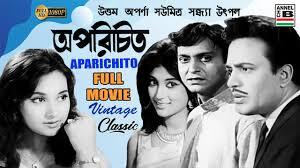
Samaresh Basu’s novel Aparichita draws considerable influence from Fyodor Dostoevsky’s The Idiot. Both works explore themes of innocence, morality, and the complexities of human relationships. In Aparichita, the protagonist’s struggles mirror those of Dostoevsky’s Prince Myshkin, highlighting the tension between idealism and societal corruption. The narrative delves into the psychological landscapes of its characters, reflecting Dostoevsky’s polyphonic style, where multiple voices and perspectives coexist, enriching the emotional depth of the story. The film (1969) portrays Uttam Kumar as Rogozhin, Soumitra Chatterjee as Myshkin, and Aparna Sen as Nastasya. Soumitra Chatterjee’s performance in the movie was power-packed.
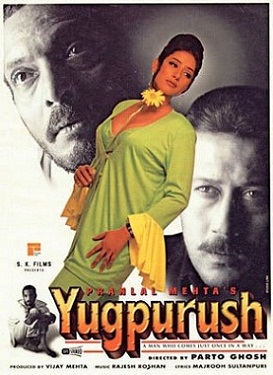
Additionally, the Bollywood film Yugpurush (1998) is based on Samaresh Basu’s novel Aparichita. The film starred Nana Patekar as Myshkin, Jackie Shroff as Rogozhin, and Manisha Koirala as Nastasya. The movie featured songs with music heavily influenced by Rabindra sangeet, composed by Rajesh Roshan. Yugpurush provides a fascinating lens on the themes of The Idiot, set within the Indian cultural milieu, and showcases the adaptability of Dostoevsky’s timeless themes.
Internationally also, The Idiot has inspired quite a few movies from such diverse countries as Russia, Germany, Japan, Estonia, and France.
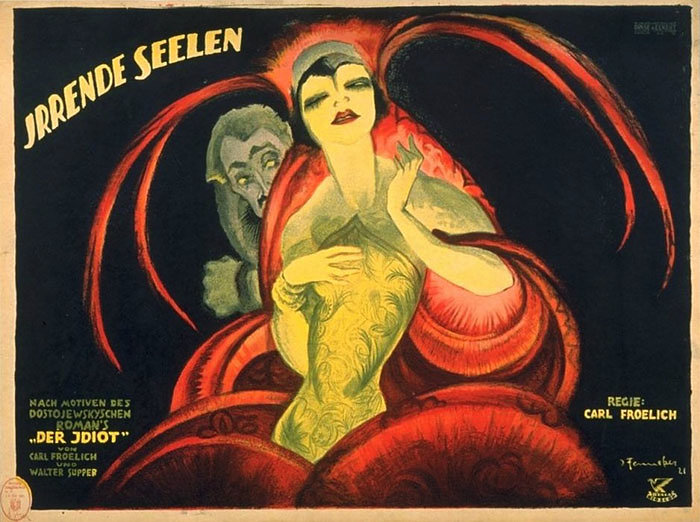
The earliest example is that of Wandering Souls (German: Irrende Seelen), a 1921 German silent drama film directed by Carl Froelich and starring Asta Nielsen, Alfred Abel, and Walter Janssen.

Yet another example is that of L’idiot (1946), a French drama film which was directed by Georges Lampin and starred Edwige Feuillère, Lucien Coëdel and Jean Debucourt.
Conclusion
The Idiot remains a profound exploration of the human condition, examining the fragile balance between integrity and corruption. Dostoevsky’s masterful characterisations and narrative depth invite readers to ponder the true nature of goodness and the possibility of redemption. As we reflect on Myshkin’s journey, we are reminded of the enduring relevance of Dostoevsky’s vision of a world where compassion and integrity can shine, even in the darkest of times.
The Idiot remains as relevant as it was in Dostoevsky’s time. Humanity faces many challenges today. Wars. Poverty. Income disparities. Climate change. Challenges posed by rapid advances in technology. If we were to dig deeper, we are apt to discover that what we face is a crisis of leadership in all realms of human endeavour. The themes of authenticity, integrity, and morality have all been relegated to the background. Few big corporates rule the world. Social media puts blinkers on our eyes, masks the reality, and shapes our opinions. Forget carbon monoxide. Hate, cynicism, and hypocrisy also pollute the air we breathe in.
Myshkin’s journey resonates with contemporary readers facing a world where virtues are often overshadowed by self-interest and superficiality, reminding us of the power of goodness even in the darkest of circumstances. Dostoevsky’s portrayal of Myshkin’s kindness and compassion challenges readers to consider the value of empathy, sincerity, and integrity in our interactions with others.
References
- Fyodor Dostoevsky, The Idiot. Translated by Richard Pevear and Larissa Volokhonsky. Vintage Classics, 2003.
- CliffsNotes on The Idiot
- [Schlemiel Theory] (https://schlemielintheory.com/2014/11/26/what-happens-when-an-idiot-reflects-on-a-beheading-on-dostoevskys-reading-of-the
Related Post
Posted in A Vibrant Life! | Tagged Fyodor Dostoevsky, Literature, Movies, Russia, The Idiot | Leave a Comment »
Posted in What ho! | Tagged English, Humour, Language, P G Wodehouse, Transferred Epithets | Leave a Comment »

Ah, chai! That comforting, fragrant, and beloved Indian beverage that transcends being just a drink. In Indian cinema, chai holds a special place, often serving as a backdrop for pivotal moments, whether it is humour, romance, or heartfelt connections. Let us take a fun look at how tea has made its way into some of Bollywood’s most iconic moments and why it remains a cultural symbol in films.
The Chaiwala: More than just a vendor
The chaiwala is a character almost as quintessential to Bollywood as the heroes and heroines. Often found on the streets, busy markets, and humble villages, the chaiwalas offer more than just a cup of tea; they provide a setting for conversations, friendships, and life-changing decisions.
Remember the iconic song Pyar Hua Iqrar Hua from Shri 420 (1955)? As Raj Kapoor and Nargis share an umbrella in the rain, they exchange tender glances, unaware of the chaiwala nearby, savouring his own cup of tea and watching the romance unfold.
In Raanjhanaa (2013), for example, Kundan (Dhanush) spends countless hours at the tea stall, not just drinking chai but plotting his next steps. The tea stall is where friendships blossom, secrets are spilled, and life, quite simply, unfolds.
Tea moments that make a mark
An unforgettable scene that brings tea into the spotlight is from the vintage film Kundan (1955). As the characters gather at a lively roadside hotel, a friendly server chimes in with unmatched enthusiasm, Aao hamare hotel mein chai piyo jee garam. Biscuit kha lo naram naram! The scene unfolds playfully as his cheerful call sets the backdrop, making tea and comfort food the quiet heroes of this charming moment that invites everyone to relax and feel at home.
Likewise, in Chennai Express (2013), Rahul (Shah Rukh Khan) stepping off a train for a quick chai leads to an entire adventure. What starts as a simple cup of tea triggers a series of hilarious and chaotic events, reminding us that in Bollywood, even a cup of chai can change everything.
Tea: A symbol of comfort and connection
Tea in Bollywood is not just a prop; it is a symbol of connection and comfort.
In Kabhi Khushi Kabhi Gham (2001), a simple scene where Amitabh Bachchan’s character Yash shares a quiet moment with Nandini (Jaya Bhaduri) over tea exemplifies how chai fosters a warm connection between family members.
Another such instance is from English Vinglish (2012), where Shashi (Sridevi) finds solace in brewing and serving tea. Her love for tea helps her bond with those around her, becoming a tool for her to regain confidence and independence.
Iconic movie scenes featuring chai
Bollywood has immortalised chai in numerous scenes, reflecting its role in everyday life. Here are ten standout moments where chai took centre stage:
Ram aur Shyam (1967): A nervous Ram (Dilip Kumar) fumbles with trembling hands as he serves tea to Anjana (Waheeda Rehman), the moment filled with unspoken emotions and anticipation.
Bawarchi (1972): Rajesh Khanna’s character Raghu gathers a dysfunctional family around cups of chai, uniting them in a ritual that symbolises peace and harmony.
Gol Maal (1979): Bhavani Shankar (Utpal Dutt) unexpectedly visits Ram Prasad (Amol Palekar) to uncover the truth about Kamala Srivastav (Dina Pathak) as his mother. While enjoying a cup of tea, the deception of the twin brother, Lakshman Prasad (also Amol Palekar), continues under the guise of warmth.
Baazigar (1993): The character Babulal’s (Johny Lever) declaration, Khaas maukon par khaas chai (Special tea for special occasions), underscores how chai can make or break important moments, even a marriage proposal.
Andaz Apna Apna (1994): Amar’s (Aamir Khan) landmark line, Do dost ek pyale mein chai piyenge, isse dosti badti hai (Two friends sharing a cup of tea strengthens friendship), is the perfect example of how tea fosters relationships in Bollywood.
Parineeta (2005): Tea serves as a bridge for important conversations, as a simple chai scene between Shekhar (Saif Ali Khan) and his mother Rajeshwari Roy (Surinder Kaur) shows how chai facilitates pivotal discussions.
Sarkar (2005): Subhash Nagre (Amitabh Bachchan) sipping tea while holding a saucer, backed by the intense Govinda Govinda soundtrack, shows the power and confidence associated with something as simple as tea.
Wake Up Sid (2009): Ranbir Kapoor’s character Sid takes Konkona Sen Sharma’s character Aisha to Marine Drive, where they share chai by the sea, building an intimate bond over the beverage.
Barfi (2012): A reunion over chai between Murphy (Ranbir Kapoor) and Shruti (Ileana D’Cruz) beautifully highlights how even unresolved love can find rekindling over a cup of tea.
Khoobsurat (2014): The simplicity of chai in a roadside stall helps break down the royal façade of a prince, Yuvraj Vikram (Fawad Khan), allowing a deep connection with a commoner, Mili (Sonam Kapoor).
Chai, a symbol of everyday life in Indian cinema
From budding romances to familial reconciliations, tea has long played a role in some of Bollywood’s most cherished moments. Here, chai isn’t just a drink. It is a symbol of warmth, love, and bonding.
The next time you sip your cup of chai, remember, you are part of a cultural phenomenon that has graced the silver screen for decades, bringing characters together in ways only Bollywood can.
About the author
With decades in the mad, mad world of advertising, Anupam Ganguli is synonymous with creativity, strategy, and storytelling. A true adman, author, and design buff, he’s the wizard behind landmark campaigns and 360-degree solutions that have shaped and birthed countless Indian brands. His flair does not stop at ads, though. He has named iconic structures across Gurugram, Faridabad, Kaushambi, and Noida, leaving his mark on more than just billboards. When it comes to storytelling and design, Anupam brings brands to life, setting the benchmarks for advertising excellence, often with wit and style.
Notes
- The collage used here has only been made for representational purposes. All the images therein are owned by their respective copyright holders.
- A version of this article had first been posted by Anupam Ganguly in The Reviewer Collective group on Facebook. His permission to publish it here is gratefully acknowledged.
Posted in The Magic of Movies! | Tagged Bollywood, Chai, Hindi, Indian, Movies, Tea | 2 Comments »
Posted in What ho! | Tagged Humour, Ogden Nash, P G Wodehouse | Leave a Comment »
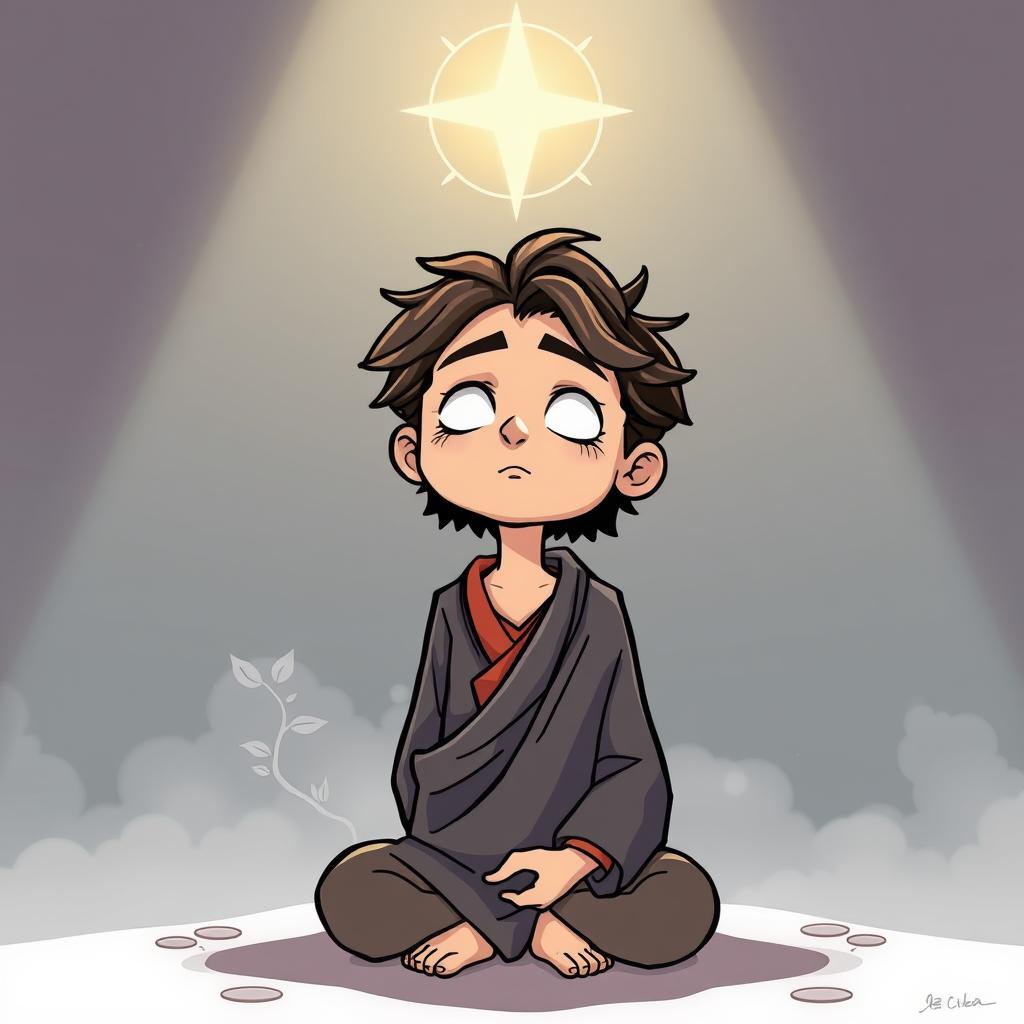
So, you think that P G Wodehouse is only about farcical butlers, upper-class twits, domineering aunts, goofy females, rogue kids, dogs with supercilious gazes, cats that wear snootiness on their sleeves, horses that are fond of cats, and pigs which need their daily quota of 57,800 calories?
Think again, I would say! For, deep within the juicy narratives dished out by the Master Humourist of our times lie buried many lessons of a spiritual kind. These are latent nuggets of wisdom that, if adopted, could enable one to lead a spirited life, facing its ups and downs with a jaunty sang froid.
Baffled, bewildered, confounded, confused, flummoxed, mystified, perplexed, and puzzled?
Allow me to elucidate.
A Journey of Self-Discovery: Embracing the ‘Me First’ Mindset
Any spiritual quest begins with an inner journey of self-discovery. Like Bertie Wooster, one has to be a keen observer of the inner workings of one’s mindset. One should know when to slide down a pipe and when to board a cruise ship to avoid an impending encounter of an unpleasant kind. Self-preservation serves one well. To put it simply, one must have a ‘Me First’ approach to life.
Take my own case. Well, I must say, I happen to be a prime candidate for the “Me First” award, if ever one is instituted by the concerned authorities. You see, I’ve got this knack of putting my own pleasure and happiness on the pedestal, leaving others hanging like a wet sock in the wind.
It’s like that old saying about chasing the rainbow – the closer you get, the further it slips away. So, here I am, with my long face like a dropped pie, whinging about my sorry lot in life. And let me tell you, it’s not a pretty sight.
If I were watching myself on the telly, I’d hand that grumpy old git the remote control and tell him to skip to the next channel, pronto! Because, my friends, a moaner, and a whinger, is about as popular as a caterpillar discovered at the bottom of a bowl of salad.
My dears, we humans are like archers, shooting our arrows of hope into the void, never sure if they’ll hit their mark. I’ve tried everything under the sun, from meditation to listening to hot-air speeches. And let me tell you, spirituality is a tough nut to crack. It’s like trying to peel a banana with oven mitts!

Finding Light in the Darkest Moments: Unravelling the Tapestry of Adversity
Now, I know this is the path to freedom from my woes, but here’s the rub: I can’t seem to figure out the ‘how-to’ manual. It’s like trying to find Waldo in a crowd of walruses. Frustrating, isn’t it? But fear not, for I’m blessed with nerves of chilled steel and am not one to give up easily. I continue my quest, armed with a magnifying glass that remains duly focused on the works of the Master.
My dear compatriots, the pursuit of spirituality proved to be a meandering journey through the labyrinth of existence, a perplexing conundrum that tested the limits of my mortal soul. Alas, in the face of such a formidable challenge, we resilient humans are wont to seek out solutions that may not blaze a trail to perfection, but rather offer a semblance of respite in the stormy seas of life.
As fortune would have it, amidst my quest for spiritual enlightenment, I stumbled upon a veritable treasure trove – the timeless works of Sir Pelham Grenville Wodehouse. Ah, the sheer delight and solace that his writings brought to my weary heart in times of dire need! My lineage, bless their souls, had been perusing his literary masterpieces for generations, paving the way for my own delectable encounter with this literary luminary.
One of the things that captivates me most was the uncanny comportment of Wodehouse’s characters in the face of adversity. Take for instance the indomitable Psmith in “Psmith Journalist”, who maintains an air of nonchalance even when confronted by kidnappers.
Such a profound sense of detachment amidst chaos brings to mind the teachings of the Bhagavad Gita, does it not? Indeed, could we not consider this delightful escapade into the world of Wodehouse as a form of modern-day spirituality? My friends, the parallels are as intriguing as they are enlightening.
The Perks of Forgetfulness and Living in the Present
Ah, Lord Emsworth! A man with an asset so heart-warming that it could melt the frigid polar ice caps – forgetfulness, leading to a habit of living in the present!
In the annals of history, great minds have extolled the virtues of forgetting. Our scriptures enjoin us to live in the present. It’s like dusting off the cobwebs in your attic – why cling to the dusty remnants of the past when you could embrace the sparkling potential of the future?
Lord Emsworth’s forgetfulness is a veritable cornucopia of blessings. It allows him to shed the heavy cloak of past grievances, like an absent-minded hiker shedding a backpack filled with regrets. And behold, he emerges anew, lighter, brighter, and infinitely more lovable to those who grace his presence.
Perhaps the saints of yore sought solace in this blessed amnesia, freeing their spirits to soar among the celestial heights. For in forgetting, we find not only liberation from the shackles of the past but also an uncanny ability to charm the socks off those around us. Thoughts of future encounters with a belligerent sister never fill us with a sense of dread.
In the realm of the spirit, or that which offers me a sense of tranquillity, I find that Wodehouse has bestowed upon me a profound lesson. Lord Emsworth stands as a beacon of hope in this respect. His forgetfulness of past events allows him to embrace the present with an unencumbered mind. Unburdened by the weight of memory, he revels in his solitude, finding pleasure in his own company. As Plum so aptly puts it,
‘Lord Emsworth sat and smoked, and sipped and smoked again, at peace with all the world. His mind was as nearly a blank as it is possible for the human mind to be. The hand that had not the task of holding the cigar was at rest in his trousers pocket. The fingers of it fumbled idly with a small, hard object.’
When he finds a scarab in his pocket, does he not simply conclude that it must have been gifted to him by the American millionaire? Once he starts focusing on the Empress of Blandings, does he ever worry about the pumpkin? He surely practices the delicate art of detachment, spoken of so very highly in our scriptures.
From Being a Self-doubting Thomas to an Opportunity-Grabber
In my annals of domestic disputation, I recall a particular clash with my bitter half. She, with her fervent tongue, extolled the valour of a dear friend who had summoned the intrepidity to pen a social media missive, heedless of any sinister implications. And I, rather than question her judgment, was exhorted to contemplate my own measly progress in the realm of social media.
The aftermath of this matrimonial contretemps was, as one might surmise, somewhat perplexing. I found myself in an odd state of accordance with her sentiments, heaping further ignominy upon my own head. For though my pen may have faltered, I had hitherto cherished the notion that the contemplation of others’ creations and the articulation of my own preferences constituted an inherent privilege.
Yet now, as if by some cruel twist of fate, I could conjure no words for my own use. Unlike some prodigies, blessed with an inexhaustible reservoir of ideas, I had no such celestial aid. Suffice it to say, my aspirations of literary heroism faded before my wife’s eyes, leaving me a mere buffoon engaging in a pathetic display of self-sabotage.
And as I spiralled further into this abyss of self-reproach, a voice whispered through the labyrinth of my mind, a voice I recognized from Joy in the Morning:
‘It was one of those cases where you approve the broad, general principle of an idea but can’t help being in a bit of a twitter at the prospect of putting it into practical effect. I explained this to Jeeves, and he said much the same thing had bothered Hamlet.’
Dear readers, lend an ear to these words that wrought a profound transformation within me. Like a veil lifted from my vision, I beheld the absurdity of my former self-chastisement. A chuckle escaped me, a gentle mockery of the charade that had held sway over my existence.
And so, I cast off the shackles of self-criticism and chose a path of liberation. This, my friends, is spirituality in its purest form—not a celestial embrace or mystical communion, but a triumph over the prison of my self-limiting beliefs. For, in embracing the folly of self-doubt, we find true freedom and the boundless expansiveness of the human spirit.
Though not directly akin to the realm of the spirit, dear reader, I often find solace in the words of P. G. Wodehouse’s The Small Bachelor. When the weight of life’s trials weighs heavy upon my mind, I turn to these lines, finding therein a gentle balm that soothes my troubled heart.
‘That’s the way to get on in the world – by grabbing your opportunities. Why, what’s Big Ben but a wristwatch that saw its chance and made good?’
By Jove, friends! When I hear such stirring words, my very essence is transformed. I feel a surge of vigour coursing through my veins, aided and abetted by a burning desire to embrace uncharted territories. The shackles of doubt and hesitation fall away, replaced by a boundless sense of possibility. Trust me, friends, such words are the catalyst that ignite the flame of adventure within me! So, dear readers, let us raise a toast to such characters as Lord Emsworth, the master of forgetting, Bertie, the epitome of chivalry, and Jeeves, whose sage counsel is akin to the teachings of Bhagavat Gita.

Different Facets of Life and the Transformative Power of Wodehouse
Overcoming Road Rage
Picture yourself on a bustling Monday morning as you prepare to embark on your daily pilgrimage to the office – the place where your purpose perhaps lies. You find yourself surrounded by a sea of cars, all honking impatiently, and scowling faces in desperate search of an outlet for their irritation. In that moment, your motivation wanes, the world around you darkens, and you feel like you are trapped in a never-ending episode of the Twilight Zone.
But then, like a bolt from the blue, something changes. The darkness dissipates, and you find yourself grinning in the face of this adversity when you get reminded of the following quote, all of a sudden!
‘The best method of getting to the Highfield is by the Subway. To see the Subway in its most characteristic mood one must travel on it during the rush-hour, when its patrons are packed into the carriages in one solid jam by muscular guards and policemen, shoving in a manner reminiscent of a Rugby football scrum.’
Now, as a mere neophyte in the realm of spirituality, I hesitate to delve deeper into this phenomenon. Yet I can’t help but wonder – does spirituality possess the power to transform our outlook so swiftly, like a magician pulling a rabbit out of a hat? The mysterious ways of the author P. G. Wodehouse never cease to amaze me, dear reader!
Meeting Theatrical Challenges with a Chin-up Attitude
Coming to the dreaded stage fright, my fellow thespians! When all eyes are peeled upon you, like a banana waiting to be devoured, your mind races at a million miles per second, a veritable rollercoaster of emotions. You fear deviation from the script, like a wayward sailor lost at sea. And let us not forget the dreaded missiles from the audience. No, I do not allude here to rotten potatoes, tomatoes or eggs. I mean words that can sting like bees, leaving you with a swollen performance.
In these trying times, performers seek solace in a tonic, a shot of confidence to carry them through the ordeal. And may I suggest that this tonic be none other than Plum’s following lines:
‘To an outside spectator he would have seemed rather like a very well-dressed Daniel introduced into a den of singularly irritable lions.’
Upon getting reminded of these words, a surge of tranquillity washes over the performer. They gaze upon themselves from a newfound perspective, an indifferent platform. A sterling performance comes about, followed by a burst of applause which could be heard across many a busy street outside the auditorium.

Tackling Lion Bosses at Office
When life’s a right ol’ cacophony, with your boss booming like a bassoon, your missus harping on you like a broken trumpet, and your pals piping up with their well-intentioned but ear-splitting advice, I find solace in the quotes delivered by this fellow who is fondly referred to as Plum.
By Jove, my dear readers, have you ever felt as though you’ve been thrown into a spin cycle by your boss? Like a tie caught in a washing machine, I find myself being mercilessly zipped and tumbled around when summoned for a “little chat.”
As I stand before my superior, shuffling my feet, my tongue resembling a malfunctioning typewriter, I utter the fateful words, “I, er… well, I went into the call and told, er…”
“Spare me the details, my boy,” he interrupts with the subtlety of a charging rhinoceros. “Let’s cut to the chase and unscrew this mess.”
Oh, the irony! My boss, the man with the power to “screw” me over, is demanding a “solution” to the screw-up I was being “screwed” for. It is enough to make me feel like a human pretzel.
For those who have trodden the path of such encounters, the subsequent unfolding is a familiar script. But for the uninitiated, allow me to veil the scene in the obscurity reminiscent of the ancient Greek plays where violence was shown. The tumultuous emotions surging within me after such an encounter were weighty enough to prompt contemplation of departure from my current vocation.
But then, as if a bolt of lightning has struck my brain, I recall these wise words from the pages of P G Wodehouse:
‘The fact is, uncle—’
‘Never mind the facts. I know them! What I require is an explanation.’
In that instant, like a light bulb illuminating a dusty attic, the missing pieces of my explanation miraculously reappear. The scales fall from my eyes. I can finally see a way out of this corporate labyrinth.
My spirits, as I said before, were as low as a politician’s poll ratings after a particularly scathing dressing-down from the discerning public. It was a veritable downpour of negativity, threatening to drench my career aspirations and send them scurrying for cover. But the words from the maestro, in their infinite wisdom, have a rather amusing trick up their sleeves.
As the day wore on, a queer thing happened. I caught a glimpse of my reflection in the office window and, lo and behold, the thunderous frown that had been etched upon my visage had mysteriously evaporated, replaced by a glow as radiant as a summer sunset. As if on cue, the sun broke through the clouds, casting its golden rays upon the scene like a celestial stand-up comedian.
And then I realized it. My boss, who had hitherto been as dour as Bingo Little who has just been ridiculed by Laura Pyke for gorging on food like a python, now bore an uncanny resemblance to Sir Thomas, while I, your humble narrator, took on the unmistakable air of the legendary Lord Dreever, a man known for his wit and indomitable spirit. The realization was like a tonic, lifting my spirits and rendering the boss’s earlier admonishments as mere comedic fodder.
Indeed, I believe that if I had dared to venture into the restroom, I would have encountered a mirror that reflected not the glum visage of a man on the brink of despair, but a veritable symphony of smiles, as if the entire universe was conspiring to cheer me up. And so, my friends, I leave you with this profound observation: even in the darkest of times, Wodehouse has a way of finding its place, painting a smile upon our souls, and reminding us that life, like a good joke, is often more amusing than it first appears.
Depression comes in all sizes and shapes. But irrespective of whether it is U-shaped, V-shaped, or W-shaped, we would do well to remember this advice from Bertie Wooster.
‘A short while ago, the air was congested with V-shaped depressions, but now one looks north, south, east and west and descries not a single cloud on the horizon – except the fact that Gussie’s wedding is still off, and that can’t be helped. Well, this should certainly teach us, should it not, never to repine, never to despair, never to allow the upper lip to unstiffen, but always to remember that, no matter how dark the skies may be, the sun is shining somewhere and will eventually come smiling through.’

Marriage Melee: A Battle of Wits and Wiles
Now, the trials and tribulations of married life! The constant struggle for supremacy between husband and wife can often lead to heated arguments. I remember one particular instance when my bitter half uttered a particularly sharp remark, causing me to contemplate throwing in the towel altogether.
Indulge me in the whimsical ramblings of a man ensnared in married life’s merry-go-round of mishaps. Picture the daily drudgery: the perpetual hide-and-seek with misplaced keys, the ceaseless battle against the despotic alarm clock – each a farcical subplot in the grand theatrical spectacle of existence. Yet, amidst the cacophony of chaos, I find refuge in the absurdity, relishing the comedic undertones of my predicaments. Armed with naught but a wry grin and a dollop of fortitude, I gallantly press forward, for in the face of adversity, it’s not the weight of our burdens that defines us, but the panache with which we pirouette through the harsh slings and arrows of life.
Measuring Up: Dealing with Matrimonial Blues
Growing up in a typical Indian household, I was no stranger to the dreaded act of comparison. Whether it was with the neighbour’s kid, my cousins, or my school chums, I was always being held up against others to highlight my shortcomings. These never-ending comparisons turned even the sweetest successes sour, casting a shadow of self-doubt over my young existence.
When I finally graduated from college and landed a job, I thought I had escaped the torment of comparison, once and for all. Alas, fate had other plans in store for me, as I soon found myself walking down the aisle and entering the realm of marriage. To my dismay, the comparisons from my youth had simply taken on a new form – instead of being measured against other youngsters, I was now being pitted against other fellow husbands.
Despite the familiar pang of depression that accompanies these regular comparisons, I find solace in the wise words of the great author. Remembering his following lines helps me to shake off the gloom and face the day with renewed vigour:
‘Chumps always make the best husbands. When you marry, Sally, grab a chump. Tap his head first, and if it rings solid, don’t hesitate. All unhappy marriages come from husbands having brains. What good are brains to a man? They only unsettle him.’
It is said that indifference is the key to true enlightenment. Perhaps that is why this quote also enters my mind upon meeting my wife’s friends. After all, they are a minefield of potential misunderstandings, where every word uttered can be met with laughter… or judgment. The joys of married life indeed!
Dinner Dynamics: A Delicate Dance of Drollery and Discretion
In this age of dual toilers, the dining hour has become our cherished trysting place. Yet, for some hapless souls like mine, it brings nought but tribulation.
For, the myriad oddities I perpetrate throughout the day come under my beloved’s scrutiny at this nocturnal tribunal. The evaluation process is akin to a relentless gauntlet, where each gaffe is met with a withering gaze and each feeble defence checkmated with a dismissive sigh.
To endure such a scenario demands the courage of a martyr and the willingness to face the unvarnished truth about oneself. And woe betide those who would dare to argue, for their fate is to be cornered and outmanoeuvred with surgical precision.
Well, I found myself in a bit of a pickle the other day. I wasn’t paying proper attention to my bitter half’s chatter, and it wasn’t long before her dulcet tones turned into something akin to a vinegar factory. In a moment of weakness, I surrendered to my plate much like a hungry squirrel would to a nut.
But alas, my hopes for a swift meal were dashed, for when one is in a spot of bother, even the most basic of tasks seem to conspire against one. The words of humiliation flowed from my wife as freely as water over Victoria Falls, and I found myself longing for the respite that only a finished meal could provide. But as we all know, when we most need something, it inevitably eludes us, and so I was forced to endure the verbal onslaught, my own loquacity proving no match for her linguistic torrent.
Terribly wounded by the slings and arrows of outrageous fortune, my dear readers, I sought refuge in yonder privy, a sanctuary most welcome after such a verbal tempest. Upon reflection, however, I found myself dishing out a double dose of censure to my ears, for my assailants’ barbs had stung me less sharply than my inner dialogue. Indeed, I resembled the legendary Ratnakar the Bandit (later known as Valmiki – the esteemed composer of that epic tale, the ‘Ramayana‘), when his kith and kin turned a cold shoulder upon discovering the slightly unsavoury nature of his profession.
Perhaps the following limerick might better explain my predicament:
There once was me so vain,
My ego could cause quite a strain.
I felt humiliated,
My pride, agitated,
Frowning at myself was his bane!
Well, my word, I was right down in the dumps, looking for a celestial lifebuoy, only to be greeted by a chorus of proverbs that made my predicament look as clear as a bottle of brown ale. Allow me to enlighten you with their profound wisdom:
‘He had just about enough intelligence to open his mouth when he wanted to eat, but certainly no more.’
(On how I took my dinner while braving the crisis.)
‘He had the look of one who had drunk the cup of life and found a dead beetle at the bottom.’
(On my present disposition.)
‘I could see that, if not actually disgruntled, he was far from being gruntled.’
(On my present mental state.)
‘I’m not absolutely certain of the facts, but I rather fancy it’s Shakespeare who says that it’s always just when a fellow is feeling particularly braced with things in general that Fate sneaks up behind him with the bit of lead piping.’
(On my fate.)
Well, bless my buttons, as I sat there in the midst of all that gloom, a flicker of mirth gently tickled my lips. My addled noggin, after a spot of sulking, decided to drag its weary feet from the doldrums and amble towards the sunny uplands!
Stakeholder Strife: Navigating the Minefield of Marred Joys and Spousal Scrutiny
The joys of childhood! Such innocent days were tarnished only by the looming spectre of criticism from the dreaded external stakeholders. The lion-tamers at the school, who, when annoyed at a group of boisterous and noisy backbenchers, flash their canes, leaving the tender spots on one’s backside throbbing as if hit by electric jolts. Neighbours, those ever-watchful guardians of politeness, who never failed to report any deviation in my behaviour to my dear mother. Oh, the horrors that ensued! One might think that growing older would bring respite from such sinister critiques, but, alas, fate had other plans.
Enter marriage, that venerable institution where the list of stakeholders expands faster than rabbits in spring. And the criticism? It descends upon me with the relentless persistence of British rain, every deviation dissected with the meticulousness of a tax inspector. My once-dreaded mother’s interventions have faded into mere historical footnotes, overtaken by the ever-vigilant gaze of my beloved wife. It feels as though I am trapped in an endless cycle of scrutiny, with no escape from those eager to critique my every move.
In this bleak landscape, I am often reminded of the haunting lines from W.H. Auden’s The Unknown Citizen:
‘Was he free? Was he happy? The question is absurd:
Had anything been wrong, we should certainly have heard.’
So you see, my friends, the feeling of emptiness and how it impacts my mental well-being at times?
Indeed, the struggle is real. Yet, in moments of solitude, when the weight of the world threatens to crush my spirit, I find solace in the words of P. G. Wodehouse:
‘Marriage is not a process for prolonging the life of love, sir. It merely mummifies its corpse.’
Wodehouse! His wit and wisdom are like a tonic for the soul, lifting my spirits and infusing me with the courage to face whatever life may throw my way. And so, armed with the sagacity of Jeeves and the indomitable spirit of Bertie Wooster, I march forward, ready to take on whatever stakeholder challenges lie ahead.

Friends – The Good, The Bad, and The Ugly
Friends, like the delectable variety of cheese, come in all shapes and sizes. You’ve got the brie-lliant ones who lift you like a hot air balloon when you’ve plummeted into a pit of despair, and then the tangy Swiss kinds who puncture your ego with holes of different sizes using harsh words as soon as you confess your blunders.
On paper, the latter may seem like a blessing, especially when it comes to spiritual enlightenment. However, my heart belongs to the feta-tastic crew who know the art of providing a shoulder to cry on rather than dishing out a lecture. These friends are as rare as a unicorn riding a unicycle, and their absence can be as painful as an ingrown toenail.
Now, dear listeners, I shall not bore you with the details of my recent blunder (let us just say that I’m still learning the difference between ‘brake’ and ‘accelerator’), but as one of my well-meaning friends was giving me a verbal scolding that could have curdled milk, I heard the screeching of tires. And like a magic skipping rope, those words from the wise P. G. Wodehouse unravelled the knot in my mind, leaving me laughing at my own misfortune.
‘…she turned away, and the lift bore her aloft. Its machinery badly needed a drop of oil, and it emitted, as it went, a low wailing sound that seemed to John like a commentary on the whole situation.’
My dear astute readers, while I eschew the mantle of a pontificator, I must confess that spirituality for me is like a tête-à-tête with oneself, a tête-à-tête that, as the aforementioned anecdotes so eloquently attest, has the miraculous power to vanquish external woes like a magician making a rabbit disappear.
The Ambivalence of Aid: To Help or Not to Help?
As certain well-intentioned individuals may perceive me, I am eternally grateful for their estimation of my character, particularly their belief in my inherent propensity to extend assistance to those in need and remain steadfast in times of adversity. However, in all humility, I regret to disappoint them.
Indeed, there have been numerous occasions when I have grappled with the profound internal struggle ‘To help or not to help’. The nagging fear that my actions might lead to calamitous consequences, akin to those suffered by Corky Corcoran in his ill-fated attempts to aid Ukridge, has repeatedly paralyzed me. Thus, I have likely squandered countless opportunities to transcend my mortal coil and attain the ethereal heights of a Bertie Wooster, who unflinchingly sacrifices his own well-being for the sake of his companions.
One particularly vivid literary example that haunts my consciousness is P. G. Wodehouse’s timeless masterpiece, The Code of the Woosters. In its pages, we witness the indomitable Bertie willingly leaping into the abyss to rescue his beleaguered friend Gussie. Bertie’s unwavering loyalty is an exemplar of selfless love and unwavering friendship.
Moreover, Bertie’s compassion knows no bounds. To safeguard the delicate health of his esteemed Uncle Tom, he willingly embraces the ignominy of incarceration, all to ensure that the culinary artistry of the inimitable Anatole would continue to nourish the elderly gentleman.
‘You were actually contemplating giving up Anatole for my sake?’ I gasped.
‘Of course.’
‘Of course jolly well not! I would not hear of such a thing.’
‘But you can’t go to prison.’
‘I certainly can, if my going means that that supreme maestro will continue working at the old stand. Don’t dream of meeting old Bassett’s demands.’
‘Bertie! Do you mean this?’
‘I should say so. What’s a mere thirty days in the second division? A bagatelle. I can do it on my head. Let Bassett do his worst. And,’ I added in a softer voice, ‘when my time is up and I come out into the world once more a free man, let Anatole do his best. A month of bread and water or skilly or whatever they feed you in these establishments, will give me a rare appetite. On the night when I emerge, I shall expect a dinner that will live in legend and song.’
‘You shall have it.’
In contemplating Bertie’s unwavering moral compass, I am forced to confront my own shortcomings. I lament the realization that I fall woefully short of the spiritual ideal espoused by Wodehouse, who believed that true happiness lies in the selflessness of bringing joy to others.
Lessons from Literary Luminaries: Rajanikant Sen and the Art of Spiritual Affection
Dear friends, the memory of the celebrated Bengali poetaster Rajanikanta Sen dances upon my fancy like a sprite! For, through his enchanting melodies, he has instructed us in the art of coalescing prayer and affection for the Great Architect of the Cosmos. Indeed, a certain passage from his oeuvre brings to mind my own peculiar connection with the wordsmith Wodehouse. It is a bond forged in the crucible of admiration, tinged with a soupçon of jovial banter, akin to that between Jeeves and his beloved Wooster.
In the grand tapestry of literary artistry, where words are spun like silken threads to weave tales that captivate and inspire, I raise my voice in a resounding ode to the master wordsmith. Like the legendary Rajanikanta, whose words danced with such grace and power, I offer my humble tribute to the one who wields the magical power of lifting my spirits to the highest level with unmatched skill.
‘… You try to embrace me, with bonds so tight,
Through myriad ties, freedoms take flight.
Thoughts of parting, but I turn to see,
Not a step you’ve taken away from me.’

Wodehouse: The Divine Comic Conductor of My Life’s Soothing Symphony
Now, let us ponder, dear readers, who it is that has been my spiritual confidante? Why, none other than the literary luminary P. G. Wodehouse! One of my superiors (not the previously mentioned one) once referred to Wodehouse as a saint. Even at the risk of being labelled a Yes-Man, I find myself in complete accord. In the tapestry of life, Wodehouse has been an unwavering presence, a steadfast companion through both the sunny meadows of joy and the murky depths of despair. Like a literary guardian angel, he has assumed the weighty burden of my well-being, leaving me free to frolic in the fields of fancy.
If I may indulge in a bit of literary wordplay, I might say that Wodehouse’s prose has been the balm that has soothed my troubled mind, the tonic that has invigorated my weary spirit, and the elixir that has granted me spiritual stamina. In short, my dear readers, P. G. Wodehouse is the holy grail of my spirited pilgrimage of life, the literary oracle who has guided me through the labyrinth of life with his wit, his wisdom, and his unforgettable characters who have made me laugh and reflect upon the human condition in all its splendid absurdity.

A Plummy Plan for My Celestial Departure
The curious customs of humanity! In the land of the sacred Ganges, where the earthly shed their mortal coils, a peculiar tradition persists. They furnish the departed with a copy of the Bhagawat Gita, believing it shall guide the soul through the ethereal realms, awakening it to the futility of earthly attachment.
As for myself, I confess to being a shameless opportunist, teetering between the realms of faith and scepticism. When the spectre of danger looms, I implore the divine, accusing Him of neglect and demanding succour as a matter of fraternal obligation. But when fortune smiles upon me, my atheism reasserts itself, and I become an artist extraordinaire.
Contemplating my own celestial departure, I ponder the tome I shall carry to enlighten me enroute to my heavenly abode. After much deliberation, I have come to a profound realization: it must be a work by the inimitable P.G. Wodehouse. For he, to me, in the words of the great Tagore, which I have translated with my limited knowledge, is:
‘My Lord divine, my treasure rare,
On every path, with me You fare.
In joy or sorrow, let me find,
In freedom’s call, no chains to bind,
In life’s sweet song, Your presence there.
Within my soul, Your essence gleams,
In love’s eternal, flowing streams.
Oh, universal, oh, my own,
In every heart, Your light be shone,
In endless dance, where beauty teems.’
With Wodehouse as my cosmic companion, I shall traverse the celestial planes with a knowing grin, revelling in the absurdity of existence and finding solace in the delightful follies of humanity.
Comrades, consider this to be my last wish. When I get around to kicking the proverbial bucket, I shall bid a hearty farewell to all mortal concerns! I shall breathe my last with a copy of Right Ho, Jeeves by my side. If Yamaraj, the Lord of Death, would allow me some time, I may even ask him if he has ever read Plum. If he replies in the negative, I could perhaps read a part of the speech delivered by Gussie Fink-Nottle to him, hopefully cheering up the hapless guy a wee bit in the midst of the kind of gloomy and obnoxious work he has been assigned by the celestial powers.
I shall then gaze at him brightly, bracing myself with the old Wooster grit. Up will come the chin, and back will go the shoulders.
‘Lead on,’ I shall say, and he will lead on.
As the flames consume my mortal remains, the jolly old fumes of Right Ho, Jeeves shall waft in the air, spreading joy, sweetness, and light all around. Roses shall then be in bloom, butterflies shall be merrily flapping their wings, birds and bees shall be happily going around doing whatever nature ordains them to do, God shall be in heaven, and all will be well with the world.
Thus only shall I embrace the celestial with a dash of wit and humour, and carry with me the indomitable spirit of P. G. Wodehouse.
Related Posts:
https://ashokbhatia.wordpress.com/2018/02/14/the-death-of-death-at-the-hands-of-p-g-wodehouse
https://ashokbhatia.wordpress.com/2014/10/30/of-bertie-goofy-females-and-the-wooster-clan
Posted in What ho! | Tagged Bhagavad Gita, Bosses, Death, Friends, Humour, P G Wodehouse, Rabindranath Tagore, Rajanikant Sen, Spirituality, Spouses, Wisdom, Yamaraj | Leave a Comment »
-
Recent Posts
Buy the Book

buy the book
Categories
-
cc
Tags
Art Bertie Wooster Bhagavad Gita Bingo Little Birthday Blake Mouton Grid Blogging Bollywood Book Campus Life CEO Chivalry Consciousness Coronavirus Corruption Edwin Empress of Blandings English Ethics Feminism Happiness Health Hindi Hollywood Human Values Humour India Jeeves Kalidasa KIds Leadership linkedin Literature Lord Emsworth Love Lyrics Mahabharata Mahatma Gandhi Management Movies Music Norway Paintings Panjab University People P G Wodehouse Politics Pondicherry Portugal Psmith Puducherry Rabindranath Tagore Ramayana Ritusamhara R K Laxman Romance Rosie M Banks Rupert Psmith Seasons Shakespeare Social Media Something Fresh Songs SPANDAN Spirituality SQ Sri Aurobindo Stephen Covey Switzerland Tatas Thos UBS Values Wodehousitis WomenArchives
- March 2026 (1)
- February 2026 (5)
- January 2026 (2)
- December 2025 (1)
- November 2025 (2)
- October 2025 (2)
- September 2025 (3)
- August 2025 (3)
- July 2025 (2)
- June 2025 (2)
- May 2025 (4)
- April 2025 (5)
- March 2025 (5)
- February 2025 (4)
- January 2025 (4)
- December 2024 (6)
- November 2024 (6)
- October 2024 (6)
- September 2024 (5)
- August 2024 (5)
- July 2024 (4)
- June 2024 (4)
- May 2024 (5)
- April 2024 (5)
- March 2024 (3)
- February 2024 (1)
- January 2024 (4)
- December 2023 (2)
- November 2023 (3)
- October 2023 (3)
- September 2023 (3)
- August 2023 (5)
- July 2023 (5)
- June 2023 (7)
- May 2023 (6)
- April 2023 (6)
- March 2023 (8)
- February 2023 (8)
- January 2023 (7)
- December 2022 (6)
- November 2022 (5)
- October 2022 (8)
- September 2022 (5)
- August 2022 (6)
- July 2022 (6)
- June 2022 (8)
- May 2022 (7)
- April 2022 (8)
- March 2022 (7)
- February 2022 (3)
- January 2022 (7)
- December 2021 (4)
- November 2021 (8)
- October 2021 (7)
- September 2021 (6)
- August 2021 (7)
- July 2021 (7)
- June 2021 (9)
- May 2021 (8)
- April 2021 (9)
- March 2021 (10)
- February 2021 (8)
- January 2021 (8)
- December 2020 (7)
- November 2020 (6)
- October 2020 (5)
- September 2020 (9)
- August 2020 (9)
- July 2020 (8)
- June 2020 (8)
- May 2020 (6)
- April 2020 (5)
- March 2020 (7)
- February 2020 (4)
- January 2020 (7)
- December 2019 (12)
- November 2019 (10)
- October 2019 (5)
- September 2019 (9)
- August 2019 (10)
- July 2019 (9)
- June 2019 (14)
- May 2019 (13)
- April 2019 (14)
- March 2019 (11)
- February 2019 (11)
- January 2019 (14)
- December 2018 (12)
- November 2018 (12)
- October 2018 (14)
- September 2018 (9)
- August 2018 (10)
- July 2018 (10)
- June 2018 (8)
- May 2018 (11)
- April 2018 (11)
- March 2018 (6)
- February 2018 (9)
- January 2018 (10)
- December 2017 (10)
- November 2017 (9)
- October 2017 (8)
- September 2017 (11)
- August 2017 (10)
- July 2017 (10)
- June 2017 (11)
- May 2017 (9)
- April 2017 (7)
- March 2017 (7)
- February 2017 (8)
- January 2017 (10)
- December 2016 (9)
- November 2016 (11)
- October 2016 (10)
- September 2016 (10)
- August 2016 (9)
- July 2016 (6)
- June 2016 (10)
- May 2016 (10)
- April 2016 (10)
- March 2016 (10)
- February 2016 (12)
- January 2016 (10)
- December 2015 (11)
- November 2015 (11)
- October 2015 (10)
- September 2015 (10)
- August 2015 (10)
- July 2015 (10)
- June 2015 (10)
- May 2015 (10)
- April 2015 (10)
- March 2015 (9)
- February 2015 (10)
- January 2015 (8)
- December 2014 (9)
- November 2014 (8)
- October 2014 (8)
- September 2014 (7)
- August 2014 (7)
- July 2014 (7)
- June 2014 (7)
- May 2014 (7)
- April 2014 (7)
- March 2014 (7)
- February 2014 (6)
- January 2014 (7)
- December 2013 (6)
- November 2013 (6)
- October 2013 (6)
- September 2013 (6)
- August 2013 (6)
- July 2013 (6)
- June 2013 (6)
- May 2013 (6)
- April 2013 (6)
- March 2013 (6)
- February 2013 (6)
- January 2013 (6)
- December 2012 (4)
- November 2012 (4)
- October 2012 (3)
- September 2012 (2)
- August 2012 (4)
- July 2012 (2)
- June 2012 (2)
- May 2012 (2)
- April 2012 (2)
- March 2012 (2)
- February 2012 (3)
- December 2011 (3)
- November 2011 (1)
- October 2011 (2)
- September 2011 (2)
- August 2011 (2)
- July 2011 (2)
- June 2011 (3)

 ashokbhatia