Bhagavad Gita is not easy to understand. Bollywood lyrics are. By contemplating the deeper meaning of some of the songs, we improve our chances of grasping what the Gita says.
In Part 1 of this series, we had covered such topics as ‘Arjuna’s Helplessness’, ‘Are Name and Fame Permanent?’, ‘Equanimity’, ‘The Compulsion of Karma’, ‘The Cost of Doing a Job Well’, and ‘Gyan Yoga.’
In Part 2, we had touched upon such areas as ‘Bhakti Yoga’, ‘Surrender’, ‘Detachment’, ‘Reining in our Desires’, ‘Resilience and Forgiveness’, and ‘Lassoing a Wild Horse Called the Mind.’
Here, in Part 3, we continue our exploration of the connection between Gita and some Bollywood songs.
Living in the Present
The Bhagavad Gita tells us that a CEO should avoid worrying about the rewards of her actions or obsessing over past events, as both distract from the present moment.
Instead, she should focus on doing her best now, keeping stakeholders informed, and acting with virtuous righteousness. The mindset of being a witness frees her from mental burdens, allowing her to find joy in the work itself, which becomes its own reward. Even amid chaos, this detached perspective helps maintain calm, treating challenges like passing clouds rather than sources of stress.
Who is this witness? It is not the mind. The mind is incapable of witnessing. Krishna says that one’s soul is the witness. If the CEO assumes a witness-like stance—witnessing her own thoughts, likes, dislikes, actions, and intentions—she is in resonance with her inner Self. This can bring harmony between her thoughts, words, and actions, making her an inwardly happier and outwardly successful professional.
In Robin S. Sharma’s famous book, The Monk Who Sold His Ferrari, Julian says that goals and dreams for the future are very essential elements in every hugely successful life. But he advises never to put off happiness for the sake of achievement; never to put off the things that are important for your well-being and satisfaction to a later time. ‘Today is the day to live fully…never put off living!’ he says. In other words, control your senses and enjoy a peaceful life.
The Bhagavad Gita reinforces this message as follows:
यदा हि नेन्द्रियार्थेषु न कर्मस्वनुषज्जते ।
सर्वसङ्कल्पसंन्यासी योगारूढस्तदोच्यते ॥ 6.4॥
When a man does not cling to the objects of the senses or to actions, when he has relinquished all incentives of desire, he is said to have ascended to Yoga.
Teamwork
Have you ever heard of the ‘traitorous eight’ of Intel fame?
Eight upcoming scientists, including Robert Noyce, Gordon Moore and Andy Grove, walked out of Shockley Transistor Laboratories, owned by William Shockley, who had previously won the 1956 Nobel Prize in Physics for his work on transistors.
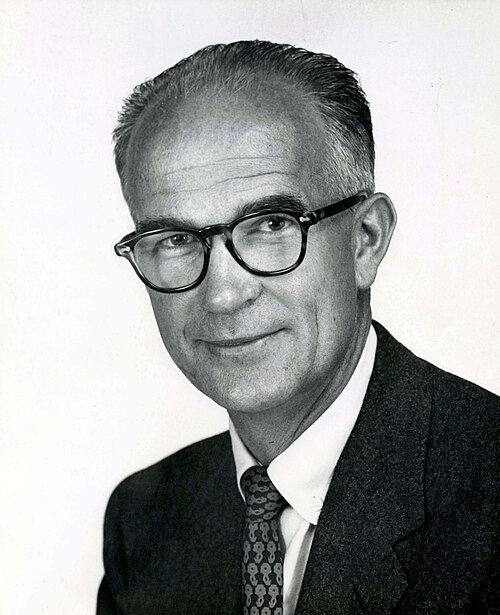
The provocation for ‘the traitorous eight’—as referred to by Shockley—to part company with him was the fact that the latter was as brilliant a scientist as he was a poor leader. He is reported to have been pig-headed in many matters, treating his team members with scant regard. He often behaved as if the eight were trying to undermine him.
When Shockley was ousted from his own company, he joined Stanford as a faculty member. In 1989, he died of prostate cancer, estranged from all his relatives and friends. His children were reported to have learnt of his death through newspapers.
On the other hand, the group of eight who had left him went on to set up Fairchild Conductors and, subsequently, Intel Corporation. They made a fortunate transition from an ‘I and Me’ approach to a ‘We and Us’ one.
The Bhagavad Gita defines ‘sattvic’ actions thus:
नियतं सङ्गरहितमरागद्वेषत: कृतम् ।
अफलप्रेप्सुना कर्म यतत्सात्त्विकमुच्यते ॥ 18.23॥
The assigned action, which is done without attachment, attraction (or) repulsion and without clinging to (its) fruit, is called ‘sattvic.’
Destiny and Free Will
Our praarabdha is like a balance sheet of one’s actions, stored in the celestial cloud at the time of our death. It is like a listing of current assets and liabilities which could get utilised, albeit with a time gap, in the following lives. Virtuous deeds assume the character of an asset, whereas bad ones tend to become a liability.
As per Marcus Aurelius:
Does aught befall you? It is good. It is part of the destiny of the universe ordained for you from the beginning. All that befalls you is part of the great web.
All this is not to say that we need to give up making choices in life. Work we must. Choose we should. However, the endeavour should be to transcend the modes of nature and attain true freedom from the cycle of Karma.
We would therefore do well to do our best and leave the rest. During the effort phase, we need to forget about destiny and focus only on punching the right buttons with confidence. In other words, exercising our free will. When the outcome crystallises, we may accept it with a dash of humility, realising that our destiny has a hand in shaping it. After all, we cannot always be at the right place at the right time.
When we use GPS to reach our destination, the GPS itself could be taken as our destiny, defining the boundaries of our actions. Free will is like reaching a T-junction where we need to make a call on whether to turn right or left!
Austerity of Speech
The Bhagavad Gita speaks of three kinds of austerities. One is that of the body, which implies due respect to one’s teachers and wise persons, purity, straightforwardness, celibacy, and non-injury.
Another is that of the mind, which captures serenity, good-heartedness, self-control, and purity of thought. We shall soon touch upon this elsewhere, while talking about shoring up our Spiritual Quotient.
It also places a premium on the austerity of speech. Specifically, it recommends:
• Speech that causes no shock
• Which is true, agreeable, and beneficial
• Avoiding a waste of this energy
• Recommends its deployment towards self-development
The implication here is that rather than saying a truth which is disagreeable to the listener, one may consider the option of resorting to a discreet silence instead.
Effective communication skills happen to be a powerful weapon in the arsenal at the disposal of a CEO. At a broader level, even body language, eye contact, and speech modulation play a crucial role in improving the effectiveness of communication. When a pink slip must be handed out, it pays to look into the eye of the person concerned and deliver the negative news in a benign and unbiased manner.
Of Ethics, Morality, and Hypocrisy
The Bhagavad Gita takes a jaundiced view of hypocrisy and procrastination.
We are forever under the influence of the triple tendencies of benign activity (sattva), activity (rajas), and inactivity (tamas) inherent in us. Remaining inactive is not an option.
When tamas prevails, one becomes inactive, dull and lazy; when rajas prevails, one is active, passionate about cracking targets and full of energy; and when one is sattvic, one is calm, sweet and gentle, simply because of the balancing of both action and inaction.
नियतं कुरु कर्म त्वं कर्म ज्यायो ह्यकर्मण: ।
शरीरयात्रापि च ते न प्रसिद्ध्येदकर्मण: ॥ 3.8॥
Perform the prescribed action. Action is indeed superior to inaction. Even the journey of your body will not be possible without action.
Here, body, in a general sense, would include mind, intellect, and our ego.
Both hypocrisy and procrastination are best avoided. These are outward manifestations of the tamasic tendencies within us.
As to procrastination, some of the best-known brands have suffered from it in the past. In this context, Kodak and Nokia are examples that come to mind.
The Angry Birds
Anger trickles down the corporate hierarchy like a toxic relay race. The CEO snaps at the VP, who vents at the GM, who then lashes out at the manager, and so on—until even the office boy kicks the dog, and the dog goes after the cat. Each person offloads their irritation onto someone else, leaving behind a workplace full of gloomy faces, hunched shoulders, and whispered complaints. By midday, productivity takes a nosedive, and the only ones smiling are the tea boys, observing the circus with quiet amusement.
The Bhagavad Gita is of the view that lust, anger, and greed are the three gateways to hell.
त्रिविधं नरकस्येदं द्वारं नाशनमात्मन: ।
काम: क्रोधस्तथा लोभस्तस्मादेतत्त्रयं त्यजेत् ॥ 16.21॥
Threefold is the gate to hell destructive of the self; desire, anger, and greed; therefore, one should renounce these three.
One commits sins under the influence of all three—lust, greed, and anger. Greed is nothing but intensified desire, while anger is frustrated desire. When desires get throttled, anger sprouts, often creating a tsunami of destructive thoughts.
Krishna captures the root cause of all shades of anger: desires. If one were to try and control the root itself, much of one’s energies could then be ploughed into nurturing trees which yield juicier fruits in one’s career and life.
Stay tuned for a few more songs in the final part of this series.
(Support from Mr Mayank Bhatia by way of creation of the reels posted here is gratefully acknowledged.)
Related Posts