Feeds:
Posts
Comments

Posts Tagged ‘Management’

ashokbhatia's avatarashokbhatia

Smart managers are always keen to ‘sharpen their saw’. They always remain alert to new ideas from all sides. Movies are no exception. These provide valuable inputs to managers at all levels – from green-behind-the-ear beginners to CEOs and owners.

Here is an update on the key take away lessons from some of the movies I am aware of: some from Kollywood, some from Hollywood and many others from Bollywood.

ENTERING THE CORPORATE JUNGLE

  • Setting Realistic Goals (Manal Kayiru: A Rope/Thread of Sand)movieposter-_manal_kaiyru_2

Be Realistic, whether looking for a life partner or a job! The hero sets impossible conditions to be met while seeking a life partner. As a result, he gets conned into marrying a girl who is exactly the opposite.

In the arena of management, we work with customers, suppliers, employees, service providers and other stakeholders. It helps us to be realistic about what we want from…

View original post 2,156 more words

Read Full Post »

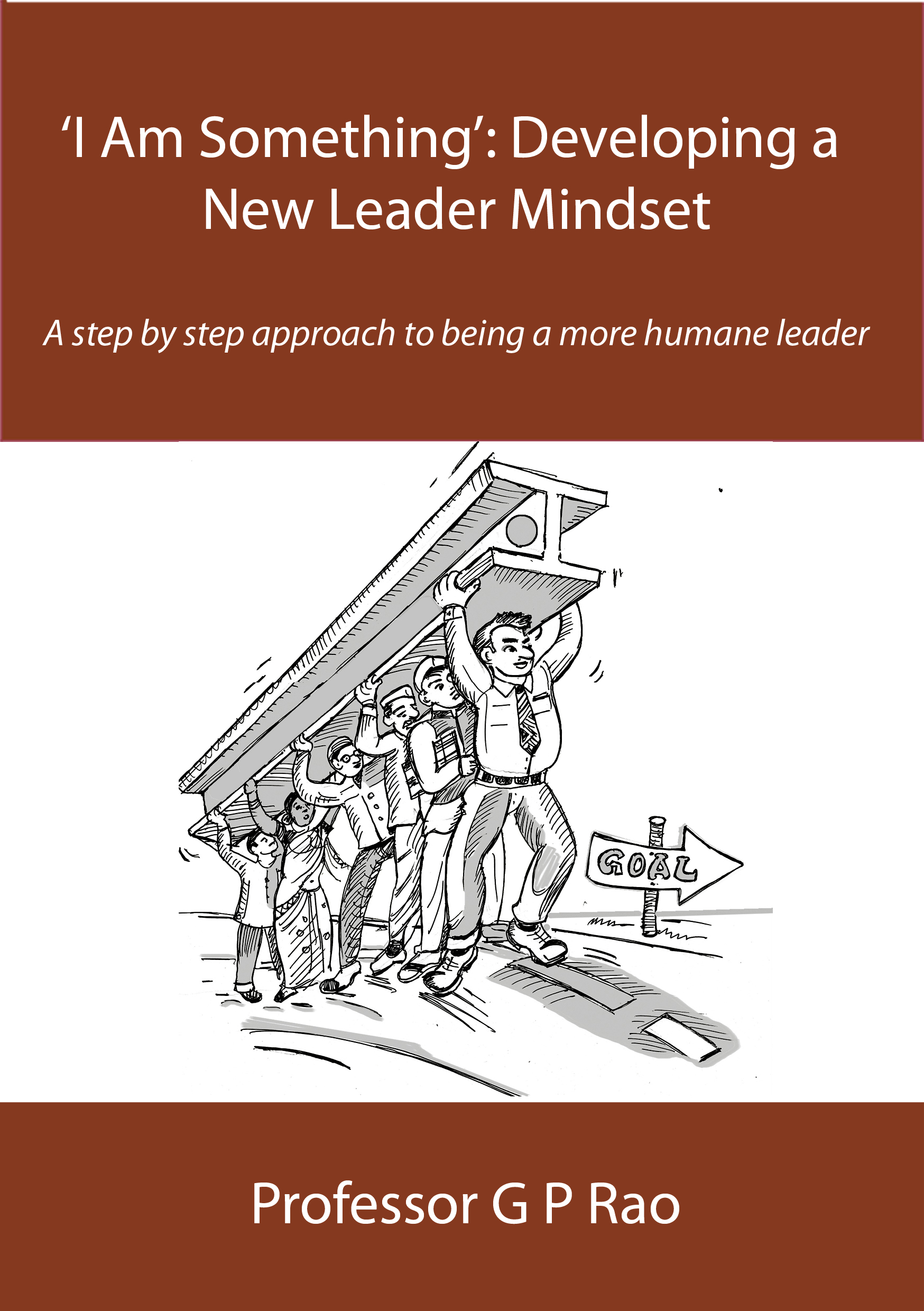
(The following is an abridged and modified excerpt from the book ‘I Am Something: Developing a New Leader Mindset’, authored by Prof G P Rao, founder of SPANDAN, yours truly and others.)

Advances in technology inevitably lead to more efficiencies, better products and improved lifestyles for people. But each leap of faith into the domain of a newer technology brings with it a set of newer challenges for mankind. As machines increasingly take over the drudgery of repetitive tasks and become more intelligent, human beings invariably need to re-skill themselves. This applies to business leaders as well as their followers.

The Fourth Industrial Revolution in the offing now builds on the Digital Revolution, representing new ways in which technology becomes embedded within societies and even the human body.

Skill-sets of the future

As per a World Economic Forum document titled ‘Future of Jobs Report’, employers are said to anticipate a significant shift in the division of labour between humans, machines and algorithms for the tasks of today.

The aforesaid report states that of the total task hours across the industries covered, on an average, 71% are currently performed by humans, whereas 29% are performed by machines or algorithms. By 2022, this average is expected to have shifted to 58% task hours performed by humans, and 42% by machines or algorithms. It can be readily appreciated that this signifies a very rapid pace of change, something for which leaders need to be better prepared.

The report goes on to project that skills related to analytical thinking, active learning, technology design and technology competency would grow in prominence. It also proposes that such ‘human’ skills as creativity, originality and initiative, critical thinking, persuasion and negotiation will either retain or increase their value, as will attention to detail, resilience, flexibility and complex problem-solving.

It follows that in the impending man-machine conflict, human beings are not likely to suffer the same fate as that of the non-avian dinosaurs which went extinct some sixty-five million years ago. But the writing on the wall is clear. They need to roll up their sleeves and get down to the task of sharpening their soft skills. A humane approach to handling team members needs to be consciously developed, especially when operating in a business environment characterized by a shortage of skilled workers. In turn, this would pre-suppose a higher Emotional Quotient and better service orientation. Even as the reliance on artificial intelligence grows for the analytical part of decision making, the role of intuition would become even more crucial.

A focus on the bottom line

Most employers would go in for innovating through technology if it makes business sense. It follows that technology would continue to remain a tool in the arsenal of the corporate world to squeeze more profits out of their operations, thereby making careers more fragile and impacting labour incomes adversely. With 24×7 connectivity, people are already working longer and enjoying lesser leisure time.

In a scenario of this kind, there is a grave risk that leaders would end up losing a connection with themselves even more than at present and hence end up de-humanizing the work place.
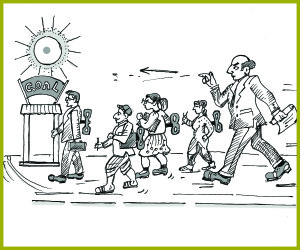
However, values remain indestructible. As an example, honesty and truthfulness in relationships is something which is bound to withstand the onslaught of newer technologies in the centuries to come. Same is the case with empathy, compassion, resilience and a flexible approach in problem solving.

Perhaps there is a need for governments the world over to anticipate newer moral and ethical dilemmas in a proactive manner and influence technological developments suitably, so human dignity and freedom is not compromised.

The perks and the perils

One may also surmise as to how the imminent advances in technology could throw up positive as well as negative factors which are likely to impact the man-machine equation in the times to come.

According to a 2014 report entitled ‘AI, Robotics, and the Future of Jobs’, published by Pew Research Centre, researchers Aaron Smith and Janna Anderson went to the extent of seeking feedback from as many as 1,896 experts. They found that when it came to the impact of advances in technology upon economic opportunity and employment, the opinion was deeply divided.

The optimists opined that technology would free us from day-to-day drudgery and end up redefining our relationship with ‘work’ in a more positive and socially beneficial manner. They felt that we shall adapt to these changes by inventing entirely new types of work and control our own destiny through the choices we make.

The pessimists amongst those who participated in the aforesaid study were of the opinion that the coming wave of innovation would mostly impact those involved in white-collar work. Whereas highly skilled workers will do better, many more might get pushed into lower paying jobs, and might even face permanent unemployment. They also felt that our educational, political and economic institutions are poorly equipped to handle the challenges which are likely to come up.

The aforesaid piece of research throws up instructive insights into how the future might shape up. Leaders and managers really need to think up some innovative ways in which they would handle a highly polarized workforce, comprising a disgruntled lot at one end and a highly skilled one at the other.

The challenge of creating happier workplaces

Unlike the earlier industrial revolutions, which first created and then changed the skill sets required by our blue collar workforce, the Fourth one promises to change the work profile of our white collar workers.

In his book, The Fourth Industrial Revolution, Professor Klaus Schwab, founder and executive chairman of the World Economic Forum, describes how this fourth revolution is fundamentally different from the previous three, which were characterized mainly by advances in technology. According to him, these technologies have great potential to continue to connect billions of more people to the web, drastically improve the efficiency of business and organizations and help regenerate the natural environment through better asset management.

As we grapple to understand the future direction of monumental changes in our socio-economic fabric owing to the next phase of technological evolution, few things stand clear.

One, that our educational institutions are nowhere near the task of training a workforce which would not learn analytical skills by rote but would grasp the importance of creativity, resilience and improve upon their Emotional Quotient.

Two, most of our governments are yet to devise ways and means of regulating issues of protecting individual privacy, executive burnouts arising out of a 24×7 connectivity and heightened civic strife due to growing inequalities. The next phase is bound to create a newer class of elite – those who are adept at newer technologies, leaving far behind those who are not.

Those in the first category could end up believing that they are all too powerful. Those who remain blissfully ignorant and continue to be disconnected to those who are reaping the benefits of newer technologies are likely to gravitate towards a belief that they have no place in the knowledge universe. With poor resources of material as well legal kind at their command, these new ‘have-nots’ of the society may be doomed to languish for a long time, till the governments of the day intervene, willfully or otherwise, and ensure implementation of economic policies which are more inclusive in nature.

The third kind, comprising those left in the middle of the normal distribution curve of technology dispersal, could end up having a balanced approach to issues. In fact, with advances in technology, this kind could well face a higher risk of extinction, paving the way for those who believe themselves to be all too powerful to rule the roost.

The same pattern may become apparent in the realm of management as well. Leaders and executives would need to increase their engagement not only with the society at large, but also with the governments of the day. A massive effort at re-skilling personnel would become a necessity.

A matter of trust and privacy

Infosys co-founder N R Narayana Murthy happens to be of the view that technology is a great leveller. He thinks that technology has improved transparency, conquered distance and class barriers. Also, that it has the potential to create a fair society and enhance the accountability of the rich, the powerful and the elite to the poor and disenfranchised in all societies.

One cannot dispute this. However, concerns regarding an increasing trust deficit remain. Denizens of many countries are feeling increasingly jittery over instances of data privacy. Moral policing, electoral pitching, rumour mongering – all these are fuelling this trust deficit.

One case in point is that of Facebook which is already armed with tools to dig deep into our lives, with the singular aim of moulding our thoughts and opinions about diverse aspects of our lives.

Employees in most organizations already resent living in a virtual fish bowl, where all their communications are suspected to be getting monitored. No one likes to be micro-managed, especially those who are capable and self-confident. Business enterprises have already started deploying tools to monitor employee productivity by collecting and analyzing their activity and inactivity levels.

In the long run, a work environment of this nature would end up impacting productivity, commitment and motivation levels adversely.

(Since 2020, the coronavirus has brought into focus the perils of techno-capitalism, dividing the society into those who can readily access technology and those who cannot. In an emerging economy like that of India, many school students have been left out of the formal learning loop because of their not having been able to access online classes. Rather than technology proving to be a leveller, it has instead proved itself to be a disruptor. Work-from-home has brought in behavioural changes amongst the knowledge workers, whereas migrant labourers have suffered from the trauma of displacement and loss of earnings.) 

The ever-increasing rate of change

One thing is certain. Change is not only a constant. With each passing year, the rate of change is also increasing. Much like Alice in Wonderland, Homo sapiens are discovering that they need to keep running faster and faster, with nary a respite in sight. Mankind is bound to evolve further much earlier than what was believed in the past. Alvin Toffler would perhaps heartily approve of this proposition.

Unlike thought so far, the man machine relationship shall become more integrated with each other in the near future. As a result, the combined force of processing of billions of data points for efficient decision making by machines, and contextual, emotional and intuitive aspects of decision making by human beings, would be, to that extent, higher and greater in their respective impacts – for good or bad.

What can be done to meet the challenge

– Employees, whether present or potential, can go beyond the formal education system and aggressively look for avenues to hone their skills, so as to remain employable. As Stephen R Covey has said, we need to keep our saws sharpened.

– Same applies to our business leaders, who would do well to improve upon their Emotional Quotient.

– The agenda for educationists and politicians is clear: To keep taking steps to facilitate the change already upon us; to anticipate the challenges of privacy and rumour mongering and to intervene to have appropriate safeguards embedded in upcoming technologies.

(References:
https://www.weforum.org/reports/the-future-of-jobs-report-2018
“Future of Jobs.” Pew Research Center, Washington, D.C. (December 11, 2014);
http://www.pewinternet.org/2014/08/06/future-of-jobs)

(Illustrations courtesy www)

Read Full Post »

ashokbhatia's avatarashokbhatia

Movies reflect what is happening in the society. In some cases, like literature, they also hint at what could be in store for us in the days to come. They not only influence what happens in the society, but also take a harsh look at its ills – including their own! There are a number of spoofs, created by some of our best known dream merchants, which reveal the level of maturity the film industry has attained.

Somehow, movies examine only some segments of the society; that too, mostly along predictable lines. Politicians, cops, industrialists and others are mostly depicted in a stereotyped manner. Business and management have so far not merited much attention from our film makers.

If business has been captured, it has mostly been depicted to be ruthless. Catering to mass appeal, the film makers have propounded the belief that big money is invariably bad. The fact…

View original post 1,939 more words

Read Full Post »

ashokbhatia's avatarashokbhatia

CEOs and managers wanting to puncture the stress bubble these days have several options. Some can head to the nearest gym and burn away those blues. Some can simply switch off their technical gizmos and spend some quality time with their loved ones. Some can start learning yoga and meditation. Some can choose to put off the lights at home, put on some soothing music and relish their favourite tissue restorative, sans any distraction.

Others can pick up any work of P G Wodehouse or Terry Pratchett and recharge their batteries. Or, they can look up the delightful work of such eminent cartoonists as R K Laxman and Mario Miranda, both of whom have looked at managerial situations with the lens of sparkling wit and humour.

In Mario Miranda’s cartoons and illustrations, we come across the buxom but woolly headed secretary, Miss Fonseca. We also get to meet Mr. Godbole…

View original post 522 more words

Read Full Post »

ashokbhatia's avatarashokbhatia

Gandhi by R K Laxman

Mahatma Gandhi, revered the world over as an apostle of peace and non-violence, led India’s freedom movement. His birth anniversary gets celebrated on the 2nd of October.

Are his teachings relevant to the world of commerce and business? Can CEOs of today learn a thing or two from his aphorisms?

Here are few of his thoughts which business owners, CEOs and managers might find of some interest.

The future depends on what you do today.

Managements who care for their brands re-engineer their business processes and ensure sustainable operations. They respect the environment and the aspirations of the local communities. They ensure compliance with local laws. Ethics and values are strictly adhered to.

A customer is the most important visitor on our premises. He is not dependent on us. We are dependent on him. He is not an interruption in our work. He is the purpose of it. He…

View original post 757 more words

Read Full Post »

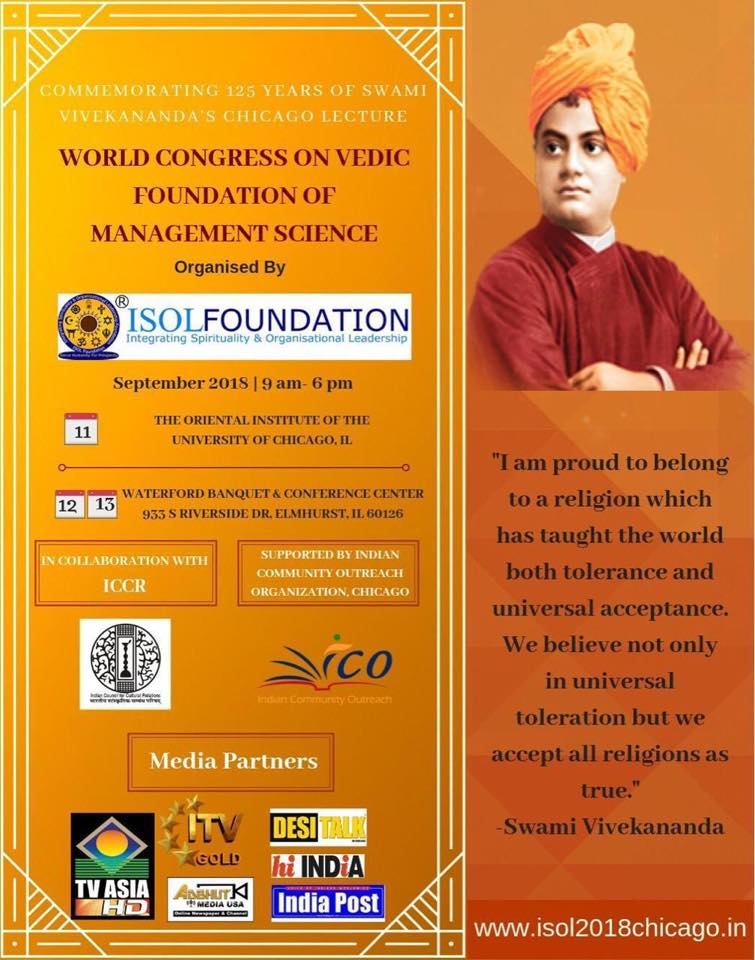
In order to commemorate 125 years of the Chicago address of Swami Vivekananda, Integrating Spirituality and Organisational Leadership (ISOL Foundation) had recently organised a World Congress on Vedic Foundations of Management Science.


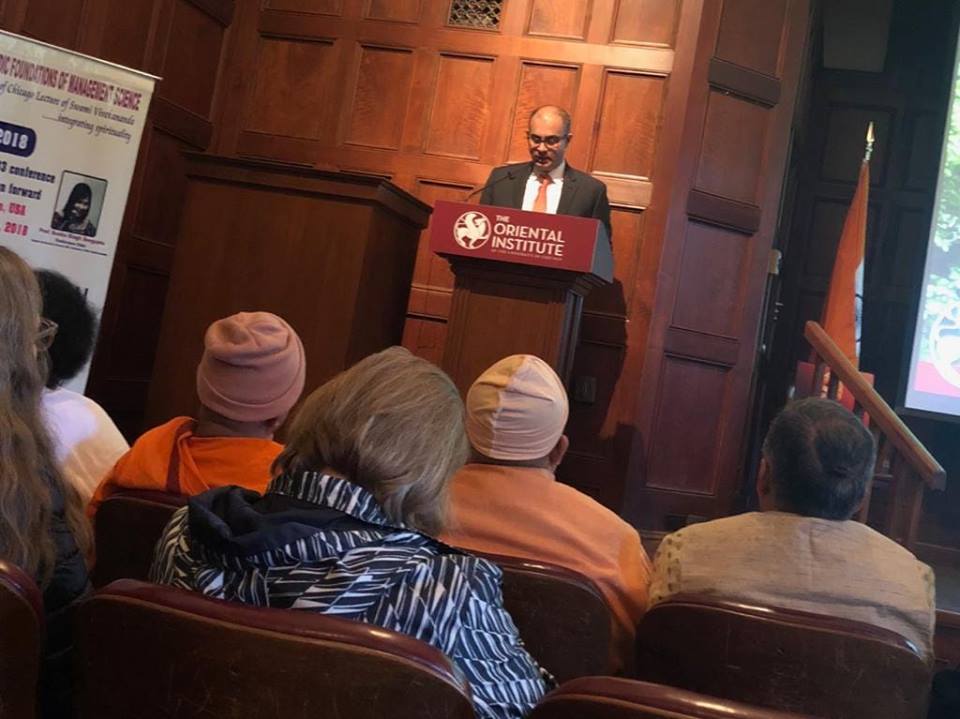
Several luminaries and experts in diverse fields addressed the gathering, which was inaugurated on the 11th of September at the Breasted Hall, The Oriental Institute, The University of Chicago. Distinguished Trinity and ISOL Awards were presented on the day. The event concluded on the 13th of September, 2018.

The Inaugural Session started with a Welcome Address by Dr J L Raina, Chairman of ISOL Foundation. Vedic Mantras were chanted by Mr Ashok Vyas, followed by a Welcome Song penned by Mr D V Shastry.

Prof Sunita Singh Sengupta, Founder ISOL Foundation, welcomed the delegates and presented a Background Paper.

The Inaugural Addresses were delivered by the following:

  • Ms Neeta Bhushan, Consul General of India in Chicago
  • Dr Larry Greenfield, Executive Director, Parliament of the World Religions
  • Prof Bala Srinivasan, Vice President, Strategy and Global Initiatives, University of Chicago
  • Prof Sunaina Singh, Vice Chancellor, Nalanda University

Rich tributes were paid to Swami Vivekananda by:

  • Prof Dinesh Singh, Former Vice Chancellor, University of Delhi and Chancellor, K R Mangalam University
  • Dr Bharat Rai, Oncologist in Chicago
  • Dr H P Kanoria, Founder, Shristi Corporation, SREI Infrastructure Finance Limited and SREI Foundation
  • Swami Yatidharmananda, Managing Tustee, Swami Chidananda Sevashram

The following tracks were covered at the three-day event.

  • Sri Ramakrishna, Ma Sarada and Swami Vivekananda
  • Education in Ancient India
  • Women Empowerment
  • Contemporary Themes on Spirituality, Ethics and Management
  • Global climate change and Eco System Management: Insights from Vedas
  • Ancient Indian Mathematics and Astronomy: Its Contemporary Relevance
  • Ayurveda, Yoga and Meditation for Modern Health Care
  • Ancient Indian Architecture, Sculpture and Art
  • Exploring Sustainability through Spirituality
  • Contemporary Themes on Scriptures, Ethics and Management
  • Vedic Foundations of Management

The last mentioned session was chaired by Prof Neal McGregor.

  • Prof N Ravichandran shared ‘Managerial Insights from Panchtantra Stories’
  • Prof Omprakash K Gupta elaborated upon his passion for ‘Simplifying and Summarising Sanatana Dharma Scriptures for our Youth’
  • Prof Kisholoy Gupta spoke of ‘Vedantic Wisdom in Contemporary Management’
  • Dr Ravi Subramaniam presented ‘A Qualitative Examination of Leadership Traits of Ram from Shrimad Valmiki Ramayan’
  • Yours truly presented a paper on ‘Ramayana – Some Management Lessons’.


Here is the PPT which might be of interest to some of you.

Ramayana Management_Lessons Chicago PPT


Distinguished Valedictory Lecture was delivered by Lucy Forster-Smith, Senior Associate Pastor for Leadership Development, Fourth Presbyterian Church, Chicago.

Dr J L Raina and Prof Sunita Singh Sengupta summed up the proceedings of the commemoration event.

(Thanks are due to several persons who added value to my presentation and gave a final shape to it.)

Read Full Post »
Vision and Mission Statements of corporates adorn their walls and can be readily copied. However, the value system of an organization is not something which can be copied very easily. It permeates the entire organization – its hierarchy, its various divisions or departments. It rubs off on most of its employees. Even service providers and supporting manufacturers get tuned to the same frequency. It would perhaps not be wrong to surmise that values are to an organization what the soul is to a physical body. Organizations which thrive over a long period of time and achieve sustainable commercial success would invariably be found to have sound values at the core of their operations.

Manifestation of values

Small things reflect the values being followed – whether spaces in the car parking lot are allotted hierarchy wise or are based on a first-come-first-served basis, whether the corner office has high sound-proof walls all around or is open to all to signify transparency, whether the boss is entitled to charge the company for her spouse accompanying her on a business trip, whether office stationery items get whisked off to executives’ households for use by their kids, or whether use of cell phones or social media platforms is viewed with a sense of benign resignation by a hapless human resources honcho.

One striking feature of values is that even if these remain spoken of in hushed tones and get communicated more effectively through grapevines which are embedded deep in any organization, it is leadership which sets the tone. Those down the ladder fall in line. Those who shape up, and have a reasonably good performance on the job, survive and do well. Those who do not, get eventually shipped out. The latter then try to look for other organizations where the values – theirs and those of the organization – happen to be in harmony.

When head-hunting for a CFO, Human Resources honchos know pretty well that even though the final three short-listed aspirants happen to have near-identical qualifications and experience, their personal value systems would set them apart. One would not mind being used to extensive window dressing to please diverse stakeholders, thereby raising the concern for a disaster lurking round the corner in not so distant a future. Another might admit to being open to transactions in hard cash, thereby consolidating his own power and pelf in the company, if appointed. Yet another one might take a dim view of any underhand dealings and project the image of someone who believes in transparency with the internal as well as the statutory auditors, thereby leaving the CEO and the board of directors breathing easier. If the management cares about maintaining high standards of corporate governance, the last one would land the assignment.

At the macro level, values of an organization manifest in the wisdom which underlies their actions. When it comes to achieving the heights of corporate excellence, organizations which have sound long-term values are invariably found to enjoy strong brand equity. Scratch beneath the surface and one is apt to discover the wiser ways in which it conducts its operations. Its initiatives lead to a sustainable growth of the business, giving back to society in ways which are imaginative as well as pragmatic.

Take the case of Tatas, a salt-to-software business conglomerate which has more than one hundred companies in its fold, spread over more than one hundred countries. Their businesses might be as diverse as chalk and cheese but much like beads strung together by a string, what holds all these outfits together is a common set of values which the group stands for. The name stands for dependability and better value for money. Around two-thirds of the profits of the group flow into Tata trusts which channelize these back to the society in myriad ways.

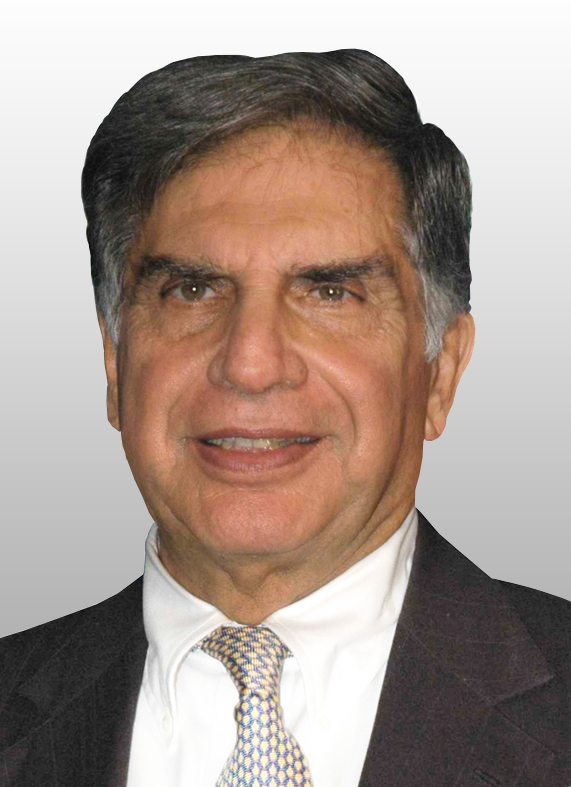
Speaking to the conglomerate’s leadership recently, Ratan Tata, Chairman Emeritus, said that the group has been under “fire” for the past few months due to allegations of mismanagement and “being in business for reasons other than good corporate governance”. “The spirit that we had that made us grow to $100-billion revenues has not been through mismanagement and unethical procedures,” he said, adding that it has grown by being a visionary, having a spirit of integrity, unity and doing philanthropy.

Products and organizations have life cycles of their own. Just like the human body is prone to many changes – birth, existence, growth, decay, disease and death. But values outlive these perils of life; somewhat akin to the Self which Gita holds to be eternal and deathless. Values pervade all arms of any organization.

अविनाशि तु तद्विद्धि येन सर्वमिदं ततम् |
विनाशमव्ययस्यास्य न कश्चित्कर्तुमर्हति || 17||

avināśhi tu tadviddhi yena sarvam ida tatam
vināśham avyayasyāsya na k
aśhchit kartum arhati

That which pervades the entire body, know it to be indestructible. No one can cause the destruction of the imperishable soul.

An inner connection to handle myriad challenges with aplomb

Hapless CEOs face myriad challenges. There are pinpricks from customers, employees, suppliers and many other stakeholders. The directors and the shareholders have to be kept in a positive frame of mind. Regulatory agencies and government departments have to be kept in good humour. Concerns for upholding norms of corporate governance keep snapping at their heels. Only nerves of chilled steel and deep reserves of inner resilience can help them to keep performing on all the twelve cylinders. An inner connection surely helps.

In an indirect manner, Gita touches upon the importance of an inner connection for business leaders. It holds that wise are those who enjoy a tranquility and calmness within themselves. Their inner being is in harmony with their outer being. Their decision-making is based on balanced, well-considered and a holistic view of the facts of the case. They do not manage crises in business with knee-jerk reactions. They deal with people according to their nature and with occurrences in the business environment according to their force and the truth or hard reality they represent. Impartial they are. Detached they are. Compassionate they happen to be, but never at the cost of their innate wisdom and truth. And never do they compromise on their core values.

Read Full Post »

ashokbhatia's avatarashokbhatia

Those of you who are fond of cats would perhaps be able to draw a parallel between the behavioral traits of the bosses they deal with at their place of work and the feline creatures whose company they cherish at home.

Here are some of the roles which appear to be common between the two species.cat 4

Actors

Both expect to be treated like royalty. The way they conduct themselves is nothing short of regal. They lord over whatever they survey. They can show off annoyance at being interrupted – while devouring a slice of fish as well as while delivering a sermon on office manners.

Never would they show appreciation for what you do. The only time you find them cuddling up close and purring is when they need a tacit assurance of your support towards an assured delivery against a juicy target set by the top dog.

Try and…

View original post 731 more words

Read Full Post »
ashokbhatia's avatarashokbhatia

After the 2008 economic meltdown, the management world has discovered that CEOs need to follow not only a Business Compass but also a Moral Compass to steer the enterprises they happen to head. Improving one’s Spiritual Quotient is now a sheer business necessity, and shall be more so in the decades to come.

It is here that Indian scriptures and sages provide a ready template for managers of all sizes and shapes. Let us consider a few facets of some of the pearls of Indian wisdom which find ready application in the realm of management.

Some pearls of Indian wisdom 

Ramayana

  • The entire narrative highlights the importance of values in our lives.Ramayana 1 Businesses which follow a policy of righteousness and conduct their operations in an ethical manner enjoy tremendous brand equity in the market. This rubs off on their products as well as on their employees.
  • Lord Rama decides to…

View original post 1,739 more words

Read Full Post »

The short half-life of all things material

If Marie Curie had decided to become a human resources professional at some point of time in her sterling career, she would surely have had something to say about the half-life of so many things:  Interpersonal Relationships, Joys and Sorrows, Promotions, Increments, Awards and other recognition which come one’s way all the time. Even insults, abuses and rebukes hurled at managers by their bosses, whether in private or in public, would have invited a comment or two.

Consider this. When one is about to join a company, a sage looking junior executive responsible for handling one at the selection stage would invariably paint a rosy picture about the state of affairs. One would be shown the kind of awards won by the company while discharging its Corporate Social Responsibility mandate.

If selected and upon joining, the demo version would continue right into one’s induction period. A honeymoon phase would invariably follow. All would be hunky and dory. Till the day, of course, when the boss would call one in, look her in the eye, and suggest that she start preparing for a bigger challenge – something like camping on the Mars and peddling the company’s goods and services out there. The scales would then start falling from one’s eyes. The warts would start becoming visible.

Likewise, when a special promotion or increment comes one’s way, a short span of happiness and exhilaration is bound to lift one’s morale. However, with the passage of time, the recognition would start losing its sheen. Challenges in the new position would weigh one down. Ask a canteen boy who is suddenly promoted as a canteen manager. Ask a production supervisor upon whom fate has smiled and who has suddenly found himself promoted to the level of a production manager. Ask a sales representative who finds himself elevated to the rank of a sales manager. There is a good chance that most of such promotees, having found their level of incompetence, would start ruing the day they got promoted. To their utter horror, they would discover that doing a job with their own hands was far easier than getting others to do the same job. Bosses who had originally pushed for the promotion of these souls would be looking sheepish and diffident in such group meetings where the performance, or the lack of it, of the promotees would be on full public display. The management may eventually come to regret the decision to confer a promotion on such souls.

Or, take the case of a bloomer having been made and the resultant rebuke delivered by a senior. If the same is delivered in private, it could lead to some soul-searching and perhaps some improvement in the future handling of similar assignments. Once the basic feedback is ingrained within, the incident may tend to get relegated back into one’s consciousness. However, if the same feedback is delivered in public, the impact would be much higher. A feeling of guilt, shame and remorse may come about, leading to poorer performance on the job. One could then be caught in a downward vicious cycle. A feeling of revolt and revenge may also pop up. Depending upon one’s sensitivity levels, the incident may remain in one’s active memory for a long time to come, leading to a drop in self-esteem and self-confidence.

The common thread in all these occurrences is that nothing is of a permanent nature. Life keeps throwing bouquets and brickbats one’s way. The impression created on one remains a function of time. That is how, wise men say that ‘Time is a great healer.’

Of reversal of polarities

Yet another feature of mortal things is what experts in the science of magnetism would thoroughly approve of. This one pertains to reversal of polarities. A person, an object or even a relationship which happens to be positive at one point in time could easily become negative at another point in time.

A boss who happens to be a role model could one day metamorphose into a villain in one’s career. Over a period of time, unstinted support from her could vanish and assume the sinister shades of vehement opposition to whatever brainy scheme one comes up with. The underlying reasons could be many. An inner sense of insecurity in her. A mere suspicion that you are in cahoots with a senior of hers she takes a jaundiced view of. A personal issue which has made her lose a sunnier outlook about life.

Likewise, a much coveted transfer or promotion could eventually prove to be an albatross around one’s neck. Unforeseen dimensions could open up when handling the situation on the ground. When wisdom dawns, one might realize exactly what the boss meant when she looked one in the eye with a steely eye and surmised that the only person who she thought could gleefully take up a challenge of that nature would have been one alone! The glamour which appeared to have been associated with the event gives way to a sense of entrapment. A sense of despondency overtakes one.

This is what the Gita has to say on the nature of material things:

मात्रास्पर्शास्तु कौन्तेय शीतोष्णसुखदु: खदा: |
आगमापायिनोऽनित्यास्तांस्तितिक्षस्व भारत || 14||

mātrā-sparśhās tu kaunteya śhītoha-sukha-dukha-dā
āgamāpāyino ’nityās tans-titik
hasva bhārata

“O son of Kunti, the contact between the senses and the sense objects gives rise to fleeting perceptions of happiness and distress. These are non-permanent, and come and go like the winter and summer seasons. O descendent of Bharat, one must learn to tolerate them without being disturbed.”

Why sweat over the small stuff

The fact remains that life rarely unfolds the way one wants it to. Others do not necessarily behave as one would like them to. There are always those who would disagree with one. Things are not handled the way one would expect them to be handled. Some things work out with little effort. Others do not, even with much greater effort. So, if one chooses to fight against this strong undercurrent of life, one would spend much of one’s time in life fighting battles of an insignificant import. Instead, much like Arjuna, one could eventually choose to fight in a war which is based on the principles of righteousness.

One needs to realize that things are of a transient nature, whether people, objects or incidents. Also, what emanates positive vibes and gives pleasure today could well turn out to be a source of torment tomorrow.

If so, there is no reason for one to sweat over such transient things. One might instead focus one’s energy, time and resources on things which are have a much longer shelf life.

A hapless CEO lives from one financial quarter to the next. A gentle nudge to her Chief Financial Officer brings about some improvement in the quarterly guidance values. However, there are limits to which receivables can be stretched, inventories can be buoyed up and expenses deferred to the next quarter. Sweating over the same stuff every quarter takes its own toll on the team’s stress levels. A myopic vision gets developed. A long-term value-based view runs the risk of getting relegated to the background.

Of things which have a much longer shelf life – Values, Character

Which are the things which have a longer shelf life, one may well ask. One’s value system. One’s character. One’s attitude towards life in general. One’s own brand equity. One’s capacity to be able to handle the rough and tumble of a management career. One’s ability to take decisions based not only on big data analytics but also on intuition.

These are the kind of things which are made of sterner stuff, so to say. Vagaries of time find it difficult to chip away at these innate qualities of one. Once this core is managed well, external things fall in place most of the times. One’s responses to people and circumstances become more nuanced, thereby improving one’s managerial effectiveness.

Putting a realisation to practice

It is one thing to know about the impermanence of things in one’s life. But it is quite another to learn to ignore the small stuff and not get swayed by the immediate circumstances. Nerves of chilled steel need to be developed. A state of inner calm needs to be cultivated. A habit of calm endurance, both in pleasure and in pain, needs to be formed. Inner Resilience needs to be imbibed.

Bhagavad Gita exhorts one to do precisely this. It goes on to propose that a person who has attained this state of mental equipoise attains immortality. The principle of reincarnation comes in here.

यं हि न व्यथयन्त्येते पुरुषं पुरुषर्षभ |
समदु:खसुखं धीरं सोऽमृतत्वाय कल्पते || 15||

ya hi na vyathayantyete puruha puruharhabha
sama-du
kha-sukha dhīra so ’mitatvāya kalpate

“O Arjun, noblest amongst men, that person who is not affected by happiness and distress, and remains steady in both, becomes eligible for liberation.”

Leading a vibrant life

Lord Krishna is not exhorting one to lead a monastic life which would be somewhat monochromatic in nature. He is merely saying not to get swayed by the ups and downs of life. In one’s journey towards attaining perfection, one can make the conscious choice of enduring meekly the little joys and pinpricks of life.

Here, He does not allude to a hapless endurance of the setbacks experienced in one’s career. That would indicate an attitude which has its origins in the dark recesses of the mind, harbouring such tendencies as procrastination. Instead, the reference here is to the sunlit valleys of life through which flow the rivulets of wisdom and understanding.

Consider the case of a manager who has been given a pep talk by his boss. He is now aware of the bigger picture and is fired with a missionary zeal to achieve his target. He is prepared to make many sacrifices on the way, because he has found a deeper purpose behind the task he is entrusted with. If a bouquet is received in the interim, he feels happy but does not slacken his efforts. If some brickbats get flung at him, he takes the feedback in his stride, sifts the wheat from the chaff, and chugs along till the target is achieved.

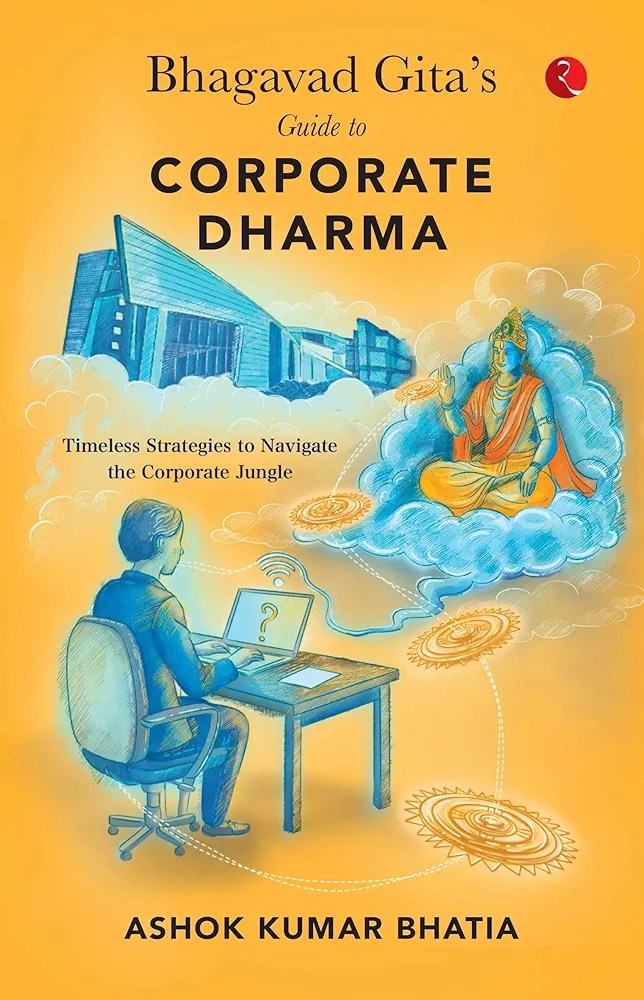
(A version of this post will appear in a yet-to-be released book authored by yours truly on Management and Bhagavad Gita)

Read Full Post »

« Newer Posts - Older Posts »