Feeds:
Posts
Comments

Posts Tagged ‘Management’

The gang of twenty-five wannabe managers, when it entered the not-so-hallowed precincts of the University Business School of Panjab University, Chandigarh in the year 1974, was clueless as to the effective use to which the power of music could be put to practice the art of managing people.

Much later in their careers, some members of the gang might have woken up to the immense potential of healthy musical practices when it came to surviving in the corporate jungle. Some would have soared higher whistling the tune that their bosses wanted to hear from them. Others would have become great leaders based on the results their teams produced, much like an orchestra gets led by a conductor to produce mellifluous symphonies.HIS MASTER’S VOICE

Some might have perfected the art of phasing out dissent from their team members by the sheer power of their vocal chords, not alike the way even soulful lyrics get drowned by loud music in some of our best movies these days. Others might have formed a Mutual Appreciation Team by bonding with like-minded colleagues, much like a group of star artistes who transcend man-made borders to come up with their own brand of fusion music.

When faced with a challenging task, an informal chat, especially when conducted in the presence of appropriate tissue restoratives, duly backed by some soothing music playing in the background, often helps.

Discovering the Music Society

Two members of the gang, however, stood out. Having spent much of their previous years in understanding and memorizing basic principles of Physics and Chemical Engineering, a course in business administration gave their grey cells some well-deserved breathing time. Soon, they discovered the presence of a Music Society on the campus. Prompted by another musical soul from the 1973-75 batch, they joined the music classes on offer.Chandigarh Music Society 7

One aspired to learn playing the sarangi, while another, yours truly, weakly attempted to master the art of playing a guitar. Friends and critics obviously had their doubts on the efficacy of our musical endeavours. Luckily, they were too busy with their own lives to continue to watch our progress with any interest whatsoever.Chandigarh Music Society 2

On a personal note

Allow me to digress a wee bit and divulge that since childhood, my parents had repeatedly failed in their attempts to get me trained in classical vocal music. Subsequently, a banjo was gifted, in the fond hope that I might make something out of it. Alas, that too was not to be. Since there was no Wodehousean kid character like Edwin around, using paraffin sprays to douse fires, the instrument never went up in flames. It merely got lost in the rapids of time.

Eventually, my parents gave up and resigned to my limited capability of belting out some movie songs at birthday parties and some social events.

The original singers of most of these compositions were such stalwarts as Hemant Kumar, Talat Mehmood, Rafi sahib and Kishore Kumar. Luckily enough, none of my attempts to copy them ever reached their ears. Had a calamity of that nature come about, they would still be found shuddering in their graves.

My crude attempts at singing were carefully planned at such locations where donkeys could not have ready access. This way, I avoided the risk of a bunch of them joining me in unison, overjoyed at having finally found a brother-in-notes amongst the Homo Sapiens.MBA 1976
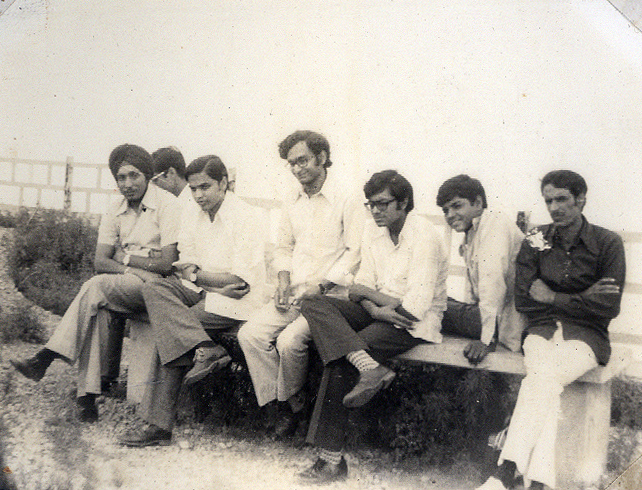
Treks to Kasauli and nocturnal visits to Morni hills nearby provided several other opportunities for me to display my singular lack of vocal skills. I still admire the tenacity and politeness of some of my hapless batch mates who not only tolerated but also applauded such renderings.

The sound of musicChandigarh Music Society 5

The association with Music Society added some colour and spice to the otherwise staid life on the campus. The members were drawn from different departments of the University. During 1975-76, the group even decided to confer on yours truly the title of Chairman, though I still wonder what I had done to deserve the honour.Chandigarh Music Society 4

Two events readily spring to my memory. One was a grand cultural show, where Mrs. Bimla Paul, wife of the then Vice Chancellor of the University, accepted our invitation to be the Chief Guest. The show was named ‘Swar Gunjan’. It was held at the University Auditorium.Chandigarh Music Society 3

Some members performed a Tibetan Yak dance. My batch mate and I, more busy coordinating the back-stage gaffes and on-stage slip-ups, were part of a group which presented an instrumental version of an old song ‘Aayega aane wala…..’ from the movie ‘Mahal’.Chandigarh Music Society 1

Yet another highlight was a bloomer in the shape of a post-card handwritten invitation sent to the inimitable Amjad Ali Khan sahib, requesting him to play at the University. After some time, surely despite our invitation, he did come over to the city and performed at the auditorium of PGI, right opposite the University Campus. Needless to say, that was a veritable treat.Ustad Amjad Ali Khan

A tool for enriching our lives

Looking back, the key lesson was the importance of indulging in extra-curricular escapades in that unique phase of life. It broke the monotonous tyranny of a class room instruction. It came across as an instructive experience which broadened one’s mental horizons and provided one with a diverse group of people to interact with. One learnt the art of event management, a term which was not in vogue in those internet-less and smart-phone-less times.

One might not have learnt what exactly what one set out to learn, but the spin-offs have surely been a reward in themselves. Above all, a connection with music, howsoever tenuous, got reinforced.

Music is not only a food for the soul. It also nourishes our mind, cleansing it of all the negative toxins which dampen our performance. It enriches our lives in more ways than one. It helps us to have better interpersonal relations. It even helps budding managers and entrepreneurs to achieve their goals more efficiently!

(Related posts:

https://ashokbhatia.wordpress.com/2016/10/01/the-class-of-1976-how-it-managed-to-get-suspended-for-a-week

https://ashokbhatia.wordpress.com/2016/11/01/the-class-of-1976-forging-the-lingering-bonds-of-friendship

https://ashokbhatia.wordpress.com/2014/03/24/music-food-for-the-soul)

Read Full Post »

The Indian view of the discipline of management speaks of four pillars of Integral Management – Wisdom, Power, Harmony and Perfection. Of these, Power is a potent tool which, when harnessed judiciously, enables organizations and individual managers to scale greater heights.

Organizations wield tremendous power. They do so not only by virtue of their financial prowess but also by way of their brand equity, their size, their reach in the market and the kind of innovative products or services they offer. They exercise influence on the society – first, by identifying its latent desires, and then by serving the same.

Individuals who are part of organizations also wield tremendous power over its resources and its people. Arrogance and exploitation could easily follow.

However, if Power is understood as “strength and force, Shakti, which enables one to face all that can happen and to stand and overcome” difficulties connected with “men, events, circumstances, means”, then Power could be used for the overall good of humankind.

Thus, with power comes the attendant responsibility of using it wisely and equitably. Checks and balances need to be put in place to ensure that boundaries set by values and ethics do not get transcended. Keeping a strict control on arrogant behaviour is the sine qua non of long-term success in career.

Power needs to be used in a socially responsible manner. Using the power to share the gains of business with relevant stakeholders makes good sense. Deployment of power to benefit the society at large, that too in a manner which does not harm the environment, ensures that the business remains sustainable.

Managers also have a latent power – of their mind, their will, their ambition, their attitude, their passion and their soft skills. By channelizing the same appropriately, they could rise to greater heights and become more evolved persons, exercising greater influence on the events and people they are connected with.

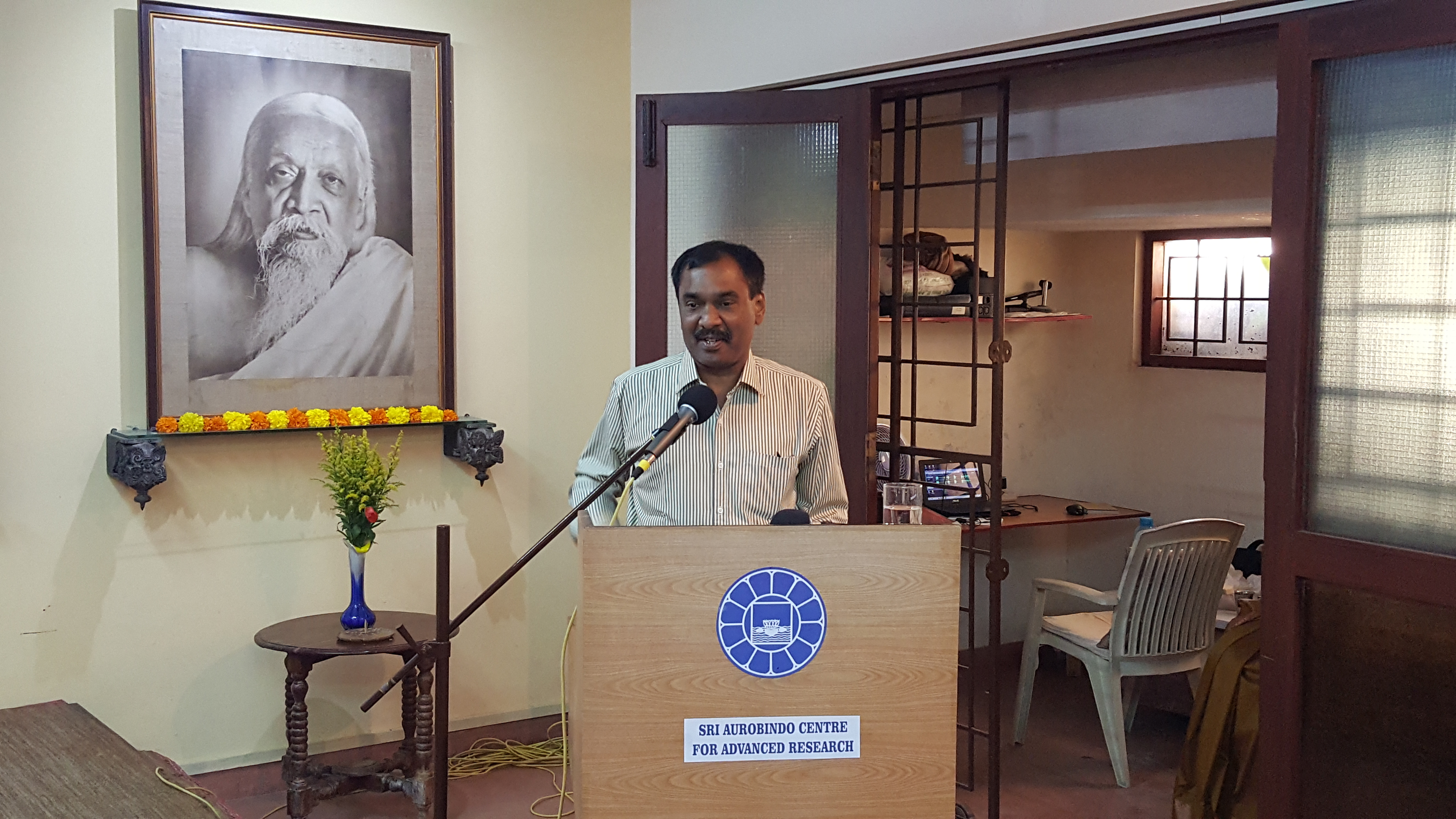
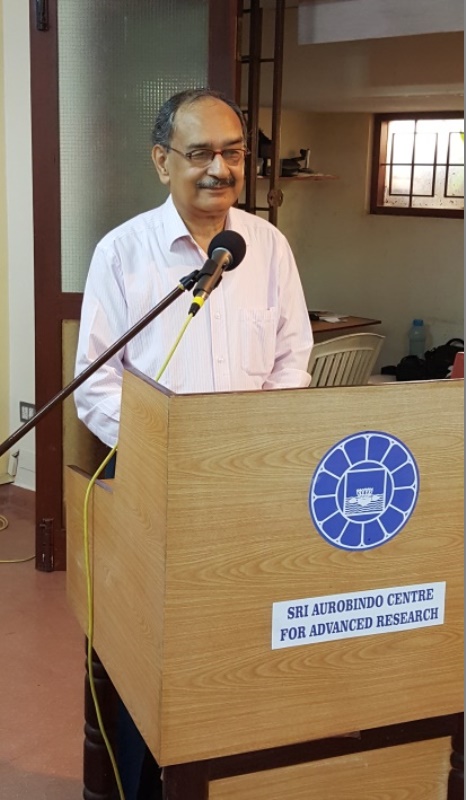
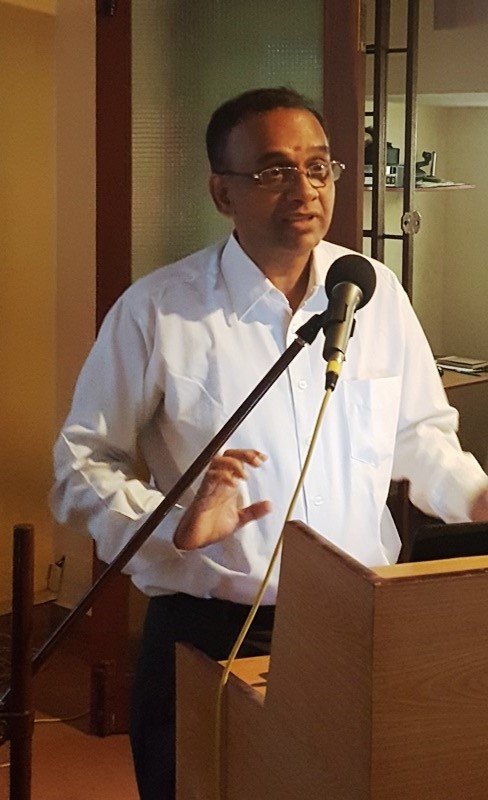
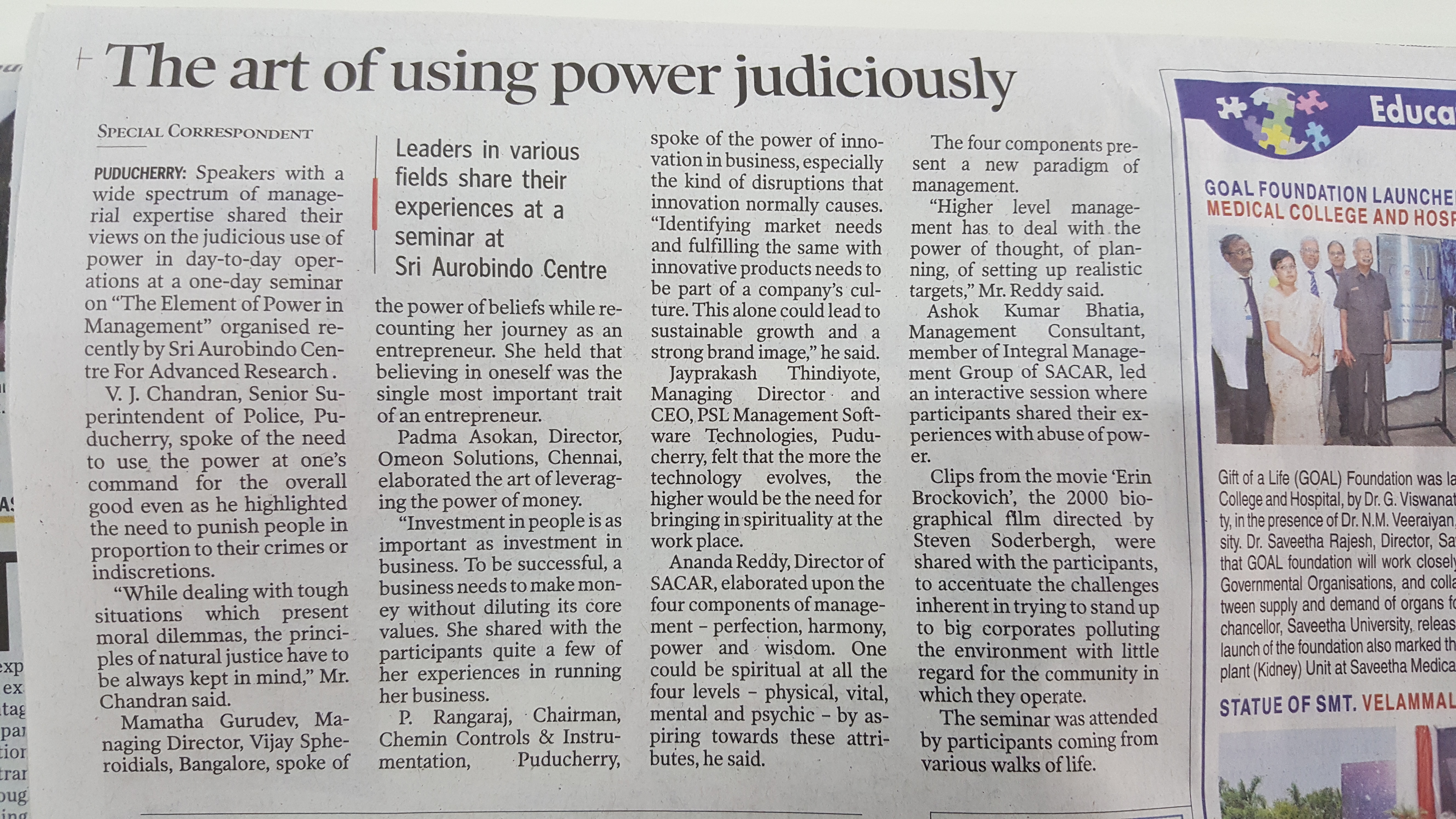
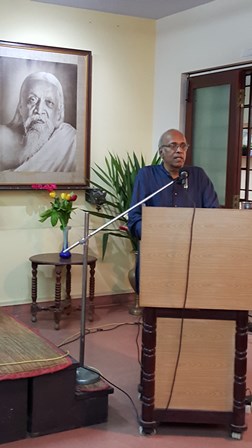
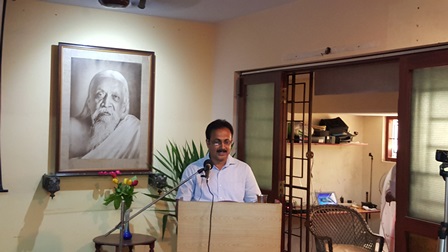
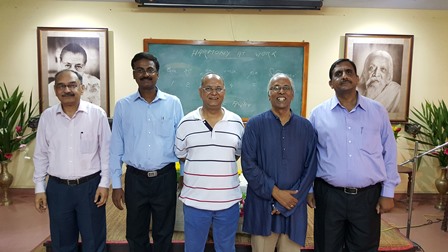
At a one-day seminar on “The Element of Power in Management” organized by SACAR on the 6th of August, 2016, speakers from a wide spectrum of managerial expertise shared their views on the judicious and responsible use of power in day-to-day operations.

SACAR Power Aug 2016 B

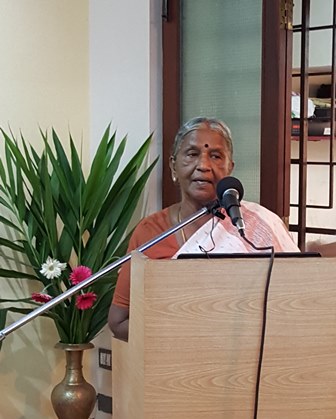
Dr. Ananda Reddy, the Director of SACAR, elaborated upon the four components of Management ― Perfection, Harmony, Power and Wisdom. He said that one could be spiritual at all the four levels – physical, vital, mental and psychic by aspiring towards what are called perfection, harmony, power and wisdom. These, he proposed, present a new paradigm of Management. On the level of thought, Power comes into play. Higher level management has to deal with the power of thought, of planning, of setting up realistic targets. He highlighted the importance of using power in a responsible and judicious manner.

SACAR Power Aug 2016 A

Dr. V. J. Chandran, IPS, SSP, Government of Puducherry, spoke of the need to use the power at one’s command in a spiritual manner – for the overall good. He highlighted the need to punish people in proportion to their crimes or indiscretions. While dealing with tough situations which present moral dilemmas, the Principles of Natural Justice have to be always kept in mind. Assuming responsibility and accountability is important. Improving upon one’s quality of work, one’s ability and one’s personal expertise alone helps. He shared with the participants certain instances where abuse of power led to severe complications for the society at large.

SACAR Power Aug 2016 3Ms. Mamatha Gurudev, Managing Director, Vijay Spheroidials, Bangalore, spoke of the power of beliefs while recounting her journey as an entrepreneur. She held that believing in oneself was the single most important trait of an entrepreneur. It makes sense to cultivate a habit of looking within and of being in touch with one’s own inner self. Trust reposed in one by others also empowers oneself. The focus should always be on the process, not on the person. She exhorted the participants to change their attitude from ‘I can’t do it yet’ to that of ‘I can do it’.

SACAR Power Aug 2016 4Ms. Padma Asokan, Director, Omeon Solutions, Chennai, elaborated the art of leveraging the power of money. Money needs constant activity and circulation. It should be used to increase wealth and prosperity. Wealth belongs to the divine and those who hold it are mere ‘’Trustees” and not “Possessors”. Investment in people is as important as investment in business. To be successful, a business needs to make money without diluting its core values. She shared with the participants quite a few of her experiences in running her business.

SACAR Power Aug 2016 5

As part of an interactive session, conducted by yours truly, participants spoke of the various ways in which they had experienced, and occasionally countered, the abuse of power. Clips from the movie ‘Erin Brockovich’ were shared with the participants, showcasing the challenges inherent in trying to stand up to big corporates polluting the environment with little regard for the community in which they operate.

SACAR Power Aug 2016 6

Mr. P. Rangaraj, Chairman, Chemin Controls & Instrumentation, Puducherry, spoke of the power of innovation in business. He touched upon some unique success stories and highlighted the need to make frugal engineering a routine habit. He described the kind of disruptions that innovation normally causes and explained the elements of perfection, harmony and wisdom which are necessary to upscale and market a new product or service.  Identifying market needs and fulfilling the same with innovative products needs to be part of a company’s culture. This alone could lead to sustainable growth and a strong brand image.

SACAR Power Aug 2016 7

Mr. Jayprakash Thindiyote, Managing Director and CEO, PSL Management Software Technologies, Puducherry, touched upon the power of technology. He spoke of rapid advances in the field of robotics and the advent of Artificial Intelligence. He felt that the more the technology evolves, the higher would be the need for bringing in spirituality at the work place. Having respect for alternative views, effective communication, genuine compassion and a creative approach to problem solving alone could help a business grow in future. He exhorted managers to be like an I-POD, that is, have an Inner Peace but be Outwardly Dynamic.

Mr. Ganesh Babu, Founder and CEO, Winning Minds Solutions, Puducherry, and Dr. Arvind Gupta, Assistant Director, Directorate of Distance Education, Pondicherry University, coordinated the entire event. Their back up support was invaluable in the planning as well as the hosting of the entire event.

Dr. Shruti Bidwaikar, Assistant Director, SACAR, summed up the proceedings and offered a vote of thanks.sacar-power-seminar-hindu

The seminar received an overwhelming response from participants coming from various walks of life, like government officials, management educationists, corporate executives, businessmen, Aurovillians, entrepreneurs and students.

The Integral Management Group of SACAR had already covered the facet of Perfection and Harmony in the past. The next event, focusing on the facet of Wisdom, is planned to be hosted during March, 2017.

(Link to a write up which appeared in The Hindu of September 13, 2016:

Best Regards

Read Full Post »

LEADERSThere is something unique about managers from India. Apparently, they have a Western mind and an Eastern heart. In other words, a unique combination of analytical prowess and intuitive faculties.

Here is a thought-provoking guest post from Mr K V Rao, Resident Director – ASEAN, Tata Sons Ltd , Singapore.

“I was born and raised in India in small towns, and started reflecting how is it that so many of my compatriots make it to global leadership positions ?

Many of our ilk have left the shores, for distant foreign lands. Have studied and imbued the best of cultures, but retained some of some of that inner rusticity, and native eclectic personalities. They have made it to the top jobs of Google, Microsoft, Mastercard, or a Pepsi, and the list is endless and still more to surface. All have been exceptional fighters, who seem to compete fiercely but fairly, often guided by their simple inner compass. All have had their roots in Middle Class India. What is the magic that’s at work ?

Typically, in a middle class family, that typifies some common basics – a high dose of personal values with low resources, what in a South Indian phrase is termed as “high thinking and simple living” hard work, education, discipline are the key mantras drilled into young minds, to help them break through the glass ceiling. Exceptionally strong personal family bonds, and a natural willingness to put oneself down for the other, compassion and care seem to naturally flower

What are those simple things that make them such effective leaders. Here are some reflections:

  1. There was never enough ….’   If one grew up in my generation in middle class India, life was always on the edge. Just about balancing ends with limited means. That meant, living happily and contented with what you have, than to aspire for what you don’t. Realism, practicality. But, also have the uncanny ability to stretch the buck – unbelievable value engineers, we are naturally. No wonder, hard to beat an Indian at cost cutting. !. Defining needs vs wants was deeply embedded in the frontal lobe of the mind, filtering away desires 🙂
  2. “We always ate together….” . Families would wait for each other to eat together. (Also the fact that there were hardly fridges then, and you ate hot and fresh !). There was sharing and caring. The bonds built were deep that lasted a life time, and giving and serving each other, imprinted that quality of care for a lifetime for another member of the family.
  3. “We celebrated together, we mourned together …” Families, lived as communities, extended with relatives, friends and neighbours. Much to the chagrin of modern nuclear families, there was little private and personal space  ! … All celebrations were shared, and so were the strains of illness or misfortune. Jumping in to help, give someone a shoulder was so very natural. That was the normal thing to do, not an act of valor or sacrifice. Your loss was mine, your success too was mine. Empathy a natural flow.
  4. Maths and English, are important…. “. Our fathers simply emphasized on 2 subjects, Maths and English, particularly in South India, as if they were meant to train the left and right brains, and eventually spur some whole brain activity. In hindsight, they seem to make sense. English opened the doors to global opportunities, the computational abilities pushed forward analytical thinking.
  5. “ We laughed a lot, joked, and pulled each others leg…Families, neighbors, and community living provided the best of entertainment, and a source of immense comedy. Radio and cinema were the only companions, and Black & White TV just came in with one or two long running serials. Sense of humour was valued, and we learnt to laugh, when nothing else could be done. Being sportive and getting the rough edge, is so normal, no big deal. It built great resilience and forbearance, for there were many things we could not change but had to live with.
  6. We prayed together….. . There was always a routine of prayer, whether you liked it or not. Before you start the day, go to college, go to exam, go to an interview. All of which, reinforced the positive belief, that no matter what, there is something more powerful and higher that resides above you, and cares for you should you make the effort to reach out. It ingrained the simple truth of focusing on the effort and leaving the ultimate result to the forces that be. It also made one more prepared to take risks, and face failure – a trait that today people struggle with, to fail, and yet to rise and be innovative.
  7. “ There is always a fix ….”  Last but not the least, there was never a “no” to be taken. There is always a fix, a ‘Jugaad’ if you may, or a work around. Hard to accept and give up. Persistence, thinking upside down, creativity or sheer street-smart tactical reflexes. Or the ability to bow, and accept failure honestly and humbly. It’s a potent combination of inner strength and outer smartness, to craft a strategy that works in the face of adversity.
  8.  “ You are not the smartest .. “. When you grew up, you always had someone much smarter than you, much better than you. You often wonder you were blessed or damn lucky to be where you are. There is a common streak of simplicity and most importantly humility. Go back to point 6, above – there was also someone “above” there who wished you well. Humility reinforced. !

It is not the top management schools that honed the skills alone, but the middle class homes of India that gave many of our generation, that inner compass and embedded CPU that makes one see life with a set of different lenses.

Leadership today, hinges on the ability to inspire, share, care, lead with empathy. Inflect clarity, sharpness, and fight the forces of competition with courage and tenacious persistence, never to give up. The ability to remain cheerful, spread laughter and joy around the work place. The training school of which is located in middle class Indian homes, that have often produced top class international business leaders.”


Read Full Post »

ashokbhatia's avatarashokbhatia

On the occasion of the upcoming International Yoga Day, managers of all sizes and shapes are all of a twitter, shuddering at the prospect of being called upon to celebrate the day by performing some complicated asanas, that too at the crack of dawn, on a day which, unfortunately, happens to be a Sunday.

It is not that people who pride themselves to be managers are any less patriotic. Nor are they any less health conscious. Those who believe that managers are forever thinking only of evading taxes while leading a sedentary life full of fun and frolic at star rated joints could not be more wrong.

The reason managers need not earmark a particular day for practicing yoga is rather simple. This hapless overworked breed is already devoting much of its time and energy to following yogic pursuits. This alone helps them to retain their sanity while riding…

View original post 1,408 more words

Read Full Post »

seagullHere are some gems of wisdom which can help you soar in your career:

  1. The more you analyse, the higher the state of inaction attained. Use intuition more often.
  2. Be unreasonable and deliver extraordinary business results.
  3. Always meet the boss halfway through.
  4. Call back yourself and be in for a surprise.
  5. Cultivate the art of Creative Dissatisfaction.
  6. Delegation without benchmarking and monitoring of targets amounts to abdication.
  7. Ethics and Values are important. Be smart. Steer your business using not only a Business Compass but also a Moral Compass.
  8. It always pays to have a credit balance in your interpersonal relationships.
  9. The only fire in the belly to be avoided is the one generated by ulcers and cysts.
  10. ‘Yes-men’ could be harmful to your career progression in the long run.
  11. Keep your learning batteries always charged up.
  12. Kiss frequently. The term ‘Kiss’ here stands for ‘Keep It Simple, Stupid’!
  13. Encourage dissenters to speak up; be a smart leader.
  14. While taking decisions, use your heart as well as your mind.
  15. Every five years, retire yourself. This would ensure you never get chucked out of a job.
  16. CEOs who succeed in the future would be the ones having a Western mind and an Eastern heart.
  17. Packages have a short shelf-life. Keep reinventing them.
  18. People are not spares of a machine, to be replaced once their utility is exhausted. Groom them for higher responsibilities, or out-place them.
  19. Always praise in public but reprimand in private.
  20. Keep your Propensity to Procrastinate under check.
  21. Being a ‘yes-man’ is a risky proposition. The higher you are in the pecking order, the higher the responsibility you carry on your shoulders – that of registering dissent.
  22. Keep your hormones under check. Love blossoming within the confines of office space can also turn into litigation and expensive lawsuits.
  23. A good way to kill an otherwise brilliant idea is to first convey it over mail.
  24. Pressure is an external stimulus. Stress is what we experience.
  25. Stress is inversely proportional to your inner resilience, which can be built up by forgiveness, a dash of humour, and meditation.
  26. Create a culture of observing, judging, and unleashing talent.
  27. Cultivate your underground cable connections. Things get done better when the informal organization gets going.
  28. Plan your vacations well. The absence of a good manager is never felt.
  29. It pays to build up and protect your own brand value.
  30. Strike the right balance between the following three: Concern for Production (read Results), Concern for People and Concern for Ethics.

(Picture courtesy Pixabay)

Read Full Post »

After the 2008 economic meltdown, the management world has discovered that CEOs need to follow not only a Business Compass but also a Moral Compass to steer the enterprises they happen to head. Improving one’s Spiritual Quotient is now a sheer business necessity, and shall be more so in the decades to come.

It is here that Indian scriptures and sages provide a ready template for managers of all sizes and shapes. Let us consider a few facets of some of the pearls of Indian wisdom which find ready application in the realm of management.

Some pearls of Indian wisdom 

Ramayana

  • The entire narrative highlights the importance of values in our lives.Ramayana 1 Businesses which follow a policy of righteousness and conduct their operations in an ethical manner enjoy tremendous brand equity in the market. This rubs off on their products as well as on their employees.
  • Lord Rama decides to leave his comfort zone for fourteen years and ends up connecting with lesser mortals better. Likewise, CEOs and marketing honchos of today who travel through the hinterland to get a better first-hand feel of the customer’s pulse do a far better job of servicing the market.
  • An alliance with Sugreeva, coupled with an out-of-the-box unconventional army, eventually leads to Sita getting traced and Ravana getting vanquished. Mergers and alliances based on mutual respect and trust leads to better market share. Mighty objectives can be achieved even based on frugal resources.
  • Beware of sycophants. A couplet in Sundara Kanda of Ramcharitmanasa clearly advises us to ignore the advice of a paid deputy, a doctor and a teacher who speak positively out of either fear or expectation of a gain. A king who acts upon such motivated advice loses his kingdom, his body and his righteousness (dharma) as well.
  • When Sita gets banished from the kingdom, Rama’s role is not much different from that of a true-blue CEO whose loyalty to the company’s overall welfare is unflinching.
  • CEOs and managers who entertain amorous intentions in respect of women team members and managements which look the other way just because they accord a higher priority to business goals than to the character of their top honchos could take a leaf out of Rama’s conduct.

Mahabharata

  • The attachment of Dhritarashtra, the blind king, to his evil son, Mahabharat Draupadi_and_PandavasDuryodhana, proves to be highly destructive in nature. The entire Kuru clan gets eliminated. CEOs who promote their kith and kin without assessing the overall welfare of an organization get doomed likewise. Same holds true for many a political outfit.
  • Arjuna’s skills in archery are well-known. He achieves mighty feats based on his power of intense concentration on the job at hand. Multi-tasking, a misleading buzzword in current business parlance, has no place in his dictionary.
  • The perseverance of Pandavas eventually pays off. Repeated setbacks do not deter them from seeking their share in the kingdom. War follows only when even a settlement with five villages only gets turned down by Duryodhana. The tenacity of bouncing back in the face of adversity that Pandavas display is worth emulating by MNCs which try to penetrate the Indian market.
  • The unity of purpose amongst the five Pandava brothers is exemplary. Theirs is a unified and invincible family which goes through its trials and tribulations as a single unit. Likewise, large conglomerates like Tatas draw their strength from a set of core values. Each company within the group’s fold has a unique place in the market. The companies operate in fields as disparate as salt and software. Yet, all of them are connected by a common value system and a similar business philosophy.
  • The manner in which Krishna persuades a demoralized Arjuna to take up his arms by enunciating the basic principles of life in the Bhagavad-Gita is exemplary.

Bhagavad-Gita

  • One of the basic concepts enunciated by Krishna in the Bhagavad-Krishna_Arjuna_GitaGita is that of the everlasting nature of the soul. The concept of a soul now finds a resonance even in modern management literature. In ‘The 8th Habit’, Stephen Covey urges professionals to pay heed to their ‘inner voice’. While proposing the whole person paradigm, he speaks of the four dimensions of a person – spirit, body, heart and mind.
  • Over its eighteen chapters, Krishna propounds the intricacies of different forms of Yoga, a philosophical system which treats all life as a management enterprise. It exhorts managers to be impartial, not favouring any one goal, any one mode any one or group of persons.
  • A manager’s goal is the total overall good, in keeping with environmental necessities and societal requirements.
  • He is not swayed by happiness or sorrow, ego or nepotism, greed or desire.
  • He is not swayed by external temptations of tangible, material success and thus attains a state of happiness, peace and contentment. He radiates positivity and his decisions bring happiness sooner or later to maximum number of people.
  • In other words, detachment is the key takeaway from Bhagavad-Gita. Detachment from the rewards of any work or action taken results into a neutral state of mind.

Thirukkural

This is a classic Tamil ‘sangam’ (3rd century BC to 4th century AD) literature

Thiruvalluvar

Thiruvalluvar

composition. It has 1,330 couplets or ‘kurals’. It was authored by the renowned poet Thiruvalluvar. It is replete with words of wisdom. It is simple and contains profound messages.

Thirukkural has 133 chapters, each containing 10 couplets. Broadly speaking, all the 133 chapters can be divided into three sections: Righteousness, Wealth and Love. Even though the contents are meant for kings of yore, many of the messages are equally relevant for CEOs of business world.

Consider these ‘kurals’:

  • It is not good to forget the benefit received; but it is good to forget then and there the injury done by another. (108)
  • Those who alienate friends by back-biting may have forgotten the art of making friends through suavity of speech. (187)
  • Entering an assembly without sufficient knowledge is like playing at a dice board without its knowledge. (401)
  • Men of foresight who guard themselves against coming events know no distress. (429)
  • A king must act after measuring the strength of his plan, his own resources, the strength of the enemy and that of the ally. (471)
  • Let men be chosen with deliberate care; when once the choice is made, let no suspicions crawl into your soul. (509)
  • Strict enquiry and impartial justice mark the rule of a just monarch. (541)
  • The greatness of a person is proportionate to the strength of his will power. (595)
  • What you have clearly decided to do, do it without hesitation and delay. (668)
  • An unfinished deed and an unfinished fight will, like a half-extinguished fire, cause ultimate harm. (674)

Each ‘kural’ is complete in itself. It deserves to be meditated upon, one at a time, and imbibed in our day-to-day lives. One wonders at the keen observations of the poet, his sagacity and the effort he has taken to collate and compile this beautiful work, replete with words of wisdom which continue to be as relevant today as they were in the days of yore.

Chanakya Neeti 

Chanakya is a well-known Indian teacher, philosopher, economist, jurist and chanakyaroyal advisor. He is said to have lived from 350-275 BCE. He authored the ancient Indian political treatise, the Arthshastra. He is considered a pioneer in the field of political science.  He assisted the first Mauryan emperor, Chandragupta, in his rise to power. He is widely credited for having played an important role in the establishment of the Mauryan Empire.

One of his seminal works happens to be Chanakya Neeti, or Chanakya’s Aphorisms. It is a treasure trove of wisdom and speaks of the criteria to be used to judge people, the need for keeping one’s intentions confidential, the value of continued learning, situations wherein it pays to be a hypocrite, the supremacy of one’s duty, and the like.

He draws an interesting analogy between the animal kingdom and those who waste their time criticizing others. He holds such persons to be worse than the crows amongst birds and dogs amongst animals.

Sri Aurobindo

Profound thoughts of one of the prominent Indian seers of modern times, Sri Aurobindo, could be interpreted to propose a different paradigm of management. Sri_aurobindo

Whereas the Western model of management thought is based on such functions as Marketing, Finance, Production and People, the Eastern model, so to say, could be said to comprise four pillars of management: Perfection, Harmony, Power and Wisdom. Collectively, this paradigm could be called Integral Management.

Analyze the conduct of any business leader and one is apt to find the underlying presence of all these elements. It does not matter whether a manager handles marketing, finance, production or human resources.

  • It is by striving for perfection that one achieves excellence in results. Being perfect implies putting our best foot forward and doing our best under the given circumstances. It is the striving for perfection which assumes significance.

When Apple launches a new product, the whole market is abuzz. The toil and hard work which goes into creating and launching a new product is exemplary indeed.

  • A harmonious conduct with respect to all key stakeholders is essential for sustained success in business. Relations with financial institutions, regulatory authorities, customers, distributors, suppliers, staff and labour need to be based on a harmonious blend of business needs and the principles of natural justice.

The manner in which the Taj Hotel management responded after the 26/11 terror attack is a shining example of harmonious conduct of business.

  • Use of power with a sense of responsibility, that too for the greater good, leads to higher brand equity for a business. Marketing prowess can influence customers’ decision making, and has to be directed at their needs and not wants. Financial strength can also be leveraged to do something useful for the society. Administrative authority comes with a great deal of responsibility.

The case of Dr Pachauri being shown the door by TERI in a sexual harassment case is just one of the several examples of how the high and mighty should not exercise the power at their command.

  • Wisdom in decision-making leads to a sustainable business, which gives back to the society and the environment what it draws from the same.

In September 1898, Jamsetji Nusserwanji Tata decided to set aside half of his wealth as an endowment to establish a university of science. His donation was worth Rs. 30 lacs in those days. The other half he left for his two sons. The Indian Institute of Science eventually came up in 1911, paving the way for quality research and teaching in India.

This is the kind of unique learning which an aspiring manager receives in her formative years in the Eastern world.

Managers with a Western Mind and an Eastern Heart

Successful CEOs and managers of the future would need to be those who have a Western Mind and an Eastern Heart.

The success of the likes of Satya Nadella (currently the CEO of Microsoft) and Sundar Pichai (currently the CEO of Google Inc) goes on to show the growing importance of managers who are not only exposed to the Western models of management but also steeped in Eastern wisdom in the realm of management.

(Presented as a talk to the members of the Pondicherry Chapter of Madras Management Association during June 2016)

(Related Posts:

https://ashokbhatia.wordpress.com/2013/05/27/management-lessons-from-ramayana

https://ashokbhatia.wordpress.com/2013/07/12/management-lessons-from-mahabharata

https://ashokbhatia.wordpress.com/2015/09/04/management-lessons-from-the-life-of-lord-krishna

https://ashokbhatia.wordpress.com/2015/01/16/management-lessons-from-thirukkural

https://ashokbhatia.wordpress.com/2015/10/06/managerial-perfection-notes-from-a-seminar-at-pondicherry-india

https://ashokbhatia.wordpress.com/2016/03/26/harmony-in-management-a-seminar-at-pondicherry-india)

Read Full Post »

Here is an excerpt from a book titled ‘Future Proof Your Business‘ by Mr Prakash Seshadri.Book Future Proof Your Business Cover

Realistically speaking, we are always on the verge of a slow down or a flat economy. In the past, CEOs made serious mistakes in trying to cope with a slowing economy. Here is a list of What Not to Do.

All of them hurt innovation. Unless you really want to compete on price, the ability to do sustained innovation is the one competitive edge left. Innovation is the driver of performance, growth and stock market valuation.

Here are the 10 worst mistakes you can make in a slow down that will hurt innovation:

1) Fire talent

Cutting back on people, especially really smart, high-priced people, is a quick way to cut costs. It will hurt companies who follow this way. Talent is the single most important variable in innovation.

2) Cut back on technology

It is being reported that companies are already curbing investments in technology to save money; banks especially. The rise of social networking and consumer power means that companies have to be part of a larger conversation with their customers. This means big money spent on IT.

3) Reduce Risk

Innovation requires taking chances and dealing with failure. Recessions push managers to be more conservative. They need to fight this instinct.

4) Stop New Product Development

Saving money often means cutting back on new products and services during an economic downturn. This hurts companies when growth returns and they have fewer offerings in the marketplace to attract consumers.

5) Boards Replace Growth-Oriented CEOs with Cost-Cutting CEOs

Sudden declines in revenues and profits often lead boards of directors to search for managers with experience in pinching pennies. That’s what appeared to happen recently at Bang & Olufsen. Penny-pinching CEOs don’t have the skills to grow, when growth returns.

6) Companies Retreat from Globalization

It’s expensive to expand globally and managers often save money by cutting back on emerging markets. It’s a big mistake. Emerging markets are sources of new revenue, business models, and talent.

7) CEOs Replace Innovation as Key Strategy

By turning defensive, top managers take innovation off the top of the official agenda and replace it with systems management and squeezing costs. The entire organization follows. It is extremely hard to reverse this when growth returns.

8) Performance Metrics Are Changed

To save money and cut costs, managers shift employee evaluations away from rewarding riskier new projects toward sustaining safer older goals. Risk-averse behavior follows. Again, this is hard to change.

9) Hierarchy Is Reinforced Over Collaboration

Sudden drops in revenue and profit often lead companies to panic and mobilize to stem the decline. The need for fast decision-making often leads to a return to command-and-control management. This alienates creative-class employees, young Gen Y and Xers and stops the evolution of corporation organization toward a flat, collaborative, open source model.

10) Retreat into Walled Castles

Cutting back on outside consultancies is seen as a quick way to save money. Yet one of the key ways of introducing change into business culture is to bring in outside innovation and design consultants. They know what companies across a broad range of industries around the world are doing to promote change. Not receiving this information can hurt a company’s global competitive position.

Winners always emerge out of slow downs and they almost always beat their competition on the basis of something new. Apple worked on iTunes, iPod and its retail stores during the last slow down and came out swinging once growth returned to destroy its competition. Apple didn’t make any of the top 10 innovation mistakes. Your company shouldn’t either.

(Here is a link to a teaser of the book:http://imojo.in/crpeqy)

(Related Post: https://ashokbhatia.wordpress.com/2013/01/23/of-idleness-innovation-and-the-peter-principle)

Read Full Post »

The Indian view of the discipline of management speaks of four pillars of Integral Management – Wisdom, Power, Harmony and Perfection. Of these, Harmony stands out as a key enabler for CEOs and business leaders to achieve their goals.

An individual manager can improve his/her effectiveness by ensuring harmony and balance within oneself – between his/her inner thoughts and outer actions and between the mind and soul.Technology MEDITATION-ENTREPRENEUR-SUCCEED

Large corporations and owners of the family businesses have to ensure that harmony prevails within the various arms of the organisation. The latter have to ensure that there is a clear succession plan in place, so that no disharmony is created at any stage. Maintaining a harmonious liaison with the financial institutions and the regulatory agencies is a key concern for many MSMEs.

Much like musicians in an orchestra, managers have to move in tandem with each other so as to create a symphony. A harmonious working inevitably leads to ‘synergy’, a term often used in the realm of management.

From a strategic point of view, operations have to be so conducted as to remain in harmony with the environment and the society at large.

A cordial relationship between the organization and its distributors allows a Marketing Manager to sleep peacefully.

A Finance Manager has to ensure the right balance between cost controls being implemented and the efficiency of departments which are affected by the same.

A Production Manager has to maintain harmony between his supervisors and workmen. He not only needs to deliver finished goods on a target date but also within the cost limits specified.

Harmony between management and employees is essential for a smooth run of the business. So is the harmony between employees at different levels of hierarchy and between employees of different age groups.

At the personal level, the owner of a family business has to ensure that a harmonious succession plan is in place. An individual manager can improve her effectiveness by ensuring there is harmony between her inner thoughts and outer actions.

At a one-day seminar on “Harmony in Management” organized by SACAR on the 20th of March, 2016, speakers from a wide spectrum of managerial expertise addressed the participants on the need for, and the ways to achieve, harmony in operations.SACAR Harmony 2

Dr. G. Natchiar, co-founder, Emeritus, Director Aravind Eye Hospital, Madurai, the chief guest, stressed upon the importance of the Vision and Mission of an organization. She not only spoke about the “Aravind Eye Model” but also shared with those present,the innovative HR policies of Aravind Eye Care. Dr. Natchiar highlighted the frugal aspect of her organization which enables it to continue to offer affordable eye care to people of India and bring about harmony in its operations. She detailed the steps taken to improve the productivity of doctors, thereby making the operations cost-effective and the institution becoming a role model for similar health care providers in other parts of the world.SACAR Harmony 1

Dr. Ananda Reddy, the Director of SACAR, elaborated upon the four essential components of Harmony ― Collaboration, Goodwill, Benevolence and Tolerance. These alone enable organizations to work and progress smoothly. Management education in India needs to be re-engineered to impart training in these components as well, so as to make it more holistic and in tune with the times.SACAR Harmony 3

Mr. B. R. Babu, IAS, Secretary Welfare, Government of Puducherry, shared with the participants his experiences of bringing about industrial harmony in public sector undertakings. He highlighted the need for managers to take ownership of their tasks and fulfill those within the ambit of the law.SACAR Harmony 4

Prof. Sibnath Deb, Prof. of Psychology and Director Incharge of the Directorate of Distance Education, Pondicherry University, elaborated upon the psychological aspects of inter-personal relationships which alone contribute towards bringing about harmony and happiness in one’s personal life.SACAR Harmony 5

Yours truly spoke about ways of establishing harmony at work. I touched upon the manner in which challenges faced by managers from customers, suppliers, personnel, superiors, peers and subordinates could be successfully met.SACAR Harmony 6

Mr. Ganesh Babu, Director of “Winning Minds”, emphasized the importance of harmonizing oneself first. He stressed upon the fact that performance of CEOs is evaluated based on not only the results they achieve but also the quality of relationships they have with other stakeholders in their organizations.SACAR Harmony 7

Ms. Uma Prajapati, Director of Upasana, Auroville, spoke of the inner call of a professional designer and the satisfaction gained when serving the community around a business. She highlighted her singular achievement of creating Tsunamika, a tiny doll, which brought about a positive change in the lives of women affected by the 2004 tsunami.

Prof. Kisholoy Gupta conducted an interactive group discussion which led the participants to articulate their major takeaways from the day-long event and also imparted the value of appreciating others.SACAR Harmony 8

Dr. Arvind Gupta, Assistant Director, Directorate of Distance Education, Pondicherry University, coordinated the entire event. His back up support was invaluable in the planning as well as the hosting of the entire event.

Dr.Shruti Bidwaikar, Assistant Director, SACAR, summed up the proceedings and offered a vote of thanks.

The seminar received an overwhelming response from participants coming from various walks of life, like government officials, management educationists, corporate executives, businessmen, Aurovillians, entrepreneurs and students.

The Integral Management Group of SACAR had already covered the facet of Perfection during September 2015. The next event, focusing on the facet of Power, is planned to be hosted during August, 2016.

(http://www.bienveillance-entreprise.fr/entreprise-2/la-bienveillance-ou-lharmonie-dans-le-management-chez-les-dirigeants-indiens)

(Press coverage by The Hindu:

http://googleweblight.com/?lite_url=http://www.thehindu.com/news/cities/puducherry/harmony-in-management-builds-a-successful-team/article8408054.ece&ei=o_mBYHhC&lc=en-IN&s=1&m=225&host=www.google.co.in&ts=1459225799&sig=APY536zzDjXkqVeszf8Ya9EQqwJnWp7JFg)

(Related Posts:

https://ashokbhatia.wordpress.com/2015/10/06/managerial-perfection-notes-from-a-seminar-at-pondicherry-india

https://ashokbhatia.wordpress.com/2015/03/17/an-inner-approach-to-leadership-and-management-note-on-a-seminar)

Read Full Post »

Amongst the kinds of CEOs we have reviewed so far elsewhere, this kind happens to belong to a very rare species in the private sector. However, many public sector outfits, government departments and political outfits owing allegiance to some outdated doctrines could boast of a significant number of CEOs of this genre.

Concern for Output or for results is not their priority. Concern for People is their primary concern. Concern for Ethics is also uppermost in their minds. In terms of an upgraded Blake Mouton Grid, they rank at 1,9,9.X Y Z upgraded

Trade unions of all hues simply love them. Managements dread and despise them. To face an ardent believer who pounds his fists onto teak wood tables of conference rooms and demands strict compliance with labour and industrial laws of all kinds is a prospect which owners bestowed with nerves of chilled steel wish to avoid.

Those who happen to have an uncompromising attitude could willy-nilly end up damaging the very cause they wish to champion. Their vision about welfare of people is always myopic.

Few enlightened ones amongst this tribe care about norms of welfare in a more pragmatic fashion. They understand the need to move along with the times and have a healthy regard for the norms of productivity as well. They collaborate with managements in adopting newer technologies. They hammer out detailed re-skilling plans so their people can embrace change for the overall good of the organization.

Managements which are conscious of the disruptive change being brought about by Artificial Intelligence and Robotics could use such CEOs with great alacrity. Their utility lies in their pro-people attitude and their incorruptibility.

Note: Inputs from Ms Somali K Chakrabarti are gratefully acknowledged. She can be found at Scribble and Scrawl (https://prepforum.wordpress.com)

(Related Posts:

https://ashokbhatia.wordpress.com/2015/12/24/looking-for-ceos-inspired-by-the-yuletide-spirit

https://ashokbhatia.wordpress.com/2016/01/07/ceos-who-happen-to-be-charmless-charlies

https://ashokbhatia.wordpress.com/2016/01/14/ceos-who-end-up-becoming-road-rollers

https://ashokbhatia.wordpress.com/2016/01/22/the-sponge-comforter-ceos

https://ashokbhatia.wordpress.com/2016/01/28/ceos-who-are-arsonist-achievers

https://ashokbhatia.wordpress.com/2016/02/04/the-missionary-zealot-ceos

https://ashokbhatia.wordpress.com/2016/02/19/ceos-who-happen-to-be-crazy-conformists)

Read Full Post »

On the occasion of Women’s Day, here is a post which salutes some of those who have broken through the so-called glass ceiling in the management world!

ashokbhatia's avatarashokbhatia

When a finer member of our species becomes the part of an all-men group, the results are obvious – better focus on the job at hand, a far more effective team, higher levels of decency and a groundswell of chivalrous overtures.

Chamaiporn Uerpairojkit Chamaiporn Uerpairojkit

Better still, if she happens to be a CEO, we have a boardroom which is painted a deeper shade of pink, thereby driving away the boredom from the drab proceedings. We also have a crackling company which is more result-oriented and has better empathy while dealing with diverse stakeholders. We are also likely to get a greener and cleaner business entity which believes in corporate ethics and good governance.

In the Pink of Health

Several studies done in far-flung countries such as USA, France and Vietnam have shown that companies led by women deliver better financial results. A McKinsey study compared the top-quartile of companies in terms…

View original post 2,222 more words

Read Full Post »

« Newer Posts - Older Posts »