Feeds:
Posts
Comments

Archive for the ‘Management Lessons’ Category

Even though quite a few business houses from India had joined the World Economic Forum’s Initiative against Corruption in November 2012, not a single Indian company has so far become a signatory to the UN Convention against Corruption. This is deeply regrettable and projects the image of a corrupt business environment in India. It discourages foreign investments and erodes the brand value of Indian companies. In the absence of a level playing field, businesses shy away from potential opportunities. Mr. Ratan Tata’s lament on not having able to enter the field of aviation quite some time back is still fresh in our minds.

Companies can never be faulted for hiring Vice Presidents who are highly virtuous, law abiding and disciplined souls. Understandably, only those who follow high ethical standards and are in sync with the core values of the company would make the grade. However, in quite a few organizations, such qualities are merely necessary but not sufficient. When it comes to handling external agencies, incumbents who can either bend a few rules or interpret the fine print of law creatively to add to the bottom line of the company alone would be rated high and viewed with awe and reverence.

The Dr. Jekyll and Mr. Hyde Scenario

In other words, VPs should not only be ‘Virtue’ Presidents, but should also possess the flexibility of doubling up as ‘Vice’ Presidents while dealing with liaison matters. This stems from the core belief that businesses cannot be run successfully without back-stage dealing and wheeling, obviously with the aid of what many would euphemistically refer to as ‘appeasement initiatives’.

Appeasement of any kind is invariably geared towards either tweaking government policy to suit the ends of business, as also for specific time bound gains in the forms of large contracts, largesse, concessions and indirect favors. Organizations believe that advance knowledge of government plans, policies and rules is a great tool to deliver results to shareholders who not only look for long-term capital gains but also for better results quarter after quarter.

Sleeping with the enemy

If a professional gets stuck with an assignment which involves corrupt practices which do not match his or her personal core values, one option would be to escalate the issue. This would ensure that the matter is reviewed at a higher level in the organization.

If this option turns out to be impractical for some reasons – whether professional or personal – another one would be to start actively searching for career options with companies which value ethical practices in business!

A much better option, however, could be to work for a change from within the organization. This could be done either by presenting alternative business plans to management or by recommending an approach whereby the company could sidestep the issue by projecting its innate strengths in an aggressive manner. Let us consider some of the tactics in a professional’s arsenal which could be used to combat corruption in business deals.

Tackling Business Competition in the Market Place

The best strategy for a business to have is one which is based on avoiding government doles and concessions. By focusing on core competence and by fighting out the competition in the market place, the business can reduce its dependence on a wide section of the government policies. Surely this calls for rare qualities of leadership, statesmanship and openness. Inviting the government to play favorites and to resolve competitive business issues that are better dealt with in the market place could be a boon as well as a bane. However, this may not be possible in industries which are highly regulated.

Operating in an Unethical Environment

If one has absolutely no other option but to operate in an unethical business environment, the following steps might help to avoid corrupt practices.

  1. Building trust: An honest and humble approach, backed by a long relationship built on explaining the contribution of business can and does work. Investments made, employment opportunities offered and revenue generated are a few of the things that can be leveraged to secure favorable decisions without indulging in corruption.
  2. Reputation travels ahead: The fact that a business house does not stoop down to corrupt practice is generally well-known. It is a strategic advantage to have a squeaky clean image which ensures that a request from such an outfit is treated with the respect it deserves.
  3. Investing in underground cables: It never pays to flaunt one’s relationships. By keeping them underground, one not only wards off competition but also ensures that in case of a change of regime, the damage is minimal.
  4. Diversifying one’s liaison ‘assets’: One learns to be friendly with political opponents. In TN, one needs to be friendly with both the Dravidian parties. In WB, it is tough even if both CPM and TMC are one’s friends. In Maharashtra, Congress, NCP and both the variants of Sena must all like one for one’s business to make some headway.                                                                           Business history teaches us the same lesson. In the pre-independence era, Tatas were funding Gokhale and engaging with the nationalist elements while British officers retired from ICS were being employed by the group. JRD had excellent personal rapport with Nehru. G D Birla had been corresponding with Winston Churchill for a long time. Churchill’s dislike for Mahatma Gandhi was well-known; even though he was being supported by Birlas. They gave a job to one of his sons. It is a fact that he was assassinated while staying as a guest at Birla House in Delhi.
  5. Be courteous, humble but firm: Most government officers take a dim view of business executives. Firstly, they are not viewed as being dependable. Secondly, they are thought to be paid exorbitantly high and generate a feeling of awe as well as jealousy in a public servant. Now, if one walks in with one’s latest cell phone and/or tablet in his office and starts showing off the latest Rolex watch, one would be surely shown the door promptly.

Setting the Moral Compass Right

The UN Convention against Corruption is a laudable initiative and deserves to be given a serious thought by our present day business leaders. It binds an organization to (a) reducing corruption risk in procurement and contracts, (b) engaging in competitive and transparent procurement processes and (c) disclosing all payments made in procurement deals. The global panel already has names such as Coca-Cola, Microsoft, Siemens and Accenture.

It is not that India does not have shining examples of groups which have demonstrated the strategic advantage of pursuing business goals while staying the ethical course. The Tata group has been at it for the past 120 years or so. Liberalization of the economy appears to have thrown up quite a few scams, but companies like Infosys keep our hopes alive. As per Elaine Dezenski, senior director at WEF and the head of PACI, Infosys, Godrej Industries, Bajaj Auto, Genpact, Wipro and M&M are already signatories to the initiative.

As argued in an earlier blog (Getting a Moral Compass Would be a Sound Business Strategy for India Inc, published on December 9, 2012), companies in India would do well to seize the opportunity to clean up their business deals. A beginning can be made by persuading major political parties to make their funding transparent. Those in real estate business can come out with a time bound plan to rationalize stamp duties all across India, thereby making their deals more transparent.

Hopefully, progressive companies in India would see the strategic benefits of committing themselves to such initiatives soon enough!

Read Full Post »

POLICIES

Grandiose written policies are useful to Accountants who would love to raise relevant as well as irrelevant objections on various transactions, legitimate or otherwise. These are also useful to procedure oriented executives who would love to drive innovation and imaginativeness out of the organization.

If you happen to be a big fish in a small outfit, prepare and circulate a Policy Manual only at the organization’s risk and peril. If you have to, do so with scope for flexibility, and ensure it gets updated and re-circulated at regular intervals.

In case of very large organizations, Policy Manuals end up being statements of benign intentions of the top management. Internal Audit uses these to conduct frequent audits, pointing out minor deviations and confusing the top management at regular intervals. Often, crucial deviations having long-term impact on the business are left out, thereby increasing the organization’s vulnerability in facing either a legal or a statutory compliance related tsunami.

POLITICIANS

Like them or hate them, they are here to stay. Keep them in good humor, if you definitely have to interact with their tribe. After all, they could be high either on their Utility Quotient or on Nuisance Quotient.

Keep equidistant from politicians of all hues. You never know when the opposition party’s turn to warm the treasury benches may come.

When doing a favor, keep it away from public eye. This way, you would not only keep your competitors guessing but also ensure that a change in regime would be less likely to derail your business plans.

PROMISES

Either don’t make promises; if you do, try your very best to keep them. If necessary, buy time to commit on deadlines. Surprise your boss by delivering on your promise in advance.

Do this without fail. In the long run, your brand value as a manager would grow.

PROMOTIONS

An effective tool in the management’s arsenal to reward and motivate guys who excel in their jobs.

There are two key challenges faced in case of promotions:

1.     Pressure for time bound promotions:Everyone expects to get promoted after having slogged it out at a given level in the     organization for few years. The reason you find most organizations top-heavy today is because the managements twenty years back did not pay attention to managing the aspirations of its people and instead went along with the philosophy of time based promotions!

2.     Managing is different:   Doing a job yourself is one thing. Getting it done through others is a different ball game altogether. To be a good manager, one needs to be a leader, bestowed with skills in team building, communication, delegation and supervision. Often, two-thirds of the promotions in corporates are based on the incumbent putting in an impressive show in his/her present role. Once promoted, the incumbent is left twiddling his thumbs, trying to figure out how to manage the same activity through others.

The solution possibly lies in building up a culture which rewards good performance but does not overlook the projected managerial talent of the promotee. Job rotation, counseling and job enrichment are some of the tools which a wise HR guy may use to manage the majority which deems a promotion as its birth-right based on the fourth dimension of our universe – time – alone!

A populist approach like resorting to time based promotions can only be practiced at the organization’s long term peril, unless there is an aggressive scheme in place to enforce employee separations also, that too in a time bound manner!  

PRAISE & REPRIMAND

When responding to a team member’s performance, always praise in public but reprimand in private. Try not to follow the obnoxious policy of getting rid of an utterly-butterly useless guy by humiliating him in public. Assist him in getting out-placed instead.

Be generous with your formally conveyed appreciation only at your own risk. If a swollen-headed guy falls in his subsequent performance ratings, he could well turn around to use your formal communication to promote his case for the next promotion!

PROCRASTINATION

It is not altogether wrong to say that it is the early worm which gets caught! Procrastination works best when the idea is to delay a crucial decision which, if taken at that point in time, could create more problems than it would solve. Governments appear to do it all the time. The flip side is the higher probability of losing a business opportunity.  

PUBLIC RELATIONS

In a large complex business, you may need to hire an expert to handle your public relations. Check the guy’s credentials, and sign him on for a maximum period of two years at a time. Better still, get one of the smart secretaries to handle it in-house.


Read Full Post »

PACKAGES

Negotiable only at the entry stage, and may not remain so thereafter! Also, the rate of growth of packages outside the company would always be better than the jumps you get in-house! Bear in mind that packages are worked out in relation to the company’s corporate ego (read brand value), and also the comfort levels offered. If you are willing to challenge yourself and move out of your present comfort zone, don’t grumble for long; find another exciting opportunity and move on!

As postulated by the Motivation-Hygiene Theory of Herzberg, packages fall in the Hygiene category of rewards. In other words, to use a medical analogy, their presence does not necessarily make a person healthier; on the contrary, their absence can cause deterioration in health. To put it simply, when it comes to individual motivation levels, packages have a rather short shelf life!

PEOPLE

They are not spares of a machine, to be replaced once their utility is exhausted. Grooming them for higher responsibilities is the management’s prerogative.

The Two Factor theory established long time back that money is a poor motivator, boosting people’s morale only in the short run. Money is connected to material acquisitions and the mind. Intangibles appeal to the heart and make much better sense. A surprising word of praise from an unexpected quarter can cheer up an employee no end. A birthday greeting which goes out-of-the-way to enable an employee to spend quality time with his family may be far more effective. The intangibles build an emotional bond with the company.

PERFORMANCE

At times, first impressions of performance are wrong. Some slow starters may become star performers; some could well be flashes in the pan who eventually fumble and attain a state of clueless bliss. Most jobs would need consistent performance, whereas some require short-term bursts of energy and attention.

Assess performance of people over a period of time, against the backdrop of the nature of the assignment handled.

PLANNING

Good planning needs to be exhaustive, but also flexible. Business environment is always in a flux, and a plan always has to be reviewed to ensure not only its own relevance but also the enthusiasm of the team which would be burning the proverbial midnight oil to implement it.

Read Full Post »

OBJECTIVES, GOALS

To come up with a clear and simple goal is the key task of a manager. A dithering on this score is bound to lead to disasters, with precious resources getting wasted. The goals also need to be flexible, to always remain in tune with the business environment.

ORGANIZATION STRUCTURESOVERSTAYING ONE’S WELCOME

Are these helpful or simply a drag on the business? A formal chart is handy for the HR guys to decide ranks, packages and perks. Also, to external agencies, it explains how the organization works. In reality, a matrix organization, with a heady mix of formal as well as informal linkages between different units and/or departments, is far more effective in meeting business goals.

In any case, an organization chart cannot be allowed to become responsible for business paralysis and rigor mortis setting in.

OVERSTAYING ONE’S WELCOME

It is just not done. It shows one to be in a deep comfort zone, enjoying the perks of familiar personalities, processes and systems, but missing out on newer challenges and some spice in one’s career.

All ideas which sound revolutionary from a new incumbent fade exponentially over a period of time. The incumbent himself gets bored and a sense of fatalism sets in. A smart incumbent would call it quits before he reaches this state of vegetation.

Read Full Post »

NETWORKING

It is great to be the part of a clique. But there is a flip side. The go-between you choose to introduce you to the big-wig might have his own axe to grind! Best is to call the big-wig cold, and keep in touch with your network to keep a tab on what is happening.

NAY-SAYERS

Try to be a ‘No-man’ and you will find that it is much more fun than being a ‘Yes-man’! It shows independence of thinking. It ensures that your boss notices you faster and values you better than your peers. Also, it may open up a new approach to solving the problem at hand.

Read Full Post »

Quite a few of the managers I run into are frustrated because they could never make it to the top slot. The corner office with plush seating and an exclusive wash room has somehow always managed to elude them. I admit that the power and pelf a Number One slot bestows upon a manager is alluring as well as intoxicating. But I believe that being a Number Two is also not too bad a proposition; in fact, it could be more rewarding, instructive and exciting!PROMOTIONS

Now, don’t get me wrong. I am not advocating a drive against perfection or excellence in whatever you do. I am only trying to say that there is divine contentment in being a Number Two as well – relish it!

The Perils of Being a Number One

Being a Number One is rewarding as well as challenging. Take it from someone like me who has been at the top of a pyramid several times in his career. There are obvious drawbacks to reaching the top, and let me sum these up.

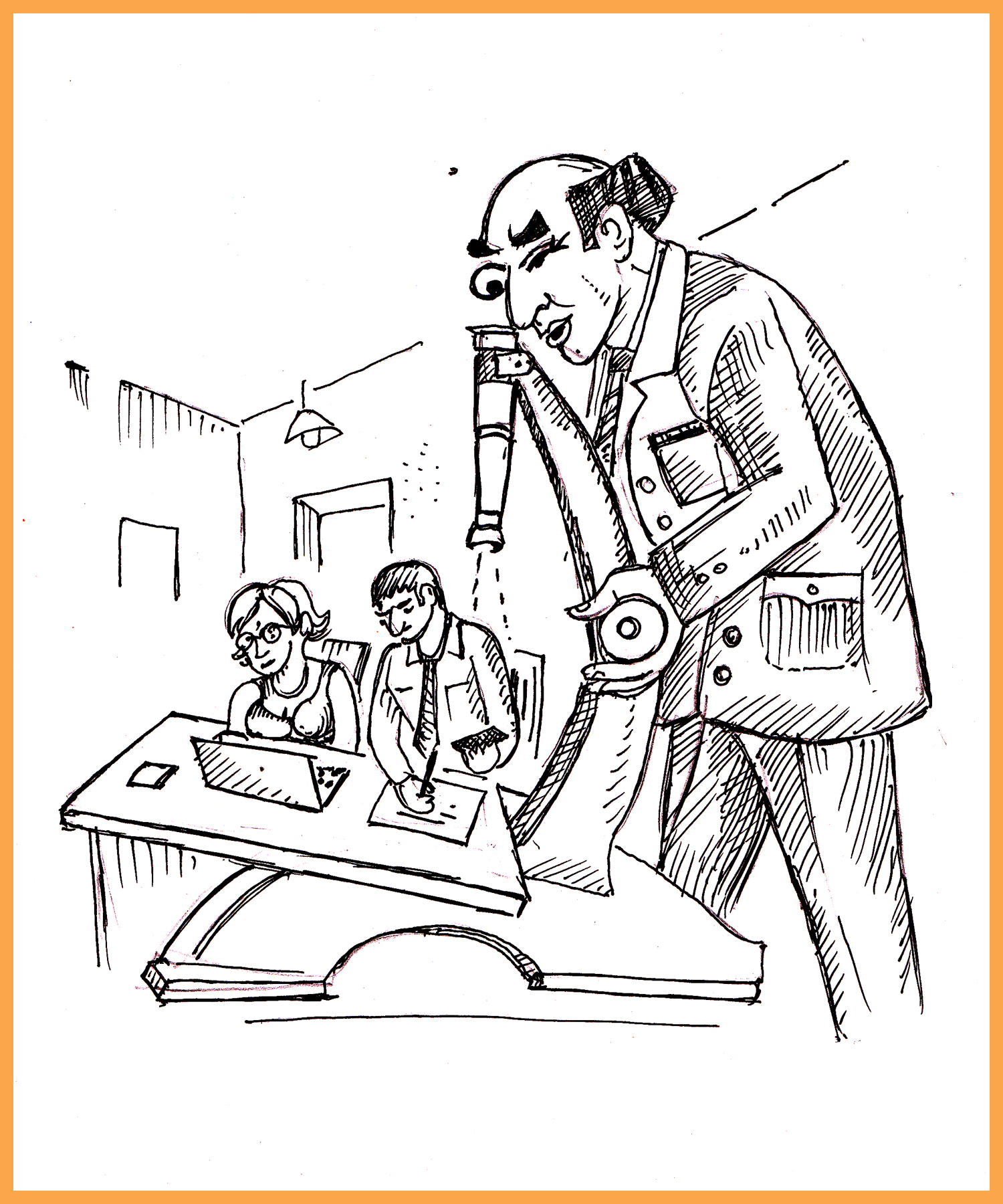
  1. When one does get to occupy the corner office, one gets no one to talk to freely. One may be lucky to have a few unsuspecting souls whom he can use as a sounding board for his ideas. But there is no denying that such team members who listen to the top boss respectfully could very well be those who believe in merely being ‘Yes Men’.
  2. Even if one gets a nay-sayer, there is no guarantee that he does not suffer from a tendency towards premature ejaculation, spilling the beans to a group of his own confidantes, thereby nipping all well thought out plans in the bud. In other words, one may be commanding fake respect, but not necessarily genuine loyalty.
  3. The sheer pressure of being a part of the rat race is rather high. Ensuring that one remains unchallenged in one’s top position brings along a level of stress that many may not be able to handle for long. If they do so, it could be at the cost of either health or quality time with their near and dear ones.
  4. One has to constantly watch over oneself to ensure that the ego does not balloon into something unmanageable. If humility does not come to one naturally, the stress builds up faster.

Being Number One does not necessarily imply that one is happy and satisfied. If so, one may be making good money but not having fun. Could it be really worth it?

The Perks of Being a Number Two

You Are Responsible, Not Accountable

The boss decides the overall paradigm and the goal to be achieved. Like the captain of a ship who has a better and wider perspective on things, he decides the course to be taken. Your own task becomes simpler to that extent. Sure enough, you add value by providing operational feedback which could alter the course quite effectively. In other words, you may be responsible, but it is he who is accountable!

Extra Time on Your Hands

The poor guy also takes the rap for all the failures. So, that leaves you with enough time to catch up with other pleasures at the work place – like, hob-nobbing with the HR guys to keep an ear to the ground, sweetening up the Accounting devils to ensure that all your claims get settled fast, chatting up with the legal eagles to ensure that your operations are free of any blemishes, and to network with other departmental heads so as to derive synergistic benefits for your own area of work.

Managing Insecurity of Your Boss

You know how insecure some of the top bosses are. Of course, this is internal to them and is never meant to be displayed publically. At times, you might have felt that your salary is getting paid only to ensure that his mental balance is always under control – a unique privilege, to say the least. Many a times, a boss gets so worked up about an insignificant issue that you need to intervene without delay – either taking the responsibility of resolving the problem yourself, or by simply diverting his mind to another pressing problem.

Some Role Models

Being a King Maker (and not a King) has its unique advantages. When you offer yourself as a sounding board, you can give sane advice as and when asked for. In our scriptures, you might have admired the sage counsel of people like Vidura (of Mahabharat fame) and Chanakya (advisor to Chandra Gupta Maurya).

In literature, if you have been introduced to the chronicles of Bertie Wooster, you would have admired the feudal spirit of Jeeves who invariably comes to the aid of the young master in his hour of peril.

These people could perhaps be the role model for those of us who are relegated to a Number Two slot in our careers.

Continue Honing Your Technical Skills

There are professions in which an elevation means getting away from honing one’s technical expertise further and instead getting bogged down with administrative hassles. Ask a doctor who has become a Medical Superintendent or a teacher who has risen to the level of a Principal; in all likelihood, they would readily attest to having experienced this syndrome.

You Always Try Harder

The best advantage you drive from being a Number Two is that of immense learning and untiring efforts towards improving your own performance. You cannot afford the luxury of being complacent. You always try to work better, because somewhere deep within you, you cannot get rid of the desire to attain the top slot some day!

I believe this logic applies to companies as well. Decades back, Nirma gave sleepless nights to HUL. Samsung is now beating Nokia at its own game. There are several David-Goliath type cases in the industry which justify this belief.

Being Number Two means that you always have a high testosterone level in your blood stream, thereby making you more aggressive and a highly focussed achiever.  The fire in the belly remains unabated.

The Flip Side

On the flip side, by being Number Two, you run the risk of becoming a scape goat at times. Too long a sojourn in this slot could either mean that the company has stopped growing, or that you have overstayed your welcome. If so, seeking greener pastures could be a solution.

A Disclaimer!

My arguments in favour of being a Number Two might have made you jump to a conclusion that I am a lazy bum, devoid of burning ambition and a fire in the belly! Or, I am a manager who believes only in abdication and not in delegation. Or, even worse, that I am rudderless drifter!

With all emphasis at my command, I deny all such insinuations! Rather, allow me to urge upon you not to lose sleep if you have just missed that coveted elevation to a Number One slot recently!

Read Full Post »

The recent economic meltdown has impacted not only the bottom lines of the companies but also the lives of a vast majority of senior managers and CEOs. Over-burdened, stressed, sleep-deprived and burnt out, they try to cope with Hurricane Stress that has hit them hard in the past few years.

How is it that they are coping with such a scenario? I spoke to twenty professionals who are in senior leadership roles in industries as diverse as IT, leather, chemicals, engineering and R&D to understand the contours of the arsenal these leaders use to combat stress. The sizes of the companies varied from 50 to 1,500, and the annual turnover ranged from USD 2 million to USD 5 billion.

I found the exercise to be pretty instructive. It led me to explore the practices adopted by CEOs and senior managers to minimize the adverse impact of stress in their lives and careers. It also gave me an insight into the kind of steps the managements are taking to address the issue effectively.

This is What They Do Differently

Using Stress For Positive Outcomes

The people who I found to be less stressed out were the ones who had perfected the art of time management. They had learnt to pace themselves. They had realized their own limitations and configured their working accordingly.

For example, the head of a regional manufacturing hub called upon to spearhead the company’s endeavours to influence government policy realized that he was out of his depth in handling such affairs. For quite some time, he was stressed out on this account. Gradually, he roped in another manager who had a flair for such activities. In two years’ time, he was not only handling the whole affair himself, but was also called upon by the company to handle similar challenges at the national level.He now loves what he used to detest earlier and has overcome his stress on this account. In the process, he has developed yet another USP for himself!

The Art of Creative Dissatisfaction

Almost two-thirds of the leaders/managers I spoke to had, subconsciously or otherwise, developed a keen sense of creative dissatisfaction. Rather than aiming for and insisting upon perfection, they went about guiding their teams towards achieving targets in a practical manner. Each time a target was met, there would be an informal session where, besides much back-slapping, an introspective discussion led everyone to discover what they could have done better. Most of the times thereafter, the team ended up achieving the target in a smarter way!

Loosening Up

Having someone to share their troubles with – whether at office or at home – was a need almost three-fourths of them mentioned. the difference lay in the severity with which the need was expressed by each one of them.

Digging deeper, I found that their need for unburdening themselves was somehow linked to their managerial styles. Those who were participatory in their decision-making approach had a lesser need, perhaps because they enjoyed a higher degree of warmth in their relationships at work. In fact, a vast majority of them were spending a lot of their time on resolving some or the other personal problems of their team members. On the other hand, those who were rather dictatorial in their approach were living in a self-created vacuum. Their sense of loneliness was acute, and so was their need to speak out aloud about their frustrations. In almost all the cases, they sought it in their families, or amongst friends who were not related to their work place.

A Dash of Humour

A positive attitude and a strong tendency to laugh off things was another common trait. At least one-third of the leaders/managers I spoke to had even cultivated the habit of remembering and narrating jokes, poems or couplets to their team members even in formal meetings. This resulted in much merriment around, but a point was made with a dash of humour. Two of them even had the capacity to laugh at themselves, prompting other team members to be very open in sharing their failures and seeking feedback and inputs from others.

Spin-offs of Meditation

The most quoted antidotes to stress were hobbies, better work-life balance, exercise and having fun! At least five of them stressed upon the importance of meditation to overcome their work-related blues.

One of them spoke enthusiastically of Mr Matthieu Ricard (66), a molecular geneticist and confidant of the Dalai Lama. According to studies done at University of Wisconsin, scans showed that when he was meditating on compassion, Mr Ricard’s brain produces a level of gamma waves never reported before in neuroscience literature. The scans also showed a very high capacity for happiness and a reduced propensity towards negativity.

Two others said that meditation brings many benefits. It refreshes them, makes them look at their surroundings and events in a detached manner, makes them wiser and gentler, and improves their ability to cope in a world which overloads them with information and communication. In other words, they felt a good improvement in their own productivity levels, linked to their meditative forays.

Diagnosing Stress

I believe that even though stress is a result of external circumstances beyond one’s control, the actual impact felt by a leader/manager also depends upon his/her own inner resilience. If it is directly proportional to the external circumstances, it is inversely related to one’s inner resilience and work attitudes. It also depends on the personality type that we are. The perennially anxious ‘A’ types end up experiencing higher levels of stress than the often composed ‘B’ types.

When an aggressive boss misbehaves, no two team members would be affected the same way. One may take it too seriously, and feel despondent for days together; another may just brush it off and be cheerful the very next day; whereas, yet another one may look upon the incident as a feedback, view it as constructive criticism and start working on a definite plan to avoid a recurrence of the event.

Role of Management

I am happy to share that as many as half of the CEOs and senior managers I spoke to had already introduced remedial measures at the work place. The steps quoted by them included piped music, group yoga for ten minutes at the beginning of each day, a dedicated resource in the HR Department to take care of family and personal needs of employees and sensitization of all HoDs to be vigilant of signs of burn-outs amongst their team members. One CEO had even organized spiritual classes for his employees.

There are several studies to show that stress impacts productivity at the work place. The faster the employers and the employees learn to handle ‘Hurricane Stress’, the better would be the bottom line of the organization!

Read Full Post »

Leadership is a much discussed virtue in management literature. However, like Peter Drucker says, there is no ideal type of leader. “Leadership personality’, ‘leadership style’ and ‘leadership traits’ don’t exist”, he writes in The Leader of the Future. The emergence of a leader is the result of a complex interplay of two factors – personality traits of the leader and what needs to be done at a given point in time. The moment the two become congruent, a new leader could emerge on the scene and deliver the goodies!LEADERS

There is no doubt that the leaders of tomorrow would need personality traits which would be qualitatively different from those of today. Here is my take on what business environment circa 2025 would be like, and how our future business leaders would be tackling it.

2025 – A Likely Business Scenario

What would be the business environment like in 2025? Several CEOs I spoke to said that business leaders in 2025 shall be working against the backdrop of a world which would, in all likelihood, be a multi-polar one, with Asia, particularly China, exerting more influence on global events. It would be a world which would be more inter-connected, commercially and otherwise. Thanks to new communication means, the individual empowerment levels would have risen significantly. Also, it would be a more urbanized world. Thanks to the rise of a new global middle-class, society in general would have reached a higher level of aspiration, resulting into a much higher demand for energy, food and water. On the flip side, income disparities would have risen substantially. Changes arising out of our climatic patterns would also pose a formidable challenge to the leaders of those times.

We could still be in for surprises, though. Disruptive changes are quite likely to overwhelm us. These changes could come in the form of impact of new technologies in the field of robotics, biotechnology, space sciences and communication. Increasingly, governments world over may start becoming enablers of entrepreneurship, faced as they will be with direct and intensive pressure from those they govern. We shall surely be seeing more entrepreneurs amongst our midst – whether in the commercial sector or in the societal sector.

A Business Leader in 2025

Decision Making Under Higher Uncertainty

Since the level of entropy in the system would have gone up further by then, a business leader of circa 2025 would have to be adept at making decisions under a higher level of uncertainty. The abnormal today would be the new normal, and many a leader would be feeling more like experts at river rafting in our economic and statutory rapids, often being called upon to go against the current.

I am not an expert in Econometrics, but could venture to guess that for those who are quantitatively inclined, advanced statistical tools would come in even more handy. I say so because there will be an overdose of data as well as information available to a business leader then. However, ultimately, his/her intuitive abilities – based on personal experiences in their formative years – would prove to be more valuable.

Sir Colin Marshall, the ex-Chairman of British Airways, transformed his organization into one of the premier customer service kinds in the days of yore. The uncertainty he faced in the period of his association with BA was monumental and serves as an example to be followed by CEOs of future.

Jeff Bezos of Amazon came up with the concept of ‘predictive analytics’, paving the way for all of us to enjoy the convenience of shopping on-line.

Higher Trust in Instincts

A logical corollary of the above would be the need for a leader to be ahead of the curve. Those who have counter-intuitive responses and place a higher trust in their natural instincts would surely fare better. In turn, there would be a strong need for a much higher degree of inner resilience, because this alone would enable them to keep their stress levels under control even in trying circumstances. Dynamism will be yet another critical input. It would ensure that they are able to steer their businesses through the dense economic fog enveloping the business highways.

The World Economic Forum had proposed a theme centered on the twin traits of resilience and dynamism for 2013. Given that there are no risk free growth models available to leaders and CEOs of the future, one could not agree more with this proposition.

A good example of facing flak and not losing sight of one’s goals is that of Larry Page of Google. He continues to trust his instincts and doing what he thinks is best for his business.

A Global Mindset

Given a much more inter-connected world, a business leader in the future would need to possess a vast knowledge of commercial, behavioral and societal norms followed in different parts of the world. A primary task would obviously be to ensure that his/her organization has world-class management processes. Only those institutionalizing best practices in strategic planning, marketing and human relations would be able to make their organization a successful one.  The fact that a leader would, in all likelihood, be leading a multicultural team of followers would pose a challenge – irrespective of whether the situation demands a leadership which is ‘transactional’ or ‘transformational’.

When one considers the example of Compaq’s Eckard Pfeiffer, who was a leader in a race against himself, it becomes clear as to how organizational renewal can be brought about. “No matter what industry a company competes in”, he said, “it must live with one foot in the present and the other in the future….there is simply no other way to build world leadership”.

A Democratic Style

The profile of the followers would also be different. Hierarchical authority is already proving difficult to manage change; there is no reason to believe this would not be even more so in the future. The followers would demand a higher degree of participation in the decision-making processes. Leaders who recognize this need of their followers and create a working environment which enables the same would achieve higher levels of efficiency and effectiveness in their business processes.

Creating a non-coercive environment in which employees and other stakeholders are clear about the corporate identity and the mission would be far more important than it is today. Reverse mentoring would be more a norm than an exception in the days to come.

Monsanto’s CEO, Robert Shapiro, had the ability to go against traditional hierarchy. He initiated strategy sessions with cross-sections of employees of different ranks, specialties and geographical perspectives and reaped rich dividends for his company.

The Moral Compass

Leaders who believe in sustainable businesses would not only use their commercial compass while determining the direction to take. Using a moral compass would be a valuable trait amongst the future leaders. A strong inner core, embedded with a value system which recognizes the needs of the society at large, would be a great quality to have. A pre-condition for employing key managers would be their endorsement and support of the core values of the business.

When the likes of Siemens and Wal-Mart come clean on their misdemeanors, they set an excellent example of probity in the business world. When Mr. Ratan Tata, the Chairman Emeritus of India’s salt to software conglomerate rues his inability to enter some fields of business because of the absence of a level playing field in India, his focus is on one of the core values of his business.

Indra Nooyi is charting a unique course for PepsiCo globally, shedding traditional markets and going in for healthier food products instead.

 Preparing Leaders for 2025

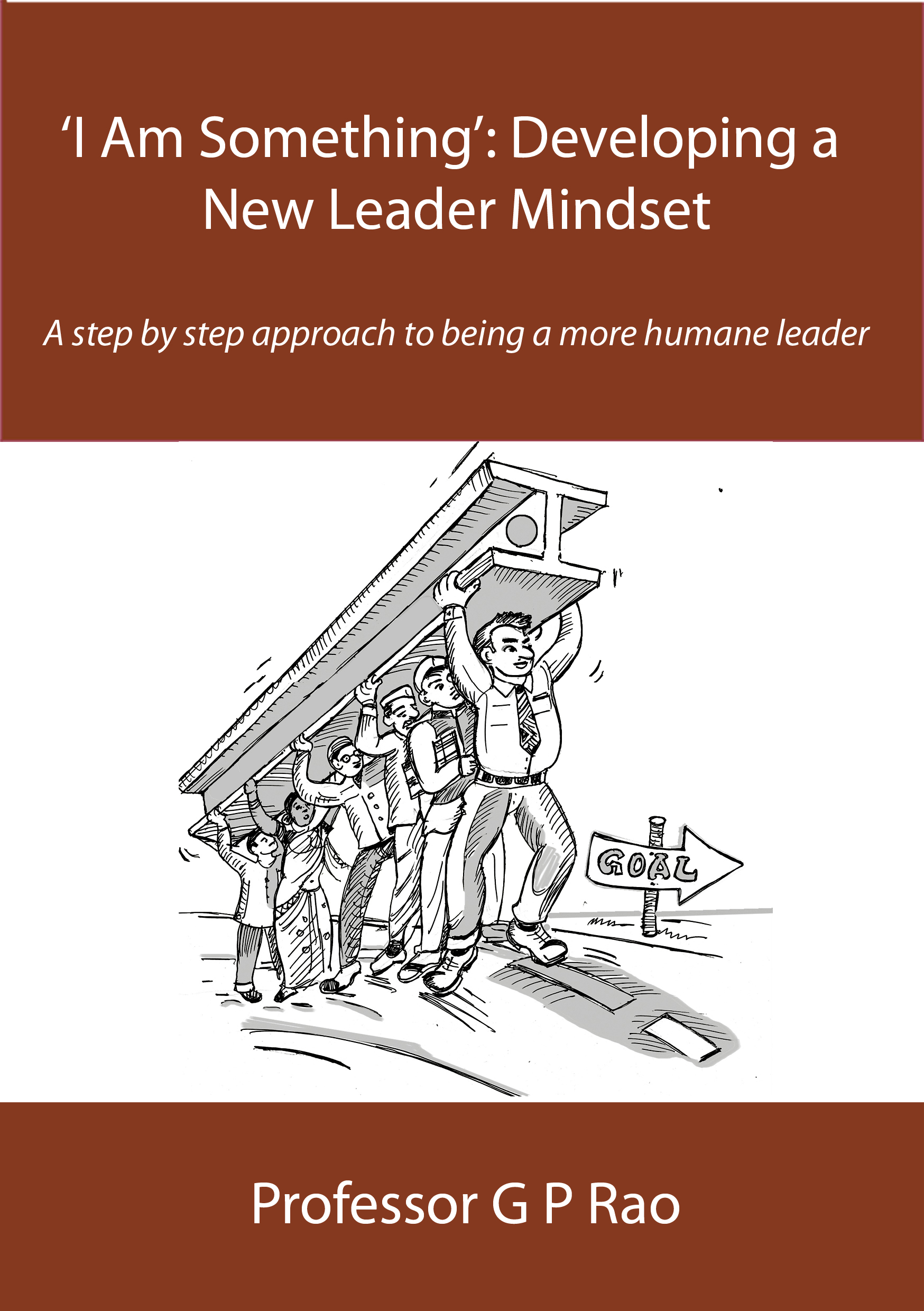
Captains of industry today can set a personal example by getting cross-functional teams in their organizations to come up with suggestions to face the challenges of future effectively. They can also emulate some of the traits, thereby leading to a trickle-down effect across the entire organization.

HR honchos can re-design their appraisal processes and re-assess training needs of key managers to address this issue.

Those in senior management positions can consciously plan to hone their skills in areas they find themselves deficient.

Management institutes can tweak their course content to ensure that those leaving their hallowed portals possess these traits, so as to improve their contribution towards the organizations they decide to either float or serve.

And our time to start preparing the leaders of tomorrow starts now!


Read Full Post »

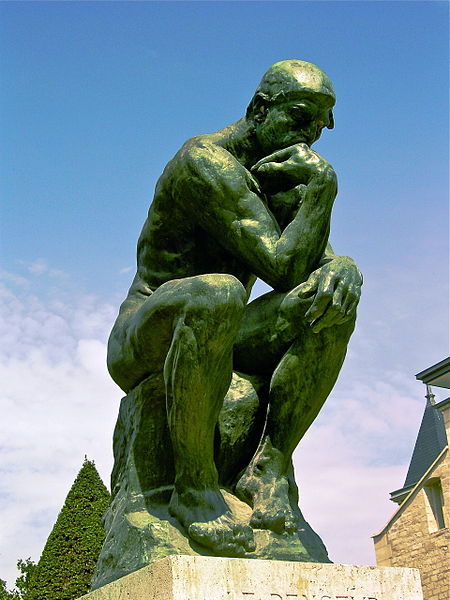
Whenever you pass by the desk of a colleague in office and see him staring with blank eyes at nothing in particular, you may 'The Thinker' : Rodinbe wrong in assuming that he is either worried about his upcoming annual appraisal or concerned about the academic performance of his kids. For all you know, like Rodin’s ‘The Thinker’, he could simply be withdrawn into himself, in a rather introspective mood, and trying to unravel life’s managerial mysteries which appear unfathomable at normal times.

One of the profound mysteries is that of facilitating innovation. History of major breakthroughs tells us of at least one factor which prompted the coveted ‘Aha!’ moment – a spot of idleness. Not the kind of idleness which is a trademark of laziness, but the dynamic type where the mind, firing at all six cylinders, suddenly decides to take a break, looks at its own self in a detached manner, delves into the realms of the sub-conscious and comes up with a gem of wisdom which had eluded it so far at the conscious level.

Some Unforgettable ‘Aha!’ Moments

Rewind to around 250 BC. If Archimedes had not decided to take some time off and soak himself in a bath tub, possibly playing with some floating toy ducks and singing along in a leisurely fashion – much to the discomfiture of his neighbors, world would have surely missed great many developments so far. There would have been no boats and ships. Countries the world over would have been dependent only on their foot soldiers and armies to defend their borders. At a more mundane level, the streets of ancient Syracuse would have missed the sight of a guy in his birthday suit running along, shouting ‘Eureka’ in gay abandon.

Visualize this scenario in 1666 AD. Newton has once again retired from Cambridge. In a contemplative mood, he is taking a leisurely stroll at Lincolnshire, in an apple orchard ostensibly owned by his mother. He has just been enjoying some tea which has had a remarkably invigorating effect on his grey matter. He sees an apple falling to the earth and starts wondering why it always has to fall down, an observation which lesser mortals like you and I would have merely shrugged off and resumed our walk. He gets down to doing some calculations and ends up giving to the inhabitants of Earth a great theory on forces of gravitation. Goes on to show what a relaxing cup of tea sipped in quiet repose in an apple orchard can accomplish.

Einstein, who left us as late as 1955 AD, was much impressed by the violin sonatas of Mozart and used to play chamber music. An inspiration for all those who suffer from absent-minded professor-itis, he pushed the frontiers of knowledge to mind-boggling levels at that point in time. History does not record a particular ‘Aha!’ moment when the theory of relativity got discovered, but the connection between the paradigm shift in our understanding of the universe and his love for music and the soothing effect it has on one’s grey matter can be readily understood. There is no doubt that the great man did not find the environment of the Swiss Patent Office conducive enough for innovative thinking.

Contemplative Downtime   

A common thread running through all these events is the presence of a unique ‘Aha!’ moment of illuminating thought, undoubtedly facilitated by a phase of idleness. Some scientists in California now say that even lesser mortals can benefit from a spot of daydreaming. This goes on to prove – if proof was ever needed – that sitting idle is not wasteful, as many whip-cracking CEOs would have us believe. A vast majority of managers, workers and students would heartily attest to the fact that difficult assignments are handled much better if only preceded by a spot of contemplative downtime. This way, they are likely to envision a more productive approach to the issue at hand, resulting into substantial savings for the organization they serve. As Tom Hodgkinson says, ‘The art of living is the art of bringing dreams and reality together’.

Globally, managements need to seriously look at the utility of mental downtime when the thinking faculties are allowed to wander freely. Rather than mistaking hectic physical activity for real efficiency and effectiveness on the job, most bosses heading a team of innovators and developers typically create a work culture which facilitates a contemplative mood. They also perfect the art of refraining from micromanaging. Nor do they abdicate. They lead simply by inspiring and standing up for their team members, whenever necessary. The result is an exponential jump in the much-coveted ‘Aha!’ moment for their team members.

Does A Rigid Hierarchy Stifle Innovation?

It has been shown that under favorable circumstances, problem solving abilities tend to improve by as much as 40%! If such moves are introduced, and further backed by tea/coffee breaks, the results could be even better. High time some ad honchos took up this clue and designed some clever TV spots for companies marketing these beverages!

In India, where the propensity to innovate appears to have diminished substantially compared to what it used to be in the Aryabhatta days, this proposition deserves far more serious thought. Perhaps our national laboratories, centers of excellence and R&D institutions need to work more days, but provide for additional tea/coffee breaks and exciting vacation binges. Going in for flatter organizations devoid of strict hierarchy could also lead to better quality of informal interactions, thereby increasing the productivity and rate of innovation. The Peter Principle is proof that organizations which put a higher premium on seniority are more likely to have a dismal record in the realm of innovation.

The Power of Daydreaming

Scientists may now claim to have discovered that the rejuvenating powers of officially sanctioned breaks are reduced if people skip off-times and use these to perform other equally demanding tasks. But the power of dynamic daydreaming was never in doubt. Our grand-parents have always held that ‘All work and no play make Jack a dull boy’!

Read Full Post »

MANAGEMENT

Unlike a “should” guy who is a philosopher, and a “would” guy who is a politician, a good manager is a “could” guy. He is aware of the constraints of resources at his disposal, and get things done accordingly.

He is the first one to come in and the last one to go from office. No job is too small for him; he is a true hands-on guy, but develops his team by delegation.

He defines and respects the invisible boundary of professional distance between himself and his key team players. When his team members are attacked, he behaves like a lioness out to protect her cubs. His team just loves him!

MARKETINGMARKETING

An ever-changing discipline, though surely not the only one. When conceived and described by Philip Kotler, it consisted of the famous 4 Ps – Product, Price, Place and Promotion. With due respects to the great man, one may safely add one more P – Password (used for viral marketing).

With the advent of internet has come a virtual democracy in information. Changes in technology have brought in a new way the customers and brands interact. Marketing has undergone a sea change and will continue to do so in future as well, what with social re-engineering leading to a greater degree of inclusion in the economy, with hordes of new customers from a so-far underprivileged social milieu joining the market. Persons with access to internet now research the brands before making a decision. They are increasingly welcoming fresh content rather than repetitive ads.

Take note of the mini packs of biscuits, noodles and other consumer items being marketed at price points of Rs. 5 and below. Thirty years back, Indians had to wait for years to get to ride their own “Hamara Bajaj”. On the car front, there were hardly three suppliers in the fray then. Now, we see global brands wooing the customer and competing cheek and jowl for a slice of the market pie.

The Customer has now become a more empowered king!

MEETINGS

Meetings to decide strategic issues are best held off campus, though not necessarily in exotic locales.

Meetings to review operations are best kept short, held in the standing mode, at regular intervals (like TV news) without prior intimation, kept crisp by ruthlessly disallowing inter-departmental issues getting discussed while all others gape in horror and ignorance, ending much before the deadline and minutes being circulated by the end of the day with clear responsibilities defined in respect of targets to be met and respective deadlines.

It is generally accepted that the probability of a meeting taking place is inversely proportional to the number of participants.

Parkinson’s Law of Meetings states that “To a certain degree, the time spent in a meeting on an item is inversely proportional to its value”.

MEDIOCRITY vs. EXCELLENCE vs. PERFECTION

Always aim for perfection! It is said that Mr. R. M. Lala, an editor, writer and publisher of repute, once commented to Mr. J. R. D. Tata that the latter believed in excellence. The great man is said to have retorted thus: “Not excellence. Perfection. You aim for perfection, you will attain excellence. If you aim for excellence, you will go lower.”

Rabindranath Tagore, in his Gitanjali, captures the same concept thus: “Where tireless striving stretches its arms towards perfection”. Even though “perfection” may not be attainable in reality, what matters is the “tireless striving”, which could well prove to be a reward in itself. “Perfection”, like happiness, need not be a station one arrives at, but a mode of travel, making the journey interesting and worthwhile.MICROMANAGING

To improve our personal capacity utilization, our basic struggle needs to be attitudinal – to adopt a Culture of Perfection and to give up the Culture of Mediocrity.  Our collective chalta hai attitude is passé.

MICROMANAGING

A sure way of becoming a liability for your team and also for your employers is to micromanage – getting into the nitty-gritty of each and every aspect of the task at hand. Learn to delegate and allow your team members to make mistakes. Demand results, but develop your people in the long run.

MISTAKES, HANDLING OF

As an individual, say sorry. Say it openly. Add a dash of humor and laugh at yourself publically. Avoid a buck passing posture. Do a root cause analysis. Suggest and work on a solution to rectify the mistake. Try to avoid a recurrence.

As a corporate, get your PR to handle the issue well. Take demonstrable steps to set the record straight. During June 2011, Toyota globally recalled as many as 1,06,000 vehicles, offering to replace front right hand shaft in selected vehicles. During 2007, Mattel announced a recall of over 19 million toys fearing that the toys had powerful magnets which could come loose and be swallowed by infants. Their brand recall value only shot up.

Read Full Post »

« Newer Posts - Older Posts »