One of the basic concepts enunciated by Krishna in the Bhagavad Gita is that of the everlasting nature of the soul.
The concept of a soul now finds a resonance even in modern management literature. In his book The 8th Habit, Stephen R. Covey urges professionals to pay heed to their ‘inner voice’. While proposing the whole person paradigm, he speaks of the four dimensions of a person—spirit, body, heart and mind.
Peter Drucker, the renowned management expert, says that:
The individual needs the return to spiritual values, for he can survive in the present human situation only by reaffirming that man is not just a biological and psychological being but also a spiritual being, that is creature, and existing for the purposes of his Creator and subject to Him.
This stream of knowledge is said to be close to 5,500 years old. However, time has not robbed it of its relevance as it gives us clear tips on controlling our minds and thoughts, reining in our senses, transcending our queen-size egos, striving to achieve perfection in whatever we do, practising equanimity, and cultivating a habit of introspection and meditation. Ultimately, it is about living a happier and healthier life.
PS: In the Bhagavad Gita, the concept of a soul leads us to the idea of reincarnation, which, in turn, prompts us to the Karma Theory.
(Most of this note is an excerpt from my latest book, ‘Bhagavad Gita’s Guide to Corporate Dharma’)
The reality is that modern people, even if they are unconscious of it, require consolation, a buffer against and an escape from the disappointment and turmoil of earthly life, as much as people in any other period ever did, quite possibly more so. People in the old world, at least, could admit without shame their need for consolation. More often, with the spotlight of social media invariably upon one, modern people are denied even that.
A hapless modern aspirant, mentally fatigued by ceaseless efforts to keep the wolf away from the door, and the perennial pressure of putting up a pretence of being happy through the wide array of sensory gratifications offered by consumer-oriented market forces, aided and abetted by 24×7 connectivity, richly deserves to win a reprieve for herself and her loved ones. To cast off the shackles of this new kind of slavery is not an easy task. Often, she is apt to find that of the rainbows she is chasing, one has suddenly turned and bitten her in the leg.
Bhagavad Gita excels at providing the reader with at least two important spiritual benefits: a tender consolation from the sufferings of the world, and some insight regarding why one suffers in the first place. In the end, one finds that this work of erudite scholarship is an effective balm for an anguished soul.
Project this into a future replete with technological advances, and one would realise the increasing relevance of the scintillating and wisdom-laced advice which is merely to be plucked, savoured and imbibed from the low-hanging juicy fruits which line up both sides of the sunlit streets of this scripture.
(An excerpt from my latest book, ‘Bhagavad Gita’s Guide to Corporate Dharma’)
The theory of karma espoused in Indian scriptures applies only to those who operate at the material level of things. As they start growing out of the operational level and give up attachment, as well as aversion, altogether and perform all actions with a sense of duty, maintaining their equipoise in success and failure, they get released from the bondage of their own actions. With such a balance in the account, the application rewards them with higher privileges. Such souls end up easing the iron grip of karma on their lives. Unless they start abusing their privileges, they end up experiencing the bliss of true freedom.
The sanchita karmas of such realised souls could be declared to be inoperative in nature. With each step of reincarnation, their personal karma operating system and the core karma application would get deactivated.
Indeed, the proposition of enabling one to transcend the cycle of karma is a unique selling proposition of the Bhagavad Gita.
(An excerpt from the chapter entitled ‘The Karma Operating System’ of my latest book, ‘Bhagavad Gita’s Guide to Corporate Dharma.’)
Those who aspire to occupy a C-suite keep an ear to the ground. But the real fun begins when they end up occupying one. Soon, they realise the perils of trying to swim in the Zambezi River on the Dark Continent. To their utter horror, they discover that mixed-bathing practices are in vogue and that their dip is being shared by a couple of young crocodiles. What leaves them literally cold in the feet are the penetrating and unfriendly eyes of some of the crocodiles swimming alongside, who take a jaundiced view of their habitat being infested with a juicy specimen of the tribe of Homo sapiens. Quite a few others are gleeful, drooling over a good source of their daily vitamins.
These crocodiles might as well be representing the kind of challenges C-suite occupants typically face—business goals, quarterly guidelines, macroeconomic shocks, dark clouds of wars and geopolitical tensions, pandemics, investor pressure, ethical dilemmas, redesigning business processes given newer frontiers of technology opening up, the advent of retaining high octane performers, compliances of all kinds, burnouts, employee morale, to cite only a few.
Business Leaders of the Future and Compassionate Capitalism
Enlightened businesses have invariably used a judicious mix of commercial and spiritual tenets to run their operations. Many of our Indian business leaders— J.R.D. Tata, Ardeshir Godrej, Verghese Kurien and R.K. Talwar, to name only a few—have guided their businesses thus. The last two, famous for the ‘milk revolution’ and the growth of the State Bank of India, respectively, have spoken of the influence of the Bhagavad Gita on their actions.
(An excerpt from my latest book, ‘Bhagavad Gita’s Guide to Corporate Dharma.’)
All books represent the innermost thoughts of their respective authors, who toil day and night to share their innermost thoughts and insights with the world. They not only provide the soul of the book but also give it an initial shape, much like a sculptor would carve out a masterpiece from an uncut rock. A team of editors then moves in to refine the same. Much thought goes into deciding the title and the subtitle. Many options are considered before a cover, as well as the blurb on the back cover, is frozen. The formatting team and the printers give the book the finishing touches it needs. The book is eventually born!
Once born, the book acquires a life of its own, waiting to be discovered by its target audience. It charts out a journey for itself, travelling far and wide, carrying the key message that its author wishes to convey. However, in the initial phase, it must be introduced to a select audience, with the basic message underlying the composition explained.
Over the last few months, my latest book, ‘Bhagavad Gita’s Guide to Corporate Dharma,’ has been fortunate enough to have travelled to four cities in India. Here are some key details which capture these events.
Pondicherry
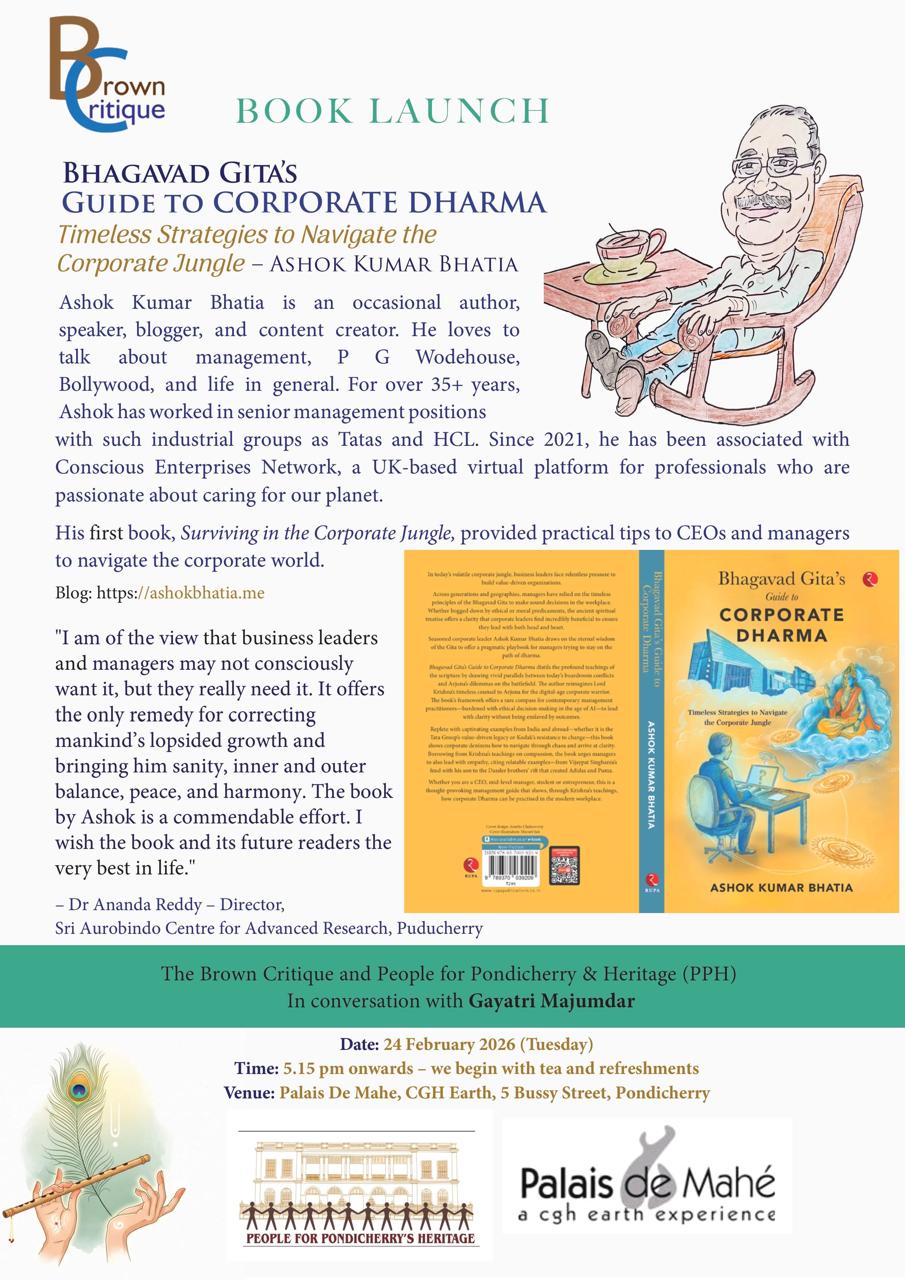
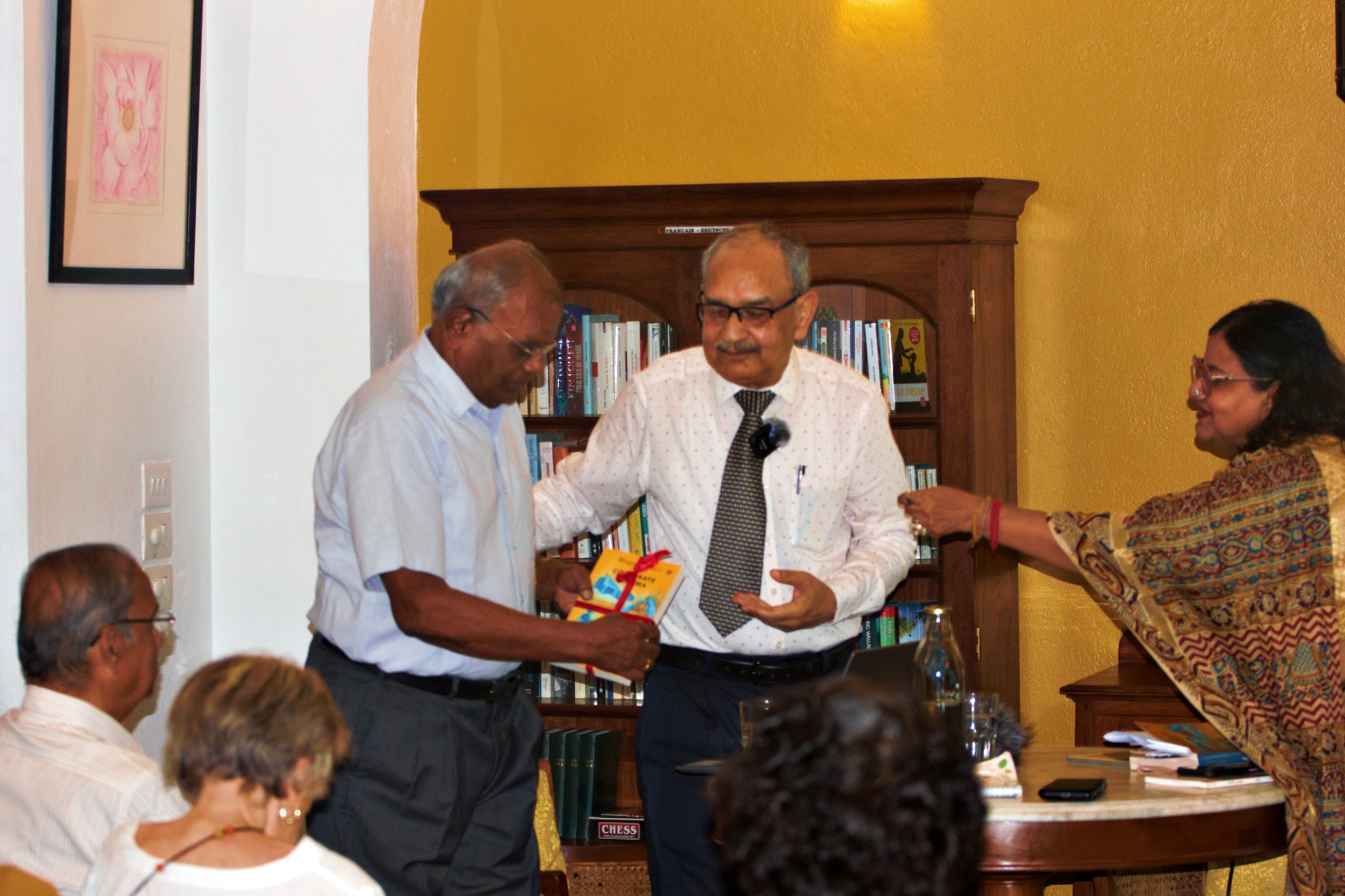
A modest launch function was held at the Palais de Mahe. Prominent industrialists, businesspeople, senior managers, management scholars, spiritual gurus, journalists, and members of the public attended the event.
Mr R. Mananathan, Chairman of the Manatec Group of Companies, was the Chief Guest on the occasion Ms. Gayatri Majumdar, a poetess in her own right and the Founder-Editor of The Brown Critique Literary Journal, conducted the session. Her scholarly acumen can be gauged by the fact that it took her only about 10 days to read the book and formulate the questions she wanted to ask me about its contents.
Wide-ranging discussions took place, covering topics such as detachment, stress management, managing day-to-day corporate challenges, and different hues of happiness. The necessity of using humour to facilitate communication was mentioned.
Dr. Ananda Reddy, Director, Sri Aurobindo Centre for Advanced Research, concluded the session with insightful remarks based on Sri Aurobindo’s Essays on the Gita.
Amongst those present were Mrs. and Mr. S. P. Krishnamurthy, who drove all the way from Bangalore to grace the occasion. Mr Krishnamurthy was a colleague of mine at Tata International many decades back.
Delhi
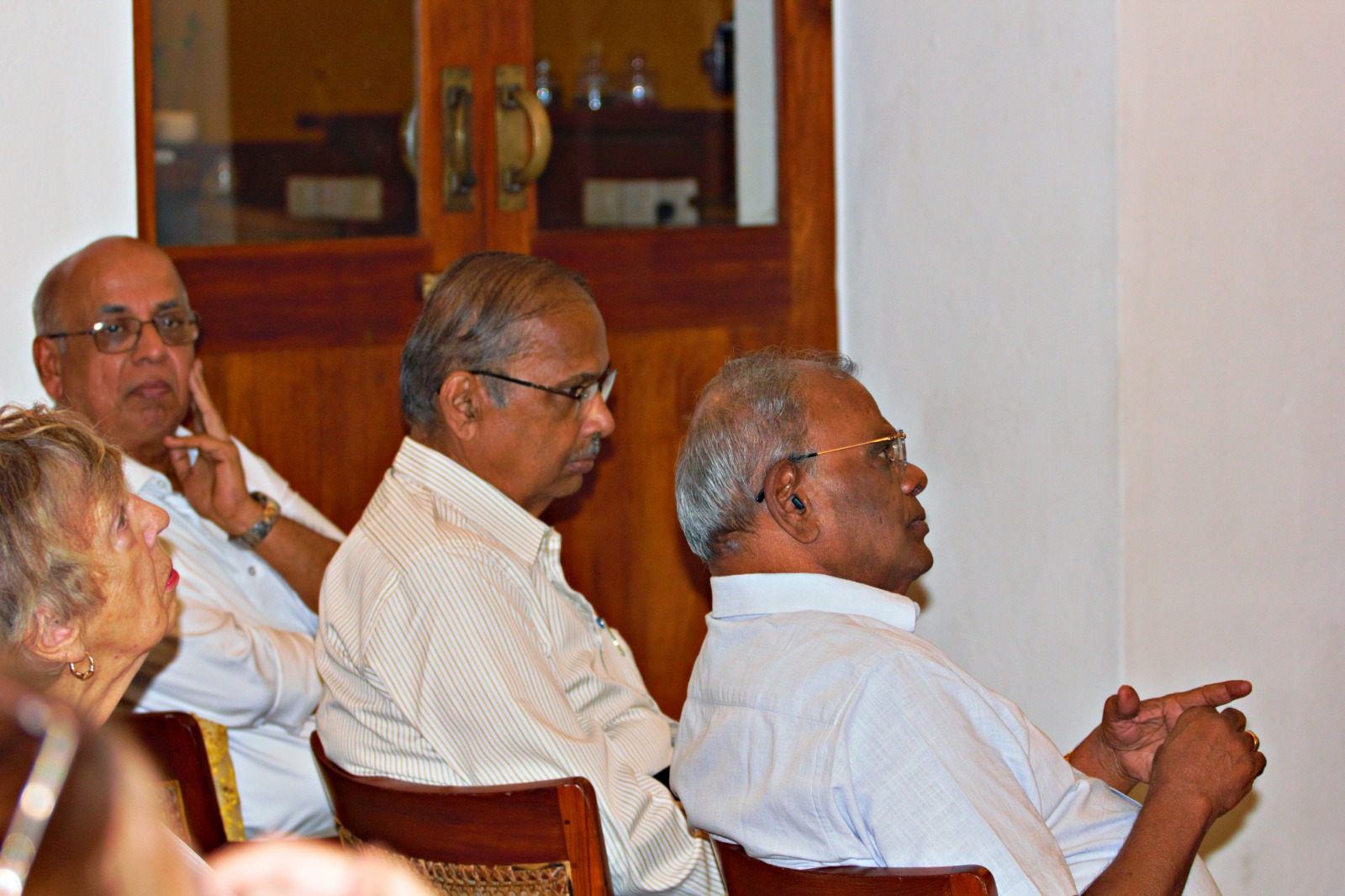
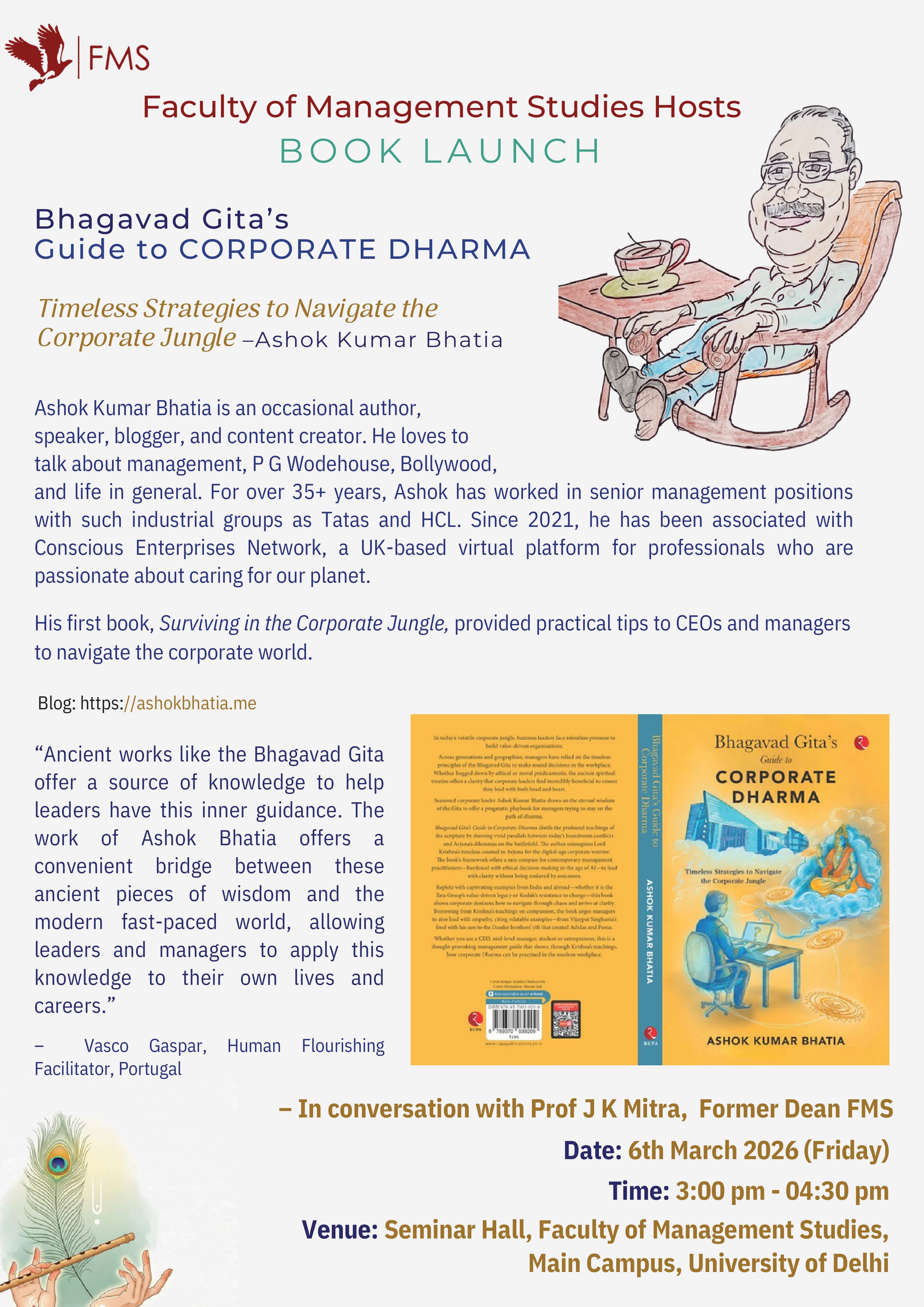
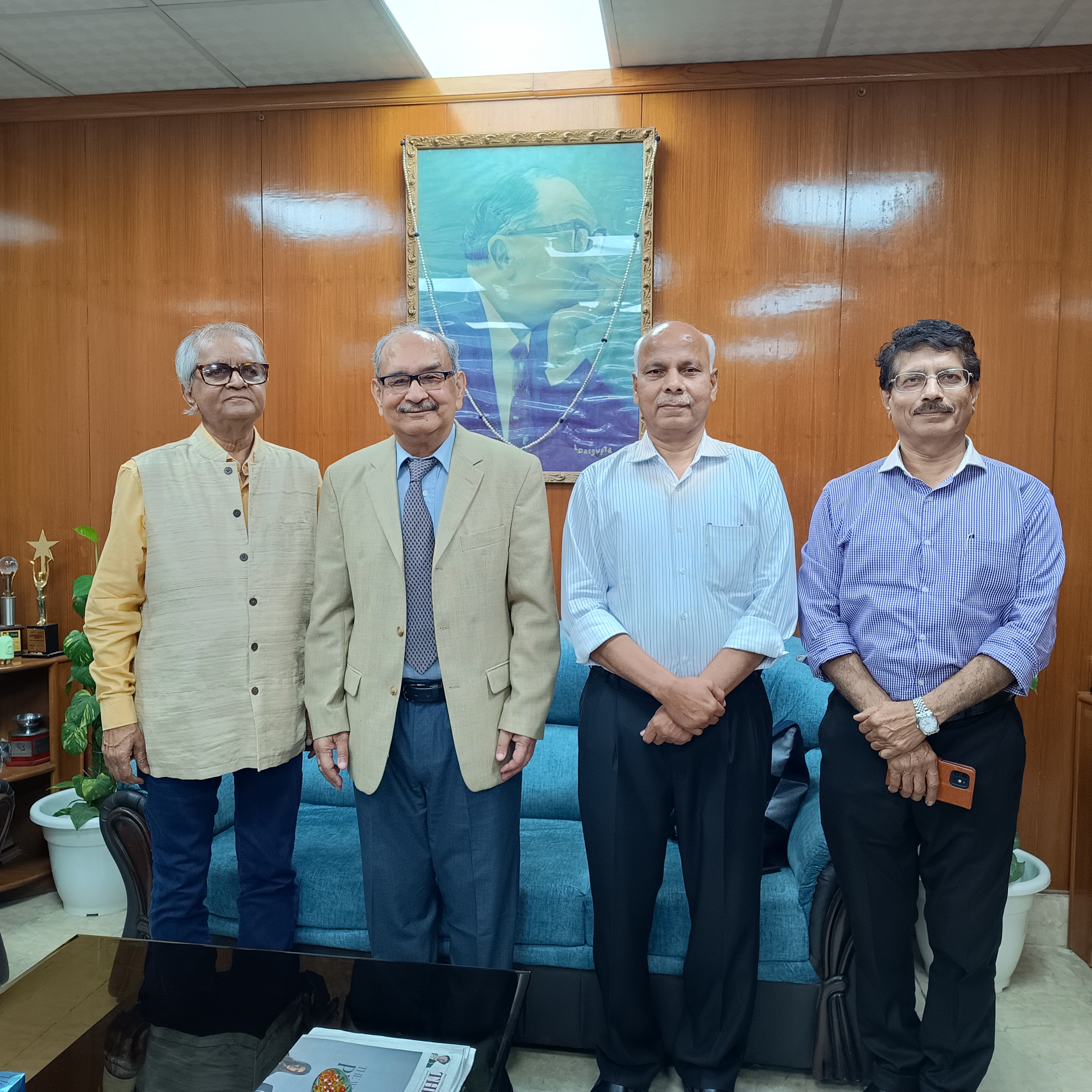
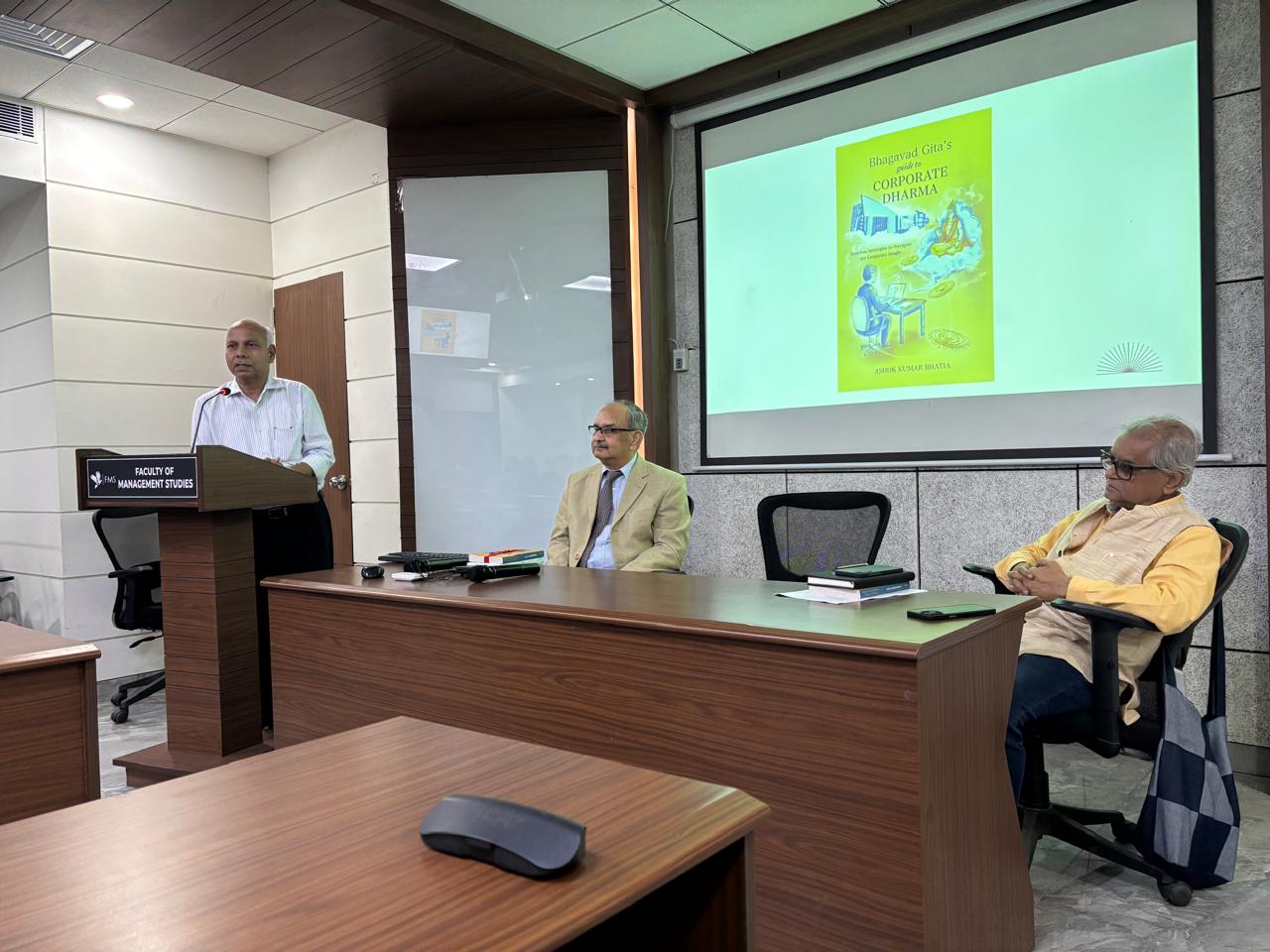
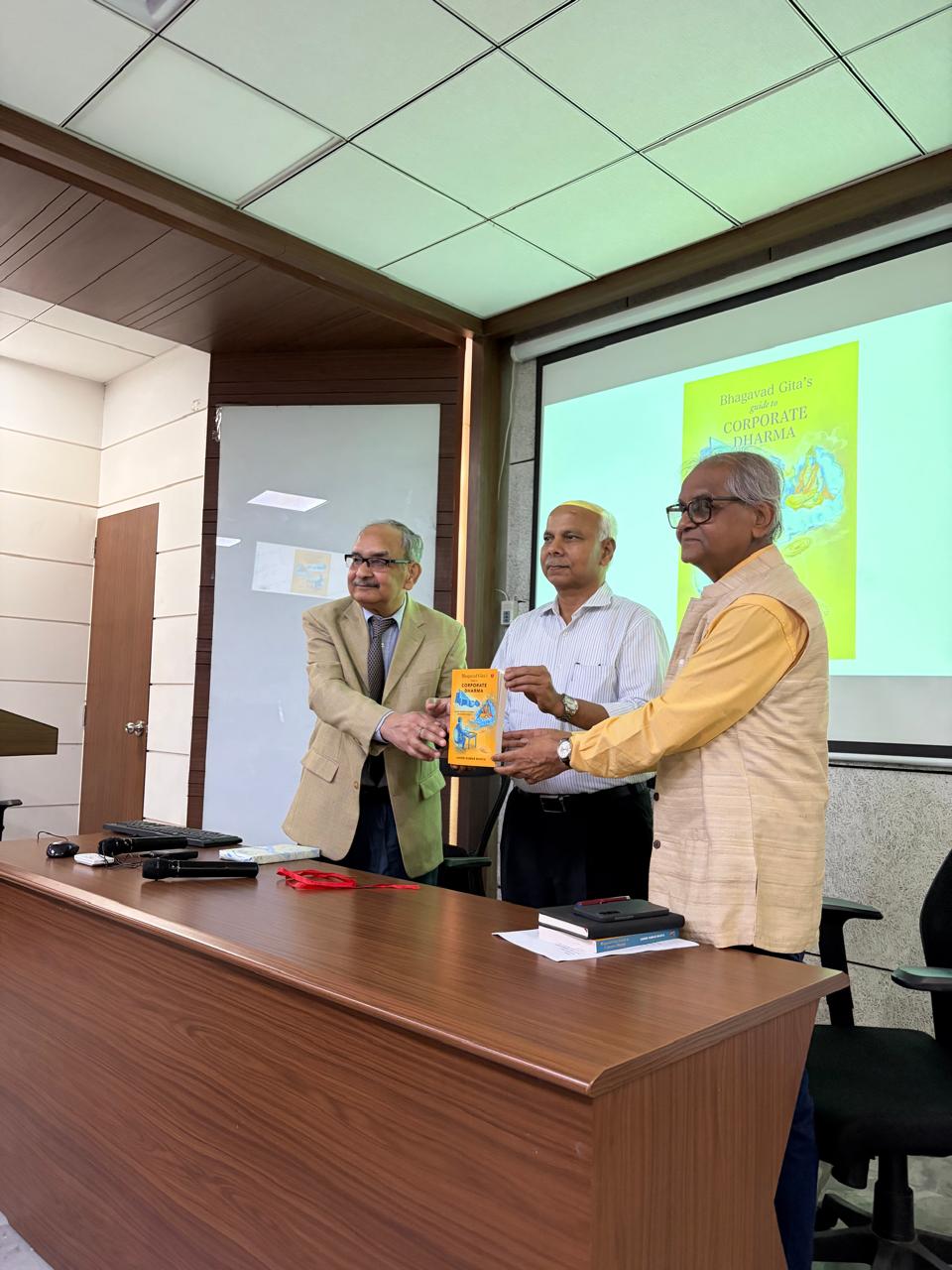
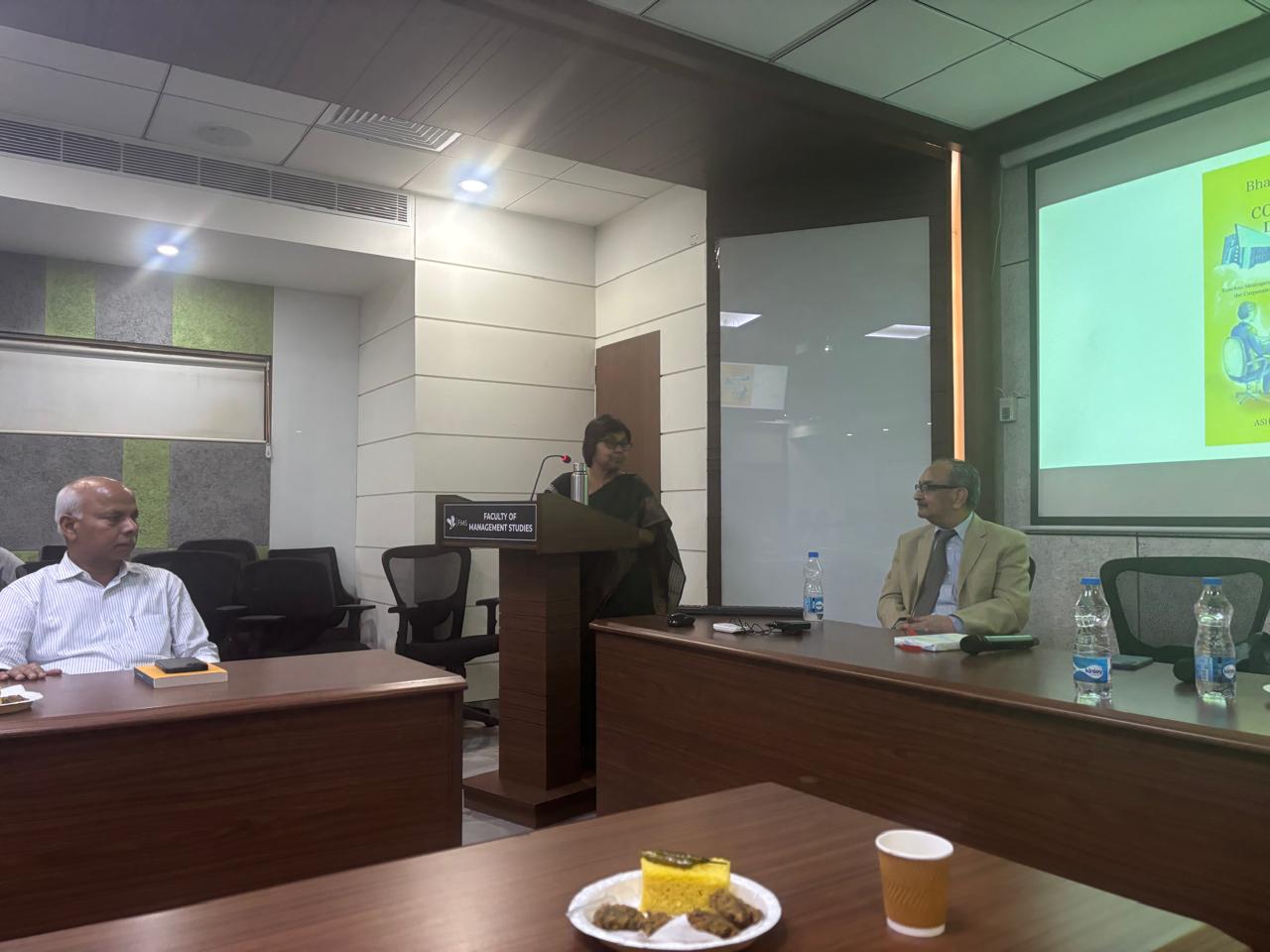
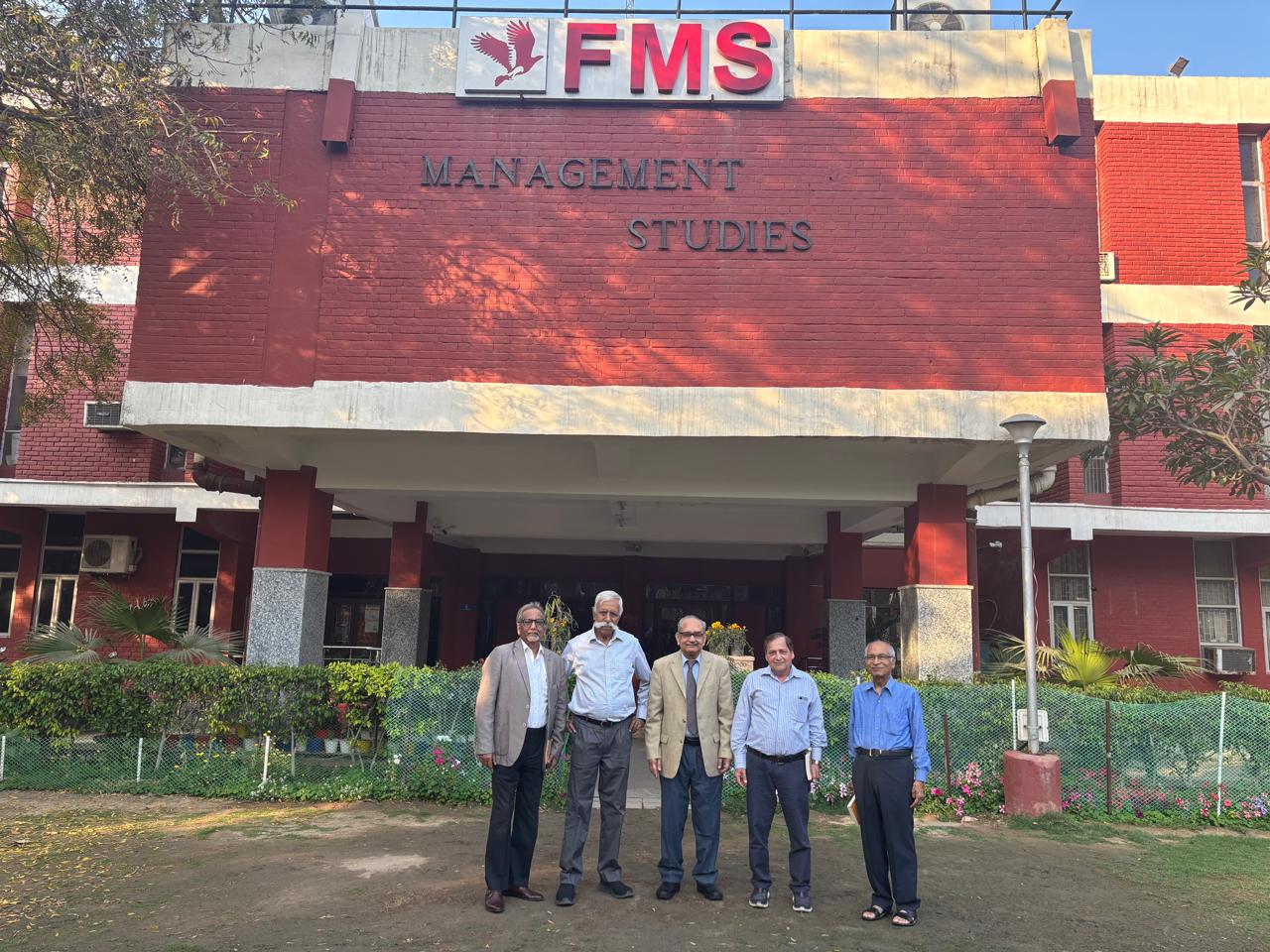
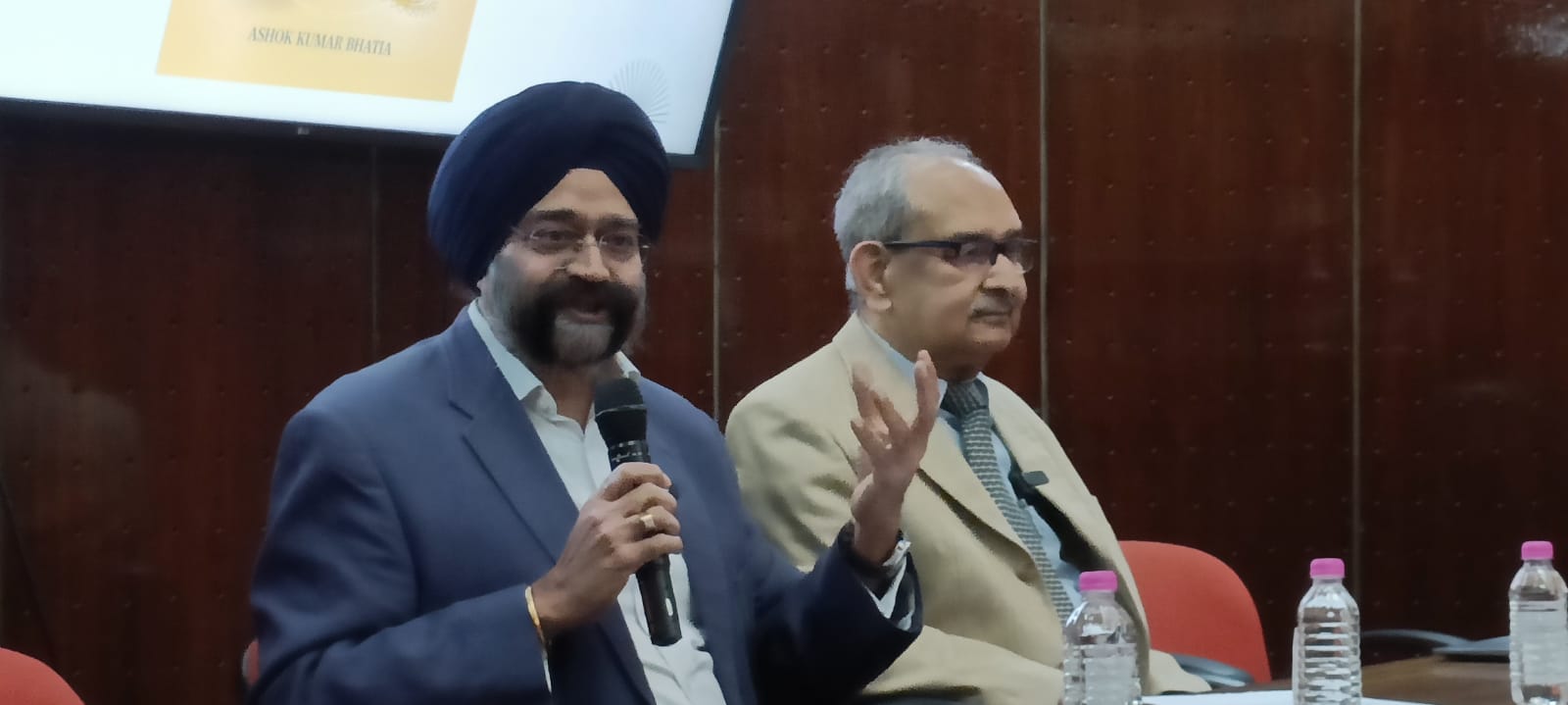
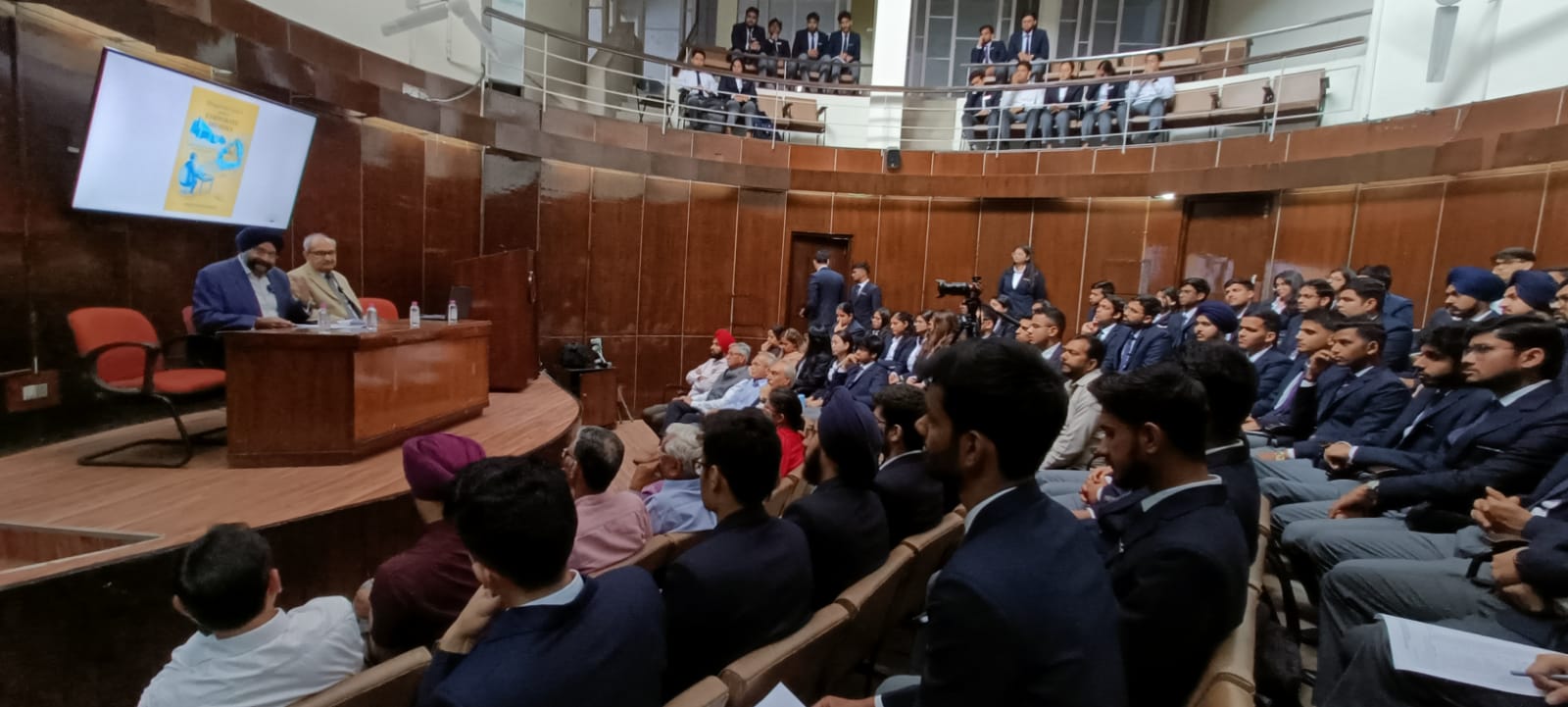
Thanks to the unqualified support of Prof. A. Venkat Raman, Head and Dean of the Faculty of Management Studies, Delhi University, the event went off well. The presentation was attended by a few seniors from the industry, faculty members, research scholars, and management students.
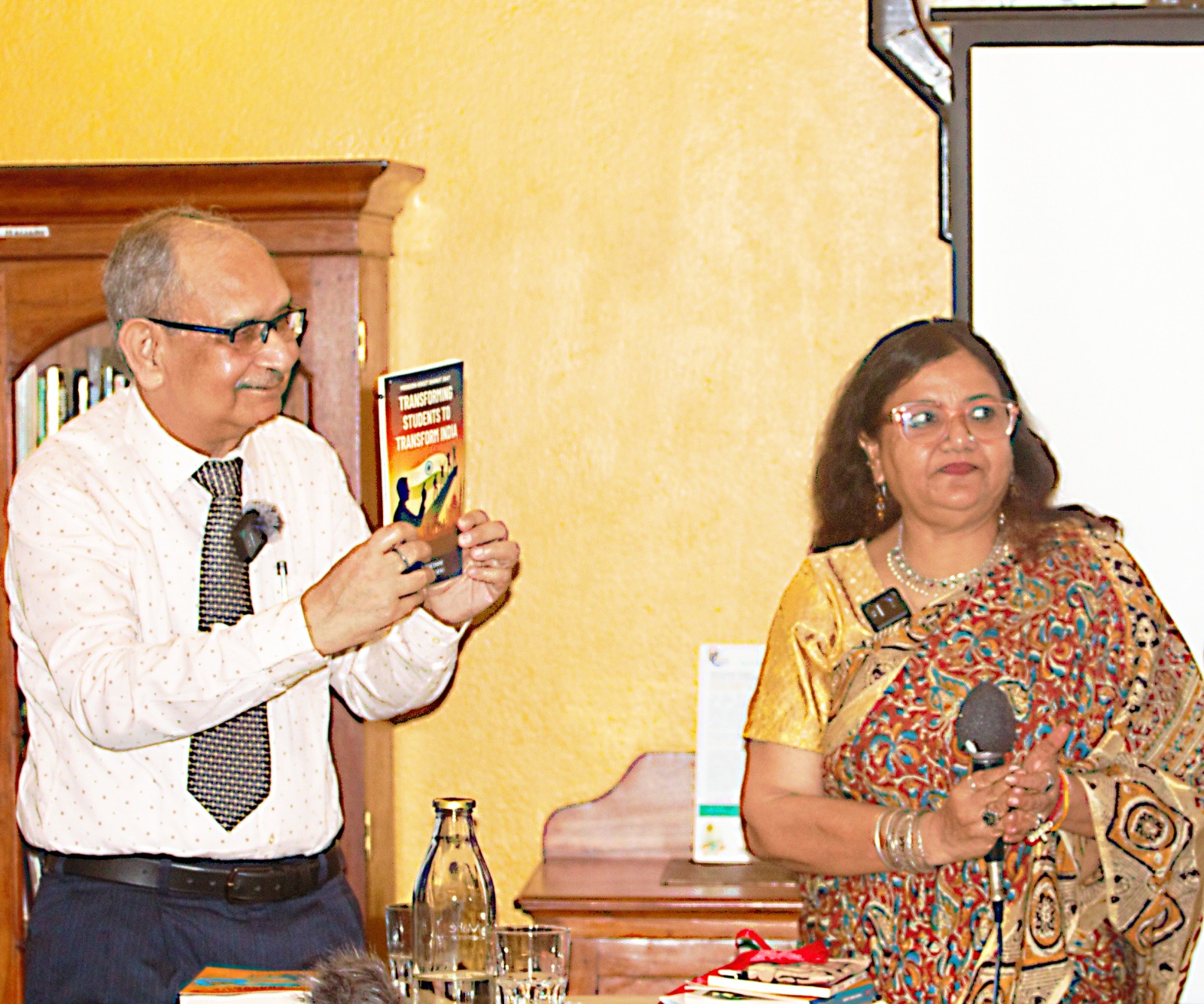
Prof. J. K. Mitra, Former Dean, FMS, and an expert in the Bhagavad Gita, was the Chief Guest on the occasion. Like a true mentor, he brought in a fresh perspective to the teachings of this unique scripture on quite a few occasions and supplemented my arguments by quoting real-life anecdotes.
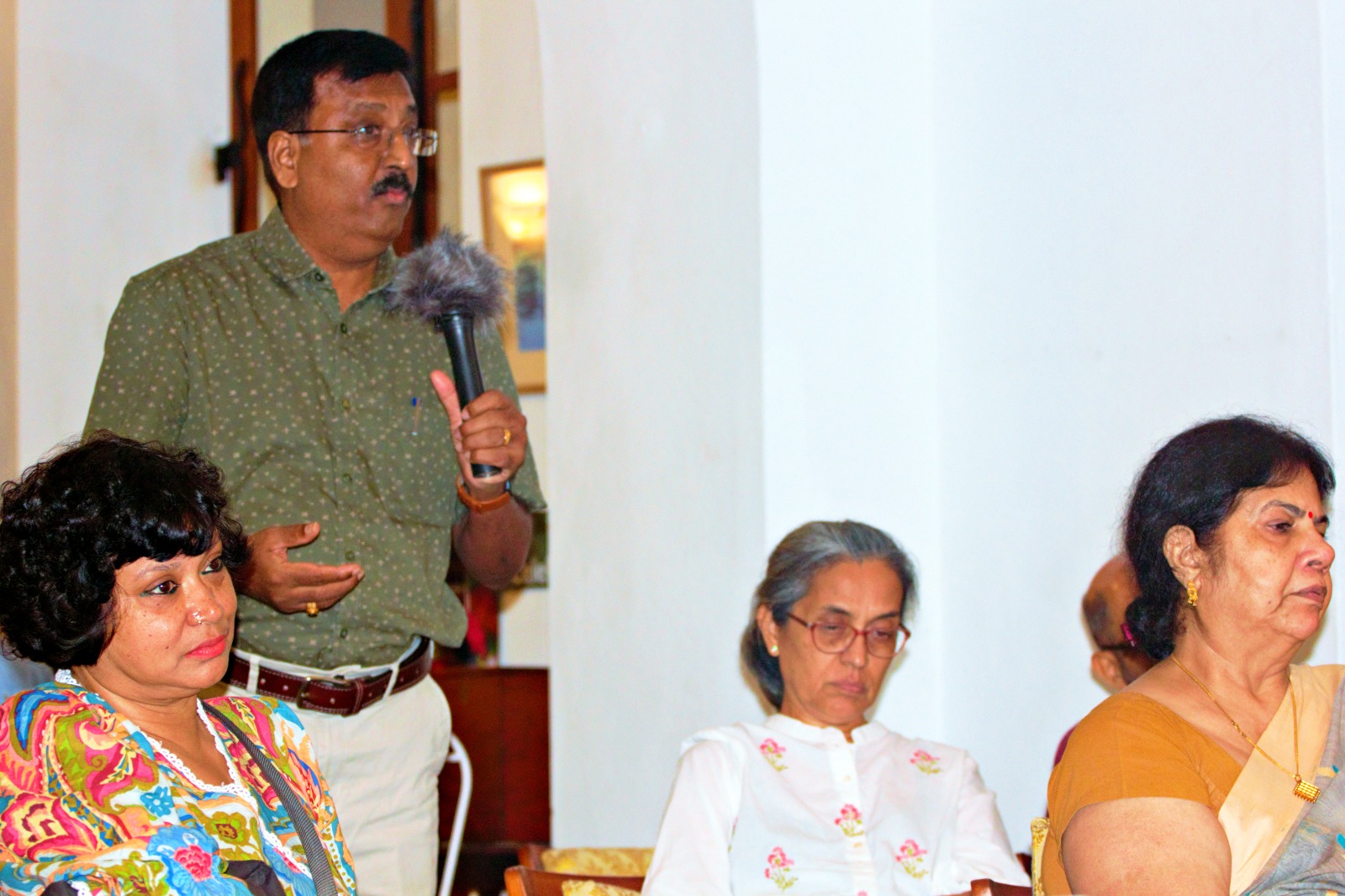
After the presentation, a sombre discussion came about, followed by a lively interaction with those present. A senior faculty member proposed a vote of thanks.
Those who braved the traffic blues in NCR and spared the time to grace the occasion with their presence included such long-time friends and well-wishers as Arvind Dang, Ashok Kalra, Bakul Bhatia, Hukam Chand Verma, and Rajeev Varma.
Chandigarh
Just like it happened in Delhi, the exaltation one feels upon returning to one’s Alma Mater cannot be captured in words. A whiff of nostalgia comes one’s way. The familiar buildings whisk one back into a comfort zone. Gandhi Bhavan nearby stands as gracefully as ever. The Students’ Centre nearby beckons one.
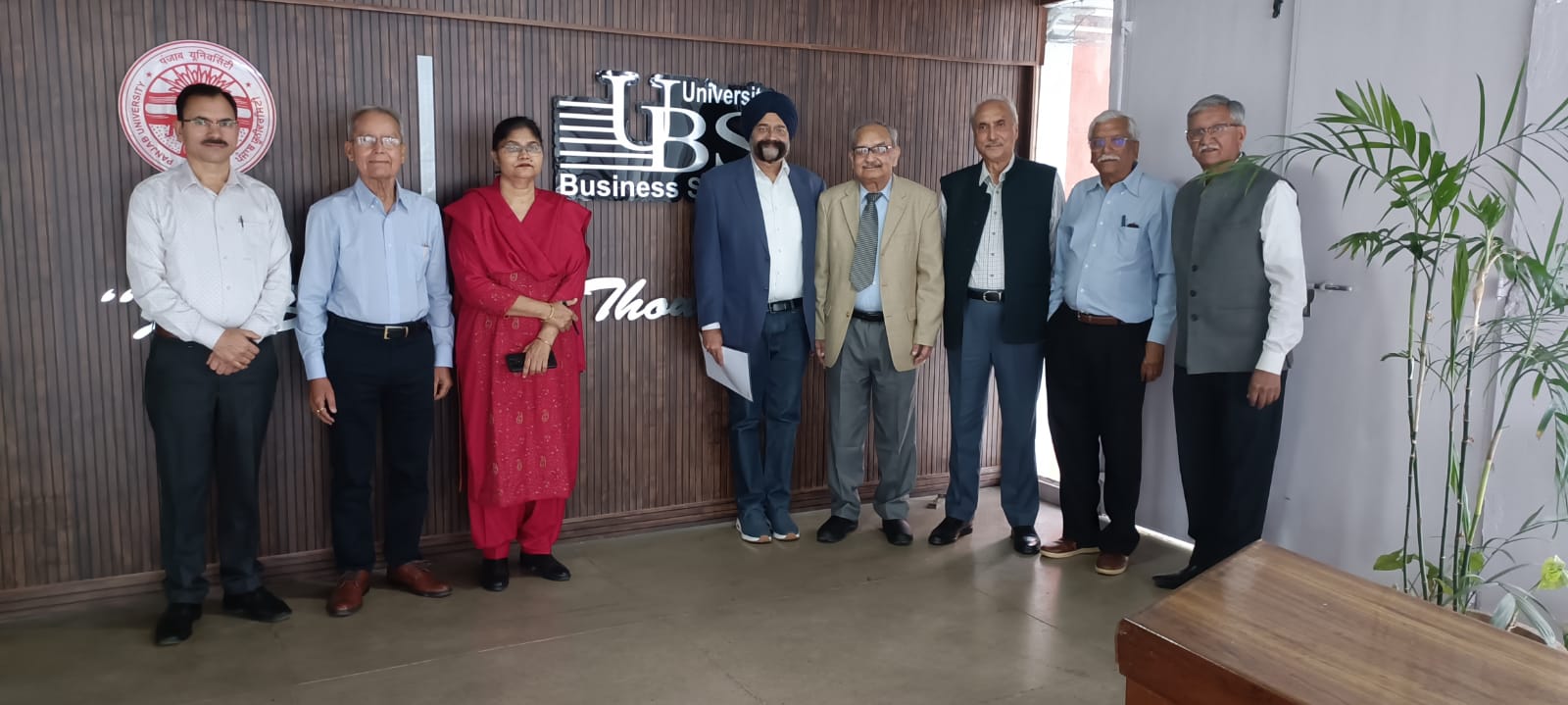
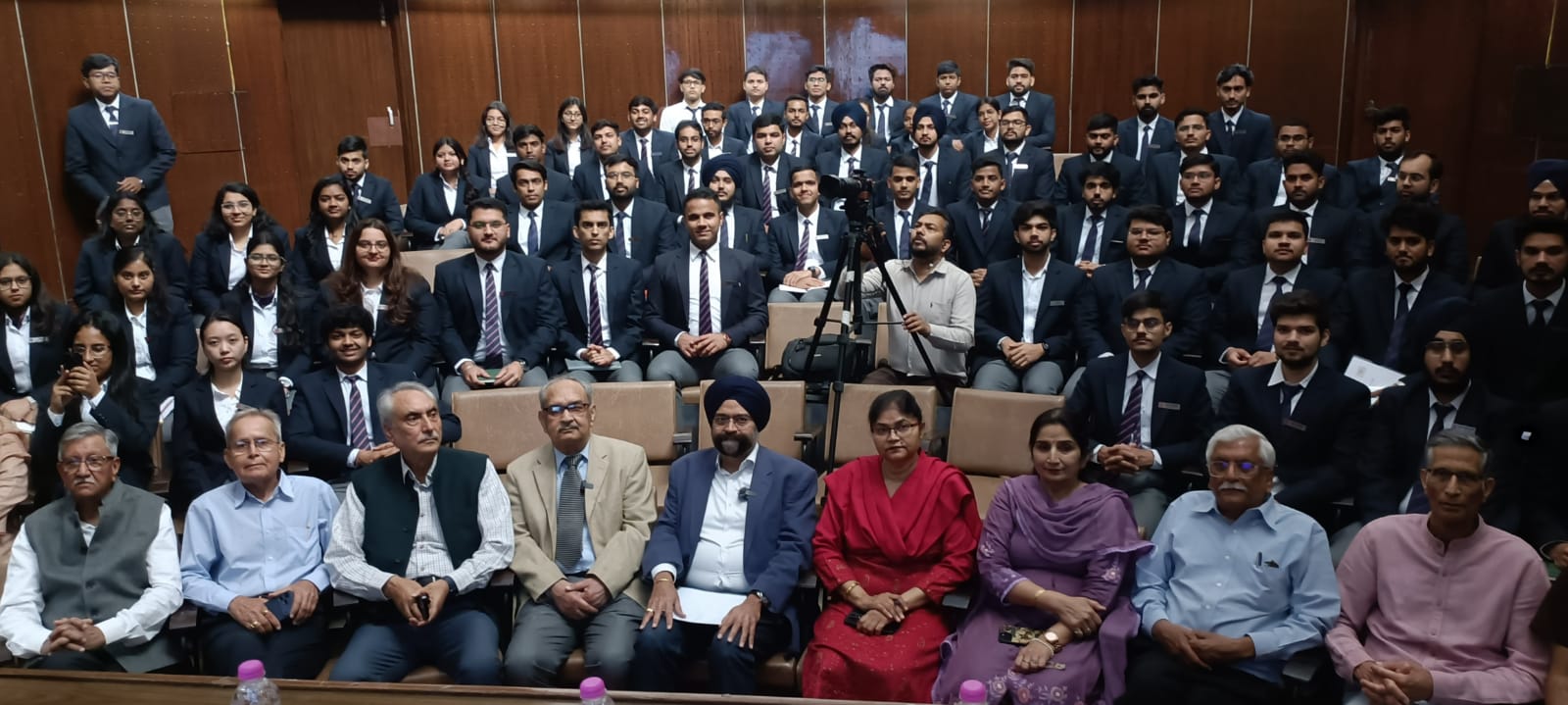
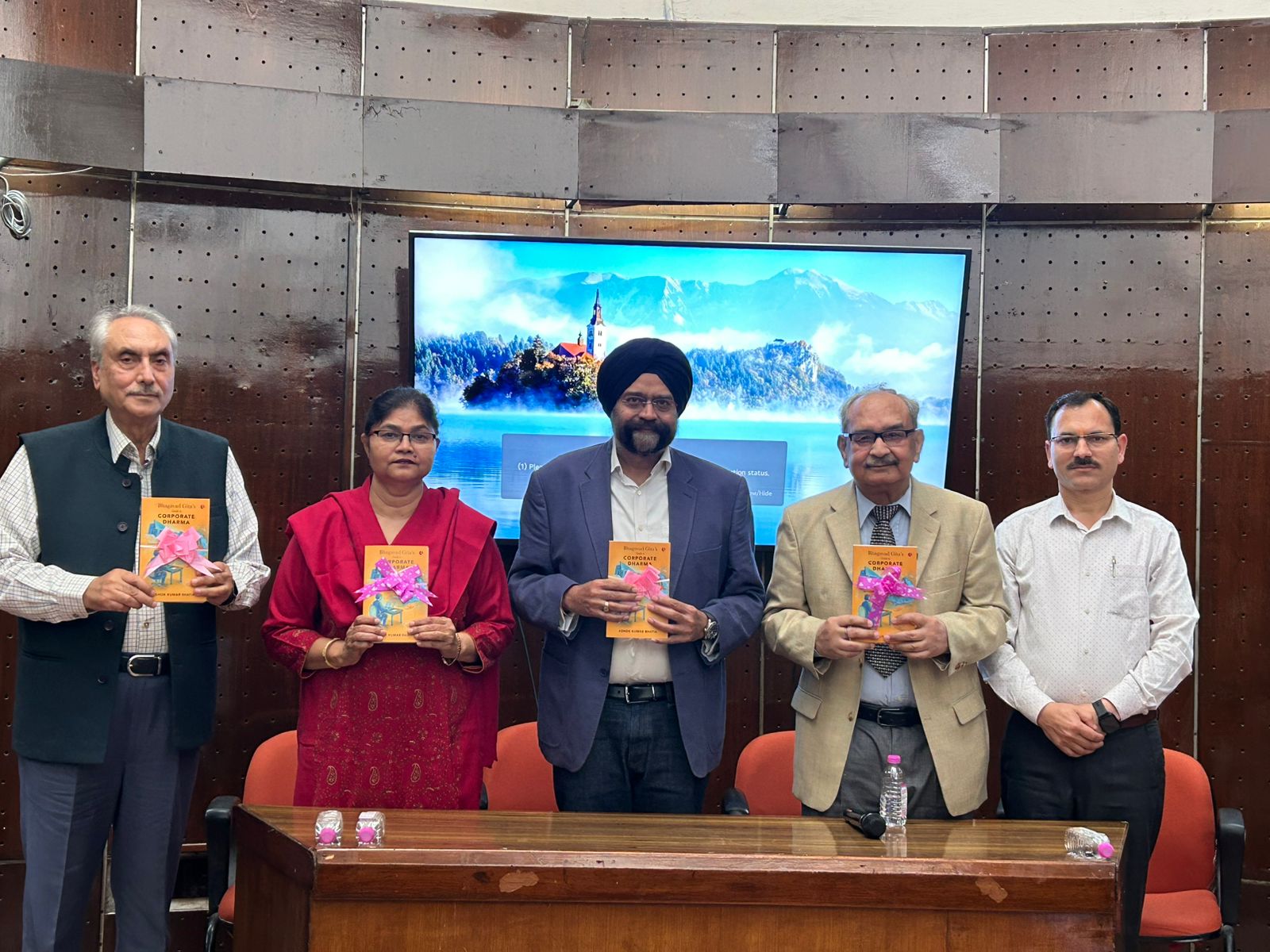
Thanks to the support of Prof. Parmjit Kaur, the present Chairperson of the University Business School at Panjab University, Chandigarh, and Mr. Kuldeep Kaul, Director, Metro Exporters Private Limited (and a batchmate of mine), the event rolled by smoothly. Industry seniors, faculty members, research scholars, and management students attended it.
Mr. D. P. Singh, the Head of Skills to Jobs with Amazon Web Services (India), had kindly consented to be the Chief Guest on the occasion. Having had a long stint with IBM and many other business houses as an HR professional, he brought in a cheery and light-hearted tone to the proceedings. Once the formal introductions were made, he asked me several searching questions, like the book’s origin, the intended target audience, my own favourite chapter/s from the book, and the like.
Followed by the presentation, a lively interaction took place. As Sir P. G. Wodehouse would have put it, the occasion turned out to be a feast of Reason and flow of Soul.
Mr. Kulbhushan Khullar, Mr. Kuldeep Kaul, Mr. Lalit Kapur, Mr. Praveen Malik, and Mr. Sunil Jain spared their valuable time and graced the occasion. So did Prof. Ashvini Agrawal, another friend, who made it a point to attend the event.
Hyderabad
Kanha Shanti Vanam is like an oasis in a desert. It is located around sixty kms from Hyderabad airport, off the Hyderabad-Bangalore highway. It is the global headquarters of Heartfulness Meditation Institute. (https://heartfulness.org).
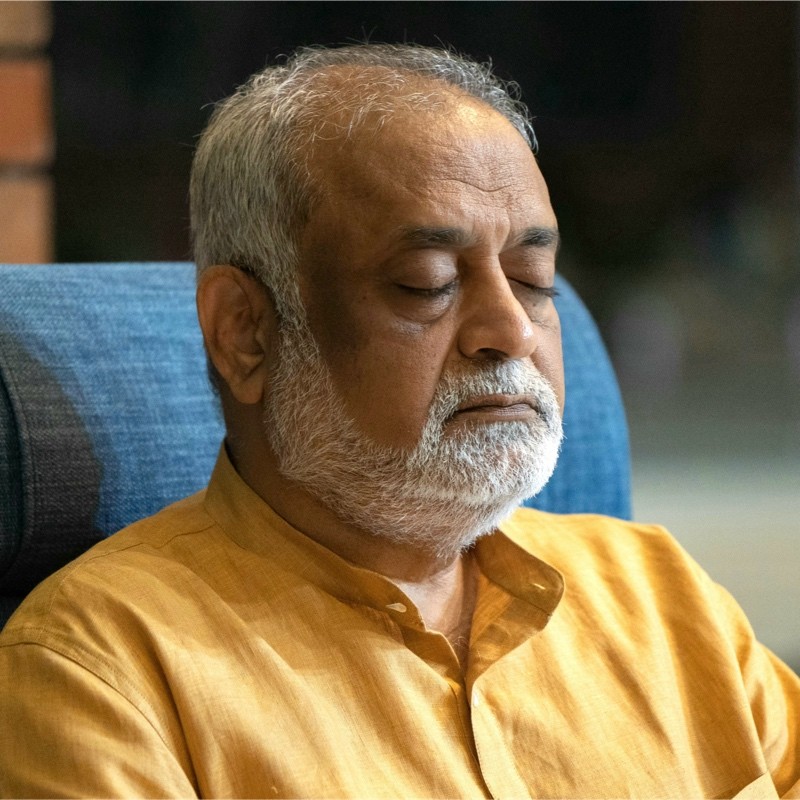
Part of the 1,400-acre complex is a lake, known as Kanha Sarovar. The head, Mr Kamlesh Patel (Daaji), was on a walk around the lake when I could see him briefly to present a copy of my latest book.
I reminded Daaji that he was kind enough to provide a Foreword to this book a few years back. Somehow, it got delayed in getting published. His remark: “Chalega. Good books take time to get published.”
One is reminded of these lines from Robert Frost:
The woods are lovely, dark and deep. But I have promises to keep, And miles to go before I sleep, And miles to go before I sleep.
The book’s journey continues, aided and abetted by many insightful and glowing remarks from those who have had the occasion to go through it.
This book also explores the challenges that management faces with the onset of the Industrial Revolution 4.0. It highlights the need to deploy both emotional and spiritual intelligence in order to navigate the choppy waters of advances in artificial intelligence, machine learning, blockchain and the like. The concept of the soul is explained based on the analogy of driver-less cars, which are already on the horizon.
A unique feature of the book is the humour and light-hearted way in which the author conveys deep and serious messages, without being preachy. Even still, he recommends a dose of one chapter a day, so that the reader does not suffer from intellectual dyspepsia!
There are many parallels between the teachings of the Bhagavad Gita and the Heartfulness Way of meditative practices that we recommend. The purpose of these practices, as well as the process of meditation, is described in detail in Chapter 6 of this unique scripture. In fact, the whole approach to individual growth and advancement is meditation-based. The Gita highlights the importance of absolute surrender to the Divine, just as Heartfulness practitioners are encouraged to do. The Gita speaks of doing selfless work, treating oneself as a mere instrument of the Divine. In the Heartfulness Way, we have the same concept, described as Constant Remembrance.
This book is not an armchair read for people who are retired. It is a manual for skilful action for leaders in the marketplace, for educators who would like to bring out the true meaning of education, to awaken students to the magnificence and creative power that lies dormant in each one of us.
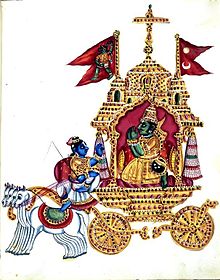
As a manual for the kind of leadership that the world needs today in all areas, the essence of this book can be captured by the last—and my own favourite—verse of the Bhagavad Gita:
Where there is Sri Krishna, the Lord of Yoga, where there is Partha, the wielder of the bow, there are surely fortune, victory, prosperity and policy.
Such is my view.
(An excerpt from the Foreword of the book ‘Bhagavad Gita’s Guide to Corporate Dharma’, by Mr Arun Wakhlu, Chief Mentor, Pragati Leadership Institute, Pune, India.)
To run a business well, wily jackals and cobras are required; but so are friendly giraffes, elephants and tortoises.
In the days to come, conscious managements would do well to assign the role of conscience keepers to any competent and willing full-time director on the board who would help to keep the business afloat without running into a collision with massive icebergs of targets which involve a hidden mass of compromise on core values and ethics. A culture of encouraging dissent and listening to whistle-blowers would also help in a business being steered right.
(An excerpt from my latest book, ‘Bhagavad Gita’s Guide to Corporate Dharma’)
Negativity is unnatural. Look at any other life form on our planet. It is not easy for one to come across an unhappy flower or a stressed oak tree. A depressed dolphin is pretty nigh impossible to locate. So are reindeer which have a problem with their self-esteem, elephants that cannot relax, or a peacock that carries hatred and resentment. These creatures, with brains far simpler than ours, teach us a vital lesson: to accept what is and live fully in the present moment. Their primal instinct for survival shows us the power of authenticity and being connected to our true selves.
Watch swans on a lake, peacefully floating and splashing, fully at ease in the Now. If a conflict with another swan comes about, it is brief and forgotten almost instantly—no anger, no grudges, no desire for revenge. They simply move on, embodying a natural grace and inner peace that many despondent CEOs could learn from.
Such are the perils Homo sapiens face for having an evolved mind!
In the movie Kung Fu Panda (2008, Directors: John Stevenson and Mark Osborne), Grand Master Oogway, an old Galapagos tortoise, motivates a demoralised Po Ping, the giant panda, as follows:
“You are too concerned with what was and what will be. There is a saying: yesterday is history, tomorrow is a mystery, but today is a gift. That is why it is called the present.”
Po’s morale gets boosted, and he goes on to achieve the goal he has set for himself.
The Bhagavad Gita recommends living in the present moment. It also speaks highly of the virtues of handling conflicts with equanimity, giving up anger, and forgiving not only others but even ourselves!
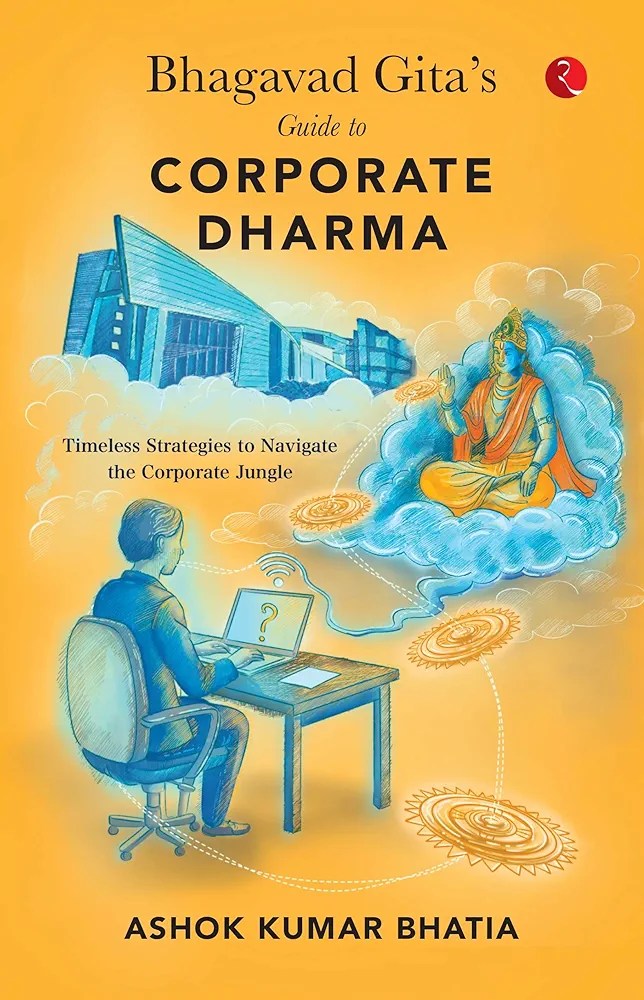
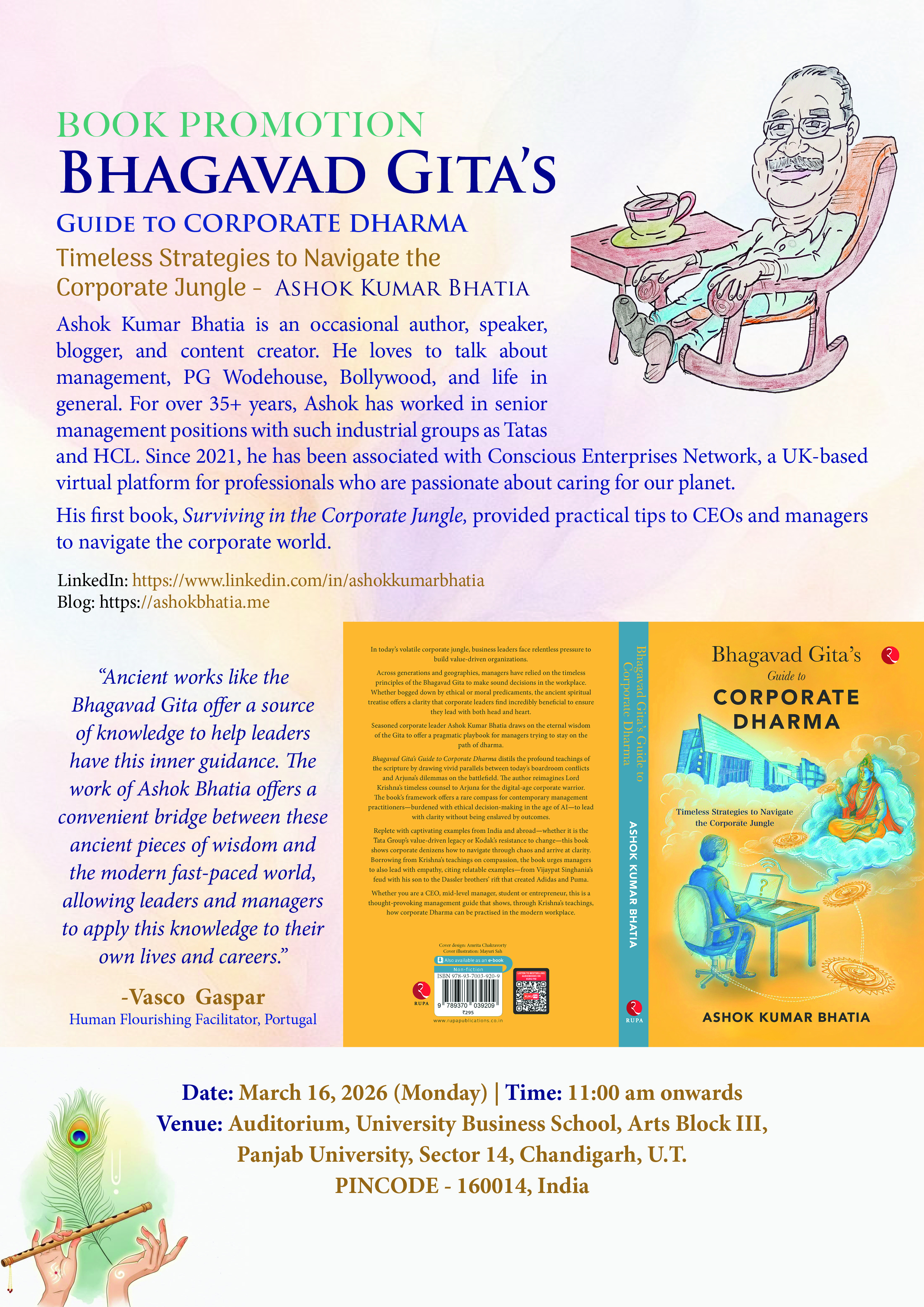
In today’s volatile corporate jungle, business leaders face relentless pressure to build value-driven organisations.
Across generations and geographies, managers have relied on the timeless principles of the Bhagavad Gita to make sound decisions in the workplace. Whether bogged down by ethical or moral predicaments, the ancient spiritual treatise offers clarity that corporate leaders find incredibly beneficial, helping them to lead with both head and heart.
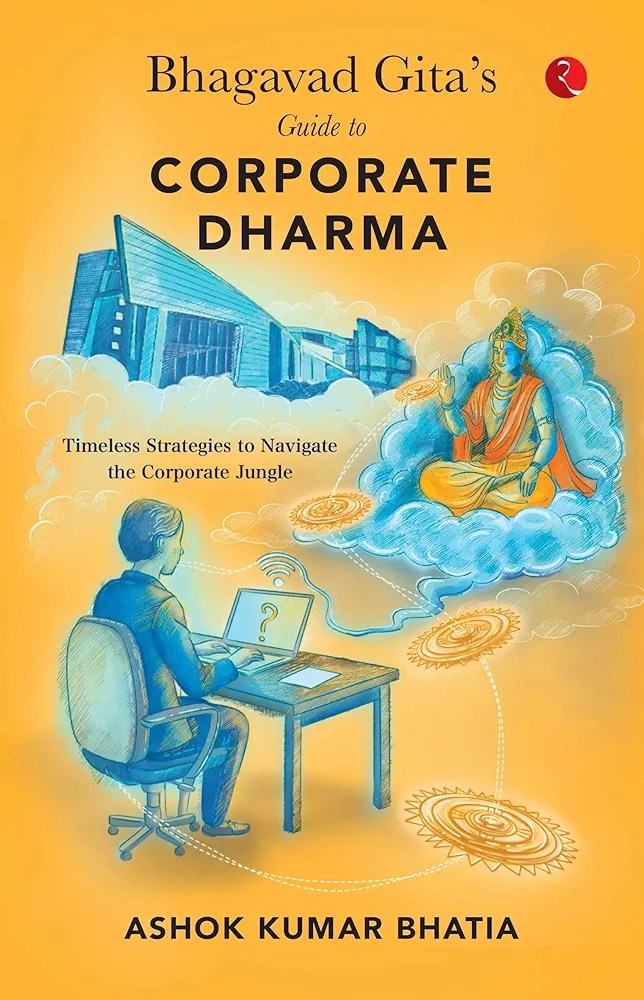
Bhagavad Gita’s Guide to Corporate Dharma distils the scripture’s profound teachings by drawing vivid parallels between today’s boardroom conflicts and Arjuna’s dilemmas on the battlefield. It reimagines Lord Krishna’s timeless counsel to Arjuna for the digital-age corporate warrior. Its framework offers a rare compass for contemporary management practitioners—burdened with ethical decision-making in the age of AI—to lead with clarity without being enslaved by outcomes.
Replete with captivating examples from India and abroad—whether it is the Tata Group’s value-driven legacy or Kodak’s resistance to change—this book shows corporate denizens how to navigate through chaos and arrive at clarity.
Borrowing from Krishna’s teachings on compassion, the book urges managers to also lead with empathy, citing relatable examples—from Vijaypat Singhania’s feud with his son to the Dassler brothers’ rift that created Adidas and Puma.
Whether you are a CEO, mid-level manager, student or entrepreneur, the upcoming book is a thought-provoking management guide that shows, through Krishna’s teachings, how corporate Dharma can be practised in the modern workplace.












 ashokbhatia